
When investors and economists ask, “How much is the apple worth?” they are rarely referring to the fruit. Instead, they are grappling with a financial phenomenon that has redefined the limits of corporate valuation. Apple Inc. (AAPL) is not merely a provider of consumer electronics; it is a financial juggernaut whose market capitalization often rivals the Gross Domestic Product (GDP) of entire G7 nations. To understand the true worth of Apple, one must look beyond the sticker price of a smartphone and dive deep into the mechanics of market capitalization, revenue diversification, and the fiscal strategies that have made it the most valuable company in history.

The Financial Powerhouse: Breaking Down Market Capitalization
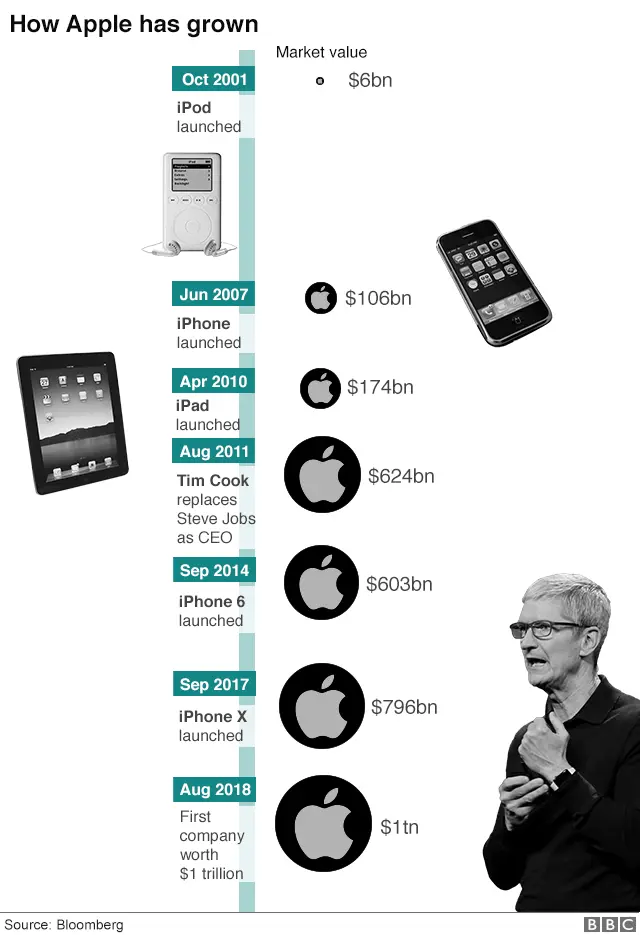
The most common metric used to answer how much Apple is worth is market capitalization, or “market cap.” This figure is calculated by multiplying the total number of outstanding shares by the current market price of a single share. While this number fluctuates daily based on trading activity, Apple has consistently set records, being the first publicly traded U.S. company to hit the $1 trillion, $2 trillion, and $3 trillion milestones.
Understanding the 3 Trillion Dollar Milestone
Reaching a $3 trillion valuation was a watershed moment for the global financial markets. To put this in perspective, if Apple were a country, its “worth” would make it the seventh-largest economy in the world, positioned just behind the United Kingdom and ahead of France. This valuation suggests that investors have immense confidence not just in the company’s current products, but in its ability to generate cash flow far into the future. The $3 trillion mark represents more than just sales; it represents a “premium” that investors are willing to pay for the perceived safety and growth potential of the Apple ecosystem.
Stock Performance and Shareholder Equity
Apple’s worth is also intrinsically tied to its performance on the NASDAQ. Over the last decade, Apple has outperformed the S&P 500 significantly, making it a cornerstone of both institutional portfolios and individual retirement accounts. Shareholder equity—the amount that would be returned to shareholders if all assets were liquidated and all debts paid—remains robust. However, Apple’s real value to the market lies in its “moat,” a financial term for a competitive advantage that protects a company’s long-term profits and market share. This moat is built on high switching costs for consumers and an incredibly high return on invested capital (ROIC).
Revenue Streams: Where the Money Comes From
A company is worth the sum of its future cash flows. To understand Apple’s multi-trillion-dollar valuation, we must analyze the diverse engines that drive its massive revenue. Apple has successfully transitioned from a hardware-only company into a multifaceted giant that monetizes both products and platforms.
The iPhone Dominance
The iPhone remains the primary driver of Apple’s financial worth, often accounting for approximately 50% or more of its total quarterly revenue. However, the financial brilliance of the iPhone isn’t just in the volume of units sold; it is in the profit margins. While competitors often engage in “price wars” that erode margins, Apple maintains a premium pricing strategy. This allows the company to capture the lion’s share of the global smartphone industry’s profits despite not having the largest market share by volume. This “premiumization” strategy is a core component of its high valuation.
The Services Pivot: Recurring Revenue Models
Perhaps the most significant shift in Apple’s valuation over the last five years has been the growth of its Services division. This includes the App Store, iCloud, Apple Music, Apple Pay, and Apple TV+. From a financial perspective, Services are highly attractive because they provide recurring, high-margin revenue. Unlike hardware, which requires manufacturing and shipping costs, Services scale with much lower overhead. Analysts often value the Services segment at a higher multiple than the hardware segment, meaning that for every dollar earned in services, the market adds more to the company’s total “worth” than it does for a dollar earned in hardware sales.

Wearables and Home Accessories
The “Wearables, Home, and Accessories” category—which includes the Apple Watch and AirPods—has grown into a business the size of a Fortune 500 company on its own. This segment serves a dual financial purpose: it generates direct revenue and it acts as a “tether” that keeps users within the Apple ecosystem. Financially, this creates an ecosystem lock-in, ensuring that a customer who buys an Apple Watch is significantly more likely to upgrade to a new iPhone, thereby securing future cash flows.
Valuation Metrics and Investment Analysis
To determine if Apple’s multi-trillion-dollar price tag is “fair,” financial analysts look at several key ratios. These metrics help investors decide if the company is overvalued, undervalued, or priced just right based on its earnings and growth.
Price-to-Earnings (P/E) Ratio vs. Peers
The Price-to-Earnings (P/E) ratio is a primary tool for assessing value. Historically, Apple traded at a lower P/E ratio than other “Big Tech” companies like Microsoft or Amazon, often because it was viewed primarily as a hardware company. However, as the “Services” narrative took hold, Apple’s P/E ratio expanded. Investors are now willing to pay a higher multiple for Apple’s earnings because those earnings are seen as more stable and predictable. When compared to the broader tech sector, Apple often sits in a “sweet spot” of being a growth stock that also offers the stability of a value stock.
Cash Reserves and Buyback Strategies
One cannot discuss Apple’s worth without mentioning its balance sheet. Apple holds one of the largest cash piles of any corporation in history. While it has recently moved toward a “cash-neutral” goal, its ability to generate tens of billions of dollars in free cash flow every quarter is nearly unparalleled. Apple uses this cash effectively through aggressive share buyback programs. By reducing the number of shares outstanding, Apple increases the “Earnings Per Share” (EPS) for remaining investors, which in turn supports a higher stock price and overall market valuation.
Dividend Yield and Long-term Stability
While many tech companies reinvest every cent into R&D, Apple provides a consistent dividend. This attracts a different class of investors—those looking for income and stability rather than just “moonshot” growth. This broad investor base, ranging from aggressive hedge funds to conservative pension funds, provides a floor for the stock price. The “worth” of the company is bolstered by this institutional support, which views Apple as a “digital utility” that is essential to modern life.
Future Growth and Macroeconomic Challenges
The final component of Apple’s worth is its “growth trajectory.” The market is forward-looking, and the current valuation reflects expectations for the next five to ten years.
Expanding into Emerging Markets
A significant portion of Apple’s future value is tied to its expansion in emerging markets, most notably India. As the middle class grows in these regions, the transition from budget Android devices to aspirational iPhones represents a massive financial opportunity. Financial analysts closely watch Apple’s retail expansion and local manufacturing efforts in India as a leading indicator of its ability to maintain its growth rate as mature markets like the U.S. and Europe reach saturation.
Regulatory Hurdles and Global Economic Shifts
No valuation is without risk. Apple faces significant “valuation headwinds” in the form of antitrust litigation and regulatory changes. In the E.U. and the U.S., regulators are scrutinizing the “Apple Tax” (the 30% commission on App Store sales). If legal rulings force Apple to open its ecosystem or reduce its commission rates, it could impact the high-margin Services revenue that justifies its current P/E multiple. Furthermore, as a global company, Apple’s worth is sensitive to currency fluctuations and trade tensions, particularly between the U.S. and China.
In conclusion, when we ask “how much is the apple worth,” the answer is a complex tapestry of current assets, future earnings potential, and investor sentiment. While the $3 trillion headline captures the imagination, the true worth of the company lies in its unparalleled ability to generate cash, its strategic pivot toward recurring service revenue, and a disciplined capital return program that rewards those who hold its shares. Apple is not just a tech company; it is a financial gold standard, a benchmark against which the health of the global economy and the tech sector is perpetually measured.
aViewFromTheCave is a participant in the Amazon Services LLC Associates Program, an affiliate advertising program designed to provide a means for sites to earn advertising fees by advertising and linking to Amazon.com. Amazon, the Amazon logo, AmazonSupply, and the AmazonSupply logo are trademarks of Amazon.com, Inc. or its affiliates. As an Amazon Associate we earn affiliate commissions from qualifying purchases.