
The humble sneeze, a sudden and often inconvenient expulsion of air and particles from the nose and mouth, is a universal human experience. Far from being a mere annoyance, it is a complex physiological reflex designed to protect our airways from irritants. While the sensation of an impending sneeze is familiar to us all, the precise mechanisms and a myriad of triggers behind it are subjects of ongoing scientific inquiry. In an increasingly data-driven world, technology is now playing a pivotal role in unraveling these mysteries, offering unprecedented insights into “what makes people sneeze” and paving the way for more effective management and prevention strategies. From advanced sensors to sophisticated AI, the digital age is transforming our understanding of this ancient bodily function.

Unpacking the “Sneeze”: A Biological Overview Enhanced by Digital Insights
Before delving into the technological interventions, it’s crucial to understand the fundamental biology of a sneeze. This reflex, formally known as sternutation, is far more than a simple cough. It’s an intricate, involuntary process involving multiple neural pathways and muscle groups, all orchestrated to clear irritants from the nasal passages. Technology, in its analytical capacity, helps us dissect and quantify aspects of this complex biological event, moving beyond qualitative observation to objective data.
The Mechanics of a Sneeze: From Irritant to Ejection
A sneeze typically begins when irritant particles — be it dust, pollen, pet dander, or even a sudden burst of bright light — stimulate nerve endings within the mucous membranes lining the nose. These nerves transmit signals to the trigeminal nerve system in the brainstem, which then triggers a rapid, involuntary sequence of events. The brain sends signals to close the eyes, take a deep breath, and then tense the chest muscles, leading to a build-up of pressure. Finally, the soft palate and tongue depress, and the air is explosively expelled at speeds that can exceed 100 miles per hour, carrying with it mucous and foreign particles.
While the core mechanics remain constant, the nuances of individual sneeze responses, such as force, frequency, and associated symptoms, can vary greatly. Modern physiological sensors, often integrated into research-grade wearable devices, can now capture real-time biometric data during a sneeze event. This includes respiratory patterns, heart rate variability, and even muscle activity, providing researchers with a more granular understanding of the body’s response. This data helps to differentiate between various types of sneezes (e.g., allergic versus irritant) and understand their impact on an individual’s overall physiological state.
Common Triggers: Beyond Pollen and Dust
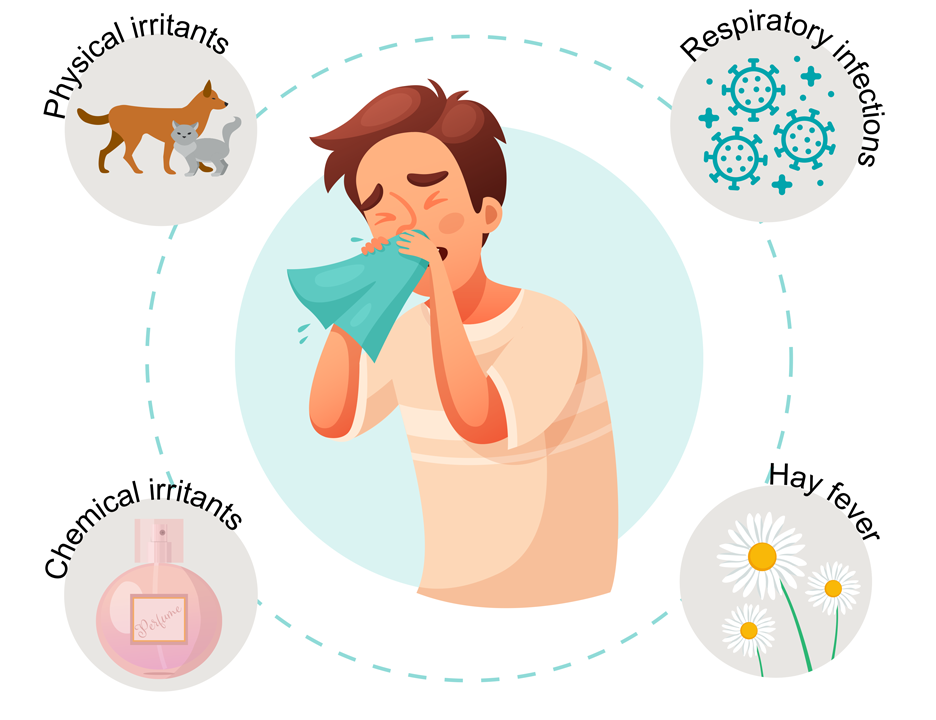
While pollen, dust mites, and pet dander are notorious allergens that make many people sneeze, the list of potential triggers is surprisingly diverse. Strong odors from perfumes or cleaning products, sudden changes in temperature, cold air, spicy foods, and even a full stomach (a phenomenon known as snatiation) can all induce a sneeze. The “photic sneeze reflex,” where exposure to bright light triggers sneezing, affects a significant portion of the population. Understanding these varied triggers is paramount for effective management.
Historically, identifying individual triggers relied on self-reporting and trial-and-error. However, technology is revolutionizing this process. Environmental sensors can now provide objective data on air quality, allergen counts, and volatile organic compounds (VOCs) in real-time. Paired with personal health apps where users log sneeze events and symptoms, these technologies create a comprehensive picture, allowing individuals and healthcare providers to pinpoint specific triggers with far greater accuracy than ever before. This integrated approach shifts trigger identification from a guessing game to a data-driven diagnostic process.
Wearable Tech & Sensors: Quantifying Environmental and Physiological Triggers
The rise of wearable technology and advanced environmental sensors has fundamentally changed how we monitor our health and surroundings. These tools offer unprecedented opportunities to track, analyze, and even predict the conditions that make people sneeze, moving us from reactive symptom management to proactive trigger avoidance.
Real-time Allergen Detection: Smart Air Quality Monitors
One of the most significant advancements comes in the form of smart air quality monitors. These compact devices, often integrated into smart home ecosystems or as portable personal gadgets, employ an array of sophisticated sensors to detect various airborne irritants. They can measure particulate matter (PM2.5, PM10), volatile organic compounds (VOCs), carbon dioxide, humidity, and even specific allergen concentrations like pollen counts.
By providing real-time data, these monitors empower individuals to make informed decisions. An allergy sufferer can receive an alert when pollen levels are rising outside, prompting them to keep windows closed or adjust their outdoor activity. Inside, a sudden spike in dust or pet dander can trigger an alert, signaling the need for cleaning or air purification. This constant environmental vigilance, driven by IoT sensors, transforms passive exposure into an active management strategy, directly addressing the environmental factors that contribute to sneezing.
Personal Biometrics: Tracking Respiratory Responses and Patterns
Beyond environmental monitoring, wearable devices like smartwatches and fitness trackers are increasingly capable of monitoring personal physiological responses. While they don’t directly detect a sneeze, they can track precursors and related symptoms. For instance, changes in heart rate variability, sleep quality disturbances, or increased respiratory rate can be subtle indicators of an allergic reaction or exposure to irritants that might lead to sneezing.
Some advanced wearables incorporate micro-acoustic sensors that could, in theory, even detect the unique acoustic signature of a sneeze, logging its occurrence automatically. When this personal biometric data is correlated with environmental sensor data and a user’s self-reported symptoms, powerful insights emerge. A pattern might reveal that elevated heart rate variability often precedes a bout of sneezing when certain air quality parameters are met, suggesting a heightened sensitivity. This personalized data collection helps individuals understand their unique physiological sneeze triggers and responses.
Predictive Analytics for Proactive Management
The true power of this data lies in its potential for predictive analytics. By collecting vast amounts of environmental and personal health data over time, AI and machine learning algorithms can identify complex patterns and correlations that are imperceptible to the human eye. This allows for the development of predictive models that can forecast high-sneeze-risk scenarios. For example, combining local weather forecasts, historical pollen data, and an individual’s past reactions, an app could alert a user hours or even days in advance about an impending high-allergen day, recommending preventative measures like medication or staying indoors. This proactive approach, driven by data-driven insights, represents a paradigm shift in managing conditions that make people sneeze.
AI and Machine Learning: Decoding Sneeze Patterns and Personalizing Prevention
Artificial intelligence and machine learning are the engines that turn raw sensor data into actionable insights. By processing massive datasets from environmental monitors, wearables, and electronic health records, AI can uncover subtle patterns, predict future events, and offer personalized advice for managing sneezing triggers.
Predictive Modeling for Allergy Forecasts
Traditional allergy forecasts rely on generalized regional pollen counts. AI, however, can create far more precise and personalized predictions. By integrating diverse data points such as satellite imagery, local weather patterns, historical allergen data, and even anonymized community health data, AI algorithms can generate hyper-localized and highly accurate allergy forecasts. These models can predict not just the presence of pollen, but also specific types of pollen and their concentrations in particular areas, considering factors like wind direction and humidity.
Such granular data empowers individuals to plan their days more effectively. An AI-powered app might suggest the optimal time for an outdoor run based on the lowest forecasted allergen levels, or advise against visiting a particular park known for specific plant species that trigger an individual’s allergies. This move from broad regional forecasts to precise, personalized predictions significantly enhances the ability to avoid sneeze-inducing environments.
Personalized Health Recommendations via AI
Beyond prediction, AI can offer personalized health recommendations tailored to an individual’s unique sneezing patterns and triggers. By analyzing a user’s historical data—including logged sneeze events, symptom severity, medication use, environmental exposures, and even sleep quality—AI can identify specific lifestyle adjustments or interventions that are most likely to be effective.
For instance, if AI detects a consistent correlation between poor sleep and increased sneezing on high-pollen days, it might recommend sleep optimization strategies in conjunction with allergy medication. If certain indoor activities consistently precede sneezing, it could suggest specific air purification routines. This level of personalized insight moves beyond generic advice, offering actionable strategies that are dynamically refined as more data is collected, optimizing an individual’s approach to managing “what makes them sneeze.”
Early Warning Systems for Allergen Hotspots
AI’s ability to process and interpret vast datasets also makes it invaluable for creating early warning systems for allergen hotspots. By aggregating data from a network of environmental sensors and anonymized user input, AI can identify emerging areas with high concentrations of irritants. Imagine a city-wide map, updated in real-time, highlighting zones with elevated dust levels after a construction project or areas with a sudden surge in a particular type of mold spore after a rainstorm.
These systems could be particularly useful for public health initiatives, allowing for targeted interventions or public advisories. For individuals, such a system acts as a digital shield, warning them away from areas that pose a high risk of triggering their sneezing reflex, thus empowering them to navigate their environment more safely and comfortably.
Smart Environments and IoT: Building Sneeze-Resistant Spaces
Beyond monitoring and prediction, technology offers tangible solutions for modifying our environments to reduce sneezing triggers. The Internet of Things (IoT) is enabling the creation of “smart spaces” that actively manage air quality and climate, transforming homes and workplaces into more sneeze-resistant havens.
Automated Air Purification and Filtration Systems
Smart air purifiers are at the forefront of this effort. Integrated into a home’s IoT network, these devices can be programmed to respond dynamically to indoor air quality readings from connected sensors. When an increase in particulate matter, pet dander, or VOCs is detected, the purifier can automatically increase its fan speed or activate advanced filtration systems (HEPA, activated carbon) to scrub the air clean.
Some systems are even more sophisticated, learning peak allergy times or typical dust-generating activities (like vacuuming) and pre-emptively increasing filtration. This automated, responsive air management significantly reduces the concentration of airborne irritants, directly addressing one of the primary factors that make people sneeze, without requiring constant manual intervention.
Climate Control and Humidity Regulation for Allergen Mitigation
Humidity plays a crucial role in the proliferation of certain allergens, particularly dust mites and mold. Smart HVAC systems and humidifiers/dehumidifiers can work in concert to maintain optimal indoor humidity levels, typically between 30% and 50%, which is inhospitable to these common sneeze triggers.
Temperature regulation also plays a role, as very cold or very warm air can irritate nasal passages in some individuals. Smart thermostats, integrated with personal preferences and real-time environmental data, can fine-tune indoor climate to create a more stable and less irritating environment, minimizing sudden changes that might induce a sneeze.
Contactless Interaction and Hygiene Solutions
In a broader sense, smart environments contribute to overall hygiene, which indirectly reduces exposure to irritants and pathogens that can trigger sneezing. Contactless solutions, such as motion-activated lighting, voice-controlled devices, and automatic door openers, minimize the transfer of germs and dust from surfaces. Advanced air filtration systems in public spaces and workplaces, coupled with smart ventilation, ensure a constant supply of clean air, reducing the spread of airborne particles that could cause irritation or infection-related sneezing. While not directly preventing a sneeze, these technologies contribute to an overall healthier environment less prone to triggers.
The Future of Sneeze Management: Towards a Data-Driven Approach
The journey to understand and manage “what makes people sneeze” is rapidly evolving, driven by technological innovation. The future promises an even more integrated, predictive, and personalized approach, transforming how we interact with our environment and our own bodies.
Integrated Digital Health Platforms
The trend towards integrated digital health platforms will consolidate data from wearables, environmental sensors, electronic health records, and even genetic information into a single, comprehensive profile. This holistic view will enable AI to identify even more complex and nuanced correlations between an individual’s genetics, lifestyle, environment, and sneezing patterns. Such platforms will not only manage current symptoms but also predict long-term sensitivities and recommend preventative health strategies tailored to an individual’s entire biological and environmental landscape.
Advanced Diagnostics and Personalized Interventions
Future diagnostics for sneeze triggers will move beyond current allergy tests. Non-invasive, real-time molecular sensors, potentially embedded in clothing or everyday objects, could detect specific allergen proteins in the air or on surfaces. This hyper-specific identification of triggers, combined with AI-driven analysis, will lead to highly personalized interventions, ranging from custom-tailored air filtration solutions to precision medicine approaches that target an individual’s unique immune responses. The ability to understand and predict “what makes people sneeze” will become increasingly sophisticated, empowering individuals with an unparalleled level of control over their health and well-being in an ever-changing world.
aViewFromTheCave is a participant in the Amazon Services LLC Associates Program, an affiliate advertising program designed to provide a means for sites to earn advertising fees by advertising and linking to Amazon.com. Amazon, the Amazon logo, AmazonSupply, and the AmazonSupply logo are trademarks of Amazon.com, Inc. or its affiliates. As an Amazon Associate we earn affiliate commissions from qualifying purchases.