
The inception of Bitcoin was not merely the launch of a new piece of software; it was the birth of a radical financial philosophy. To understand when Bitcoin started is to understand a pivotal moment in economic history where the traditional foundations of trust, banking, and currency were challenged by a decentralized alternative. Since the mining of the “Genesis Block” in early 2009, Bitcoin has evolved from an experimental cryptographic project into a trillion-dollar asset class, fundamentally reshaping the landscape of personal finance and global investment strategies.
The Economic Catalyst: The 2008 Financial Crisis and the Whitepaper
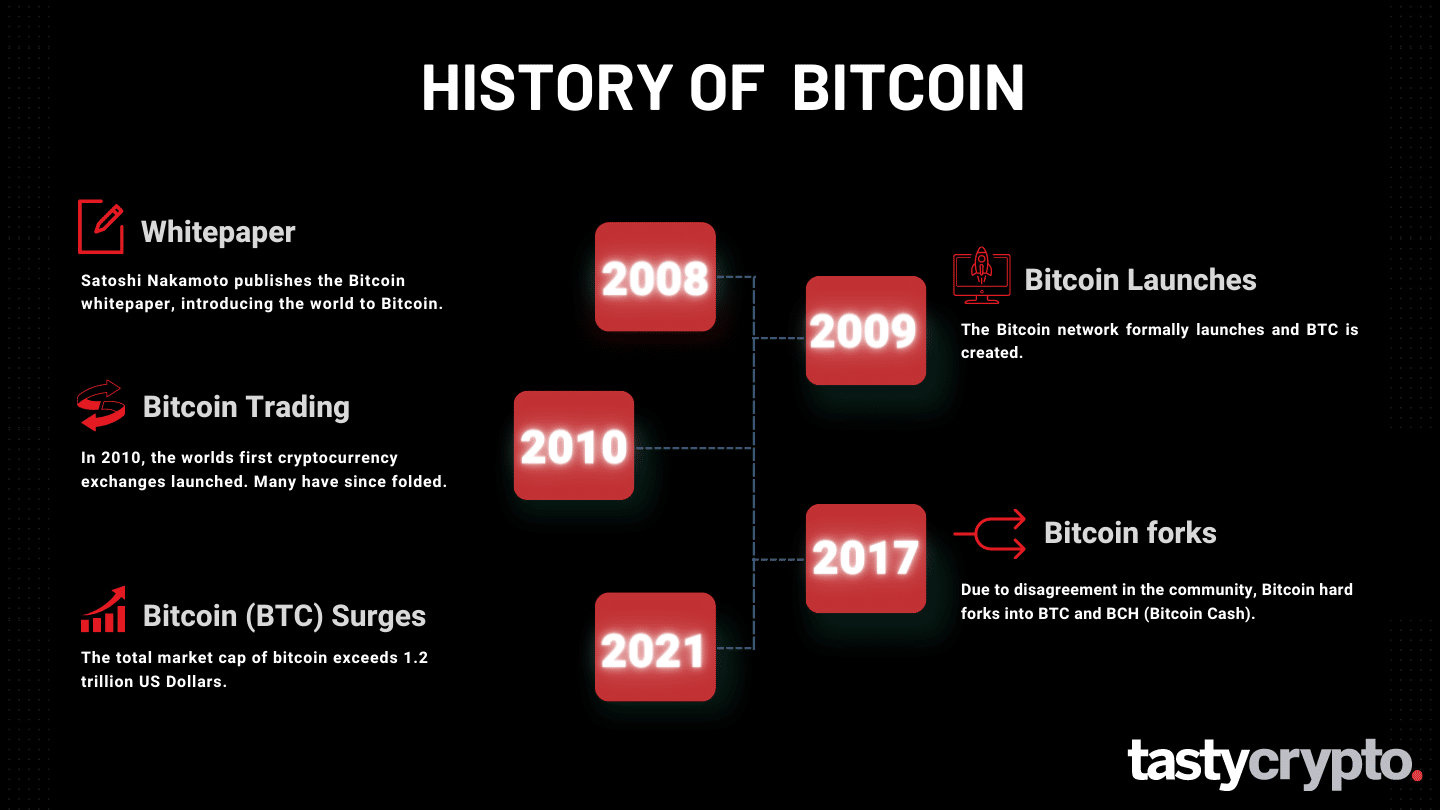
The timing of Bitcoin’s emergence was far from coincidental. It was born out of the wreckage of the 2008 global financial crisis, a period defined by the collapse of major investment banks, massive government bailouts, and a profound loss of public trust in centralized financial institutions.

The 2008 Financial Crisis as a Catalyst
In late 2008, the world economy was on the brink of a total systemic failure. The subprime mortgage crisis in the United States had triggered a domino effect, leading to the bankruptcy of Lehman Brothers and necessitating unprecedented intervention by central banks. For many, this era highlighted the vulnerabilities of a “middleman” economy, where the health of an individual’s savings was dependent on the risk management of third-party institutions. It was against this backdrop of fiscal instability that the concept of a “trustless” financial system gained traction.
Satoshi Nakamoto’s Vision for Decentralized Finance
On October 31, 2008, an individual or group using the pseudonym Satoshi Nakamoto published a whitepaper titled Bitcoin: A Peer-to-Peer Electronic Cash System. This document proposed a solution to the “double-spending problem” without the need for a central authority. By utilizing a distributed ledger—the blockchain—Nakamoto envisioned a world where individuals could transact directly with one another. From a financial perspective, this was revolutionary: it offered the first viable path toward a global currency that was immune to the inflationary pressures of central bank “money printing” and the censorship of traditional banking rails.
The Genesis Block and the Early Economics of Bitcoin
While the whitepaper laid the theoretical foundation, the physical reality of Bitcoin began on January 3, 2009. This date marks the mining of the first block on the Bitcoin blockchain, known as the “Genesis Block” or Block 0.
Mining the First 50 BTC
The Genesis Block contained a reward of 50 Bitcoins, but it also contained a hidden message embedded in its raw data: “The Times 03/Jan/2009 Chancellor on brink of second bailout for banks.” This headline from a UK newspaper served two purposes: it acted as a timestamp and a permanent reminder of the financial instability Bitcoin was designed to circumvent. In these early days, Bitcoin had no market price. It was mined by a handful of cypherpunks and hobbyists who were interested in the mathematics and the ideology rather than the immediate monetary gain.
The Famous 10,000 BTC Pizza Transaction
For a currency to be effective, it must function as a medium of exchange. The first recorded commercial transaction using Bitcoin occurred on May 22, 2010, when a programmer named Laszlo Hanyecz paid 10,000 BTC for two Papa John’s pizzas. At the time, those 10,000 Bitcoins were worth roughly $41. Today, that same amount represents hundreds of millions of dollars. While often cited as a humorous anecdote, “Bitcoin Pizza Day” is a landmark event in the history of money; it was the first time a digital asset, created out of thin air through computation, was successfully exchanged for a tangible, real-world commodity.
Bitcoin as an Asset Class: From Zero to Digital Gold
As Bitcoin moved past its experimental phase, it began to attract the attention of investors who saw it not just as a currency, but as a store of value. This transition marked Bitcoin’s move into the mainstream financial consciousness, where it earned the moniker “Digital Gold.”
Understanding Scarcity and the Halving Cycles
One of the most compelling financial attributes of Bitcoin is its hard-capped supply of 21 million coins. Unlike fiat currencies, which can be issued indefinitely by governments, Bitcoin’s supply is governed by code. Every four years, an event known as “the halving” occurs, which cuts the reward for mining new blocks in half. This programmatic scarcity creates a deflationary pressure that has historically driven significant price appreciation. For investors, the halving cycles serve as a predictable monetary policy, a stark contrast to the often-unpredictable decisions made by the Federal Reserve or other central banks.
Institutional Adoption and Market Capitalization
The narrative of Bitcoin changed significantly around 2020. What was once viewed as a “speculative bubble” by Wall Street began to be embraced by major financial institutions. Companies like MicroStrategy and Tesla began adding Bitcoin to their corporate balance sheets, viewing it as a hedge against the devaluation of the US Dollar. The subsequent launch of Bitcoin Spot ETFs (Exchange Traded Funds) in 2024 marked the ultimate institutional validation, allowing traditional investors to gain exposure to Bitcoin through their standard brokerage accounts. This shift has solidified Bitcoin’s status as a legitimate pillar of a modern investment portfolio.
Strategic Investing in the Modern Crypto Era
For the modern individual looking to build wealth, Bitcoin represents a unique opportunity, but it requires a disciplined financial approach. The volatility that characterized Bitcoin’s early years remains a factor, making strategic planning essential.
Dollar-Cost Averaging (DCA) and Long-Term Holding
Because of Bitcoin’s price swings, many financial advisors suggest “Dollar-Cost Averaging” (DCA) as the most effective entry strategy. By investing a fixed amount of money at regular intervals—regardless of the price—investors can mitigate the risk of buying at a local peak. This strategy aligns with the “HODL” philosophy (a misspelling of “hold” that became a community mantra), which emphasizes long-term conviction over short-term speculation. History has shown that those who have held Bitcoin for a period of four years or more have consistently seen a positive return on investment.
Risk Management and Portfolio Diversification
While Bitcoin offers high growth potential, it is vital to treat it as part of a diversified financial plan. Professional investors typically allocate a small percentage of their total portfolio (often between 1% and 5%) to digital assets. This “asymmetric bet” allows for significant upside if Bitcoin continues its upward trajectory, while ensuring that the investor’s overall financial health is not jeopardized by a market downturn. Furthermore, understanding “self-custody”—the act of holding one’s own private keys—is a crucial component of financial security in the crypto space, adhering to the principle of “not your keys, not your coins.”
The Future of Money: Beyond the Start
When Bitcoin started, it was a fringe experiment. Today, it is a global financial network that operates 24/7, without borders and without the need for permission from a bank.
Layer 2 Solutions and the Utility of Bitcoin
As the network grows, the focus is shifting from simply holding Bitcoin to using it more efficiently. The development of the Lightning Network—a “Layer 2” scaling solution—allows for nearly instantaneous and virtually free transactions. This technology is turning Bitcoin back toward its original goal of being a “peer-to-peer electronic cash system,” enabling micropayments and global remittances that are faster and cheaper than traditional systems like SWIFT or Western Union.

Regulation and the Mainstreaming of Digital Assets
The final stage of Bitcoin’s evolution involves its integration into the global regulatory framework. As governments around the world develop clearer guidelines for digital asset taxation and custody, the “Wild West” era of crypto is coming to a close. While some fear that regulation stifles innovation, many in the finance industry argue that it provides the “legal rails” necessary for the next wave of capital to enter the market. For the average person, this means better consumer protection, more reliable financial tools, and the continued normalization of Bitcoin as a standard component of global finance.
In summary, the start of Bitcoin was not just a technical milestone; it was the catalyst for a new understanding of money. By removing the need for central intermediaries and introducing mathematical scarcity, Bitcoin has provided individuals with a tool for financial sovereignty that was previously unimaginable. Whether viewed as an investment, a hedge, or a medium of exchange, Bitcoin’s journey from a 2008 whitepaper to a global asset is a testament to the power of decentralized finance.
aViewFromTheCave is a participant in the Amazon Services LLC Associates Program, an affiliate advertising program designed to provide a means for sites to earn advertising fees by advertising and linking to Amazon.com. Amazon, the Amazon logo, AmazonSupply, and the AmazonSupply logo are trademarks of Amazon.com, Inc. or its affiliates. As an Amazon Associate we earn affiliate commissions from qualifying purchases.