
In the world of personal finance and global investing, few assets have commanded as much retrospective fascination as Bitcoin. Today, it is discussed in the boardrooms of Wall Street and included in the portfolios of institutional hedge funds, but in the early 2010s, it was a fringe experiment. To understand the current valuation of digital assets, one must look back at the watershed year of 2013. This was the year Bitcoin transitioned from a penny-stock curiosity into a legitimate, albeit volatile, financial instrument.
If you are asking “how much was Bitcoin in 2013,” you are likely looking for more than just a number; you are looking for the story of a financial revolution. In 2013, Bitcoin’s price moved from a humble $13.00 in January to a staggering peak of over $1,100 by December. This 10,000% increase redefined the concept of high-growth investing and set the stage for the modern cryptocurrency market.
The Financial Landscape of Bitcoin at the Start of 2013
At the dawn of 2013, the global economy was still shaking off the long-term effects of the 2008 financial crisis. Trust in traditional banking was low, and a small group of tech-savvy investors began looking for alternative stores of value. Bitcoin, which had been around since 2009, was finally beginning to gain some transactional traction.
From Double Digits to the First Peak
On January 1, 2013, Bitcoin was trading at approximately $13.30. For the average investor, the asset was almost invisible. However, as the first quarter progressed, the price began to climb steadily. By March, Bitcoin had surpassed its previous all-time high of $31, reaching into the $70 range. This initial surge was driven by increased liquidity and the realization that the “blockchain” protocol was stable.
Investors who entered the market at $13 saw their capital quadruple in less than 90 days. This was the first major “bull run” that caught the attention of financial journalists, shifting the narrative from “internet play money” to a speculative high-yield asset.
The Impact of Cyprus and the Sovereign Debt Crisis
One of the most significant financial catalysts for Bitcoin in 2013 was the banking crisis in Cyprus. When the Cypriot government proposed a “haircut” on bank deposits to facilitate a bailout, depositors panicked. This event served as a real-world stress test for the “digital gold” thesis.
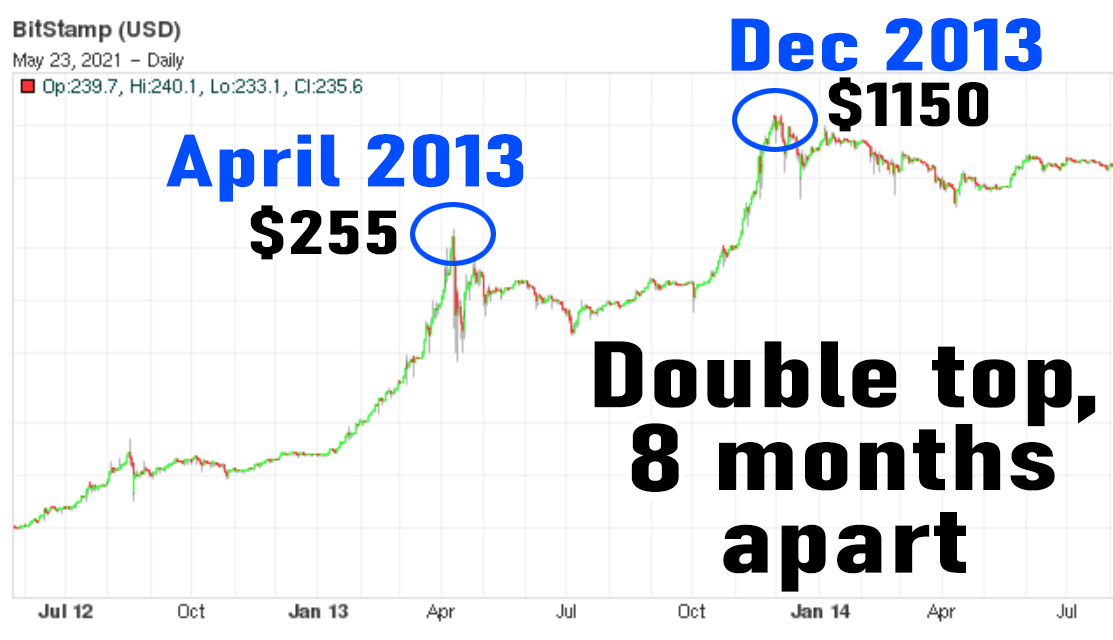
As citizens looked for ways to move their wealth out of reach of government seizure, Bitcoin’s price surged to $266 in April 2013. This was a pivotal moment for personal finance; it proved that Bitcoin could act as a hedge against sovereign risk. For the first time, the “Money” niche began to take Bitcoin seriously as a tool for wealth preservation in unstable economic climates.
The Mid-Year Correction and the Silk Road Aftermath
Financial markets rarely move in a straight line, and the volatility of 2013 provided a masterclass in market psychology. After hitting $266 in April, the market experienced a flash crash, with prices plummeting to nearly $50 in a matter of days. This correction weeded out “weak hands” and speculative traders who were not prepared for the inherent risks of a decentralized market.
The April Crash and Market Maturity
The crash from $266 to $50 was a sobering moment for those viewing Bitcoin as an “easy win.” It highlighted the lack of infrastructure in the early crypto-economy. Most trading was concentrated on a single exchange, Mt. Gox, which struggled to handle the massive influx of volume. From an investment standpoint, the summer of 2013 was a period of consolidation. The price stabilized between $70 and $120, allowing for the development of more robust financial tools and entry points for a new wave of investors.
Regulatory Scrutiny and the Fall of the Dark Web Markets
In October 2013, the FBI shut down the Silk Road, an online marketplace that used Bitcoin for illicit transactions. Initially, the news caused a sharp dip in price as investors feared that Bitcoin’s primary “use case” was being eliminated. However, the market’s recovery was surprisingly swift.
Sophisticated investors viewed the shutdown as a net positive; it decoupled Bitcoin’s reputation from illegal activity and paved the way for institutional adoption. By removing the “black market” stigma, Bitcoin became more palatable for venture capital firms and professional traders, leading to one of the most explosive quarters in financial history.
The Parabolic Surge to $1,000: Q4 2013
The final three months of 2013 were nothing short of historic. The price of Bitcoin entered a “parabolic” phase, where the rate of growth increased exponentially. This period turned early adopters into millionaires and forced the traditional financial world to acknowledge Bitcoin as a major asset class.

China’s Entry and Institutional Curiosity
The primary driver of the late-2013 surge was the sudden interest from the Chinese market. Large-scale Chinese investors began using Bitcoin as a way to diversify their wealth away from the Yuan. Simultaneously, the U.S. Senate held hearings on virtual currencies, where officials from the DOJ and the Fed admitted that digital currencies could be “legitimate financial services.”
This regulatory “green light” reduced the perceived risk of a total government ban. As a result, capital poured into the market. By November, the price had crossed $500, and the momentum showed no signs of slowing down.
Crossing the Psychological Barrier
On November 27, 2013, Bitcoin hit the $1,000 mark for the first time. This was a massive psychological milestone. In just one year, the asset had grown from the cost of a movie ticket to the cost of a high-end laptop or an ounce of gold. By early December, the price peaked at approximately $1,150.
For the “Money” niche, this event changed the math of portfolio allocation. Even a 1% allocation to Bitcoin in 2013 would have outperformed an entire portfolio of traditional stocks and bonds. It was the birth of “asymmetric upside”—the idea that an investor could risk a small amount of capital for a potentially life-changing return.
Strategic Lessons for Modern Investors
Looking back at the prices of 2013 is an exercise in “what if,” but for the modern investor, the year offers vital lessons in strategy, risk management, and the nature of emerging markets.
The Psychology of Volatility and “HODLing”
The term “HODL” (a misspelling of “hold”) actually originated in a Bitcoin forum post during the price turbulence of December 2013. It describes a strategy of ignoring short-term price swings in favor of long-term value. Investors who panicked and sold during the April crash at $50 missed out on the $1,000 peak in December.
The lesson here is clear: in high-growth, high-volatility assets, your greatest enemy is often your own emotions. Successful wealth building requires a disciplined approach to volatility, treating it as a price of entry rather than a reason to exit.
Portfolio Allocation and Risk Management
If there is one financial takeaway from 2013, it is the importance of “speculative allocation.” Many investors in 2013 were hesitant to buy Bitcoin because they couldn’t justify putting their life savings into it. However, the most successful investors treated it as a “side hustle” for their capital—allocating only what they could afford to lose.
Because the gains were so significant, you didn’t need to bet the house to see a massive impact on your net worth. This principle remains true today for any emerging financial tool: small, calculated risks can lead to outsized rewards without compromising your overall financial security.
The Long-Term ROI: Comparing 2013 Prices to Today
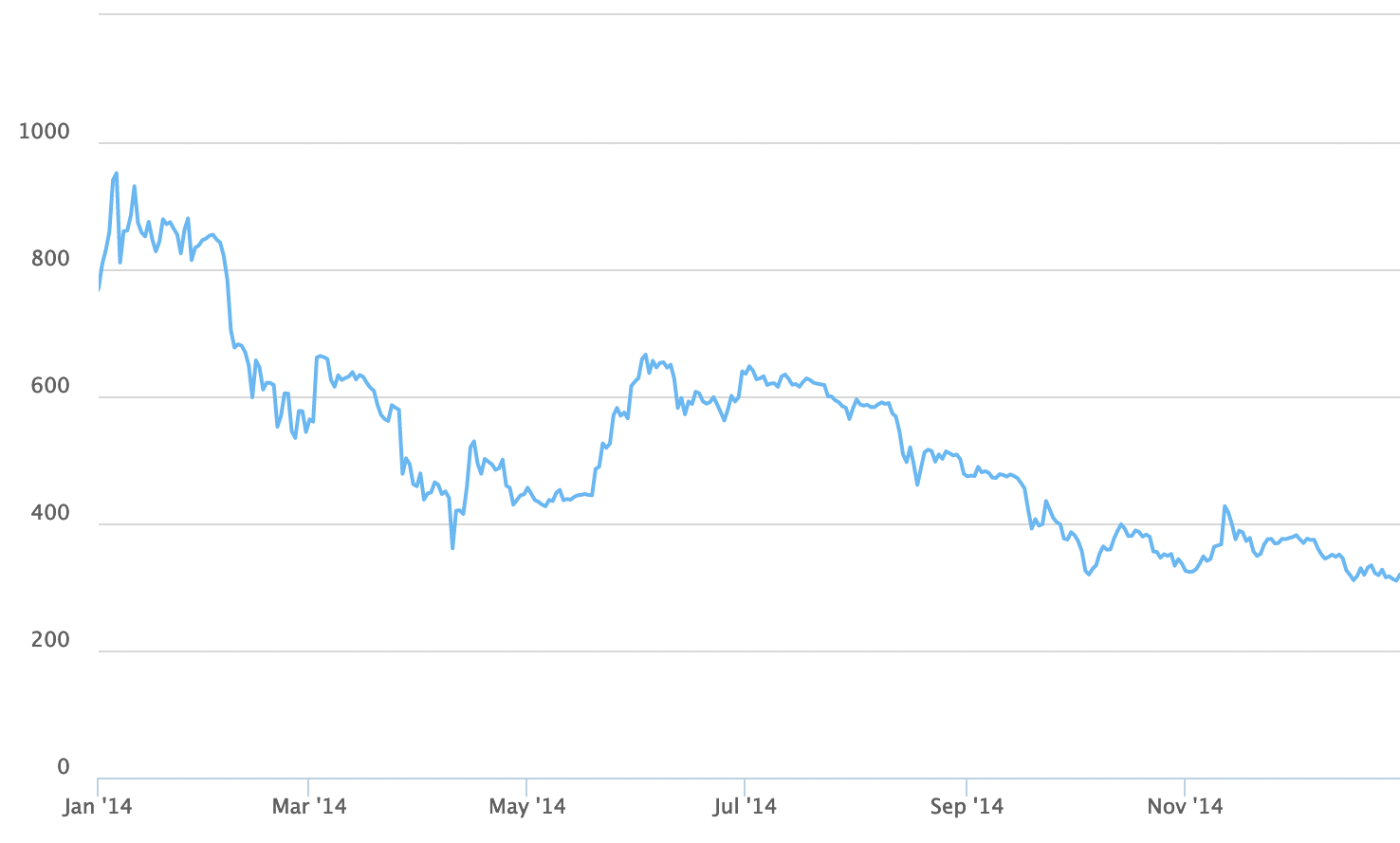
To truly appreciate what “how much was Bitcoin in 2013” means, we must look at the compound annual growth rate (CAGR). While the 2013 peak was followed by a multi-year “crypto winter” where prices dropped back down to the $200 range, the long-term trajectory remained upward.
Opportunity Cost and Historical Gains
An investment of just $1,000 in January 2013 would have purchased approximately 75 BTC. At the peak of 2013, that investment was worth $75,000. If an investor held that position until the 2021 or 2024 cycles—where Bitcoin surpassed $60,000—that same $1,000 would be worth over $4.5 million.
This comparison isn’t meant to induce “FOMO” (fear of missing out), but rather to illustrate the power of early-stage investing in transformative technology. It serves as a reminder that the “expensive” prices of today may very well be the “cheap” prices of tomorrow.
Building a Sustainable Financial Future with Digital Assets
The story of 2013 proves that Bitcoin is more than just a currency; it is a financial phenomenon that rewards those who study market cycles. Whether the price was $13 or $1,000, the underlying value proposition—scarcity, decentralization, and global accessibility—remained the same.
As you navigate your own personal finance journey, the 2013 retrospective encourages a forward-thinking mindset. Financial success is rarely about catching a single “lucky” trade; it is about recognizing shifts in the global financial paradigm and having the courage to participate early, manage your risks, and hold through the noise. 2013 was the year Bitcoin grew up, and for those who were watching, it was the investment opportunity of a lifetime.
aViewFromTheCave is a participant in the Amazon Services LLC Associates Program, an affiliate advertising program designed to provide a means for sites to earn advertising fees by advertising and linking to Amazon.com. Amazon, the Amazon logo, AmazonSupply, and the AmazonSupply logo are trademarks of Amazon.com, Inc. or its affiliates. As an Amazon Associate we earn affiliate commissions from qualifying purchases.