
For decades, the delivery of live television was tethered to physical infrastructure—coaxial cables, satellite dishes, and proprietary set-top boxes. However, the rise of Over-the-Top (OTT) media services has fundamentally disrupted this model. At the forefront of this digital transformation is YouTube TV. Rather than relying on legacy hardware, YouTube TV operates as a sophisticated Virtual Multichannel Video Programming Distributor (vMVPD), leveraging Google’s massive global data center footprint to deliver high-definition live broadcasts via the internet.
Understanding how YouTube TV works requires looking beyond the user interface. It is a complex synergy of cloud computing, adaptive bitrate streaming, and advanced Digital Rights Management (DRM). This article explores the technical architecture that allows YouTube TV to replace the cable box with a software-defined viewing experience.
The Infrastructure of Over-the-Top (OTT) Streaming
At its core, YouTube TV is a software solution that bypasses traditional cable providers to deliver content directly over the open internet. This transition from “closed-circuit” hardware to cloud-based delivery involves several layers of high-level networking and data management.
The Transition from Coaxial to Cloud
Traditional cable TV uses a dedicated portion of the electromagnetic spectrum delivered via physical wires to your home. In contrast, YouTube TV functions as a vMVPD. When a broadcaster like ESPN or NBC sends a signal, YouTube TV’s ingest servers capture that feed, transcode it into digital formats optimized for web delivery, and host it on Google’s Cloud Platform. This eliminates the need for a technician to install wiring in your home; if you have a high-speed internet connection, the “hardware” is already in place.
Latency and the Challenge of “Live” Data
One of the greatest technical hurdles for any streaming service is latency—the delay between a real-life event and the image appearing on a screen. In live sports, a 30-second delay can result in a “spoiler” via a text notification from a friend. YouTube TV utilizes Google’s private fiber-optic network to minimize the “hops” data must take from the broadcast source to the end-user. By using sophisticated “low-latency” protocols and strategically placed Edge Points of Presence (PoPs), YouTube TV narrows the gap between the live action and the digital stream.
Infinite Storage: The Cloud DVR Engine
Perhaps the most revolutionary tech feature of YouTube TV is its Cloud DVR. Unlike traditional DVRs that rely on a physical hard drive with limited capacity, YouTube TV uses server-side storage. When a user “records” a show, they aren’t actually downloading a file to their device. Instead, the system flags that specific broadcast on Google’s servers and associates it with the user’s account metadata. This allows for virtually unlimited storage and the ability to stream recorded content simultaneously on multiple devices without any local hardware constraints.
Hardware Ecosystem and Cross-Platform Integration
A primary driver of YouTube TV’s success is its hardware-agnostic nature. Because the heavy lifting—processing, storage, and signal decoding—happens in the cloud, the client-side device only needs to handle the decryption and display of the video stream.
Native Apps and Operating System Optimization
YouTube TV is built to run on a wide array of operating systems, including Android TV, Apple’s tvOS, Amazon’s Fire OS, and Samsung’s Tizen. Each version of the app is optimized to utilize the specific hardware acceleration capabilities of the device it’s on. For instance, on a modern smart TV, the app leverages the onboard Image Processor to upscale 1080p feeds to 4K, reducing the “blocky” artifacts often seen in low-bandwidth environments.
Bandwidth Management and Adaptive Bitrate Streaming
To ensure a buffer-free experience, YouTube TV employs Adaptive Bitrate Streaming (ABS). The software continuously monitors the user’s real-time internet speed and adjusts the video quality on the fly. If your bandwidth drops because someone else in the house started a large download, the YouTube TV algorithm will automatically switch from a 1080p/60fps stream to a 720p stream. This prevents the video from stopping entirely, prioritizing playback continuity over pixel density.
Mobile and Web Architecture
The mobile application for YouTube TV is designed with different constraints than the living room version. It uses high-efficiency video codecs (like VP9 or AV1) to deliver high-quality video while consuming less mobile data. Furthermore, the web version of YouTube TV relies on HTML5 and Encrypted Media Extensions (EME) to deliver content through browsers like Chrome or Safari without requiring external plugins, ensuring a seamless transition from a smartphone to a desktop environment.
Advanced Software Features and UI/UX Innovations
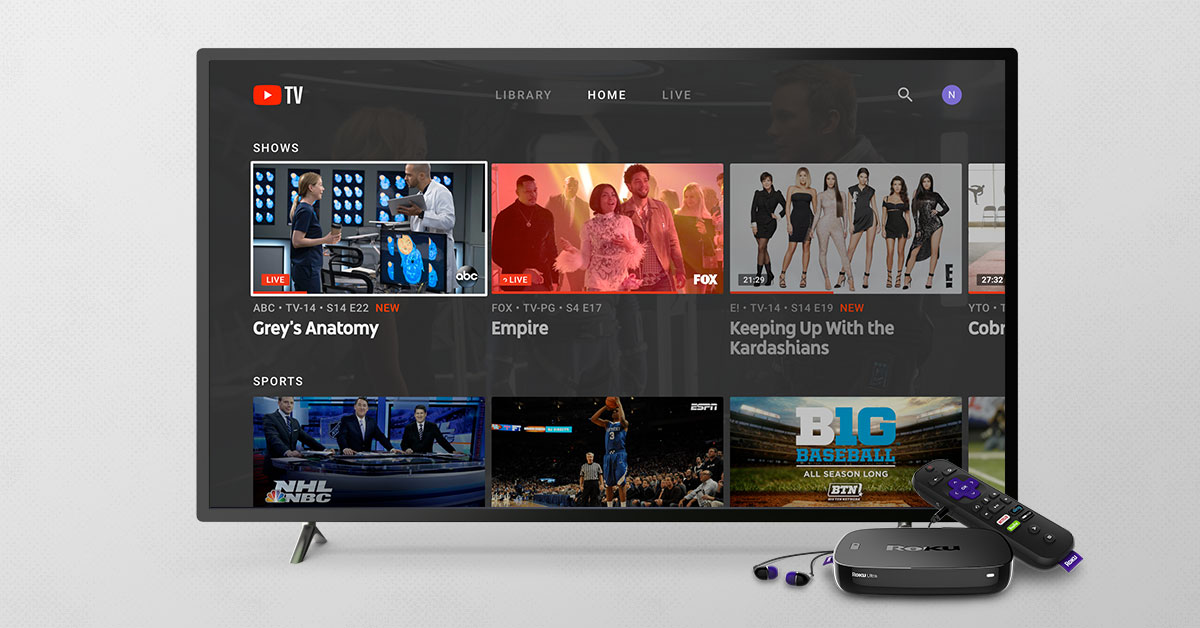
The “magic” of YouTube TV lies in its software layer. Google has integrated its world-class search and machine learning algorithms into the television experience, making it more intuitive than the “grid guides” of the 1990s.
The Power of the Google Search Algorithm in Live TV
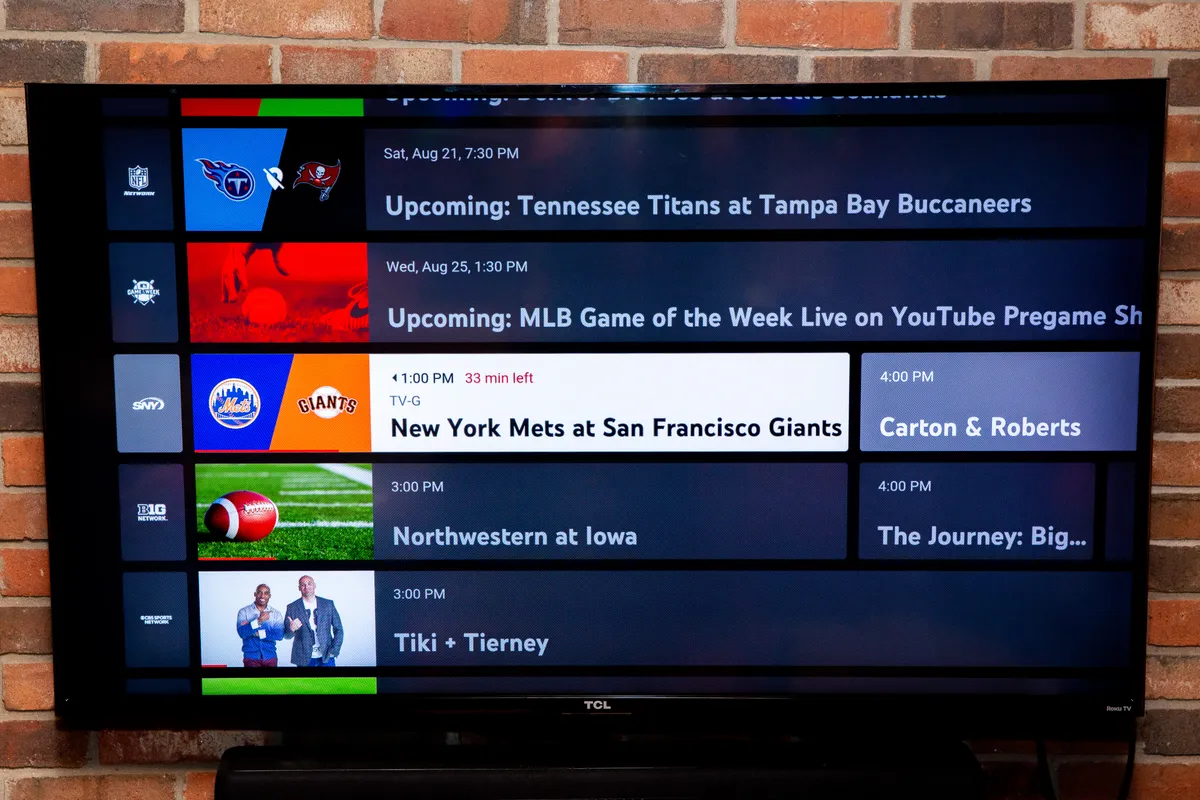
Navigating thousands of hours of live and on-demand content is a metadata challenge. YouTube TV indexes every program, actor, and sporting event using a massive database. When a user searches for “NFL,” the system doesn’t just look for those letters in a title; it identifies live games, upcoming schedules, and related clips from the standard YouTube platform. This deep-link integration between the live TV service and the broader YouTube ecosystem is a unique technical advantage.
Multi-View and Real-Time Statistical Overlays
One of the more recent technical innovations in YouTube TV is “Multi-View,” which allows users to watch up to four live feeds simultaneously. From a backend perspective, this is incredibly complex. Rather than forcing the user’s device to decode four separate video streams—which would crash most low-powered smart TVs—YouTube TV’s servers “stitch” the four feeds into a single video stream before it ever reaches the house. Additionally, for sports fans, the software can overlay real-time stats and “key plays” by syncing with external data providers in sub-second intervals.
Personalization through Machine Learning
The “Home” tab on YouTube TV is governed by recommendation engines similar to those found on YouTube’s main site. By analyzing viewing habits, the software predicts what a user wants to watch at specific times of the day. If the system notices you watch local news at 6:00 PM and sports at 8:00 PM, it will dynamically reorder the interface to surface those channels. This reduces the “time-to-content,” a key metric in modern software design.
Security, Geofencing, and Account Management
Because YouTube TV deals with licensed content that is often restricted by region (especially local news and sports), it must employ rigorous digital security and geolocation protocols.
Digital Rights Management (DRM) and Content Protection
To prevent the unauthorized recording or redistribution of its streams, YouTube TV uses Google’s Widevine DRM. This technology encrypts the video stream from the server to the device’s screen. The decryption keys are managed securely, ensuring that even if a user attempts to “sniff” the data packets, they remain unreadable. This level of security is what allows YouTube TV to negotiate contracts with major networks that are protective of their intellectual property.
IP-Based Geolocation and Local Feed Synchronization
One of the most common questions is how YouTube TV knows which local channels to show you. The system uses a combination of IP address geolocation and, on mobile devices, GPS data. When you log in, the app cross-references your current location with your “Home Area” set in the account profile. If you are traveling, the software’s geofencing capabilities will temporarily update your “Live” guide to show the local affiliates of your current city while still allowing access to your home DVR recordings.
Dynamic Ad Insertion (DAI)
The tech behind the commercials is also vastly different from cable. YouTube TV often uses Dynamic Ad Insertion (DAI). While a network might broadcast a generic commercial for a national audience, Google’s servers can “swap” that ad in real-time for a localized or personalized advertisement based on the user’s demographic data. This process happens seamlessly in the cloud, so the viewer never sees a “hiccup” in the stream.
The Technical Evolution: 4K Plus and Future Scalability
As display technology improves, YouTube TV is evolving its backend to support higher resolutions and more robust networking standards.
High-Efficiency Video Coding (HEVC) for 4K
Delivering 4K content live is a massive data undertaking. YouTube TV’s “4K Plus” add-on utilizes HEVC (H.265) compression. This codec is twice as efficient as the previous H.264 standard, allowing for 4K resolution at manageable bitrates. This ensures that even users with moderate fiber connections can enjoy Ultra-HD content without saturating their entire home network.
The Impact of 5G and Low-Latency Networking
The future of YouTube TV is closely tied to the rollout of 5G and Wi-Fi 6. These networking standards offer the low latency and high throughput required for even more immersive features, such as 360-degree cameras or augmented reality (AR) overlays during live events. As the “last mile” of internet connectivity becomes faster and more reliable, YouTube TV’s cloud-native architecture is perfectly positioned to scale, eventually making the concept of “channel surfing” entirely instantaneous.
In conclusion, YouTube TV is far more than a simple streaming app; it is a masterclass in cloud-native software engineering. By moving the complexities of broadcast television into the cloud, it has created a flexible, intelligent, and highly scalable platform. For the user, it’s just TV. But for the technologist, it is a testament to the power of distributed computing and the end of the hardware-centric media era.
aViewFromTheCave is a participant in the Amazon Services LLC Associates Program, an affiliate advertising program designed to provide a means for sites to earn advertising fees by advertising and linking to Amazon.com. Amazon, the Amazon logo, AmazonSupply, and the AmazonSupply logo are trademarks of Amazon.com, Inc. or its affiliates. As an Amazon Associate we earn affiliate commissions from qualifying purchases.