
The satisfying fizz, the gentle tickle on the tongue, and the refreshing sensation of a carbonated beverage are all thanks to the humble bubble. But “what makes bubbles in soda” is far more than a simple chemical reaction; it’s a testament to sophisticated engineering, advanced material science, and precise control technologies that ensure every sip delivers that iconic effervescence. This article delves into the technological marvels behind carbonation, transforming a basic scientific principle into a global industry.
The Science of Fizz: Beyond Basic Chemistry
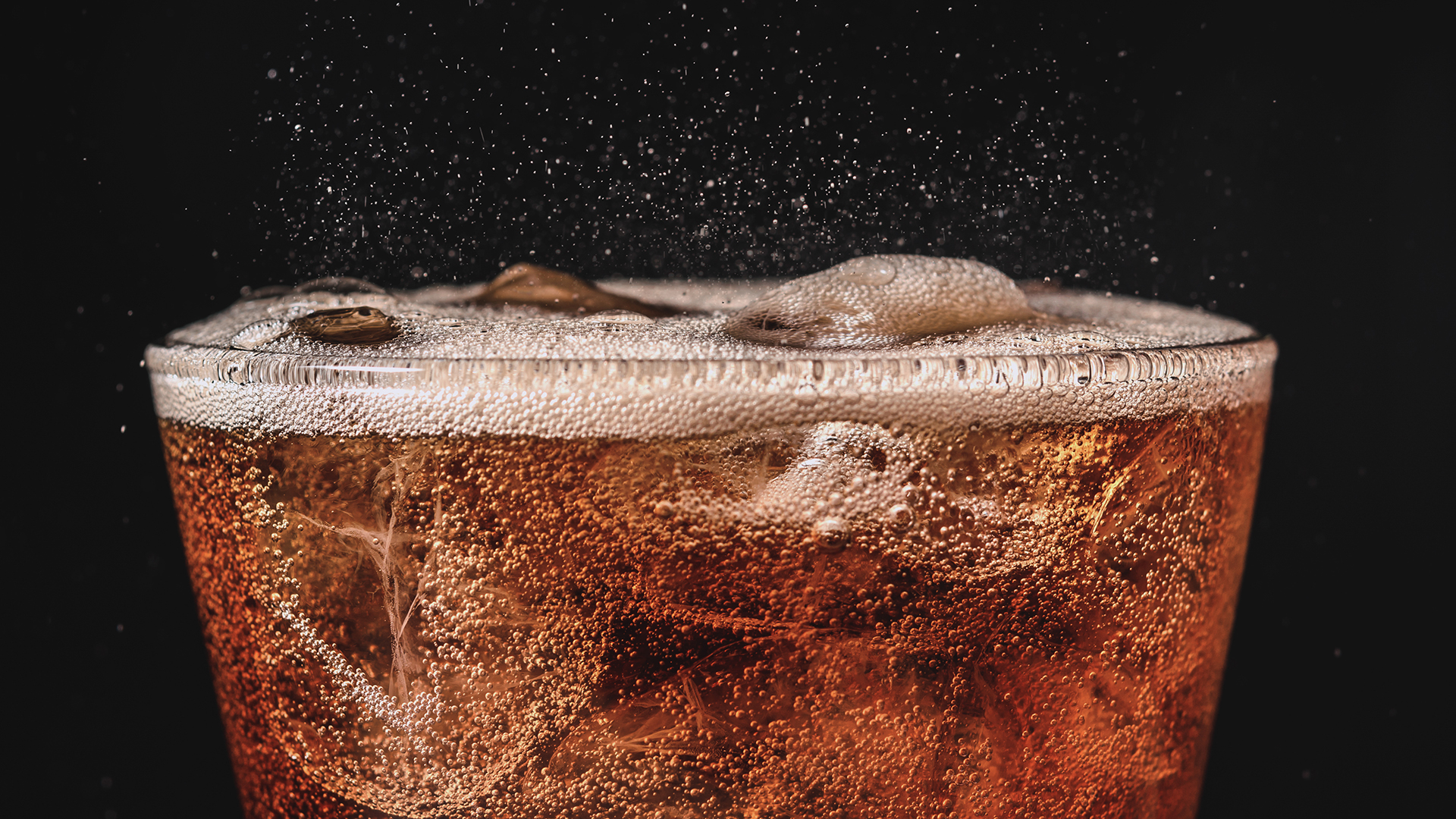
At its core, soda bubbles are a result of dissolved carbon dioxide (CO2) gas. However, the journey from CO2 gas to delightful bubbles in your drink involves a meticulous understanding and application of physical and chemical principles, orchestrated by cutting-edge technology in the beverage industry.
Carbon Dioxide: The Star Ingredient and Its Properties
Carbon dioxide is chosen for carbonation for several key reasons. It’s highly soluble in water under pressure, non-toxic, relatively inexpensive, and contributes a slight acidity that enhances flavor. The technology used to source, purify, and store CO2 is critical. Industrial CO2 is typically a byproduct of other processes like fermentation or ammonia production, requiring extensive purification technologies to ensure food-grade quality, free from impurities that could affect taste or safety. This involves multi-stage filtration, scrubbing, and cryogenic separation techniques to achieve purity levels often exceeding 99.9%.
Henry’s Law in Action: Dissolution and Release
The fundamental principle governing carbonation is Henry’s Law, which states that the amount of dissolved gas in a liquid is directly proportional to the partial pressure of that gas above the liquid. Beverage manufacturers leverage this law through precise technological control. In carbonation systems, high-purity CO2 gas is forced into chilled water (or syrup mixture) under elevated pressure. Chilling the liquid is crucial because gas solubility increases as temperature decreases. Advanced heat exchangers and chilling units are employed to bring the beverage base to optimal temperatures, often just above freezing, before carbonation. This maximizes CO2 absorption efficiency, a key technological parameter for cost-effective and consistent production. When the bottle is opened, the external pressure drops, causing the dissolved CO2 to rapidly come out of solution, forming bubbles.
Nucleation Sites: The Birthplace of Bubbles
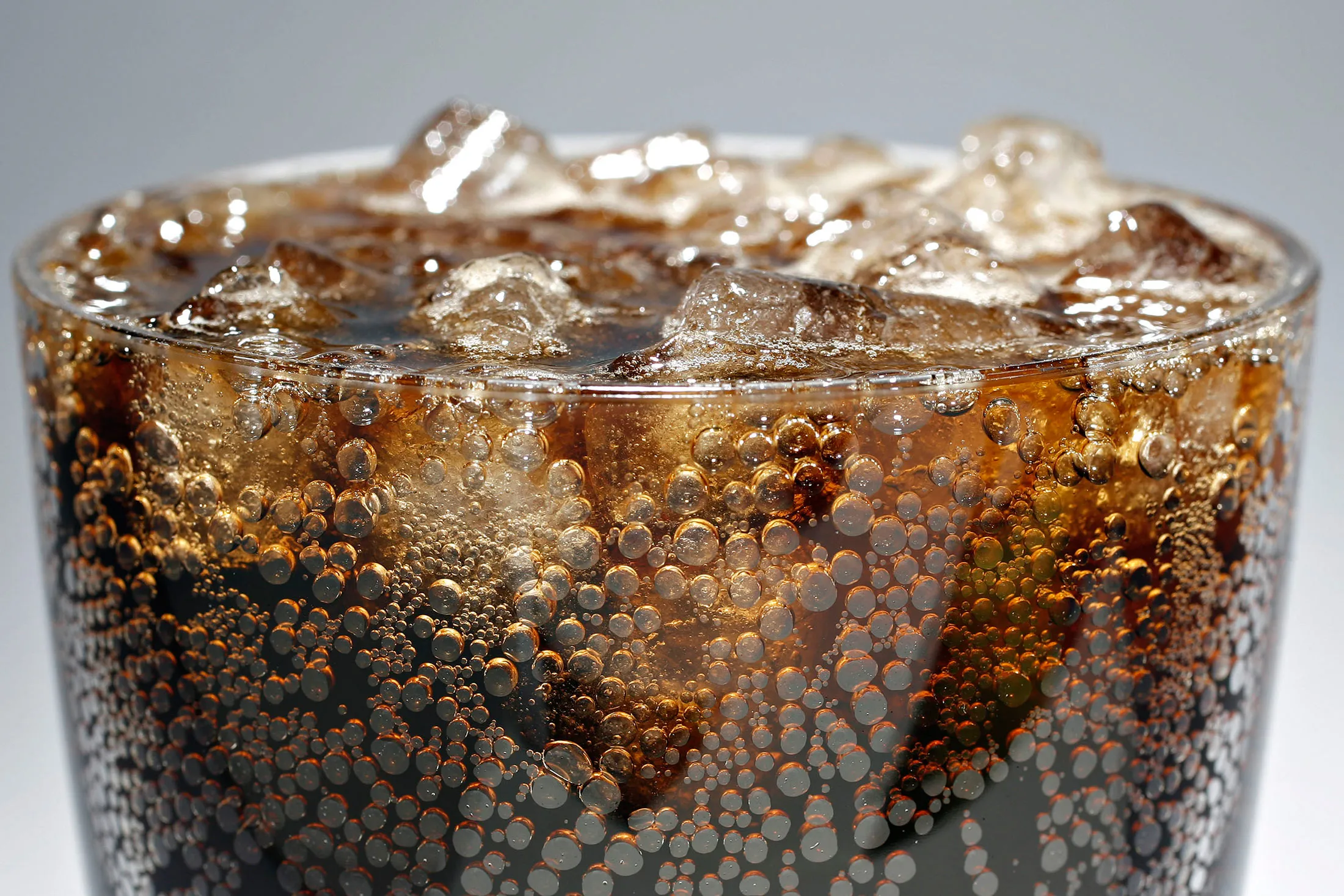
While Henry’s Law explains why CO2 comes out of solution, nucleation sites explain where and how bubbles primarily form. These are microscopic imperfections, dust particles, or scratches on the inside surface of a glass or bottle, or even within the liquid itself. These tiny irregularities provide surfaces where dissolved CO2 molecules can congregate, overcome surface tension, and form a gas pocket large enough to become a visible bubble. In a controlled industrial environment, minimizing unwanted nucleation (e.g., from impurities) is critical for shelf stability, while ensuring sufficient controlled nucleation (e.g., through specific bottle designs or agitation techniques) for the consumer experience. Microscopic analyses and surface engineering principles are applied to optimize bottle interiors and filling processes to manage nucleation effectively.
Industrial Carbonation: Engineering the Effervescence
The transition from a laboratory concept to mass production requires a sophisticated array of machinery and control systems. Industrial carbonation is a high-tech process designed for efficiency, consistency, and scale.
Large-Scale CO2 Introduction Systems
Modern beverage plants utilize advanced carbonation systems capable of handling thousands of liters per hour. These systems typically involve precision proportioning equipment that mixes the syrup concentrate with purified water in exact ratios. Following this, the mixture is pumped into a carbonator, which is essentially a high-pressure vessel where CO2 is injected. Advanced diffusers and agitators within these vessels ensure maximum surface area contact between the CO2 gas and the liquid, facilitating rapid and thorough dissolution. Sensor arrays continuously monitor CO2 levels, pressure, and temperature, feeding data back to a central programmable logic controller (PLC) system that makes real-time adjustments to maintain precise carbonation levels.
Maintaining Pressure and Temperature Precision
Consistency in carbonation is paramount for brand identity and consumer satisfaction. This is achieved through meticulously engineered pressure and temperature control systems. Industrial carbonators are equipped with highly accurate pressure transducers and temperature probes, coupled with automated valves and chilling units. PID (Proportional-Integral-Derivative) control algorithms are widely used in the PLCs to adjust CO2 flow rates and chiller performance, ensuring that the beverage reaches the filler at a consistent temperature and carbonation level, often within very tight tolerances (e.g., ±0.1°C and ±0.05 volumes of CO2). This level of precision minimizes product variability and waste, critical in high-volume production.
Advanced Mixing and Chilling Technologies
Beyond the carbonator itself, the entire process line is optimized for effervescence. In-line mixers ensure homogenous blending of syrup and water before carbonation. Post-carbonation, sophisticated chilling technology, often involving plate heat exchangers, rapidly cools the carbonated beverage to bottling temperature. This rapid cooling helps to “lock in” the CO2, increasing its solubility and minimizing gas loss during the filling process. Furthermore, deaeration technology, which removes dissolved oxygen from the water before carbonation, is crucial not only for improving CO2 solubility but also for preventing oxidation, which can negatively impact flavor and shelf life.
Packaging Innovations: Keeping the Pop in Your Drink
Once carbonated, the challenge shifts to preserving the bubbles until the consumer opens the product. Packaging technology plays a monumental role in this, acting as a high-tech barrier against CO2 loss.
Material Science for Carbonation Retention
The choice of packaging material is critical. PET (polyethylene terephthalate) bottles, for example, have replaced glass for many sodas due to their lightweight, shatter-resistant properties, and increasingly, their carbonation retention capabilities. Modern PET bottles are not just simple plastic; they often incorporate multi-layer designs or barrier coatings (e.g., nylon or EVOH) that significantly reduce the permeability of CO2 through the plastic wall. Research and development in polymer science continually push the boundaries to create thinner, lighter, and more sustainable packaging materials that still offer superior barrier performance against gas migration.
Seal Integrity and Cap Technology
The weakest point for CO2 loss in a bottle is often the seal between the bottle and the cap. Cap technology has evolved significantly to counter this. Modern bottle caps for carbonated beverages are typically made from polypropylene (PP) and incorporate an inner liner, often made of expanded polyethylene foam, which creates a tight, resilient seal against the bottle’s finish. The design of the cap threads and the bottle neck also ensures that a precise amount of torque is applied during capping to create an optimal hermetic seal without damaging the bottle. Electronically controlled capping machines apply consistent torque, monitored by sensors, to guarantee seal integrity across millions of bottles.
Dispensing and User Experience Design
Beyond retention, technology influences how bubbles are dispensed and experienced. From the internal mechanisms of soda fountains that precisely mix syrup and carbonated water on demand, to the ergonomic design of bottle necks that facilitate a smooth pour without excessive foaming, the focus is on optimizing the consumer experience. Even the texture and feel of a bottle or can are engineered to convey freshness and quality, indirectly relating to the perceived fizz. Innovations like self-chilling cans or pressure-regulating caps are ongoing areas of research, aiming to further enhance the “bubble experience” through sophisticated design and material science.
The Future of Fizz: Technological Trends in Beverages
The beverage industry is dynamic, constantly seeking innovations to meet evolving consumer demands for health, personalization, and sustainability. Technology will continue to shape the future of soda bubbles.
Smart Carbonation and Personalized Drinks
Imagine customizing your drink’s fizziness level with an app. This isn’t far-fetched. Home carbonation systems like those from SodaStream are precursors to more sophisticated personalized beverage machines. Future innovations could include AI-powered dispensers that analyze user preferences (e.g., via IoT devices or purchase history) and adjust carbonation levels, flavor intensity, and even temperature to create a truly bespoke drink experience on demand, perhaps even integrating with smart home ecosystems.
Sustainable Carbonation and Eco-Friendly Practices
With increasing environmental concerns, the technology behind sustainable carbonation is gaining traction. This includes exploring alternative, greener sources of CO2 (e.g., captured from industrial emissions), developing more energy-efficient carbonation processes, and designing fully recyclable or biodegradable packaging materials that still maintain carbonation integrity. Research into solid-state carbonation methods or enzymatic CO2 generation could lead to entirely new ways of producing fizzy drinks with a reduced environmental footprint.
AI and Data Analytics in Beverage Production
Artificial intelligence and big data analytics are becoming indispensable in optimizing beverage production. AI algorithms can analyze vast datasets from production lines, identifying patterns in carbonation levels, energy consumption, and raw material usage to predict and prevent issues, optimize equipment maintenance schedules, and fine-tune process parameters for maximum efficiency and quality. This level of predictive analytics helps manufacturers maintain perfect bubbles while reducing operational costs and waste.
Quality Control and Sensory Technology
Ensuring consistent bubble quality is not just about the science and engineering; it’s also about rigorous quality control and understanding sensory perception, areas where technology provides critical tools.
Measuring Carbonation: From Manual to Automated Systems
Traditional methods of measuring dissolved CO2 involve pressure and temperature charts. However, modern facilities utilize highly accurate, automated in-line CO2 analyzers based on non-dispersive infrared (NDIR) technology or acoustic wave sensors. These instruments provide continuous, real-time data on carbonation levels, allowing for immediate adjustments and maintaining consistent product specifications. Beyond measuring, visual inspection systems employing high-speed cameras and image recognition software can detect issues like improper fill levels or faulty caps that could lead to CO2 loss.
Detecting Off-Flavors and Ensuring Consistency
The presence of dissolved CO2 also interacts with flavor compounds. Off-flavors can arise from impurities in the CO2 itself or from interactions with packaging materials. Advanced analytical techniques such as gas chromatography-mass spectrometry (GC-MS) are employed to detect even trace amounts of undesirable compounds. Sensory panels, often augmented by statistical analysis tools, provide human feedback on the “mouthfeel” and overall bubble experience, ensuring that the technological process delivers a product that delights the consumer’s palate consistently.
Consumer Feedback and Iterative Improvement
Technology also facilitates the collection and analysis of consumer feedback, from social media sentiment analysis to targeted surveys. This data helps beverage companies understand how their carbonation is perceived globally, informing future R&D efforts. This iterative process, driven by technological tools for data collection and analysis, ensures that the science and engineering behind “what makes bubbles in soda” continues to evolve, delivering an ever-improving, perfectly effervescent product.
In conclusion, the seemingly simple phenomenon of bubbles in soda is a sophisticated interplay of science and technology. From the precise control of gas dissolution and temperature in industrial carbonators to the advanced material science of packaging and the future promise of AI-driven personalization, technology is the silent architect behind every fizzy sip.
aViewFromTheCave is a participant in the Amazon Services LLC Associates Program, an affiliate advertising program designed to provide a means for sites to earn advertising fees by advertising and linking to Amazon.com. Amazon, the Amazon logo, AmazonSupply, and the AmazonSupply logo are trademarks of Amazon.com, Inc. or its affiliates. As an Amazon Associate we earn affiliate commissions from qualifying purchases.