
In the ever-evolving landscape of computing, where performance gains often come in incremental steps, certain innovations emerge that genuinely shift the paradigm. AMD’s X3D technology, specifically its implementation of 3D V-Cache, stands as one such breakthrough. Far from being a mere marketing label, X3D represents a sophisticated hardware-level enhancement designed to fundamentally alter how CPUs access and process data, with profound implications primarily for gaming and other cache-sensitive workloads. It’s a testament to AMD’s commitment to pushing the boundaries of processor architecture, demonstrating how intelligent design can overcome conventional performance bottlenecks and redefine what’s possible in high-performance computing.

The Genesis of 3D V-Cache: A Leap in Processor Design
For decades, CPU performance has been dictated by a complex interplay of clock speed, core count, instruction per cycle (IPC), and memory subsystem efficiency. While clock speeds and core counts have seen significant advancements, the memory subsystem—particularly the latency of accessing data—has remained a stubborn bottleneck. AMD’s 3D V-Cache technology was conceived to directly address this challenge, offering a novel solution that leverages vertical integration to enhance data accessibility.
The Limitations of Traditional Cache
Central processing units (CPUs) rely on multiple layers of cache memory (L1, L2, and L3) to store frequently accessed data close to the processing cores. This tiered approach is crucial because accessing data from main memory (RAM) is significantly slower—orders of magnitude slower—than accessing it from on-die cache. When a CPU needs data, it first checks L1, then L2, then L3, and only if it’s not found in any of these, does it venture out to main memory. Each “miss” at a higher cache level incurs a performance penalty, as the CPU must wait for data to be fetched from a slower source.
Traditionally, increasing L3 cache size meant dedicating more physical area on the CPU die. This approach quickly runs into limitations:
- Die Size and Cost: Larger dies are more expensive to manufacture, have lower yields, and are harder to cool.
- Signal Integrity: As caches grow horizontally, the electrical pathways become longer, introducing latency and signal degradation.
- Power Consumption: Larger, more sprawling cache structures can also consume more power.
These physical constraints meant that simply adding more L3 cache on the same plane was becoming an unsustainable path for significant performance gains, especially for workloads that are highly sensitive to data availability and latency.
The Vision Behind 3D Stacking
AMD’s innovative chiplet design philosophy, which began with their Zen architecture, laid the groundwork for 3D stacking. Instead of building monolithic CPUs, AMD separated compute dies (CCDs) from the I/O die, allowing for greater modularity and scalability. This modular approach naturally led to exploring the third dimension for further integration.
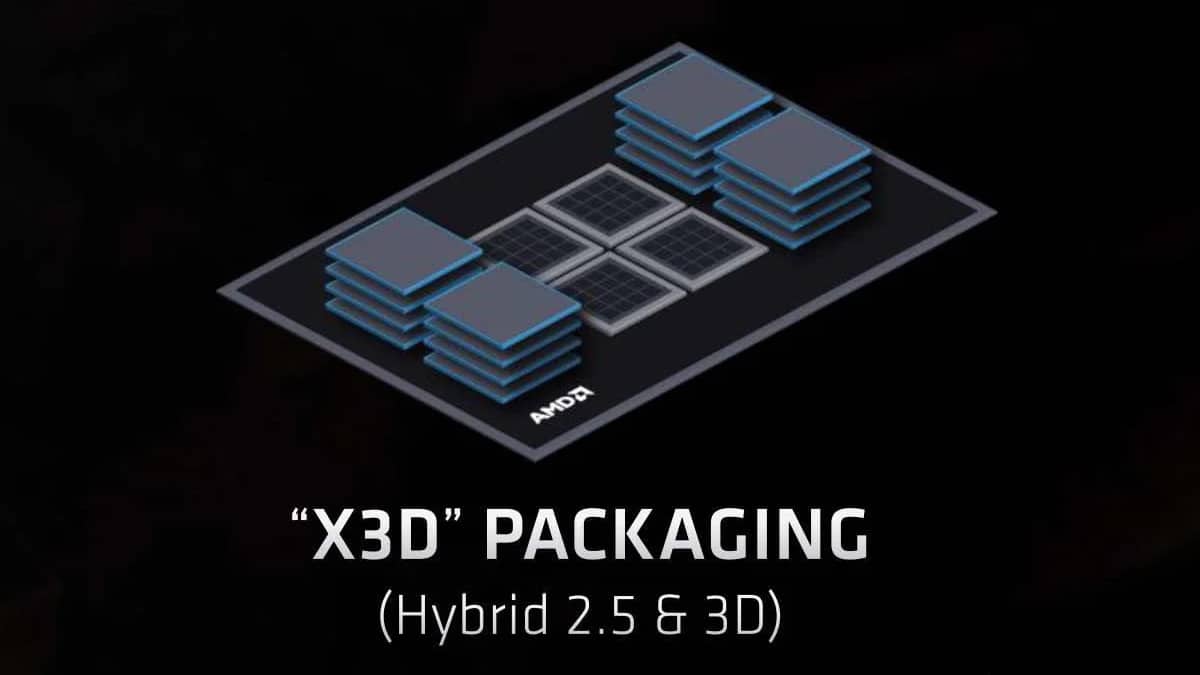
The vision behind 3D V-Cache was to overcome the planar limitations by stacking additional SRAM (Static Random-Access Memory)—the type of memory used for cache—directly on top of the existing CPU compute dies. This approach, developed in collaboration with TSMC using their 3D stacking technologies like SoIC (System-on-Integrated Chips), allows for a dramatic increase in cache capacity without expanding the CPU’s overall footprint or compromising the core logic’s design. The objective was clear: create an immensely deep L3 cache that could feed the CPU cores with data at unprecedented speeds, thereby minimizing trips to slower main memory and drastically improving application performance, particularly for cache-hungry applications.
How X3D Works: The Architecture of Performance
The magic of AMD X3D lies in its elegant yet complex integration of an additional cache die onto a standard CPU compute die. This isn’t just about sticking two chips together; it involves intricate engineering to ensure high-speed, low-latency communication between the stacked components and efficient thermal management.
Understanding 3D V-Cache Integration
At the heart of X3D technology is the concept of a “hybrid bond” between a dedicated L3 cache die and one of the CPU’s existing compute dies (CCDs). Here’s a simplified breakdown of the process:
- Dedicated SRAM Die: A separate die, composed entirely of high-density SRAM, is manufactured. This die is thinner and specifically designed for stacking.
- Stacking: This SRAM die is then precisely aligned and bonded directly on top of one of the CPU’s CCDs. The bonding process is crucial; it creates a very short, high-bandwidth connection between the two dies.
- Through-Silicon Vias (TSVs): To facilitate communication, tiny vertical electrical connections, known as Through-Silicon Vias (TSVs), are etched through the stacked SRAM die. These TSVs act like miniature elevators, allowing data to travel directly between the additional L3 cache and the underlying CPU cores, bypassing traditional longer, planar traces. This direct vertical pathway is what enables the extremely low latency access that defines X3D’s advantage.
- Integrated Heat Spreader: To manage the increased heat generated by two active dies stacked together, a modified Integrated Heat Spreader (IHS) is often used. The presence of the stacked cache can sometimes necessitate slight adjustments to clock speeds or voltage to maintain thermal stability, although the overall efficiency gains often outweigh these minor trade-offs.
This ingenious architecture effectively multiplies the L3 cache available to the CPU cores. For instance, a standard Ryzen 7 CPU might have 32MB of L3 cache, but its X3D counterpart can boast 96MB (32MB on-die + 64MB stacked), providing a massive pool of fast memory for the cores to draw from.
The Role of SRAM in Gaming and Compute
The choice of SRAM for the additional cache layer is critical. SRAM is significantly faster than DRAM (Dynamic Random-Access Memory), which is used for main system RAM, because it doesn’t require refreshing and can hold data as long as power is supplied. Its speed is paramount for cache memory, where every nanosecond counts.
-
In Gaming: Modern video games are increasingly complex, featuring vast open worlds, intricate physics simulations, sophisticated AI, and high-fidelity textures. These elements demand frequent and rapid access to large quantities of data. Many game engines are highly “cache-sensitive,” meaning their performance scales significantly with the size and speed of the CPU’s L3 cache. With a massive 3D V-Cache, more of the game’s critical data (e.g., textures, geometry, AI instructions, physics calculations) can reside within the CPU’s fastest memory tier, leading to fewer memory stalls, higher frame rates, and smoother gameplay. This is why X3D CPUs have consistently demonstrated unprecedented dominance in gaming benchmarks, often outperforming chips with higher clock speeds or core counts in this specific workload.
-
In Compute: While gaming is the most prominent beneficiary, certain professional and computational workloads also see substantial gains. Applications that involve repetitive data access patterns, large datasets that fit within the extended cache, or complex simulations can benefit from the reduced memory latency. Examples include specific scientific simulations (e.g., molecular dynamics), certain database operations, some compilation tasks, and virtual machine environments where guest operating systems can leverage the larger cache. However, it’s important to note that not all professional applications are equally cache-sensitive; some are more reliant on raw core count, single-threaded performance, or memory bandwidth, where X3D’s advantages might be less pronounced.
The Impact of X3D: Reshaping Gaming and Workstation Performance
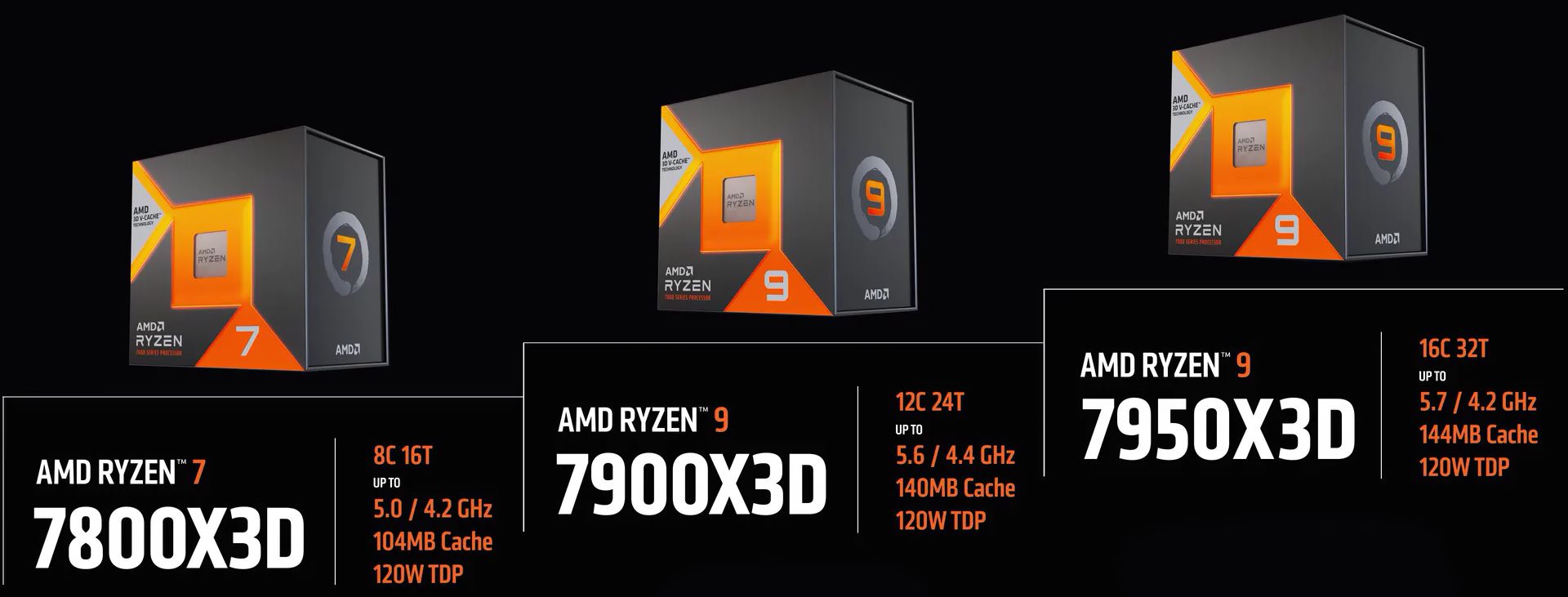
AMD X3D technology has not merely offered incremental improvements; it has genuinely reshaped performance expectations, particularly in the gaming sector, and carved a niche for itself in certain professional applications.
Unprecedented Gaming Dominance
The launch of the Ryzen 7 5800X3D in 2022 marked a pivotal moment. Built on the Zen 3 architecture, this CPU defied conventional wisdom by often outperforming Intel’s then-flagship processors and even AMD’s own higher-tiered, higher-clock-speed Ryzen 9 chips in gaming benchmarks. It did so despite having fewer cores than some competitors and a slightly lower maximum boost clock compared to its non-X3D counterpart (the 5800X). This feat was almost entirely attributable to its 96MB of L3 cache, demonstrating the profound impact of minimizing memory latency for game engines.
The subsequent introduction of Zen 4-based X3D processors (Ryzen 7 7800X3D, Ryzen 9 7900X3D, and Ryzen 9 7950X3D) further solidified AMD’s position. The Ryzen 7 7800X3D, in particular, became the undisputed king of gaming performance, offering an unmatched balance of frame rates, power efficiency, and price, especially at its launch. Its ability to deliver superior gaming experiences across a wide array of titles, even against more expensive CPUs, underscored the transformative power of 3D V-Cache.
Beyond Gaming: Professional Applications
While AMD’s marketing primarily targets gamers, the underlying principle of reduced memory latency has broader implications. In professional contexts, X3D technology can accelerate tasks where large datasets are frequently accessed and reused.
- Scientific and Engineering Simulations: Applications that model complex systems, such as molecular dynamics, fluid dynamics, or structural analysis, often involve iterative calculations over large data structures. If these structures can reside substantially within the L3 cache, computation times can be significantly reduced.
- Database Management: Certain database operations, especially those involving in-memory processing or highly cached queries, can benefit from the faster data access provided by X3D.
- Software Development and Compilation: Large codebases can lead to lengthy compilation times. While core count is often a primary factor, specific stages of compilation that involve extensive symbol lookups or intermediate data manipulation can see uplifts from a larger, faster cache.
- Virtualization: In multi-VM environments, each virtual machine benefits from having its own isolated cache space. An overall larger L3 cache can improve the responsiveness and performance of multiple concurrently running virtualized workloads.
It’s crucial to acknowledge that the performance uplift in these professional scenarios is highly application-dependent. Unlike gaming, where the benefits are often widespread, business and scientific software require specific characteristics to fully leverage the X3D advantage. Users in these fields should consult benchmarks relevant to their specific workloads to determine if an X3D processor offers a meaningful return on investment.
Power Efficiency Considerations
An often-overlooked benefit of X3D technology, particularly in cache-sensitive scenarios, is improved power efficiency. By reducing the number of times the CPU has to access the slower, more power-hungry main memory, the processor can complete tasks with fewer wasted cycles. This means the CPU spends less time waiting and more time actively processing data, leading to higher effective performance per watt. While the stacked cache itself adds some power draw and thermal load, the overall system efficiency can improve for suitable workloads, making X3D attractive not just for raw speed but also for more efficient computation. Cooling solutions still need to be robust, given the concentrated heat generated by the stacked architecture.
The X3D Lineup: Current and Future Iterations
AMD’s commitment to 3D V-Cache technology is evident in its expanding product stack, establishing X3D as a core pillar of its high-performance CPU strategy.
From Ryzen 7 5800X3D to Zen 4 and Beyond
The journey of X3D began with the pioneering Ryzen 7 5800X3D. Built on the AM4 platform and Zen 3 architecture, it served as a powerful swansong for that socket, delivering unprecedented gaming performance and extending the platform’s lifecycle. Its success validated the 3D V-Cache concept and paved the way for its integration into the newer Zen 4 architecture and the AM5 platform.
The Zen 4 generation introduced a more comprehensive X3D lineup:
- Ryzen 7 7800X3D: Following in the footsteps of its predecessor, the 7800X3D (with 8 cores, 16 threads) quickly became the gaming performance champion, offering a direct upgrade path for users on the new AM5 platform. Its single-CCD design, with the entire 96MB L3 cache available to all cores, simplified its operation and maximized gaming performance.
- Ryzen 9 7900X3D and 7950X3D: These higher-core-count processors (12 cores/24 threads and 16 cores/32 threads, respectively) implement 3D V-Cache in a slightly different manner. With Zen 4, AMD uses multiple CCDs. For the 7900X3D and 7950X3D, only one of the CCDs receives the 64MB stacked L3 cache, while the other CCDs retain their standard L3 cache. This design offers a blend of high core count (for productivity) and enhanced cache (for gaming), but it requires the operating system’s scheduler (particularly Windows) to intelligently prioritize workloads to the cache-enabled CCD for optimal gaming performance. AMD has provided specific drivers and guidance to ensure this optimization occurs, leading to powerful hybrid performance for users who both game and engage in heavy multi-threaded productivity tasks.
AMD’s consistent integration of X3D into its flagship gaming CPUs demonstrates a clear long-term strategy. Expect future generations of AMD processors to continue evolving and refining this technology, potentially extending it to other product segments like mobile or server CPUs, where cache size can also play a crucial role.
Competitive Landscape and Innovation Drive
AMD’s X3D technology has largely provided it with a unique selling proposition in the CPU market. While Intel has introduced its own hybrid architectures with performance and efficiency cores, it has not yet offered a direct architectural equivalent to AMD’s 3D V-Cache in terms of significantly expanding on-die L3 cache through vertical stacking. This has allowed AMD to carve out a distinct lead in specific performance metrics, particularly gaming.
The existence of X3D underscores AMD’s role as a key innovator in semiconductor design. By daring to move beyond conventional planar scaling, AMD has pushed the entire industry to consider new approaches to chip architecture. This competitive pressure encourages further innovation, benefiting consumers with more powerful and efficient computing solutions in the long run. The continuous refinement of 3D stacking techniques promises even greater integration density and performance potential for future generations of processors.
Conclusion
AMD X3D technology, powered by its groundbreaking 3D V-Cache, stands as a pivotal innovation in modern CPU design. By leveraging the third dimension to dramatically increase on-die L3 cache, AMD has successfully addressed one of the most persistent bottlenecks in high-performance computing: memory latency. This has translated into unprecedented performance gains, especially in cache-sensitive applications like gaming, where X3D processors have consistently redefined performance leadership.
Beyond gaming, the benefits extend to specific professional workloads that thrive on rapid data access, making X3D a versatile technology for users demanding the absolute best in computational efficiency. AMD’s ongoing commitment to this technology, seen in its successive generations of X3D CPUs, highlights its strategic importance and positions it as a cornerstone of future processor development. As the industry continues to explore novel ways to pack more performance into ever-smaller footprints, 3D stacking, spearheaded by AMD’s X3D, will undoubtedly play an increasingly vital role in shaping the next era of high-performance computing.
aViewFromTheCave is a participant in the Amazon Services LLC Associates Program, an affiliate advertising program designed to provide a means for sites to earn advertising fees by advertising and linking to Amazon.com. Amazon, the Amazon logo, AmazonSupply, and the AmazonSupply logo are trademarks of Amazon.com, Inc. or its affiliates. As an Amazon Associate we earn affiliate commissions from qualifying purchases.