
In the vast and ever-evolving landscape of online video, YouTube stands as an unparalleled giant, a platform where billions of hours of content are consumed monthly. For creators, marketers, analysts, and even casual observers, understanding how this complex ecosystem operates is crucial. Among the myriad metrics YouTube provides to help decipher performance, “Unique Viewers” stands out as a fundamental, often misunderstood, yet profoundly insightful indicator. Far from being just another number, unique viewers represent the true breadth of a channel’s audience, offering a critical lens through which to assess reach, growth, and content effectiveness.

At its heart, “unique viewers” is a technological measurement designed to count the distinct individuals who watch a channel’s content over a specified period, typically 28 days. This metric goes beyond mere “views” or “subscribers” to paint a more accurate picture of a channel’s audience penetration. It’s a testament to the sophisticated tracking and analytical capabilities built into the YouTube platform, allowing creators to move past superficial metrics and delve into the genuine human engagement their content generates. In a world saturated with digital content, understanding how many individual eyes are genuinely being reached is paramount for strategic decision-making, content optimization, and ultimately, sustainable growth on the platform.
The Core Concept: Defining Unique Viewers
To truly appreciate the power of the unique viewers metric, it’s essential to first establish a clear definition and differentiate it from other related, but distinct, performance indicators on YouTube. This metric isn’t just about counting clicks; it’s about identifying individual user engagement.
Distinguishing from Other Metrics
YouTube provides a comprehensive suite of analytics, each serving a specific purpose. Understanding how unique viewers differ from these other metrics is key to accurate interpretation.
- Views: This is arguably the most common and often misleading metric if taken in isolation. A “view” is simply counted each time a video is played, often with a minimum duration threshold (e.g., 30 seconds). A single individual can generate multiple views on the same video or across different videos. For instance, if one person watches a video five times, that counts as five views, but only one unique viewer. Views indicate overall content consumption, but not the breadth of your audience.
- Subscribers: Subscribers represent the number of users who have opted to follow your channel, indicating an intention to receive updates and watch future content. While a higher subscriber count often correlates with more unique viewers, it’s not a direct measure of active engagement. Many subscribers might be inactive, or new viewers might watch content without subscribing. Subscribers measure audience loyalty and potential reach, but not current individual viewership.
- Watch Time: This metric measures the cumulative amount of time viewers spend watching your content. It’s a crucial indicator of audience engagement and content quality. Longer watch times suggest viewers find your content valuable. However, watch time can be accumulated by a small number of highly engaged viewers or spread across a large, less engaged audience. It doesn’t tell you how many distinct individuals contributed to that total.
Unique viewers, therefore, fills a critical gap by providing a de-duplicated count of the actual people interacting with your content. It moves beyond the volume of interactions (views, watch time) or potential audience (subscribers) to focus on the unique human beings behind those interactions.
How YouTube Identifies Uniqueness
The technology behind identifying unique viewers is sophisticated, relying on a combination of digital identifiers to track individual user activity across the platform. YouTube employs several mechanisms to attempt to identify a single user, even if they’re not logged in or are using multiple devices.
- Cookies: These small data files stored in a user’s web browser are a primary method. When a user visits YouTube, a unique cookie ID can be assigned. As long as this cookie persists, YouTube can track that specific browser’s activity and attribute it to the same unique viewer.
- IP Addresses: An Internet Protocol (IP) address identifies a device connected to the internet. While not foolproof (IP addresses can change, or multiple users can share one), it provides another layer of identification, especially for users who are not logged in or do not have persistent cookies.
- Device IDs: For users accessing YouTube via mobile apps, unique device identifiers (e.g., advertising IDs on Android or iOS) can be used to track individual devices.
- Login Sessions: Perhaps the most robust method for identifying a unique viewer is when they are logged into their Google account. Google can then associate all activity across different devices and browsers (where the user is logged in) with that single, identifiable individual. This allows for cross-device tracking, providing a more holistic view of a user’s engagement.
It’s important to note that unique viewer data is typically presented within a 28-day rolling window in YouTube Analytics. This means the metric reflects the number of distinct individuals who have watched your content within the past 28 days, offering a relevant and actionable snapshot of recent audience reach. While no tracking system is 100% perfect (due to factors like shared devices, privacy settings, or VPNs), YouTube’s methodology is designed to provide the most accurate estimation possible within these technological constraints.
The Technical Mechanisms Behind Unique Viewer Tracking
The ability to accurately count unique viewers is a marvel of large-scale data engineering. YouTube processes an unfathomable volume of user interactions daily, requiring robust infrastructure and intelligent algorithms to distill individual user behavior from raw data streams.
Data Collection and Aggregation
Every interaction on YouTube, from watching a video to clicking a thumbnail or searching for content, generates data points. This data is collected and aggregated through a multi-layered system:
- Server-Side Logging: When a user interacts with YouTube, the platform’s servers record these events. This raw log data includes timestamps, video IDs, user agents (browser and OS information), IP addresses, and, if available, user IDs (for logged-in users) or anonymous identifiers (for logged-out users). This is the foundational layer of data collection.
- User Authentication (Signed-in Users): For users logged into their Google account, their unique Google User ID serves as a persistent identifier. This allows YouTube to link all their activity across various devices (laptop, phone, smart TV) to a single individual, providing the most reliable source for unique viewer identification. This authenticated data is crucial for generating comprehensive user profiles.
- Anonymous User Tracking (Cookies, Local Storage, Browser Fingerprints): Tracking users who are not logged in presents a greater challenge. YouTube leverages browser cookies, local storage, and increasingly, more advanced techniques like browser fingerprinting (analyzing a combination of browser settings, plugins, and device characteristics to create a unique signature) to assign a pseudo-anonymous identifier. While these methods are less definitive than a logged-in Google ID, they are effective in deduplicating views from the same browser or device within a given timeframe.
Dealing with Complexity
The real world introduces significant complexities that YouTube’s tracking mechanisms must account for.
- Multiple Devices per User: A single user might watch content on their phone during their commute, their laptop at home, and a smart TV in the evening. If logged into their Google account on all devices, YouTube can seamlessly attribute all this activity to one unique viewer. For logged-out users, the challenge is greater, relying on a combination of IP addresses, network information, and cookie heuristics to infer if it’s the same individual.
- Shared Devices: Conversely, multiple individuals might use the same device (e.g., a family computer or tablet). If they are not logged into separate Google accounts, or if they clear their cookies regularly, YouTube might incorrectly count them as the same unique viewer, or potentially multiple unique viewers on the same device, depending on the session data. This is an inherent limitation in anonymized tracking.
- VPNs and Proxy Servers: These tools mask a user’s true IP address, making it harder for YouTube to use IP-based identification. While they don’t prevent cookie-based tracking, they can introduce noise into location-based or IP-dependent unique viewer analysis.
- Privacy Considerations and Data Anonymization: YouTube, as part of Google, operates under strict data privacy regulations (e.g., GDPR, CCPA). The unique viewer data provided in analytics is highly aggregated and anonymized. Individual viewing habits are not exposed, and the system is designed to provide statistical insights without compromising user privacy. The underlying identifiers used for tracking are not directly accessible to creators, who only see the aggregated unique viewer count.
Analytics Dashboard Insights
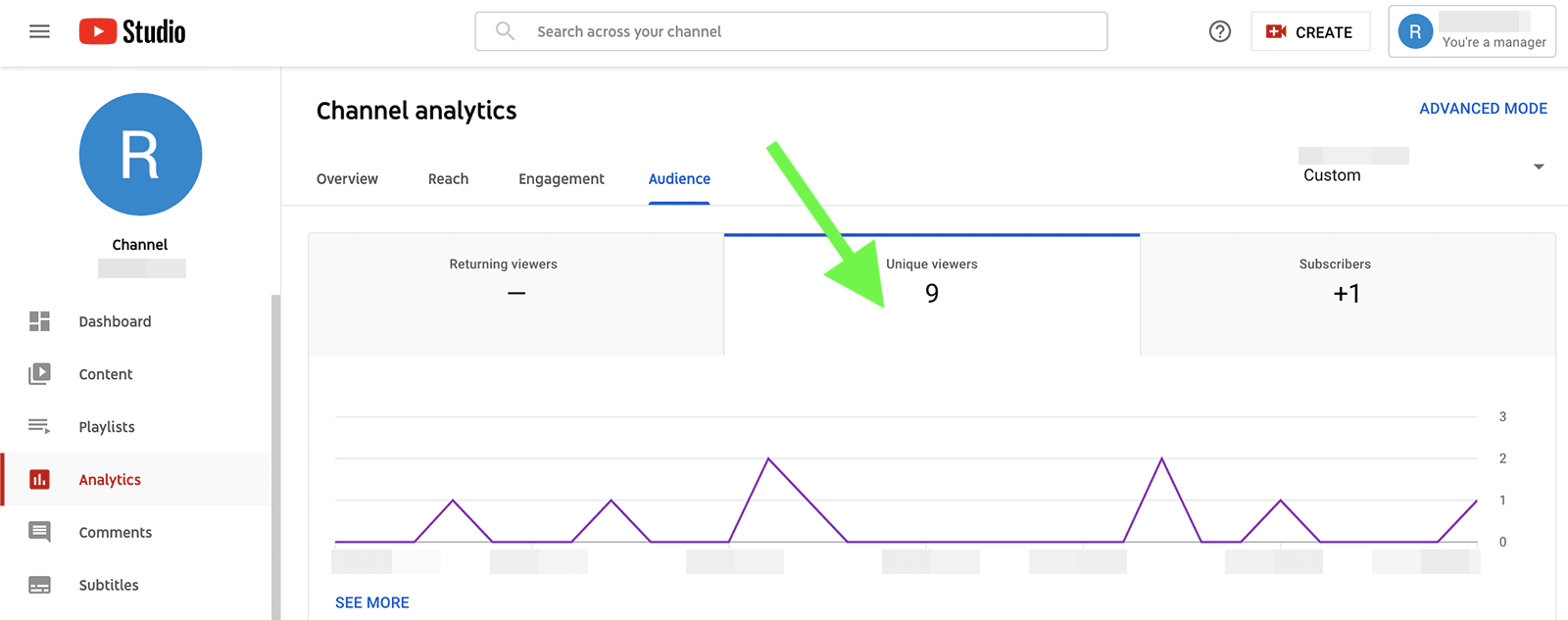
Creators can access their unique viewer data through the YouTube Studio Analytics dashboard. This section provides a wealth of information, typically found under the “Audience” tab.
- Where to Find This Data: In YouTube Studio, navigate to “Analytics,” then select “Audience.” Here, you’ll find a graph and summary for “Unique Viewers.”
- Interpretation of Charts and Graphs: The unique viewers chart usually displays the number of distinct individuals over time. You can adjust the time range (e.g., 7 days, 28 days, 90 days, lifetime) to observe trends. A rising line indicates growing reach, while a flat or declining line suggests stagnation or shrinking audience breadth.
- Historical Data and Trends: Analyzing historical unique viewer data allows creators to understand long-term growth patterns. Peaks might correspond to viral content or successful promotions, while dips might indicate a loss of appeal or algorithm changes. This data helps in understanding the lifecycle of content and the overall health of the channel’s audience expansion.
Why Unique Viewers Matter Technologically and Strategically
Beyond being a technical measurement, unique viewers holds profound strategic implications for anyone leveraging the YouTube platform. It shifts the focus from superficial popularity to genuine audience engagement and reach.
Gauging True Audience Reach
- Understanding the Size of Your Distinct Audience: Unique viewers offers the most accurate estimation of the number of individual people your content is reaching. This is invaluable for understanding the true scale of your influence. A video with 1 million views from 100,000 unique viewers tells a different story than 1 million views from 1 million unique viewers, indicating either deep engagement from a smaller audience or broad appeal to a larger one.
- Preventing Inflation from Repeat Views: Relying solely on total views can be misleading. A popular video might accumulate millions of views primarily from a dedicated fanbase repeatedly watching it. While valuable for watch time, this doesn’t indicate new audience acquisition. Unique viewers cuts through this by counting each person only once, providing a clearer picture of how many new people are discovering and interacting with your channel.
Informing Content Strategy & Development
- Are You Attracting New Viewers or Just Engaging Existing Ones More Deeply? By comparing unique viewers to total views, creators can discern their audience strategy. If unique viewers are growing slower than total views, it suggests strong engagement with your existing audience. If unique viewers are growing rapidly alongside total views, it means your content is effectively attracting new individuals. This insight helps fine-tune content to either foster deeper loyalty or expand reach.
- Identifying Content That Resonates with a Broader Audience: Analyzing unique viewer data for individual videos can highlight which specific topics, formats, or styles are most effective at bringing in new people. A video with a high proportion of unique viewers compared to its total views likely has strong discoverability and broad appeal, serving as a template for future content.
Benchmarking and Growth Analysis
- Comparing Performance Over Time: Tracking unique viewers month-over-month or quarter-over-quarter provides a tangible measure of audience growth. It helps creators set realistic goals and measure the impact of their content and promotion strategies on expanding their reach.
- Understanding Audience Saturation or Expansion: If unique viewer growth plateaus, it might signal that your content has reached a saturation point within its current niche. This prompts a re-evaluation of content strategy to explore new topics, expand target demographics, or cross-promote to attract new segments. Conversely, consistent growth indicates successful expansion.
- Technical Indicators for Platform Algorithm Interactions: YouTube’s algorithm prioritizes content that keeps viewers engaged and brings new users to the platform. A high and growing unique viewer count can signal to the algorithm that your content is valuable for attracting and retaining distinct individuals, potentially leading to increased algorithmic promotion and discoverability.
The Nuances and Limitations of Unique Viewer Data
While incredibly valuable, unique viewer data, like any aggregated metric, comes with certain nuances and limitations that tech-savvy users and analysts should be aware of. No digital tracking system is perfectly infallible.
The “Household” vs. “Individual” Conundrum
- Challenges with Shared Computers/Accounts: The primary challenge is distinguishing between an “individual” and a “device” or “household.” If multiple family members share the same computer and watch YouTube without logging into separate accounts, or if they frequently clear browser data, YouTube’s system might count them as one unique viewer (if the same cookie/device ID persists) or inaccurately count multiple unique viewers (if cookies are deleted). Similarly, if one person watches a video on their personal laptop and then watches it again on a public library computer, without logging in, they might be counted as two unique viewers.
- Imperfect but Best-Available Metric: Despite these challenges, unique viewers remains the most robust and accurate metric available for estimating individual reach on YouTube. YouTube’s sophisticated algorithms constantly strive to de-duplicate as much as possible, using a probabilistic approach when definitive identification (like a logged-in Google ID) isn’t available. It’s an estimation based on the best available technology, not an exact census.
Impact of Privacy Settings and Ad Blockers
- How User Choices Can Affect Tracking Accuracy: Users have increasing control over their privacy online. Browser settings that block third-party cookies, “Do Not Track” requests, or the use of privacy-focused browsers (e.g., Brave) can all interfere with YouTube’s ability to set and read tracking cookies. This can lead to undercounting of unique viewers, as the system might not be able to persistently identify a returning user.
- The Ongoing Cat-and-Mouse Game in Digital Tracking: The digital advertising and analytics industry is in a constant state of flux, reacting to evolving privacy regulations and user preferences. As browsers move towards stricter cookie policies (e.g., Google Chrome’s eventual phasing out of third-party cookies), YouTube and other platforms are developing new, more privacy-centric methods for tracking unique users while still respecting user choices. This ongoing evolution means the underlying mechanisms for unique viewer tracking are always adapting.
The 28-Day Window Explained
- Why This Specific Timeframe Is Used: The 28-day rolling window is a standard in many digital analytics platforms. It strikes a balance between providing a sufficiently long period to capture meaningful trends and being short enough to reflect recent activity. A shorter window might be too volatile, while a longer one might dilute the relevance of current performance. This window ensures that the unique viewer count is always relevant to current channel activity and audience engagement.
- Implications for Long-Term vs. Short-Term Analysis: For short-term campaigns or viral content, a 7-day or 14-day window might be more indicative. For assessing sustained channel growth and audience loyalty, the 28-day window is excellent. For lifetime unique viewers, the metric would need to be aggregated differently, potentially showing a much higher number as it includes all distinct individuals ever reached. Understanding the timeframe is crucial for accurate interpretation and comparison.
Leveraging Unique Viewer Data for Technical Optimization and Growth
Understanding unique viewers isn’t merely an academic exercise; it’s a powerful tool for technically optimizing your content and growth strategies on YouTube. By acting on these insights, creators can make data-driven decisions that expand their reach and impact.
A/B Testing and Audience Expansion
- Using Unique Viewer Data to Test Thumbnail, Title, and Topic Effectiveness for Attracting New Eyes: When A/B testing elements like video thumbnails or titles, unique viewer growth can be a key metric. If a particular thumbnail variation leads to a significantly higher number of unique viewers for a video, it suggests that variation is more effective at capturing the attention of new, distinct individuals who haven’t seen your content before. This direct feedback helps refine presentation strategies for broader appeal.
- Analyzing Which Content Types Bring in the Most New Distinct Individuals: Track unique viewers for different content series, video formats (e.g., long-form tutorials vs. short vlogs), or specific topics. If a certain type of content consistently brings in a higher percentage of new unique viewers, it signals a successful avenue for audience expansion. This insight can guide future content creation to maximize reach to untapped demographics.
Understanding Audience Overlap (Channel vs. Video)
- Analyzing if Individual Videos Bring in Unique Viewers Not Seen on Other Videos: YouTube Analytics often provides data on audience overlap. By examining the unique viewers of a specific video and comparing it to your channel’s overall unique viewers, you can identify videos that are particularly effective at attracting an audience segment that is new to your channel. This is crucial for understanding which topics or keywords serve as excellent entry points for new viewers.
- Cross-Promotion Strategies Informed by Unique Viewer Insights: If you discover that a particular video is bringing in a unique audience not typically found on your other content, you can strategically cross-promote related videos within that video’s description, end screens, or pinned comments. This helps to convert these “new unique viewers” into repeat viewers and potentially subscribers, thereby deepening their engagement with your channel.
The Future of Viewer Identification
The technology behind tracking unique viewers is not static. As privacy concerns evolve and new technologies emerge, so too will the methods for identifying and counting users.
- Emerging Technologies for User Tracking (e.g., Cookieless Tracking, Federated Learning, Privacy Sandbox Initiatives): With the deprecation of third-party cookies on the horizon, platforms like YouTube (and its parent Google) are investing heavily in new tracking paradigms. These include “cookieless” tracking methods that rely on anonymized data aggregations, federated learning (where data processing happens locally on user devices before aggregated insights are shared), and Google’s Privacy Sandbox initiatives which aim to balance advertising effectiveness with enhanced user privacy.
- How These Might Change Unique Viewer Metrics in the Future: These shifts will likely lead to more sophisticated, privacy-preserving methods of unique viewer counting. While the core concept of counting distinct individuals will remain, the underlying technical identifiers and algorithms will continue to evolve. Creators and analysts will need to stay informed about these changes to accurately interpret their audience data and adapt their strategies accordingly.

Conclusion
Unique viewers on YouTube is far more than a simple vanity metric; it is a fundamental technological indicator of a channel’s true reach and audience penetration. By de-duplicating individual users, YouTube provides creators with an invaluable tool to understand how many distinct people are engaging with their content. This metric is the bedrock upon which meaningful content strategies, audience expansion initiatives, and platform growth can be built.
From discerning the genuine size of an audience to pinpointing which content resonates with new viewers, the insights derived from unique viewer data are indispensable for data-driven decision-making. While inherent limitations exist due to the complexities of digital identity and user privacy, YouTube’s sophisticated tracking mechanisms provide the best available estimation. As the digital landscape continues to evolve, the importance of understanding and leveraging unique viewer data will only grow, cementing its status as a core metric for anyone serious about thriving on the world’s largest video platform. Embracing this metric allows creators to move beyond superficial numbers and connect with the real individuals who form the heart of their YouTube community.
aViewFromTheCave is a participant in the Amazon Services LLC Associates Program, an affiliate advertising program designed to provide a means for sites to earn advertising fees by advertising and linking to Amazon.com. Amazon, the Amazon logo, AmazonSupply, and the AmazonSupply logo are trademarks of Amazon.com, Inc. or its affiliates. As an Amazon Associate we earn affiliate commissions from qualifying purchases.