
The test tube, a seemingly simple piece of glassware, stands as an enduring emblem of scientific inquiry and innovation. Far from being a mere relic of rudimentary labs, this ubiquitous cylindrical vessel is a cornerstone of countless technological advancements, from groundbreaking medical diagnostics to cutting-edge material development. Its unassuming design belies a profound utility, making it an indispensable tool across diverse scientific disciplines. In an era dominated by advanced robotics and AI-driven analysis, understanding the fundamental role and evolving applications of the test tube reveals a fascinating narrative of scientific progress, firmly positioning it as a foundational gadget within the broader tech landscape of scientific discovery.
The Ubiquitous Workhorse of the Laboratory
At its core, the test tube is designed for simplicity and versatility. Typically a finger-sized cylinder of glass or plastic, open at one end and closed with a rounded bottom, its form factor is optimized for ease of use in a multitude of experimental settings. This fundamental design, however, enables a vast array of sophisticated scientific operations, making it a true workhorse in both academic and industrial laboratories.
Fundamental Design and Material Science
The construction of a test tube, while appearing straightforward, involves specific material science choices that are critical to its function within a technological context. Traditional test tubes are made from borosilicate glass (Pyrex or Kimax), chosen for its exceptional resistance to thermal shock, chemical corrosion, and its clarity. This resistance is paramount when experiments involve rapid heating or cooling cycles, or exposure to strong acids, bases, and organic solvents – conditions common in chemical synthesis, analytical chemistry, and biochemical reactions. The material’s low coefficient of thermal expansion ensures that it can withstand direct flame heating or immersion in ice baths without cracking, a critical safety and precision feature for reproducible experimental results.
Beyond glass, modern laboratories frequently employ test tubes made from various plastics, such as polypropylene or polystyrene. These plastic alternatives are often preferred for applications requiring disposability, sterility, or resistance to breakage. For instance, in clinical diagnostics and molecular biology, where contamination must be rigorously avoided and samples are often precious, sterile, disposable plastic test tubes prevent cross-contamination and eliminate the need for laborious washing and sterilization. The choice of plastic also depends on the specific chemical resistance required, with polypropylene offering broader resistance to organic solvents compared to polystyrene, which is typically used for aqueous solutions and cell culture. This material diversity underscores the test tube’s adaptability, allowing scientists and engineers to select the optimal vessel based on the specific technological demands of their experiments.
Basic Operations: Mixing, Heating, Holding
The primary uses of a test tube revolve around its ability to safely contain, mix, heat, and observe small volumes of liquids or solids.
- Containing Samples: Its fundamental role is to hold samples for analysis or reaction. In biotechnology, this could be a bacterial culture; in chemistry, a reagent solution; and in environmental science, a water sample. Its narrow opening minimizes evaporation and allows for easy sealing with stoppers or caps, preserving sample integrity – a crucial factor for the accuracy and reliability of analytical technologies.
- Mixing Reactions: The cylindrical shape and small volume are ideal for mixing reactants. Manual agitation, vortexing, or magnetic stirring can be easily performed within a test tube, facilitating chemical reactions or homogenous sample preparation. This mixing capability is fundamental to countless chemical processes, from drug discovery to the synthesis of new materials.
- Heating and Cooling: Borosilicate glass test tubes are designed to withstand direct heating over a Bunsen burner or in a water bath. This is essential for accelerating reaction rates, dissolving solutes, or sterilizing media. Conversely, they can be submerged in ice baths for cooling reactions or preserving temperature-sensitive biological samples, playing a critical role in temperature-controlled experiments common in chemical kinetics and protein stability studies.
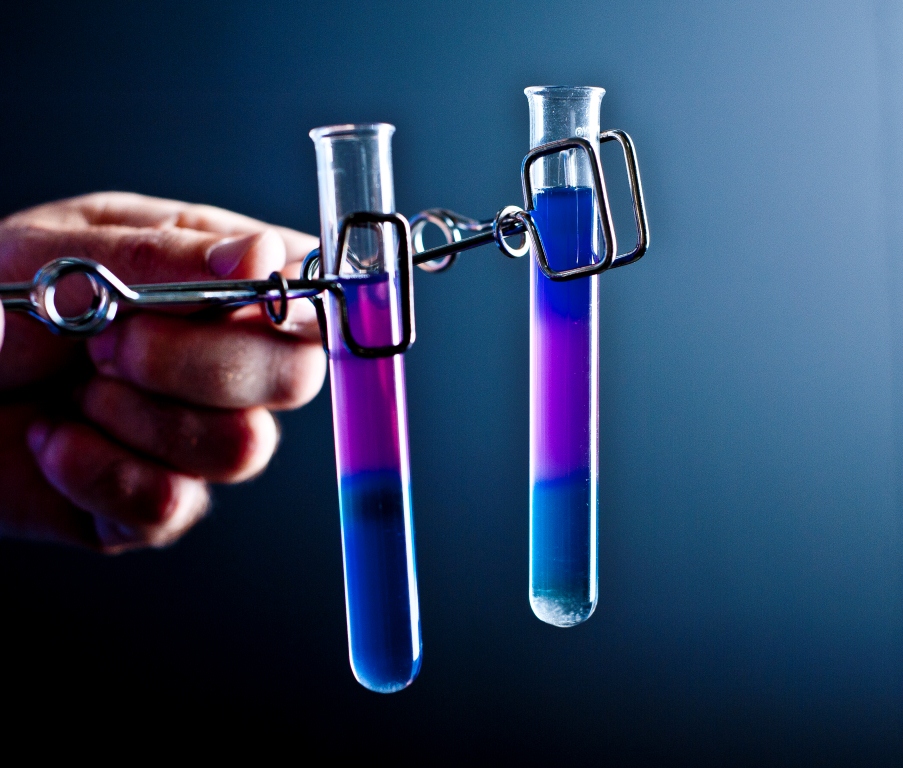
- Observing Reactions: The clear walls of the test tube allow for direct visual observation of experimental changes, such as color shifts, precipitate formation, gas evolution, or phase separation. This immediate feedback is vital for monitoring experiments and for qualitative analysis, providing scientists with real-time insights into the processes they are studying before employing more advanced analytical instrumentation.
Beyond the Basics: Test Tubes in Specialized Applications
While the basic functions of a test tube are universal, its application extends into highly specialized areas, often integrating with sophisticated technological platforms to push the boundaries of scientific understanding and practical innovation.
Chemical Synthesis and Analysis
In the realm of chemistry, the test tube is more than a simple container; it’s often the miniature reaction vessel itself. For organic synthesis, test tubes facilitate small-scale reactions, allowing chemists to screen various reaction conditions or synthesize novel compounds with minimal material consumption. This is particularly valuable in early-stage drug discovery, where hundreds or thousands of potential drug molecules might be synthesized and tested. In analytical chemistry, test tubes are used for preparatory steps before samples are introduced into advanced instrumentation like gas chromatographs (GC), mass spectrometers (MS), or high-performance liquid chromatographs (HPLC). They hold samples during derivatization reactions, dilution steps, or solvent extractions, ensuring the sample is in the optimal form for precise instrumental analysis. The ability to perform these manipulations efficiently in test tubes directly impacts the throughput and accuracy of these complex analytical technologies.
Biological Research and Diagnostics
The impact of test tubes in biological research and clinical diagnostics is profound. In microbiology, they are used to cultivate bacterial or cell cultures, grow viruses, and perform susceptibility testing for antibiotics. In molecular biology, test tubes (often specialized microcentrifuge tubes) are indispensable for DNA/RNA extraction, polymerase chain reaction (PCR), and electrophoresis sample preparation. These processes are fundamental to genetic engineering, disease diagnosis, and forensic science.
In diagnostics, blood collection tubes (which are specialized test tubes, often vacuum-sealed with specific additives) are crucial for drawing and preserving blood samples for a myriad of tests, from complete blood counts to glucose levels and pathogen detection. The interior of these tubes is meticulously engineered with anticoagulants, clot activators, or gels to ensure sample integrity for automated analysis on sophisticated diagnostic platforms. Test tubes are also used for serological tests, enzyme-linked immunosorbent assays (ELISA), and various biochemical assays, forming the bedrock for medical decision-making and public health surveillance.

Material Science and Quality Control
In material science, test tubes are employed for synthesizing new materials on a small scale, testing their properties, and observing their behavior under various conditions. This can involve polymer synthesis, crystallization experiments, or corrosion studies. For example, researchers might mix different monomers in a test tube to synthesize a new plastic or test the degradation of a novel material in various chemical environments. In quality control across industries, from pharmaceuticals to food and beverage, test tubes are used for routine chemical assays, pH measurements, and stability testing of products. Batches of products are regularly sampled and tested in test tubes to ensure they meet specified standards, safeguarding product safety and efficacy. This integration highlights the test tube’s role in the practical application and validation of advanced materials and product technologies.
Evolution and Integration with Modern Technology
While the fundamental design of a test tube has remained largely unchanged for centuries, its application has significantly evolved alongside technological advancements. Modern science has found ways to integrate these simple vessels into complex automated systems, enhancing throughput, precision, and data generation.
Automation and High-Throughput Screening
The most significant technological leap for test tubes has been their integration into automated laboratory systems. Robotic liquid handlers can precisely dispense reagents into rows of test tubes or microplates (which are essentially arrays of miniature test tubes). This capability is crucial for high-throughput screening (HTS) in drug discovery, where millions of compounds can be rapidly tested against biological targets. Automated systems minimize human error, increase experimental reproducibility, and accelerate the pace of research exponentially. Specialized racks and automated sorting systems for test tubes allow for efficient sample tracking and storage, which is critical for managing large biological banks or chemical libraries. The humble test tube, often a component of these automated workflows, becomes a key interface between sample and advanced robotics.
Miniaturization and Microfluidics
The trend towards miniaturization in science and technology has also impacted the test tube. While traditional test tubes hold milliliters, the principles of containment and reaction have been scaled down to microcentrifuge tubes (e.g., Eppendorf tubes holding microliters) and, more dramatically, into microfluidic devices. These “labs-on-a-chip” can perform complex assays using nanoliter volumes, with channels and reaction chambers often mimicking the functions traditionally performed in test tubes, but on an exponentially smaller scale. This miniaturization reduces reagent consumption, accelerates reaction times, and enables parallel processing, pushing the boundaries of what’s possible in diagnostics and basic research. Even in this advanced context, the test tube often serves as the initial sample collection or preparation vessel before transfer to these micro-scale systems.
Data Generation and Digital Integration
Modern labs are increasingly digital, and the test tube plays a role in generating the data that feeds these systems. Samples contained within test tubes are often barcoded or QR-coded, allowing for automated tracking, inventory management, and seamless integration with laboratory information management systems (LIMS). This digital connection links physical samples to experimental data, metadata, and analytical results, creating a comprehensive digital record. Spectrophotometers, centrifuges, and other analytical instruments are often designed to accommodate test tubes, directly feeding raw data into computer systems for processing, analysis, and visualization. This digital integration transforms raw experimental observations into actionable insights, driving further research and development in the tech-driven scientific landscape.
The Test Tube’s Enduring Legacy and Future Relevance
Despite the relentless march of technological progress, the test tube maintains a powerful and relevant presence in modern science. Its blend of simplicity, versatility, and adaptability ensures its continued utility, even as laboratory technologies become increasingly sophisticated.
A Symbol of Scientific Inquiry
Beyond its practical applications, the test tube remains a potent symbol of scientific inquiry itself. It represents the foundational curiosity, experimentation, and discovery that drive all scientific and technological progress. From primary school science fairs to Nobel Prize-winning research, the image of a scientist holding a test tube is universally recognized, embodying the spirit of exploration and the pursuit of knowledge. This symbolic power underscores its enduring importance in inspiring new generations to engage with science and technology.

Adaptability in a Changing Technological Landscape
The test tube’s true genius lies in its adaptability. It can be used manually with basic equipment, or seamlessly integrated into the most advanced automated platforms. This flexibility means that it is not easily replaced, but rather augmented and recontextualized by new technologies. As science continues to evolve, the test tube will undoubtedly continue to find new applications, perhaps in space-based laboratories, personalized medicine point-of-care diagnostics, or novel material synthesis environments. Its fundamental role in containing, reacting, and observing small quantities of matter ensures its relevance for as long as experimental science exists.
In conclusion, the question “what is the test tube used for?” reveals far more than a simple list of functions. It unveils a complex narrative of a fundamental tool that has not only facilitated countless scientific breakthroughs but has also evolved alongside the most advanced technologies of our time. From its robust material science to its critical role in automation, diagnostics, and data generation, the test tube remains an indispensable, versatile, and profoundly impactful gadget within the dynamic and ever-expanding world of scientific technology. Its legacy is secure, and its future relevance undeniable, as it continues to be a silent, yet powerful, catalyst for discovery.
aViewFromTheCave is a participant in the Amazon Services LLC Associates Program, an affiliate advertising program designed to provide a means for sites to earn advertising fees by advertising and linking to Amazon.com. Amazon, the Amazon logo, AmazonSupply, and the AmazonSupply logo are trademarks of Amazon.com, Inc. or its affiliates. As an Amazon Associate we earn affiliate commissions from qualifying purchases.