
In our increasingly interconnected and electrified world, electricity is the invisible force that powers virtually every aspect of modern life. From the glowing screens of our smartphones to the complex machinery of industrial plants, it’s the lifeblood of technological advancement. Yet, beneath the surface of convenience lies a intricate network of components, each playing a critical role in delivering this energy safely and efficiently. Among these, the “live wire” stands out as perhaps the most vital – and potentially the most dangerous – conductor in any electrical circuit.

Often heard in warnings and safety instructions, the term “live wire” refers to the conductor that carries electrical current from the power source to an appliance or device. It is the conduit through which the electrical potential, or voltage, is delivered, initiating the flow of electrons that perform work. Understanding what a live wire is, how it functions within a broader electrical system, and, critically, the significant hazards it presents, is not merely a technical curiosity but a fundamental aspect of electrical safety and operational knowledge for anyone interacting with or designing electrical systems. This article will delve into the essence of the live wire, exploring its technical definition, its place within circuit architecture, the inherent dangers it poses, and the sophisticated safety mechanisms developed to mitigate those risks.
The Fundamentals of Electrical Circuits and the Live Wire’s Role
At the core of all electrical operations is the concept of a circuit – a closed loop that allows electrons to flow from a power source, through a load (the device consuming power), and back to the source. The live wire is the primary actor in initiating this flow, acting as the starting point for energy delivery within this essential pathway.
Defining the Live Wire
The “live wire,” often referred to as the “hot wire,” is the conductor that carries the active electrical current from the power distribution network (the grid) or a local generator to the electrical load (e.g., a light bulb, a computer, a motor). In an alternating current (AC) system, which is standard for residential and commercial power distribution, the live wire carries a voltage that constantly oscillates between positive and negative potentials relative to the earth or ground. This fluctuating voltage is what drives the electrons through the circuit to deliver power. It is crucial to understand that the live wire is always at a high electrical potential, making it inherently dangerous if touched.
How Electricity Flows: A Brief Overview
For electricity to flow and perform work, there must be a potential difference (voltage) and a closed path (circuit). The live wire provides this high potential from the source. When an appliance is plugged in and turned on, it completes the circuit, allowing current to flow from the live wire, through the appliance’s components, and back to the source via another wire, typically the neutral wire. This continuous flow of electrons is what powers the device. Without a live wire to supply the initial potential and current, no work can be done. It is the driving force that pushes electrons through the system.
Alternating Current (AC) and its Significance
The vast majority of modern power grids operate on Alternating Current (AC). Unlike Direct Current (DC), where electrons flow in one direction, AC involves the periodic reversal of the current’s direction and voltage’s polarity. The live wire in an AC system is continuously carrying this oscillating voltage, typically at frequencies of 50 Hz or 60 Hz depending on the region. This constant change is why AC is preferred for large-scale power transmission: it can be easily transformed to higher voltages for efficient long-distance transport and then stepped down to safer, usable voltages for homes and businesses. The live wire is the conduit for this dynamically changing electrical energy, making its proper handling and insulation paramount for both functionality and safety.
Anatomy of Electrical Wiring: Live, Neutral, and Ground
To manage the delivery and safe return of electrical current, modern wiring systems employ multiple conductors, each with a distinct and critical function. While the live wire carries the power, it operates within a network that includes neutral and ground wires, forming a comprehensive and secure electrical infrastructure.
The Triumvirate: Live, Neutral, and Ground Wires Explained
A standard three-wire electrical system, common in most countries for appliances and outlets, comprises three distinct types of conductors:
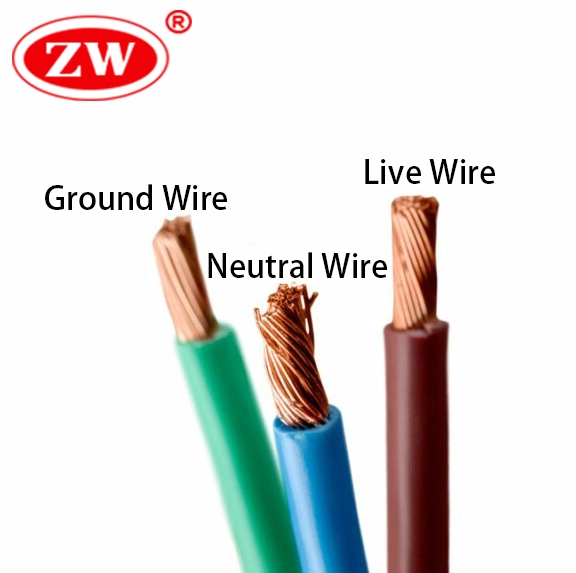
- Live (Hot) Wire: As established, this wire carries the high-voltage current from the power source to the load. It is the active conductor.
- Neutral Wire: The neutral wire completes the circuit, providing a path for the current to return from the load back to the power source. Ideally, the neutral wire is maintained at or very close to zero electrical potential relative to the earth, acting as the return path for the electrical current that the live wire delivered. While generally safer than the live wire, a break in the neutral path can still lead to dangerous conditions if other parts of the circuit are live.
- Ground (Earth) Wire: This is purely a safety wire. It does not carry current during normal operation. Its purpose is to provide a low-resistance path for fault currents to safely dissipate into the earth in the event of an electrical fault (e.g., if a live wire accidentally touches the metal casing of an appliance). This path helps trip circuit breakers or fuses, preventing electric shock and reducing fire hazards.
Color Coding Standards and Why They Matter
To ensure proper identification and, more importantly, safety, electrical wires adhere to strict color coding standards. These standards vary by region, but their purpose is universal: to quickly and unambiguously identify the function of each conductor.
- International (IEC) Standard (e.g., EU, UK):
- Live: Brown (for single phase), Brown, Black, Grey (for three phases)
- Neutral: Blue
- Ground: Green and Yellow stripes
- North American (NEC) Standard (e.g., US, Canada):
- Live: Black, Red, Blue (for typical AC circuits; other colors like orange, yellow can be used for specific voltages/phases)
- Neutral: White
- Ground: Green, Green and Yellow stripes, or bare copper
Adherence to these color codes is critical for anyone working with electrical systems. Incorrect wiring, due to misidentification, can lead to dangerous short circuits, appliance malfunction, and severe electrical shock hazards, rendering safety features ineffective.
The Role of Voltage and Current
The live wire is characterized by its high voltage potential. Voltage is the electrical “pressure” that pushes electrons, and in household wiring, this can be 120V, 230V, or 240V depending on the region. When a device is connected, this voltage creates a flow of electrons, known as current (measured in Amperes). The current drawn by a device depends on its power consumption and the applied voltage (Power = Voltage x Current). The live wire carries this voltage and subsequent current, making it the active conductor responsible for delivering energy to the load.
The Inherent Dangers and Critical Safety Measures
The very nature of the live wire – its high voltage and current-carrying capability – makes it inherently dangerous. Direct contact or improper handling can lead to severe injury or fatality. Therefore, a robust understanding of these risks and the implementation of stringent safety measures are paramount.
The Risks of a Live Wire: Electric Shock and Beyond
Coming into contact with a live wire can result in an electric shock, which occurs when electrical current passes through the body. The severity of a shock depends on several factors, including the voltage, the amount of current, the path the current takes through the body, and the duration of contact. Consequences can range from painful muscle contractions and burns to more severe outcomes like ventricular fibrillation (a chaotic heart rhythm that can lead to cardiac arrest), internal organ damage, and electrocution (fatal shock). Beyond direct contact, a live wire can also cause arc flashes, which are extremely hot and bright electrical discharges capable of causing severe burns and eye damage, and can ignite flammable materials, leading to electrical fires.
Essential Personal Protective Equipment (PPE)
Anyone working with or near live electrical circuits must utilize appropriate Personal Protective Equipment (PPE) to minimize risk. This includes:
- Insulated Gloves: Rated for the voltage levels being worked with, these provide a crucial barrier against current flow.
- Insulated Tools: Screwdrivers, pliers, and other tools with handles designed to prevent current transmission.
- Safety Glasses/Face Shields: To protect against arc flashes, sparks, and flying debris.
- Flame-Resistant Clothing: To reduce the severity of burns from arc flashes.
- Insulated Footwear: Providing an additional layer of insulation from the ground.
Safety Devices and Systems
Modern electrical systems are designed with multiple layers of protection to mitigate the dangers posed by live wires:
- Circuit Breakers and Fuses: These overcurrent protection devices are installed on the live wire(s) and automatically interrupt the electrical flow if the current exceeds a safe limit (due to an overload or short circuit). They protect wiring from overheating and prevent fires.
- Ground Fault Circuit Interrupters (GFCIs) / Residual Current Devices (RCDs): These highly sensitive safety devices monitor the current flowing through the live and neutral wires. If they detect an imbalance (indicating current leaking to ground, potentially through a person), they rapidly cut off the power, significantly reducing the risk of electric shock. They are mandatory in wet areas like bathrooms and kitchens.
- Earthing/Grounding Systems: As discussed, the dedicated ground wire provides a safe, low-resistance path for fault currents. In conjunction with circuit breakers or GFCIs, a properly functioning grounding system ensures that in the event of a fault, the protective device trips quickly, de-energizing the circuit and preventing shock.
- Lockout/Tagout (LOTO) Procedures: For professional electricians and technicians, LOTO is a critical safety protocol. It involves de-energizing a circuit, physically locking the power source in the “off” position, and tagging it to prevent accidental re-energization while work is being performed.
Practical Applications and Modern Electrical Systems
The live wire is ubiquitous across all scales of electrical infrastructure, from the smallest electronic gadgets to vast industrial complexes, and its role continues to evolve with technological advancements.
Live Wires in Home and Industrial Settings
In our homes, live wires are present in every wall outlet, light switch, and junction box, delivering power to appliances, lighting, and heating systems. Each time a device is plugged in, its internal circuitry connects to the live wire to draw power. In industrial settings, live wires power heavy machinery, robotics, and control systems, often at much higher voltages and currents, demanding even more rigorous safety protocols and specialized wiring. Understanding the routing and function of these live circuits is fundamental for both installation and maintenance.
Smart Home Technology and Electrical Integration
The proliferation of smart home devices, from smart lighting to intelligent thermostats and security systems, relies heavily on constant power supplied by live wires. These devices often integrate directly into existing electrical wiring, drawing power to operate their sensors, processors, and communication modules. Ensuring that these installations are performed correctly, respecting the principles of live, neutral, and ground, is vital for the reliable operation of smart homes and, more importantly, for the safety of their occupants. The rise of IoT (Internet of Things) means more devices are connected, increasing the need for safe and secure electrical practices.
Electric Vehicles (EVs) and High-Voltage Systems
Electric Vehicles represent a significant technological shift, and at their heart are powerful, high-voltage electrical systems. The battery packs and drive trains in EVs operate at hundreds of volts DC, and the charging systems involve high-current AC connections. These systems contain “live” conductors that pose unique and substantial risks during manufacturing, maintenance, and in the event of an accident. Specialized training, insulated tools, and stringent safety procedures are mandatory for anyone working on EVs, highlighting the importance of understanding live circuits in advanced applications.
Renewable Energy Integration
The integration of renewable energy sources like solar panels and wind turbines into the grid also involves complex live wire connections. Solar photovoltaic (PV) systems generate DC power, which is then converted to AC by inverters before being fed into a building’s electrical panel and potentially back to the grid. These systems involve live DC and AC circuits, often exposed to outdoor elements, requiring specific grounding, surge protection, and disconnection protocols to ensure safety during installation, operation, and maintenance.
Conclusion
The live wire, while often unseen and unacknowledged, is the fundamental carrier of electrical energy that fuels our modern world. From illuminating our homes to driving industrial innovation and powering the vehicles of the future, its role is indispensable. However, its very function as a conduit for high-potential electrical current also makes it the most significant point of electrical hazard.
Understanding “what is the live wire” extends beyond a mere definition; it encompasses a deep appreciation for the principles of electricity, the meticulous design of safe wiring systems, and the unwavering commitment to safety protocols. By recognizing the critical distinction between live, neutral, and ground wires, adhering to color coding standards, and diligently employing safety devices and PPE, we can harness the immense power of electricity while mitigating its inherent risks. As technology continues to advance and our reliance on electrical energy grows, this knowledge becomes not just important, but absolutely essential for professionals and the general public alike, ensuring a safer and more efficiently powered future.
aViewFromTheCave is a participant in the Amazon Services LLC Associates Program, an affiliate advertising program designed to provide a means for sites to earn advertising fees by advertising and linking to Amazon.com. Amazon, the Amazon logo, AmazonSupply, and the AmazonSupply logo are trademarks of Amazon.com, Inc. or its affiliates. As an Amazon Associate we earn affiliate commissions from qualifying purchases.