
The loss of a loved one brings with it an immense emotional toll, often compounded by a confusing array of financial decisions and administrative processes. Among the most common areas of confusion are the terms “survivor benefits” and “widow benefits,” particularly in the context of Social Security. While often used interchangeably in casual conversation, these terms have distinct meanings and implications that are crucial for understanding eligibility, benefit amounts, and overall financial planning after a death.
This article aims to unravel the intricacies of these Social Security provisions, clarifying the fundamental differences, outlining specific eligibility criteria, and providing insights into how these vital financial lifelines are calculated. By understanding the nuances, individuals can better navigate the claims process, make informed decisions, and secure the financial stability they deserve during a challenging time.
Demystifying Social Security Benefits After Loss
When a worker who has paid into Social Security dies, certain family members may be eligible to receive monthly benefits based on the deceased worker’s earnings record. These provisions are designed to provide a measure of financial protection to families facing the economic hardship that often accompanies the loss of a primary or significant income earner.
The Umbrella Term: Survivor Benefits
At its core, “survivor benefits” is the comprehensive term used by the Social Security Administration (SSA) to describe all types of benefits paid to eligible family members of a deceased worker. It acts as an umbrella, encompassing various categories of individuals who qualify as “survivors” in the eyes of the law.
These beneficiaries can include:
- Spouses: Both current and sometimes divorced spouses.
- Children: Biological, adopted, and sometimes stepchildren.
- Parents: Dependent parents of the deceased.
The general purpose of survivor benefits is to replace a portion of the deceased worker’s earnings, helping eligible family members maintain some level of financial stability. Eligibility and benefit amounts vary significantly depending on the relationship to the deceased worker, the survivor’s age, and other specific conditions. It’s important to recognize that while a “widow” is a type of survivor, not all survivors are widows.
The Specific Case: Widow/Widower Benefits
Within the broader category of survivor benefits, “widow benefits” (or “widower benefits,” to be inclusive of surviving husbands) refers specifically to the benefits paid to the surviving spouse of a deceased worker. This is arguably the most common and often the most substantial type of survivor benefit claimed.
To be clear, “widow benefits” are a subset of survivor benefits. All widow benefits are survivor benefits, but not all survivor benefits are widow benefits. For instance, a deceased worker’s child receiving benefits is a “survivor” but not a “widow.” The specific designation of “widow/widower” highlights the unique relationship and often more extensive provisions afforded to the surviving legal spouse due to their integral role in the deceased worker’s financial and family life.
Eligibility Criteria: Who Qualifies for What?
Understanding who qualifies for which type of benefit is critical. The SSA has specific rules regarding age, relationship, and other factors that determine eligibility for different categories of survivor benefits.
Eligibility for Spousal Survivor Benefits (Widow/Widower)
For a surviving spouse to claim widow or widower benefits, several key conditions must typically be met:
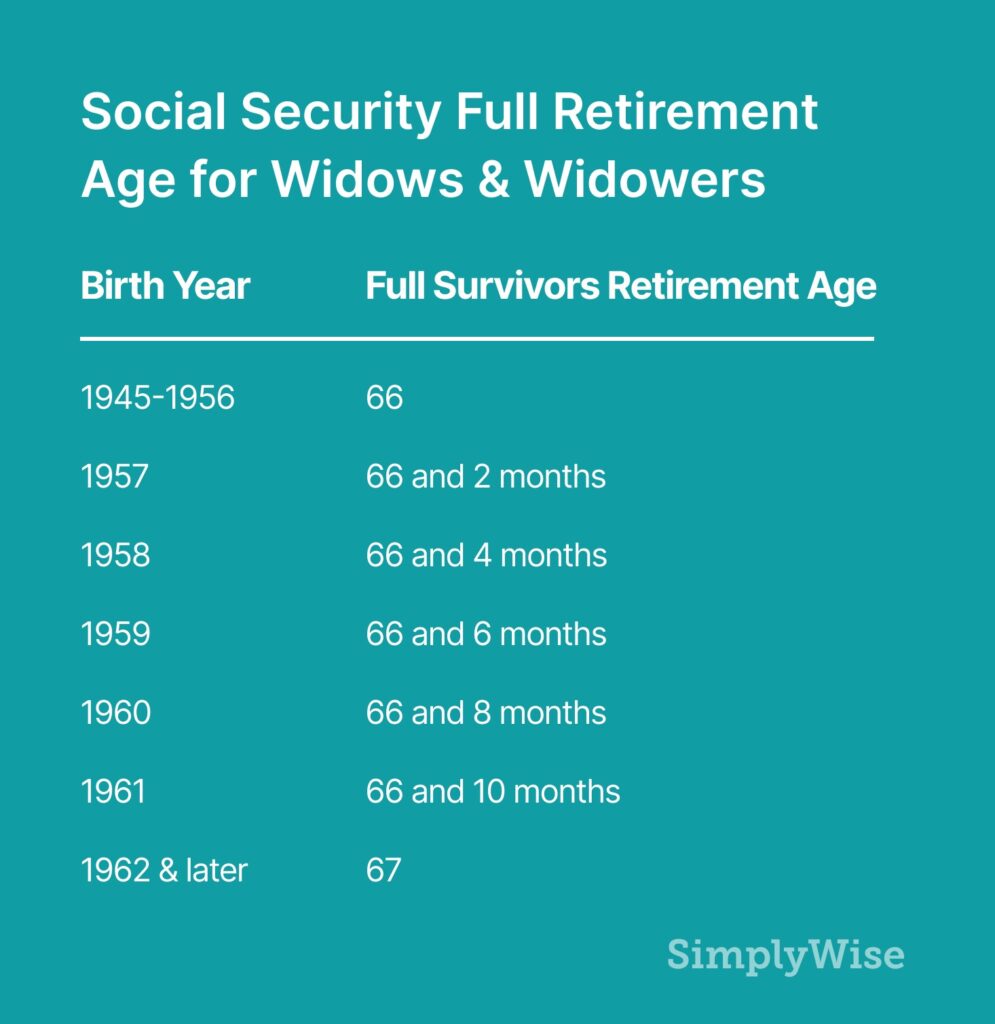
- Age Requirements: A surviving spouse can usually start receiving benefits as early as age 60. If the surviving spouse is disabled, benefits may be available as early as age 50. However, to receive 100% of the deceased worker’s basic benefit amount, the surviving spouse must claim at their own “full retirement age” for survivor benefits (which may be different from their full retirement age for their own retirement benefits).
- Marriage Duration: Generally, the marriage must have lasted for at least nine months immediately before the worker died. There are exceptions, such as if the death was accidental or occurred in the line of duty for military service.
- Remarriage Status: If the surviving spouse remarries before age 60 (or age 50 if disabled), they generally cannot receive benefits as a widow/widower. However, if they remarry after age 60 (or age 50 if disabled), their eligibility for widow/widower benefits is not affected.
- Caring for a Child: A surviving spouse of any age can be eligible for benefits if they are caring for the deceased worker’s child who is under age 16 or who has a disability that began before age 22. These are often referred to as “mother’s” or “father’s” benefits.
- Own Earnings: If the surviving spouse is below their full retirement age for survivor benefits and continues to work, their earnings can reduce the benefit amount received, subject to the annual earnings limit.
Eligibility for Other Survivor Benefits
Beyond the surviving spouse, other family members may also qualify for survivor benefits, each with their own set of rules:
- Children:
- Unmarried children of the deceased worker can receive benefits if they are under age 18 (or up to age 19 if they are a full-time student in elementary or secondary school).
- Children with a disability that started before age 22 may receive benefits at any age, as long as they remain unmarried.
- This includes biological children, legally adopted children, and sometimes stepchildren or grandchildren if certain dependency requirements are met.
- Divorced Spouses:
- A surviving divorced spouse can receive benefits if the marriage lasted 10 years or longer.
- They must also meet the same age and remarriage rules as a widowed spouse.
- Crucially, a divorced spouse’s claim for survivor benefits does not affect the benefits of other survivors, such as a current spouse or children.
- Dependent Parents:
- Parents of the deceased worker may be eligible for benefits if they are age 62 or older.
- They must also have been dependent on the deceased worker for at least half of their support at the time of the worker’s death.
Understanding Benefit Amounts and How They’re Calculated
The amount of survivor benefit a person receives is not arbitrary; it’s intricately linked to the deceased worker’s earnings history and several other factors. The goal is to provide benefits that reflect the deceased’s contributions to the Social Security system.
The Deceased Worker’s Earnings Record
The foundation for all survivor benefits is the deceased worker’s Primary Insurance Amount (PIA). The PIA is the monthly benefit the deceased worker would have received if they had claimed retirement benefits at their own full retirement age. It’s calculated based on the worker’s average indexed monthly earnings (AIME) over their highest-earning years. A higher lifetime earner will have a higher PIA, which in turn leads to higher survivor benefits for their eligible family members.
How Widow/Widower Benefits are Calculated
For a surviving spouse, the benefit amount is a percentage of the deceased worker’s PIA:
- At Full Retirement Age for Survivor Benefits: A widow or widower can receive 100% of the deceased worker’s basic benefit amount if they claim benefits at their own full retirement age for survivor benefits. This age varies depending on the year of birth, similar to full retirement age for retirement benefits.
- Claiming Early: If a surviving spouse claims benefits between age 60 and their full retirement age for survivor benefits, the benefit amount will be reduced. For example, claiming at age 60 typically results in a reduction to around 71.5% of the deceased worker’s PIA.
- Caring for a Child: A surviving spouse caring for a child under age 16 or a disabled child (mother’s/father’s benefit) can receive 75% of the deceased worker’s PIA, regardless of their own age.
- Impact of Own Work Record: If a surviving spouse is eligible for their own Social Security retirement benefits and also for survivor benefits, they will generally receive the higher of the two amounts. They cannot receive both benefits in full. In some cases, a surviving spouse may be able to claim one benefit first (e.g., survivor benefits at age 60) and then switch to their own higher retirement benefit at a later age (e.g., age 70), a strategy known as “restricted application” for those born before a certain date.
Other Survivor Benefit Calculations
Other eligible survivors also receive a percentage of the deceased worker’s PIA, subject to a family maximum:
- Children: Each eligible child typically receives 75% of the deceased worker’s PIA.
- Dependent Parents: A single surviving parent can receive 82.5% of the PIA, while two surviving parents can each receive 75% of the PIA.
- Family Maximum Benefit: There is a limit to the total amount of benefits that can be paid to a family based on one worker’s earnings record. This “family maximum” is usually between 150% and 188% of the deceased worker’s PIA. If the sum of individual benefits exceeds this maximum, each individual benefit will be proportionately reduced until the total falls within the limit. It’s crucial to note that a divorced spouse’s survivor benefits do not count toward this family maximum.
Key Differences, Overlaps, and Strategic Considerations
While the distinction between “survivor” and “widow” benefits might seem subtle, understanding it opens the door to more strategic financial planning and ensures that all eligible individuals receive their rightful benefits.
The Fundamental Distinction Re-emphasized
To reiterate, “survivor benefits” is the overarching category encompassing any benefit paid to a deceased worker’s family members (spouses, children, parents). “Widow benefits” (or widower benefits) is a specific type of survivor benefit reserved exclusively for the surviving legal spouse. This distinction is crucial for proper terminology and navigating the SSA’s official communications and forms. When discussing “widow benefits,” you are always referring to a specific type of survivor benefit. When discussing “survivor benefits,” you could be referring to a widow, a child, a parent, or any combination thereof.
Navigating Multiple Benefit Eligibility
One common scenario involves a surviving spouse who is eligible for both their own Social Security retirement benefits based on their work record and survivor benefits based on their deceased spouse’s record. Social Security does not allow individuals to collect both benefits simultaneously in full. Instead, they will pay the higher of the two benefit amounts.
- “Deemed Filing”: For those born after January 1, 1954, if you apply for either your own retirement benefits or survivor benefits, you are generally “deemed” to have filed for the other as well, and the SSA will automatically pay the higher amount. This limits the ability to strategically delay one benefit while collecting another.
- “Restricted Application”: Individuals born on or before January 1, 1954, have more flexibility. They may have the option to file a “restricted application,” allowing them to claim only survivor benefits at their full retirement age for survivors (while allowing their own retirement benefits to grow until age 70) and then switch to their potentially higher retirement benefit later. This strategy can maximize lifetime benefits and is a key area where professional guidance can be invaluable.

Practical Financial Planning Implications
Understanding these benefits is more than just academic; it’s a vital component of robust financial planning after the loss of a loved one:
- Timely Application: Benefits are not paid automatically. Survivors must apply for them. While benefits can sometimes be retroactive, applying promptly ensures continuous income.
- Reporting Changes: It is critical to report any changes that could affect eligibility or benefit amounts to the SSA, such as remarriage (especially before age 60/50), an eligible child leaving school, or significant changes in earned income for those below full retirement age for benefits.
- Professional Guidance: Given the complexity of rules, especially regarding the interaction between different types of benefits and claiming strategies, consulting with a financial advisor specializing in Social Security or directly with the Social Security Administration can provide personalized advice and ensure optimal claiming decisions. This is particularly true for those navigating “restricted application” or those with complex family situations (e.g., divorced spouses, multiple beneficiaries).
- Long-Term Security: For many families, survivor benefits represent a significant source of income that can cover essential living expenses, especially for surviving spouses and young children. Incorporating these potential benefits into a broader financial plan can provide a critical safety net.
In conclusion, while “survivor benefits” and “widow benefits” are often used interchangeably, grasping their distinct definitions is fundamental to navigating the Social Security system effectively. Survivor benefits are the overarching category of support for deceased workers’ families, while widow benefits are the specific subset designed for surviving spouses. By understanding the specific eligibility criteria, calculation methods, and strategic considerations, individuals can make informed decisions that secure their financial well-being during a time of profound loss.
aViewFromTheCave is a participant in the Amazon Services LLC Associates Program, an affiliate advertising program designed to provide a means for sites to earn advertising fees by advertising and linking to Amazon.com. Amazon, the Amazon logo, AmazonSupply, and the AmazonSupply logo are trademarks of Amazon.com, Inc. or its affiliates. As an Amazon Associate we earn affiliate commissions from qualifying purchases.