
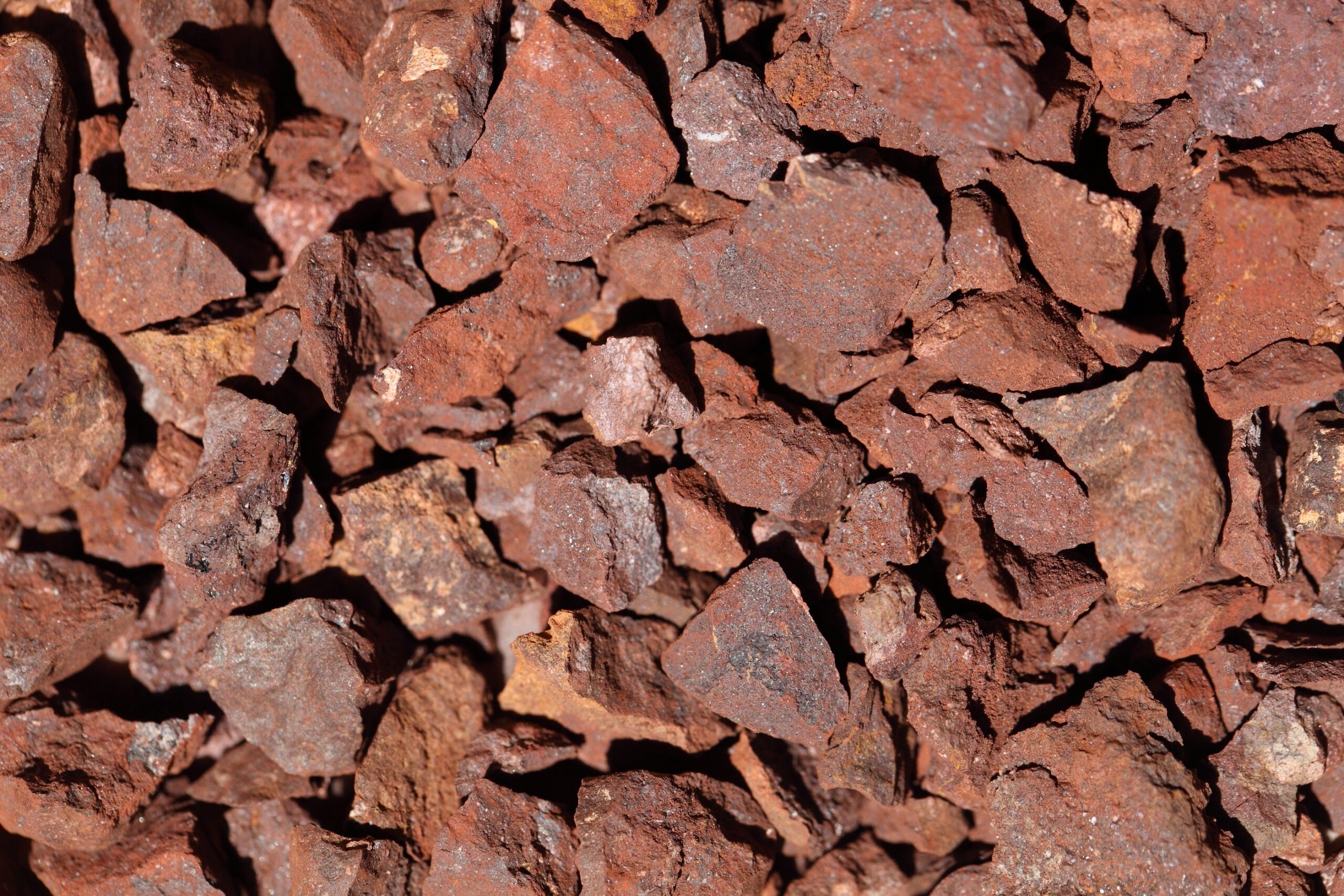
When one ponders “what is the color of iron ore,” the immediate thought might be a simple, singular answer. However, for those immersed in the world of finance, commodities, and industrial economics, this question opens a much richer vein of understanding. Iron ore isn’t just one color; it manifests in a spectrum of hues, each hinting at its geological origins, mineral composition, and, critically, its financial value and processing requirements. In the complex global economy, where raw materials like iron ore form the bedrock of countless industries, understanding these visual cues, and the underlying properties they represent, is paramount for investors, commodity traders, mining executives, and policymakers alike. The “color” of iron ore, far from being a mere aesthetic detail, is a gateway to comprehending its economic significance, market dynamics, and the intricate financial considerations that govern its extraction, trade, and utilization.
The Spectrum of Iron Ore: More Than Meets the Eye for Financial Analysis
The visible color of iron ore is a direct reflection of its mineralogy and geological history. Different iron-bearing minerals yield distinct colors, which in turn are often correlated with iron content, impurity levels, and ease of processing – all critical factors in determining its market price and the profitability of mining operations.
Hematite: The Red Gold of Industry
Perhaps the most iconic form, hematite is responsible for the characteristic reddish-brown to dark grey color often associated with iron ore. Its name, derived from the Greek word “haima” for blood, aptly describes its pigment. Financially, hematite is a titan. It is an iron oxide mineral (Fe₂O₃) that typically boasts a high iron content, often exceeding 60%, making it a premium ore. For investors, hematite deposits are highly prized because their high purity often translates into lower processing costs and reduced energy consumption for steelmaking. This efficiency directly impacts the bottom line of steel producers and, consequently, the demand and price for hematite on the global commodity markets. Major producers in Australia and Brazil largely contribute high-grade hematite, underpinning significant portions of their national economies and offering lucrative investment opportunities in mining equities.
Magnetite: The Dark Horse of Economic Potential
Magnetite (Fe₃O₄) presents a stark contrast, appearing as a dark grey to black mineral, notable for its magnetic properties. While raw magnetite ore often has a lower iron content (typically 25-45%) than hematite, requiring more extensive beneficiation – a process of upgrading the ore – its unique characteristics offer distinct financial advantages. The magnetic separation process, employed to concentrate magnetite, can be highly efficient in removing impurities and producing a very high-grade concentrate, often exceeding 65% iron. This high-grade concentrate is particularly valuable for certain steelmaking processes, especially in pelletizing for direct reduction iron (DRI) production, which is gaining traction for its lower carbon footprint. Therefore, while initial processing costs might be higher, the premium achieved for high-quality magnetite concentrates can justify the investment, making deposits financially attractive, particularly for companies with expertise in advanced beneficiation techniques. For investors, understanding the CAPEX and OPEX associated with magnetite processing is crucial for assessing the viability and profitability of such projects.
Goethite and Limonite: The Earthy Tones and Economic Trade-offs
Goethite (FeO(OH)) and limonite (a mixture of hydrated iron oxides, often including goethite) typically present as yellowish, brownish, or ochre-colored ores. These minerals are often found in lateritic deposits, resulting from intense weathering in tropical and subtropical regions. Generally, these ores have lower iron content and higher moisture levels compared to hematite or magnetite. From a financial perspective, goethite and limonite present a different set of challenges and opportunities. Their lower grade means higher transportation costs per unit of iron and increased energy consumption during processing (e.g., calcination to remove water). Consequently, they command lower market prices. However, their widespread availability and ease of surface mining (often open-pit) can sometimes offset these disadvantages, especially in regions with lower labor costs or less stringent environmental regulations. For businesses, the decision to invest in goethite/limonite deposits involves a careful calculation of extraction costs versus market price, often considering the local economic context and technological advancements in beneficiation that might make these lower-grade ores more viable.
Siderite: The Carbonate Connection and Niche Value
Siderite (FeCO₃), a less common but economically significant iron ore, typically appears as a grayish-brown to yellowish-brown mineral. As an iron carbonate, its processing requires calcination to convert it into iron oxide and remove carbon dioxide, which can be energy-intensive. Historically, siderite deposits were important in regions like the UK and Germany. Today, their economic viability depends heavily on the specific deposit’s characteristics, energy costs, and the availability of technology to manage its processing efficiently. While not a primary global traded commodity in the same vein as hematite or magnetite, specific siderite deposits can hold niche value, particularly in regions where they can be processed cost-effectively, offering localized investment opportunities that might not appear on the radar of large-scale commodity traders.
Color as a Financial Indicator in Mining and Trade
While advanced analytical tools now dominate the assessment of iron ore quality, the visual cues of color and texture historically, and to some extent still, offer initial insights that guide financial decisions in the mining and trading sectors. The color of an ore directly correlates with its mineralogy, which in turn dictates its iron content, impurity profile, and the beneficiation pathway required—all factors that critically impact profitability.
Visual Cues vs. Analytical Precision in Valuation
Historically, miners and traders relied on visual characteristics, including color, to make preliminary assessments of iron ore quality. A vibrant reddish-brown might indicate high-grade hematite, while a dull yellow could suggest lower-grade limonite. However, in the modern commodity market, such visual assessments are merely a starting point. Precise financial valuation demands rigorous analytical testing for iron content (Fe%), silica (SiO₂), alumina (Al₂O₃), phosphorus (P), sulfur (S), and moisture. These impurities, irrespective of color, significantly affect the final steel product’s quality and the efficiency of the steelmaking process, incurring penalties or premiums on the global market. For investors, relying solely on visual cues would be akin to judging a financial instrument by its ticker symbol alone. The true “color” of financial value lies in the detailed chemical analysis that determines the ore’s market grade and, consequently, its price and investment potential. Mining companies invest heavily in geological surveys and laboratory analysis to accurately quantify reserves and quality, directly feeding into their financial reporting and investor relations.
Impact on Processing Costs and Profitability
The specific mineralogy indicated by an ore’s color has a direct bearing on the capital expenditure (CAPEX) and operational expenditure (OPEX) of a mining operation. High-grade hematite, often indicated by deep reddish-brown hues, typically requires less complex beneficiation, resulting in lower processing costs per ton of iron. This translates directly into higher profit margins for mining companies, making such deposits highly attractive to investors seeking robust returns. Conversely, lower-grade ores, or those with significant impurities (regardless of their initial color), demand more intensive crushing, grinding, flotation, or magnetic separation processes. These additional steps require significant investment in processing plants (CAPEX) and higher energy consumption, water usage, and reagent costs (OPEX). For a financial analyst, understanding the ore type (and its associated color) in a specific deposit is crucial for projecting cash flows, calculating payback periods, and assessing the overall financial viability of a mining project. A deposit of, say, black magnetite, despite appearing less visually appealing than rich red hematite, could offer superior long-term profitability if it yields high-purity concentrates via efficient magnetic separation.
Market Specifications and Grade Premiums

The global iron ore market operates on strict specifications, with benchmark prices tied to specific grades, typically 62% Fe content fines from Australia. Premiums are paid for higher-grade ores (e.g., 65% Fe or 65.5% Fe pellet feed), and discounts applied for lower grades or those with high impurity levels. The color of iron ore can offer an initial indication of its likely grade, influencing where it sits in these market specifications. For instance, a producer of high-quality, deep red hematite concentrate is likely to fetch a premium, enhancing revenue streams. Conversely, a mine extracting yellowish-brown goethite will likely face discounts, requiring careful financial modeling to ensure profitability. Commodity traders meticulously track these grade differentials, hedging against price fluctuations and optimizing logistics to capitalize on arbitrage opportunities. Investors in mining equities need to understand how the average grade of a company’s ore profile impacts its sensitivity to market price fluctuations and its competitive positioning. A company with a diverse portfolio of ore types, or access to cutting-edge beneficiation technology, can better navigate market volatility and maintain stronger financial performance.
Investing in Iron Ore: Beyond the Visual
For serious investors, the “color” of iron ore extends far beyond its physical appearance. It encapsulates a complex interplay of commodity market dynamics, global economic forces, technological advancements, and geopolitical realities that collectively determine its financial value and investment appeal.
Commodity Market Dynamics and Global Economics
The price of iron ore, a bellwether for global industrial activity, is driven by fundamental supply and demand. China’s steel production, for instance, remains the single largest determinant of global iron ore demand, with other Asian economies and emerging markets also playing significant roles. Geopolitical events, trade disputes, and economic downturns can trigger sharp price movements, impacting the revenues of mining giants and the financial health of steelmakers. For investors, understanding these macro-economic trends and their potential impact on iron ore prices is critical. Investing in iron ore can be done directly through futures contracts, ETFs, or indirectly by purchasing shares in mining companies. Each approach carries different risk and reward profiles, all fundamentally linked to the underlying commodity’s market performance, which itself is only tangentially related to its physical color.
Mining Company Valuations: Deeper than the Deposit
When evaluating mining companies, investors look at a multitude of factors, with the ore body being just one. Key considerations include:
- Reserves and Resources: The quantity and quality of proven and probable reserves, implicitly linked to the type (color/mineralogy) of ore, directly influence a company’s longevity and production capacity.
- Operational Efficiency: The ability to extract, process, and transport ore cost-effectively, which is heavily influenced by the ore type and required beneficiation, impacts profit margins.
- Financial Health: Debt levels, cash flow generation, and dividend policies are crucial.
- ESG Factors: Environmental, Social, and Governance considerations are increasingly important, impacting investment decisions, access to capital, and regulatory compliance. Companies with strong ESG performance often command higher valuations.
- Geographical and Political Stability: The regions where mines are located can present significant risks or advantages.
Therefore, while the geological characteristics hinted at by ore color are foundational, they are integrated into a much broader financial analysis. A company mining high-grade hematite in a stable jurisdiction with strong ESG practices will likely be valued differently than one exploiting lower-grade ores in a politically volatile region, regardless of how “red” or “black” their ore might appear.
Futures and Derivatives: Hedging and Speculation
The vast majority of iron ore trading occurs not through physical exchanges of colored rock, but through financial instruments like futures and derivatives contracts. These instruments allow steelmakers to hedge against price volatility, ensuring predictable input costs, and enable investors and speculators to profit from anticipated price movements. Here, the physical color of the ore is entirely irrelevant; what matters is the underlying grade and market benchmark price. Traders operate in a highly liquid market where sophisticated algorithms and market intelligence dictate positions, rather than visual inspections. This financial layer underscores that while iron ore is a tangible, multi-colored substance, its economic identity is largely defined by abstract financial contracts and market indices.
The Future of Iron Ore: Innovation and Sustainability’s Financial Imperative
The future of the iron ore market is not merely about extracting and selling existing deposits, but about adapting to evolving global demands, technological innovation, and an increasing focus on sustainability. These factors have profound financial implications, influencing investment decisions, commodity prices, and the long-term viability of the industry.
Decarbonization and Green Steel: A New Financial Metric
The global push for decarbonization is fundamentally reshaping the steel industry, which accounts for a significant portion of global industrial CO₂ emissions. This transition involves a shift towards “green steel” production methods, such as direct reduction iron (DRI) combined with electric arc furnaces (EAFs), which require high-purity iron ore, often in the form of pellets. This creates a premium for specific types of ore, irrespective of their physical color, that can be upgraded to these stringent specifications. For example, magnetite deposits, which can be efficiently beneficiated into high-grade concentrates ideal for pelletizing, may see increased financial attractiveness. Investors are increasingly scrutinizing mining companies’ strategies for aligning with these green initiatives, as future access to capital and market share will likely depend on it. Companies investing in technologies to produce lower-carbon iron units will likely command higher valuations and be better positioned for long-term growth.
Technological Advancements in Ore Beneficiation: Unlocking New Value
Technological innovations in ore beneficiation are constantly expanding the spectrum of economically viable iron ore deposits. Advancements in comminution (crushing and grinding), separation techniques (e.g., enhanced magnetic separation, flotation), and process optimization mean that previously uneconomic lower-grade or highly impure ores, regardless of their color, can now be processed profitably. This has significant financial implications: it can extend the lifespan of existing mines, open up new reserves, and reduce the overall cost of production per unit of iron. For investors, identifying companies that are at the forefront of these technological advancements can lead to significant returns, as these firms are better positioned to extract value from a wider range of resources and maintain competitiveness in a fluctuating market. This also means that what might appear as a “low-value” yellowish-brown ore today could become a significant financial asset with the right technological investment tomorrow.
Geopolitical Shifts and Supply Chain Resilience: Managing Financial Risk
The global iron ore supply chain is highly concentrated, with a few major producers dominating exports. This concentration, coupled with increasing geopolitical tensions and trade protectionism, introduces significant financial risks. Mining companies and steelmakers are actively exploring strategies to enhance supply chain resilience, including diversifying sourcing, investing in new mining regions, and developing domestic processing capabilities. For investors, this translates into considering the geopolitical stability of mining jurisdictions, the robustness of logistical networks, and the potential for disruptions when evaluating investment opportunities. The “color” of iron ore from a politically stable, geographically diverse supplier might, in fact, be more financially appealing than a higher-grade ore from a region prone to instability, as it reduces financial risk and ensures more predictable supply.
In conclusion, while “what is the color of iron ore” might seem a straightforward query, for those operating in the spheres of finance, investment, and industrial economics, it unveils a sophisticated landscape. The varied hues—from the reddish-brown of hematite to the dark grey of magnetite or the earthy yellows of goethite—each tell a story of geological formation, mineral composition, and, most importantly, financial potential and challenge. The true “color” of iron ore, in a monetary context, is multifaceted: it is the premium commanded by high-grade material, the cost savings from efficient processing, the financial returns on mining investments, the hedging opportunities in commodity futures, and the strategic imperative of sustainable production. Ultimately, understanding these nuances is crucial for navigating the complex, multi-billion-dollar global industry that supplies the foundational material for our modern world.
aViewFromTheCave is a participant in the Amazon Services LLC Associates Program, an affiliate advertising program designed to provide a means for sites to earn advertising fees by advertising and linking to Amazon.com. Amazon, the Amazon logo, AmazonSupply, and the AmazonSupply logo are trademarks of Amazon.com, Inc. or its affiliates. As an Amazon Associate we earn affiliate commissions from qualifying purchases.