
Structural biology is a fundamental scientific discipline dedicated to unraveling the intricate three-dimensional (3D) architecture of biological macromolecules, such as proteins, nucleic acids (DNA and RNA), and their complex assemblies. Far from being a purely academic pursuit, this field sits at the cutting edge of technological innovation, constantly pushing the boundaries of what instruments and computational methods can achieve. It’s not just about what these molecules look like, but how their specific shapes dictate their functions, interactions, and ultimately, their roles in health and disease. In an era dominated by data and digital transformation, structural biology stands as a testament to how advanced technology can decode life’s most fundamental processes, driving breakthroughs in medicine, biotechnology, and beyond.

At its core, structural biology is a quest for precision at the atomic level. Imagine trying to understand how a complex machine works without ever seeing its gears, levers, or circuits. That’s essentially the challenge that structural biologists overcome, but on a scale vastly smaller and more intricate than any human-made device. By employing a sophisticated arsenal of technologies, they provide the blueprints of life, offering unprecedented insights into biological mechanisms and enabling the rational design of new drugs, vaccines, and advanced materials. This interdisciplinary field thrives on the synergy between advanced instrumentation, computational power, and cutting-edge software, making it a cornerstone of modern scientific and technological progress.
The Technological Foundation of Structural Biology: Methods and Instruments
The journey to understanding molecular structures is paved with technological marvels. Structural biology is defined by its methodologies, each offering a unique lens through which to view the microscopic world. These techniques are not just tools; they are sophisticated technological ecosystems requiring immense engineering, computational prowess, and continuous innovation.
X-ray Crystallography: Illuminating Molecular Architectures
For decades, X-ray crystallography reigned supreme as the primary method for determining high-resolution 3D structures of biological molecules. The technique involves crystallizing a purified molecule—a challenging feat in itself—and then firing a beam of X-rays at the crystal. When the X-rays hit the ordered array of molecules in the crystal, they diffract, creating a distinctive pattern of spots. Specialized detectors capture this diffraction pattern, which is essentially a Fourier transform of the electron density within the crystal.
The technological sophistication lies not only in generating intense, coherent X-ray beams (often from synchrotrons, which are particle accelerators the size of football fields) but also in the advanced detectors and sophisticated computational algorithms required to process the diffraction data. Software pipelines are essential to interpret these complex patterns, reconstruct the electron density map, and ultimately build an atomic model of the molecule. Recent advancements include X-ray Free-Electron Lasers (XFELs), which can generate incredibly short, intense X-ray pulses, allowing scientists to study structures at room temperature and even capture molecular dynamics in action, overcoming the limitations of radiation damage. This fusion of massive hardware (synchrotrons, XFELs) with intricate software exemplifies the tech-heavy nature of the field.
Cryo-Electron Microscopy (Cryo-EM): Visualizing the Dynamic Cell
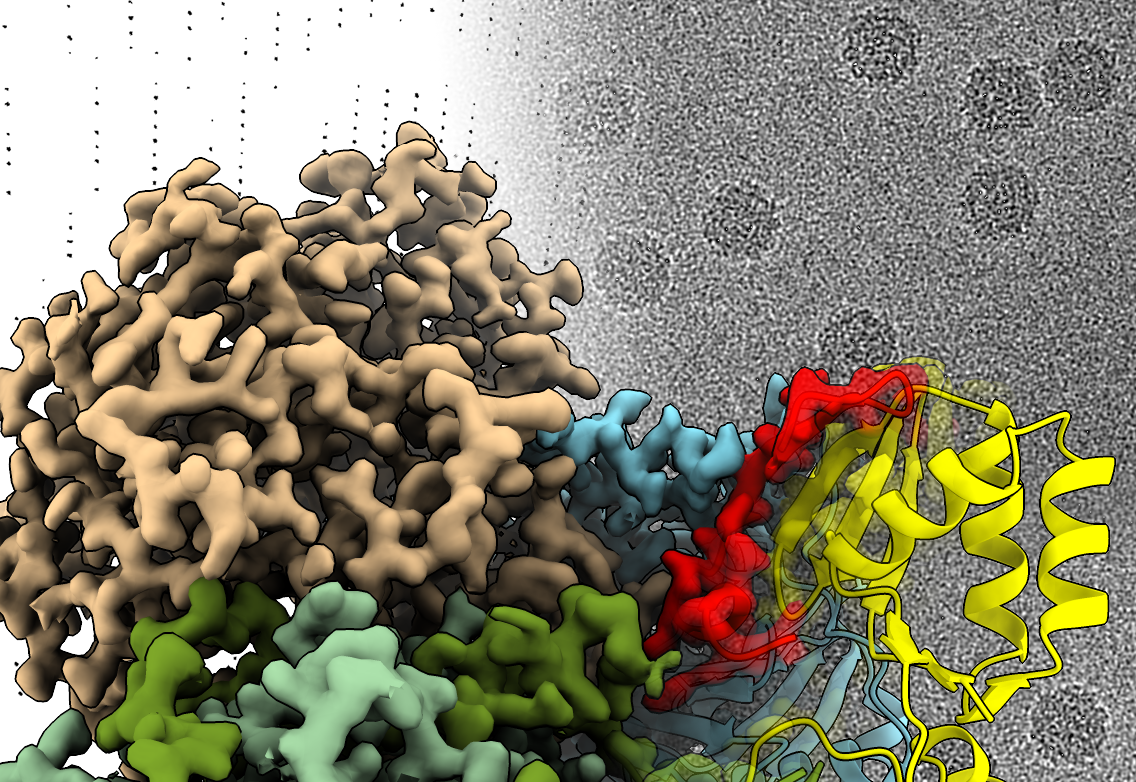
Cryo-Electron Microscopy (Cryo-EM) has revolutionized structural biology, especially for large, complex, or difficult-to-crystallize molecules and assemblies. The method involves flash-freezing biological samples in a thin layer of vitreous ice, preserving their native state without the need for crystallization. High-energy electron beams are then passed through these frozen samples, and the scattered electrons are captured by highly sensitive direct electron detectors.
The groundbreaking aspect of Cryo-EM lies in its ability to reconstruct 3D structures from thousands, or even millions, of 2D images of individual molecules oriented randomly in ice. This process is intensely computational. Sophisticated image processing software, often leveraging parallel computing and advanced algorithms, aligns and averages these 2D projections to generate a high-resolution 3D density map. Advances in electron microscope hardware (such as stable, high-brightness electron sources and aberration correctors) combined with the exponential improvement in detector technology and processing software have propelled Cryo-EM to atomic resolution, earning its pioneers the Nobel Prize in Chemistry in 2017. It has opened doors to understanding structures previously considered intractable, from entire viruses to intricate cellular machinery.
Nuclear Magnetic Resonance (NMR) Spectroscopy: Probing Molecular Dynamics
Unlike crystallography and Cryo-EM, which provide static snapshots, Nuclear Magnetic Resonance (NMR) spectroscopy excels at providing insights into the dynamics and flexibility of molecules in solution. This technique exploits the magnetic properties of atomic nuclei (primarily hydrogen, carbon, and nitrogen isotopes) within a molecule. When placed in a strong magnetic field and subjected to radiofrequency pulses, these nuclei absorb and re-emit energy, creating a unique spectroscopic fingerprint.
The technological demands of NMR are substantial, requiring powerful superconducting magnets (often operating at hundreds of MHz, corresponding to fields of 10-20 Tesla) and highly sensitive radiofrequency electronics. The data generated is complex, multi-dimensional (2D, 3D, or even 4D), and requires advanced signal processing software to extract structural and dynamic information. NMR is particularly valuable for studying intrinsically disordered proteins, protein-ligand interactions, and conformational changes, providing a dynamic view of molecular behavior that complements the static structures obtained by other methods. The development of ever-more powerful magnets and sophisticated pulse sequences continues to expand its capabilities.
Computational Powerhouse: Software and AI in Structural Biology
The sheer volume and complexity of data generated by structural biology experiments would be insurmountable without advanced computational tools. Software and Artificial Intelligence (AI) are not merely辅助 components; they are integral to every stage, from data acquisition and processing to structure prediction and functional annotation.
Data Processing and Model Building Software
Each structural biology technique relies on a specialized suite of software packages for data reduction, image processing, and 3D reconstruction. For X-ray crystallography, programs like MOSFLM, PHENIX, and CCP4 handle everything from indexing diffraction patterns to refining atomic models. In Cryo-EM, software suites such as RELION, cryoSPARC, and EMAN drive the complex workflows of particle picking, 2D classification, 3D reconstruction, and map refinement. NMR data is processed and analyzed using programs like SPARKY, CARA, and FELIX.
These software platforms are often open-source, community-driven projects that represent decades of algorithmic development in signal processing, image recognition, statistical analysis, and molecular modeling. They require significant computational resources, often running on high-performance computing clusters or cloud-based platforms, to handle the petabytes of data generated by modern experiments. The continuous development and optimization of these tools are critical for pushing the resolution limits and increasing the throughput of structural studies.
AI and Machine Learning: Revolutionizing Protein Structure Prediction
One of the most profound technological advancements in structural biology, and indeed in all of biology, has been the advent of AI and machine learning for protein structure prediction. For decades, predicting a protein’s 3D shape from its amino acid sequence—the “protein folding problem”—was considered one of biology’s grand challenges. Traditional methods were slow, resource-intensive, and often yielded only partial success.
The breakthrough came with DeepMind’s AlphaFold, followed by RosettaFold from the Baker lab. These AI models, particularly AlphaFold2, leverage deep neural networks trained on vast databases of known protein structures and sequences. They can predict protein structures with accuracy comparable to experimental methods for many proteins, revolutionizing drug discovery, enzyme design, and our fundamental understanding of biology. This technology significantly reduces the time and cost associated with experimental structure determination, democratizing access to structural information and accelerating scientific discovery at an unprecedented pace. It represents a paradigm shift, where computational prediction is now a primary method, not just a complementary one.
Molecular Dynamics Simulations and Drug Discovery Platforms
Beyond determining static structures, computational methods allow scientists to simulate the dynamic behavior of molecules over time. Molecular Dynamics (MD) simulations use classical mechanics to model the movement of atoms and molecules, providing insights into protein folding, ligand binding, and conformational changes. Software like GROMACS, NAMD, and AMBER are staples in this area, running on powerful GPUs and supercomputers to simulate molecular interactions for nanoseconds to microseconds or even longer.
These simulations are critical for drug discovery. By understanding how a drug molecule interacts with its target protein at an atomic level, pharmaceutical companies can rationally design new compounds with improved efficacy and reduced side effects. This involves virtual screening of millions of compounds, docking simulations, and free energy calculations – all computational tasks that heavily rely on advanced algorithms, high-performance computing, and specialized software platforms. The integration of structural data with computational drug design tools is a prime example of how tech directly translates into tangible health benefits.
Applications and Impact: Driving Innovation in Biotech and Medicine
The technological insights gained from structural biology have profound and far-reaching implications, extending far beyond the confines of research labs. They fuel innovation in biotechnology, revolutionize medicine, and even contribute to advanced materials science.
Rational Drug Design and Development
Structural biology is the cornerstone of rational drug design. By visualizing the precise 3D arrangement of atoms at the active site of a disease-causing protein, scientists can design small molecules that fit perfectly into these sites, either inhibiting the protein’s function or enhancing it. This “lock-and-key” approach has led to the development of numerous life-saving drugs for conditions ranging from cancer and HIV to hypertension and infectious diseases. For instance, the structural elucidation of viral enzymes like HIV protease or influenza neuraminidase has directly enabled the development of highly specific antiviral drugs. The iterative process of determining structures, designing compounds, and testing their efficacy is a technological feedback loop that continuously refines drug candidates.
Vaccine Design and Understanding Pathogens
The rapid development of vaccines, particularly during global health crises like the COVID-19 pandemic, owes a tremendous debt to structural biology. By determining the structure of key viral proteins, such as the SARS-CoV-2 spike protein, scientists can identify optimal targets for antibody recognition. This structural information guides the design of vaccine antigens that elicit a robust immune response, preventing infection. Cryo-EM, in particular, has been instrumental in visualizing complex viral particles and their interaction with host cells, providing critical insights for developing both vaccines and antiviral therapies. This immediate and critical impact underscores the vital role of structural tech in public health.
Advancing Biotechnology and Material Science
Beyond medicine, structural biology fuels innovation in various biotechnological applications. Understanding enzyme structures allows for engineering enzymes with enhanced activity or specificity for industrial processes, such as biofuel production or bioremediation. In material science, insights into the structural properties of biological polymers like cellulose or silk can inspire the design of new bio-inspired materials with superior strength, flexibility, or biocompatibility. From creating sustainable plastics to developing targeted delivery systems, the structural blueprints provided by these technologies open new avenues for bioengineering and advanced material design.
Future Frontiers: Emerging Technologies and Interdisciplinary Synergy
The field of structural biology is far from static; it is a vibrant domain constantly evolving with new technological breakthroughs. The next wave of innovation promises even more powerful tools and deeper insights, often at the intersection of various scientific and technological disciplines.
Next-Gen Cryo-EM and XFELs
The evolution of Cryo-EM continues with efforts to improve resolution, increase sample throughput, and enable in situ structural determination—meaning visualizing molecules directly within their cellular context. Advances in detector technology, automated sample preparation robots, and multi-tilt tomography promise to push these boundaries further. Similarly, XFELs are becoming more accessible and capable, allowing for time-resolved experiments that capture molecular motion and reactions in real-time, essentially creating “molecular movies.” These technologies are moving towards observing biological processes as they happen, blurring the lines between static structures and dynamic function.
Quantum Computing for Molecular Simulations
While still in its nascent stages, quantum computing holds immense potential for molecular simulations. Traditional computers struggle with the complexity of quantum mechanical calculations required to accurately model electron interactions in large molecules. Quantum computers, with their ability to handle superposition and entanglement, could one day revolutionize molecular dynamics, drug design, and material science by performing these calculations with unprecedented speed and accuracy. This could unlock a new era of predictive biology and chemistry, making currently intractable problems solvable.
Integrating Multi-Omics Data with Structural Insights
The future of structural biology lies in its integration with other “omics” technologies, such as genomics, proteomics, and metabolomics. By combining vast datasets on gene sequences, protein expression levels, and metabolic pathways with high-resolution structural information, scientists can build holistic, systems-level models of biological processes. AI and machine learning will play a crucial role in integrating and interpreting these diverse datasets, leading to a more complete and dynamic understanding of how molecular structures contribute to overall cellular function and disease. This interdisciplinary synergy, underpinned by sophisticated data science and computational tools, represents the pinnacle of technological application in understanding life itself.
In conclusion, structural biology is a shining example of how technology drives scientific discovery. From the colossal hardware of synchrotrons and electron microscopes to the intricate algorithms powering AI-driven prediction, every advancement in the field is a testament to human ingenuity in engineering and computation. By providing atomic-level blueprints of life, structural biology not only deepens our fundamental understanding of biology but also serves as an indispensable engine for innovation in medicine, biotechnology, and beyond, continually shaping our technological future.
aViewFromTheCave is a participant in the Amazon Services LLC Associates Program, an affiliate advertising program designed to provide a means for sites to earn advertising fees by advertising and linking to Amazon.com. Amazon, the Amazon logo, AmazonSupply, and the AmazonSupply logo are trademarks of Amazon.com, Inc. or its affiliates. As an Amazon Associate we earn affiliate commissions from qualifying purchases.