
The seemingly simple question of “what toiletries can I take on a plane?” often masks a deeper layer of financial considerations for the savvy traveler. Beyond the essential security regulations, every choice made regarding personal care items for your journey – from the size of your shampoo to whether you pack it in a carry-on or checked bag – can directly impact your travel budget. In an era where every penny counts, understanding how to navigate airline rules while optimizing your spending on toiletries is a fundamental aspect of personal finance for travel. This guide will explore the financial dimensions of packing toiletries, offering insights to help you save money, avoid unnecessary expenses, and make smart decisions for your next flight.
Navigating the 3-1-1 Rule: Protecting Your Investment in Personal Care
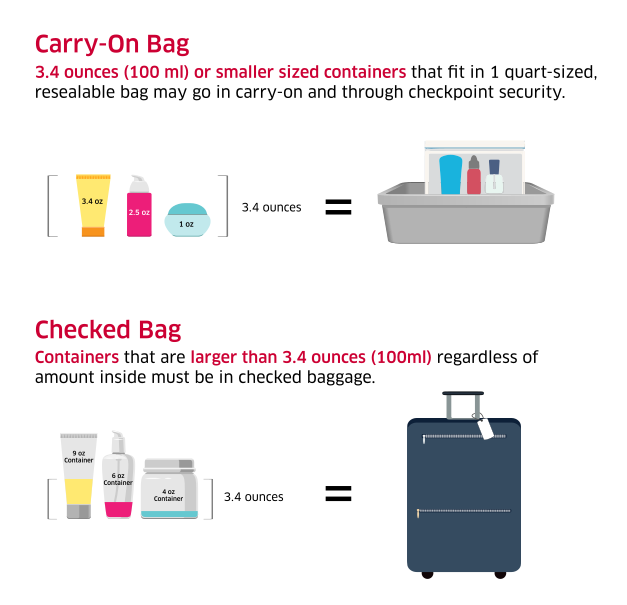
The Transportation Security Administration (TSA) and similar bodies worldwide enforce strict rules for liquids, gels, and aerosols in carry-on luggage. Known as the 3-1-1 rule in the U.S. (3.4 ounces or 100 milliliters per container, fitting in a 1-quart-sized bag, one bag per passenger), these regulations are often viewed as mere hurdles. However, from a personal finance perspective, adhering to them is crucial for safeguarding your monetary investment in personal care products.
Understanding the TSA’s Liquid Rules for Financial Prudence
The primary financial risk of ignoring the 3-1-1 rule is the confiscation of your items. Imagine purchasing a high-end moisturizer or a specific prescription liquid that costs a significant amount, only to have it seized at the security checkpoint because it exceeds the permitted size. This isn’t just an inconvenience; it’s a direct financial loss. By carefully measuring and transferring your liquids into TSA-compliant containers, you actively prevent this waste. Investing a small amount in a set of reusable, travel-sized bottles (often less than $10-20 for a quality set) can save you from losing much more expensive products.
Furthermore, being meticulous with your liquid packing minimizes delays at security. While not a direct monetary cost, time is valuable. Avoiding extra screening or needing to repack can save precious minutes, which can be critical if you’re on a tight connection, potentially preventing costly missed flights or additional travel expenses.
Carry-On vs. Checked Bag: The Cost-Benefit of Liquid Transport
One of the most significant financial decisions related to toiletries is whether to pack them in a carry-on or a checked bag. The 3-1-1 rule primarily applies to carry-ons; for checked luggage, you can typically pack full-sized toiletries without liquid restrictions. However, the omnipresent and often hefty checked bag fees imposed by many airlines present a compelling financial argument for packing light and utilizing your carry-on space efficiently.
For many travelers, avoiding a $30-$60 checked bag fee by fitting all essentials, including toiletries, into a carry-on is a clear financial win. This requires strategic planning, often involving adherence to the 3-1-1 rule for all your liquid toiletries. For instance, if you’re traveling for a short trip (a few days to a week), the ability to consolidate your toiletries into compliant travel sizes almost certainly outweighs the cost of checking a bag solely for larger bottles.
However, there are scenarios where checking a bag might be a financially sound choice:
- Longer Trips or Specific Needs: For extended vacations or if you have specialized, non-negotiable full-sized products (e.g., medical creams, specific hair care) that would be excessively expensive to replace or decant, paying for one checked bag might be more economical than buying multiple travel sizes or compromising your routine.
- Family Travel: When traveling with a family, especially with young children who require numerous specific products, a single checked bag for all toiletries and other shared items can be more cost-effective than multiple carry-on liquid kits or purchasing everything at your destination.
- Included Checked Bags: If your ticket class or airline loyalty status includes a free checked bag, then the financial imperative to squeeze all liquids into a carry-on diminishes. In this case, you have the flexibility to bring larger toiletries without incurring extra costs.
Ultimately, the decision balances the cost of travel-sized items versus potential checked bag fees, weighed against your specific travel duration and needs.
The Cost of Convenience: Smart Choices for Travel-Sized Essentials
The market for travel-sized toiletries is vast, offering everything from miniature versions of popular brands to specialized multi-purpose products. While convenient, these options often come with a hidden financial premium. Understanding the economics of travel-sized essentials can lead to significant savings over time.
DIY Decanting vs. Pre-Packaged Travel Sizes: A Budget Breakdown
When it comes to small-sized toiletries, you generally have two options: buy pre-packaged travel sizes or decant your existing full-sized products into reusable travel bottles.
- Pre-Packaged Travel Sizes: These are incredibly convenient, available in most drugstores and supermarkets. However, they frequently carry a high unit cost. A 3-ounce travel shampoo might cost $3-$5, whereas a full-sized 16-ounce bottle of the same brand might be $8-$10. This means you’re often paying significantly more per ounce for the smaller version. While good for a one-off trip, relying on these regularly can quickly inflate your travel expenses.
- DIY Decanting: This involves purchasing a set of reusable, TSA-compliant empty travel bottles and filling them with your favorite products from home. The initial investment in the bottles (as discussed, around $10-$20) is quickly recouped. You use products you already own, paying only the true unit cost of your full-sized items. This is by far the most budget-friendly and environmentally conscious option for frequent travelers. It also ensures you use products you know and trust, avoiding potentially irritating new formulations.
Multi-Purpose Products: Streamlining Your Routine and Saving Cash
Another smart financial strategy is to embrace multi-purpose toiletries. These products reduce the number of items you need to pack, which in turn saves money on purchases and helps you stay within carry-on limits.
- Shampoo & Conditioner Combos: While not always ideal for daily use, a good quality 2-in-1 can be a lifesaver for travel, reducing one liquid bottle.
- Solid Toiletries: Shampoo bars, conditioner bars, solid body wash, and even toothpaste tablets or powders are game-changers. They are not subject to liquid restrictions, saving space, weight, and crucially, reducing your liquid count. Investing in solid alternatives eliminates the need for decanting or buying tiny liquid versions altogether, offering long-term savings and peace of mind at security.
- Moisturizer with SPF: Combining hydration and sun protection into one product reduces the need for two separate items.
- Tinted Moisturizer/BB Cream: Combining foundation, moisturizer, and often SPF into one product simplifies your make-up routine and minimizes liquid cosmetics.

By strategically choosing multi-purpose or solid products, you not only make packing easier but also significantly cut down on the recurring costs of buying separate travel-sized items.
Avoiding Airport Markups: The Financial Trap of Last-Minute Purchases
One of the quickest ways to derail your travel budget is to forget an essential toiletry and be forced to purchase it at the airport or your hotel. Airport convenience stores and hotel gift shops are notorious for their exorbitant markups. A toothbrush that costs $2 at a local pharmacy might be $8 at the airport. A small bottle of sunscreen could easily double or triple in price.
This financial trap highlights the importance of thorough packing and checking your toiletry bag before heading to the airport. Create a packing list and stick to it. Double-check your 3-1-1 bag for all necessary liquids. Every item you manage to bring from home or purchase at standard retail prices before your trip represents money saved. This pre-emptive planning is a simple yet effective personal finance tactic for travelers.
Strategic Packing for Financial Wellness: Long-Term Savings and Resourcefulness
Beyond immediate cost-saving on individual items, a strategic approach to packing toiletries can contribute to overall financial wellness for travelers. This involves a blend of sustainable choices, leveraging available resources, and considering the broader impact on your luggage and budget.
Investing in Reusable Solutions: A Sustainable and Economical Choice
The initial investment in high-quality reusable travel containers (bottles, jars, solid bar cases, silicone tubes) pays dividends over time. Not only do they reduce plastic waste, aligning with environmentally conscious values, but they also eliminate the need to repeatedly purchase single-use travel-sized plastics. Good quality containers are durable, leak-proof, and can last for years, becoming a cornerstone of your travel packing strategy and a consistent source of savings.
Consider also a dedicated, well-organized toiletry bag. A bag with multiple compartments can help you keep track of items, prevent leaks, and ensure nothing is left behind, reducing the chance of costly replacements.
Leveraging Loyalty Programs and Samples for Travel Savings
Smart travelers can tap into existing resources to acquire travel-sized toiletries without direct cost.
- Hotel Loyalty Programs & Amenities: If you’re staying at a hotel with a good loyalty program, you might earn points that can be redeemed for free amenities, sometimes including upscale toiletries or credits for the hotel shop. Moreover, most hotels provide basic toiletries (shampoo, conditioner, soap, lotion). For short trips, using these complimentary items can completely eliminate the need to pack your own, saving both money and space. Researching what amenities your hotel provides can be a clever way to lighten your load and your wallet.
- Beauty Brand Samples: Many beauty and skincare brands offer free samples of their products. When making a purchase or even just visiting a store, politely inquire about samples. These small sachets or mini-tubes are perfectly sized for a few days of travel and are an excellent way to try new products without committing financially or to stock up on travel-friendly options.
The Hidden Costs of Overpacking: Beyond Just Toiletries
While not solely about toiletries, smart packing of these items contributes to a lighter overall bag, which has financial implications. An overstuffed suitcase, even if it’s a checked bag, risks exceeding airline weight limits, triggering exorbitant overweight bag fees. By opting for minimalist toiletries, multi-purpose items, and solid alternatives, you significantly reduce the weight and bulk of your personal care arsenal. This contributes to staying within weight limits, potentially saving you $50-$100 or more in additional fees. Lighter luggage also makes travel physically easier, reducing stress, which, while not a direct financial cost, can prevent impulse spending due to exhaustion or frustration.
Beyond Regulations: Making Informed Financial Decisions on the Go
The journey of financially savvy toiletry packing extends beyond the initial preparation. It involves making informed decisions even while traveling.
Researching Destination Costs: When to Buy vs. When to Bring
Before an international trip, especially to countries with different currencies or price structures, it can be beneficial to do a quick cost comparison for essential toiletries. For example, if you’re traveling to a country where a particular brand of sunscreen or shampoo is significantly cheaper, or if the exchange rate is favorable, it might be more economical to purchase certain items upon arrival rather than carrying them. Conversely, if you rely on specialized products that might be unavailable or extremely expensive at your destination, bringing them from home, even if it means checking a bag, becomes the financially prudent choice. This research allows you to make an informed “buy or bring” decision.
Evaluating the Value of Comfort: When to Splurge (Wisely)
While the emphasis here is on saving money, personal finance also involves understanding when to strategically spend for personal comfort or well-being. For some, a specific skincare routine is non-negotiable for health reasons, or a particular hair product significantly boosts their confidence. In such cases, the “cost” of bringing these items (e.g., decanting time, potential checked bag fee) might be outweighed by the “value” of maintaining personal comfort and routine while traveling. The key is to make this a conscious financial decision, understanding the cost implications and deciding if the personal value justifies the expense, rather than simply incurring it out of habit or oversight. This might mean allocating a specific portion of your travel budget to these essential comfort items.

Conclusion
The question “what toiletries can I take on a plane?” is far more than a simple query about airline regulations; it’s a gateway to a myriad of personal finance decisions that impact your travel budget. By understanding the 3-1-1 rule and its financial implications, strategically choosing between DIY decanting and pre-packaged travel sizes, embracing multi-purpose solutions, and avoiding costly airport markups, travelers can transform their toiletry packing from a mundane task into an exercise in financial wisdom. Investing in reusable products, leveraging samples, and being mindful of checked bag fees all contribute to a more economical and stress-free journey. Ultimately, being a financially smart traveler means making informed choices about every item in your luggage, ensuring your personal care doesn’t come at the cost of your financial well-being.
aViewFromTheCave is a participant in the Amazon Services LLC Associates Program, an affiliate advertising program designed to provide a means for sites to earn advertising fees by advertising and linking to Amazon.com. Amazon, the Amazon logo, AmazonSupply, and the AmazonSupply logo are trademarks of Amazon.com, Inc. or its affiliates. As an Amazon Associate we earn affiliate commissions from qualifying purchases.