
In an era increasingly defined by data, automation, and interconnected systems, even the most traditional diagnostic tools are undergoing a profound transformation. The Mini Mental State Examination (MMSE), a cornerstone in cognitive assessment for decades, is no exception. While its core principles remain steadfast, the methods of its administration, analysis, and integration into broader healthcare ecosystems are rapidly evolving, driven by advancements in technology. This article delves into the MMSE, not just as a clinical instrument, but through the lens of technology, exploring how digital platforms, artificial intelligence, and data science are reshaping our approach to cognitive health.

The quest for early and accurate detection of cognitive impairment has never been more critical. As global populations age, conditions like dementia and mild cognitive impairment present significant challenges to healthcare systems and individual well-being. The MMSE has long served as a quick, standardized screening tool to identify potential issues, guiding further, more comprehensive evaluations. However, its traditional pen-and-paper format, while effective, comes with inherent limitations in efficiency, data management, and scalability. Enter the digital age, where technology offers compelling solutions to these challenges, promising a future of more accessible, precise, and integrated cognitive health management.
The Core of Cognitive Assessment: Understanding the MMSE in a Tech-Driven Context
Before we plunge into the digital advancements, it’s essential to understand the foundation: what the MMSE is and why it remains relevant, even as technology progresses. Its inherent structure makes it ripe for digital interpretation and augmentation.
A Brief Overview of the MMSE’s Traditional Role
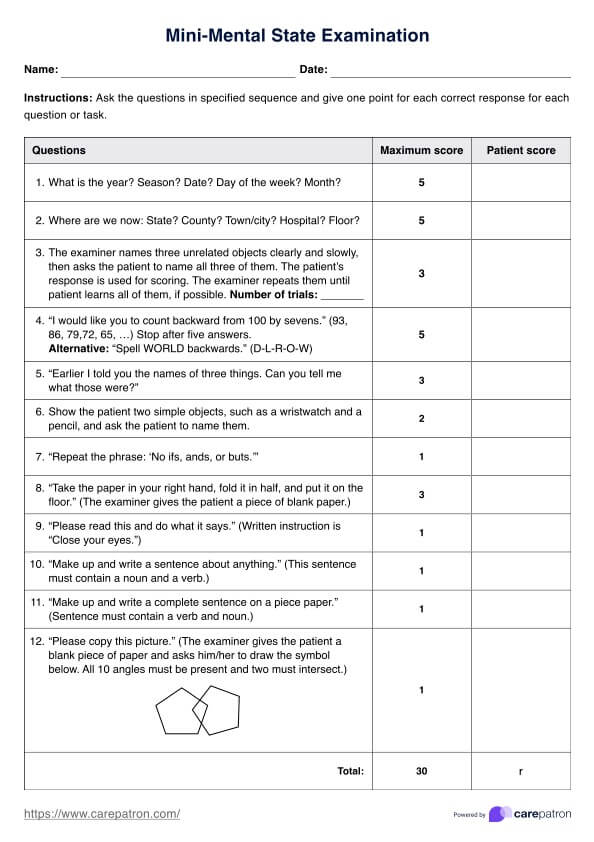
Developed in 1975 by Dr. Marshal Folstein and colleagues, the Mini Mental State Examination is a 30-point questionnaire designed to screen for cognitive impairment. It assesses a range of cognitive functions, including:
- Orientation: Awareness of time (date, year, season) and place (country, state, city, building, floor).
- Registration: Ability to remember three unrelated words immediately.
- Attention and Calculation: Tasks like serial sevens (subtracting 7 from 100 repeatedly) or spelling a word backward.
- Recall: Ability to remember the three words from the registration task after a few minutes.
- Language: Naming objects, repeating a phrase, following a three-stage command, reading a sentence, and writing a sentence.
- Copying: Drawing intersecting pentagons.
The MMSE is administered by a trained clinician and typically takes 5-10 minutes. Scores range from 0 to 30, with lower scores indicating greater cognitive impairment. It’s important to note that the MMSE is a screening tool, not a diagnostic one. It helps identify individuals who might benefit from a more thorough neurological or neuropsychological evaluation. Its simplicity, portability, and widespread acceptance have made it a global standard, laying the groundwork for digital iterations.
Why Cognitive Assessment Matters in the Digital Age
In an increasingly complex and rapidly evolving digital world, cognitive health is not just about memory; it’s about the capacity to adapt, learn, process information, and engage with technology. From navigating intricate software interfaces to discerning credible information online, robust cognitive function is paramount for daily life and professional success. Consequently, the demand for accurate, accessible, and scalable cognitive assessment tools is growing.
Technology amplifies this need in several ways:
- Increased Screen Time and Cognitive Load: Digital environments can place new demands on attention, executive function, and memory, making cognitive resilience more important.
- Telehealth and Remote Care: The shift towards virtual healthcare necessitates digital tools for assessment that can be administered remotely without compromising validity.
- Personalized Health Management: Wearable technology and digital health platforms generate vast amounts of data, creating opportunities to integrate cognitive assessment into a holistic view of health.
- Early Intervention Potential: Digital tools can facilitate more frequent and less burdensome assessments, potentially allowing for earlier detection of subtle cognitive changes, crucial for timely intervention strategies.
Thus, the MMSE, as a foundational assessment, finds renewed relevance in helping to flag cognitive changes in a population increasingly reliant on, and exposed to, digital stimuli.
Digitizing the MMSE: Bridging the Gap Between Pen-and-Paper and Pixels
The transition from traditional, paper-based assessment to digital platforms represents a significant leap forward, addressing many of the limitations of the original MMSE.
The Rise of Digital Platforms for Assessment
The digitalization of the MMSE involves translating its components into software applications, web-based tools, or tablet-based interfaces. These digital versions offer several compelling advantages:
- Standardized Administration: Digital platforms can ensure consistent prompts, timing, and visual stimuli, reducing variability introduced by different administrators.
- Automated Scoring: Manual scoring is prone to human error and can be time-consuming. Digital tools automatically calculate scores, providing immediate results and eliminating scoring discrepancies.
- Efficient Data Collection and Storage: Results are instantly recorded, stored securely, and can be easily retrieved for longitudinal tracking. This minimizes paperwork, reduces filing errors, and improves data integrity.
- Enhanced Engagement: Some digital versions incorporate interactive elements or gamification principles, which can make the assessment more engaging for patients, potentially reducing anxiety and improving compliance.
Enhancing Accessibility and Reach Through Technology
One of the most profound impacts of digitizing the MMSE is its ability to democratize access to cognitive screening:
- Telemedicine Integration: Digital MMSEs can be administered remotely via video conferencing platforms, allowing clinicians to assess patients across geographical barriers. This is particularly beneficial for individuals in rural areas, those with mobility issues, or during public health crises.
- Broader Population Screening: The ease of digital administration opens doors for large-scale screening initiatives in community settings, public health programs, or even for self-assessment (with appropriate clinical oversight and interpretation).
- Multilingual Support: Digital platforms can easily incorporate multiple languages, making the MMSE accessible to diverse populations without requiring a human interpreter for every language variant.
Data Management and Integration in Healthcare IT
Beyond individual assessment, digital MMSE data offers immense value when integrated into broader healthcare information systems:
- Electronic Health Records (EHRs): Digital MMSE results can be seamlessly integrated into a patient’s EHR, providing clinicians with a comprehensive view of their cognitive history alongside other medical information. This holistic data enables better-informed clinical decisions.
- Longitudinal Tracking: With digital records, healthcare providers can easily track changes in MMSE scores over time, identifying trends that might signal progressive cognitive decline or the effectiveness of interventions.
- Population Health Management: Aggregated, anonymized MMSE data from large patient cohorts can be analyzed to identify population-level trends in cognitive health, inform public health strategies, and support epidemiological research.
- Clinical Research: Digital platforms simplify data collection for clinical trials and research studies on cognitive disorders, accelerating drug development and therapeutic advancements.
AI, Machine Learning, and the Future of Cognitive Screening
The true revolution in cognitive assessment extends beyond mere digitalization, moving into the realm of artificial intelligence (AI) and machine learning (ML). These technologies promise to transform how we interpret data, predict outcomes, and even evolve the assessment itself.
Automated Scoring and Interpretation with AI
While basic digital MMSE tools offer automated scoring, AI can take this a step further by introducing sophisticated interpretation capabilities:
- Nuanced Scoring: AI algorithms can be trained on vast datasets of MMSE results and corresponding clinical diagnoses to identify subtle patterns that might be missed by human scorers, providing more accurate and consistent scoring, especially for ambiguous responses.
- Preliminary Interpretation and Flagging: AI can provide preliminary interpretations of scores, flagging results that indicate a higher likelihood of specific cognitive impairments, guiding clinicians towards specific diagnostic pathways. This acts as an intelligent assistant, streamlining the diagnostic process.
- Voice and Image Analysis: AI can analyze vocal patterns during verbal tasks or subtle inconsistencies in drawing tasks (like the intersecting pentagons), extracting objective biomarkers that augment the numerical score. For instance, changes in speech tempo, hesitancy, or specific grammatical errors might be indicative of particular cognitive changes.
Predictive Analytics and Early Detection
Machine learning algorithms are adept at identifying complex patterns in data, making them invaluable for predictive analytics in cognitive health:
- Risk Stratification: By analyzing MMSE scores alongside demographic data, medical history, genetic markers, and other digital health data, ML models can identify individuals at higher risk of developing cognitive decline or specific conditions like Alzheimer’s disease, even before overt symptoms appear.
- Prognosis Prediction: AI can help predict the likely trajectory of cognitive decline, informing patient and family planning, and guiding the timing and intensity of interventions.
- Personalized Interventions: By understanding individual risk factors and cognitive profiles, AI could theoretically suggest personalized preventative strategies or cognitive training programs.
Beyond the MMSE: AI-Enhanced Cognitive Batteries and Continuous Monitoring
While the MMSE is a valuable screening tool, AI is paving the way for more comprehensive, adaptive, and continuous cognitive monitoring:
- Adaptive Testing: AI can power adaptive cognitive test batteries that adjust the difficulty of questions based on a participant’s responses, offering a more precise and efficient assessment tailored to the individual.
- Digital Biomarkers: AI can process data from a wide array of sources—smartphones (typing speed, app usage patterns), wearables (sleep patterns, activity levels), smart home devices (gait analysis, social interaction patterns), and even voice assistants—to identify “digital biomarkers” of cognitive health. These passive, continuous measurements offer a richer, ecological view of cognitive function than episodic tests like the MMSE.
- Integrated Cognitive Health Ecosystems: The MMSE could become one component within a larger, AI-driven cognitive health ecosystem, where its snapshot assessment is complemented by continuous monitoring and more specialized digital neuropsychological tests, providing a truly holistic and dynamic understanding of an individual’s cognitive status.
Navigating the Digital Frontier: Challenges and Considerations
The technological revolution in cognitive assessment, while promising, is not without its hurdles. Integrating the MMSE into a digital framework requires careful attention to critical factors.
Data Privacy, Security, and Ethical AI Use
The digitization of sensitive health information, especially cognitive assessment data, brings paramount concerns regarding privacy and security:
- HIPAA and GDPR Compliance: Digital health platforms must rigorously adhere to data protection regulations like HIPAA in the US and GDPR in Europe, ensuring patient data is encrypted, anonymized where appropriate, and accessible only to authorized personnel.
- Cybersecurity Risks: Protecting against data breaches, hacking, and unauthorized access is crucial to maintaining patient trust and preventing misuse of sensitive cognitive health information.
- Ethical AI Deployment: As AI takes on more interpretive and predictive roles, ethical considerations become critical. Ensuring AI algorithms are unbiased, transparent, and interpretable is essential to avoid perpetuating societal inequalities or making erroneous life-altering predictions. Human oversight remains vital.
Ensuring Validity, Reliability, and Digital Literacy
Translating a traditional assessment to a digital format demands rigorous validation:
- Psychometric Equivalence: It is imperative that digital versions of the MMSE demonstrate psychometric equivalence to the paper-and-pencil version. This means ensuring that they measure the same constructs with the same level of accuracy and consistency, yielding comparable results.
- User Interface Design: The digital interface must be intuitive, user-friendly, and accessible to individuals of varying technological proficiency and cognitive states. Poor design can invalidate results or exclude certain demographics.
- Digital Divide: Not all individuals have equal access to technology or the digital literacy required to use digital assessment tools. Strategies must be in place to ensure equitable access and support for all populations.
The Role of Human Expertise in a Tech-Driven Landscape
Despite the power of technology, human clinicians remain indispensable in the cognitive assessment process:
- Contextual Interpretation: While AI can provide data and patterns, only a human clinician can fully contextualize MMSE results within a patient’s unique medical history, social situation, and cultural background.
- Patient Interaction and Empathy: The nuanced observation of patient behavior, emotional state, and non-verbal cues during an assessment cannot be replicated by technology. The human element of empathy and rapport is crucial for accurate assessment and patient care.
- Holistic Care Planning: Technology provides tools, but clinicians are responsible for synthesizing all available information to formulate diagnoses, develop treatment plans, and provide ongoing support and counseling to patients and their families. Technology should augment, not replace, clinical judgment.

Conclusion
The Mini Mental State Examination, a venerable tool in cognitive assessment, is experiencing a remarkable evolution in the digital age. From its traditional paper-and-pencil origins, it is transforming into a sophisticated digital instrument, leveraging the power of applications, integrated data systems, and advanced artificial intelligence. This technological shift promises greater accessibility, enhanced efficiency, and more insightful interpretations of cognitive function, paving the way for earlier detection, more personalized interventions, and a more robust understanding of cognitive health.
However, as we embrace these innovations, it is paramount to navigate the digital frontier with caution, prioritizing data privacy, ensuring the validity of digital tools, and recognizing the irreplaceable role of human expertise. The future of cognitive assessment, with the MMSE as a foundational element, lies in a synergistic blend of cutting-edge technology and compassionate, informed clinical practice, ultimately leading to better outcomes for individuals grappling with cognitive challenges.
aViewFromTheCave is a participant in the Amazon Services LLC Associates Program, an affiliate advertising program designed to provide a means for sites to earn advertising fees by advertising and linking to Amazon.com. Amazon, the Amazon logo, AmazonSupply, and the AmazonSupply logo are trademarks of Amazon.com, Inc. or its affiliates. As an Amazon Associate we earn affiliate commissions from qualifying purchases.