
At its core, mathematics provides the fundamental language and logic upon which the entire edifice of technology is built. From the simplest calculation in a calculator app to the complex algorithms powering artificial intelligence, mathematical concepts are the silent architects of our digital world. Among these foundational concepts, the “greater than” sign (>) stands out as a deceptively simple yet profoundly powerful operator. While its primary role lies in expressing magnitude in arithmetic, its true ubiquity and indispensable nature become glaringly apparent when we delve into the realms of technology, software development, data analysis, and even the intricate workings of AI.
This article will embark on a journey from the elementary definition of the greater than sign to its sophisticated applications in the technological landscape. We will uncover how this single symbol, a cornerstone of relational logic, underpins everything from conditional programming statements to advanced data filtering and cybersecurity protocols. Understanding its role is not just about appreciating a mathematical symbol; it’s about grasping a critical piece of the puzzle that makes our digital lives possible.
The Fundamental Concept: A Building Block of Logic
Before exploring its technological manifestations, it’s essential to solidify our understanding of the greater than sign in its purest mathematical context. This symbol represents a fundamental comparison, one of the most basic logical operations humans perform.
Defining the “>” Symbol
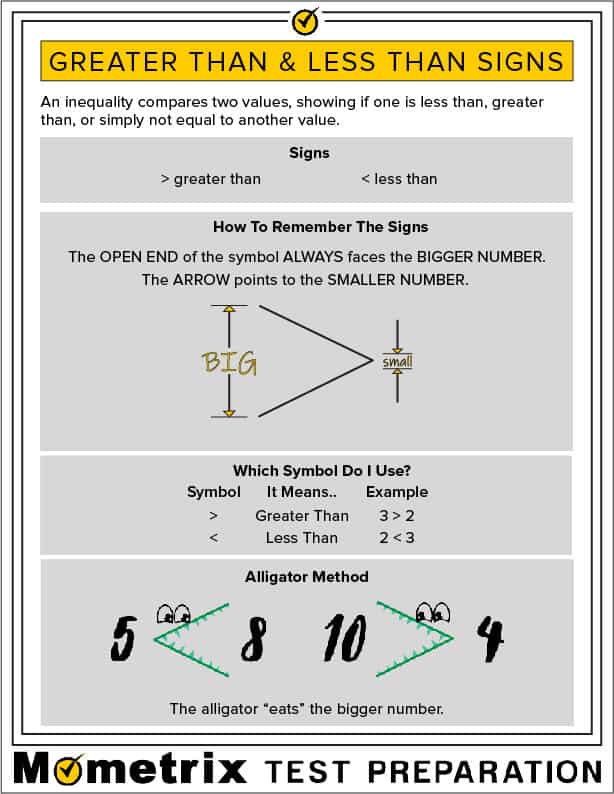
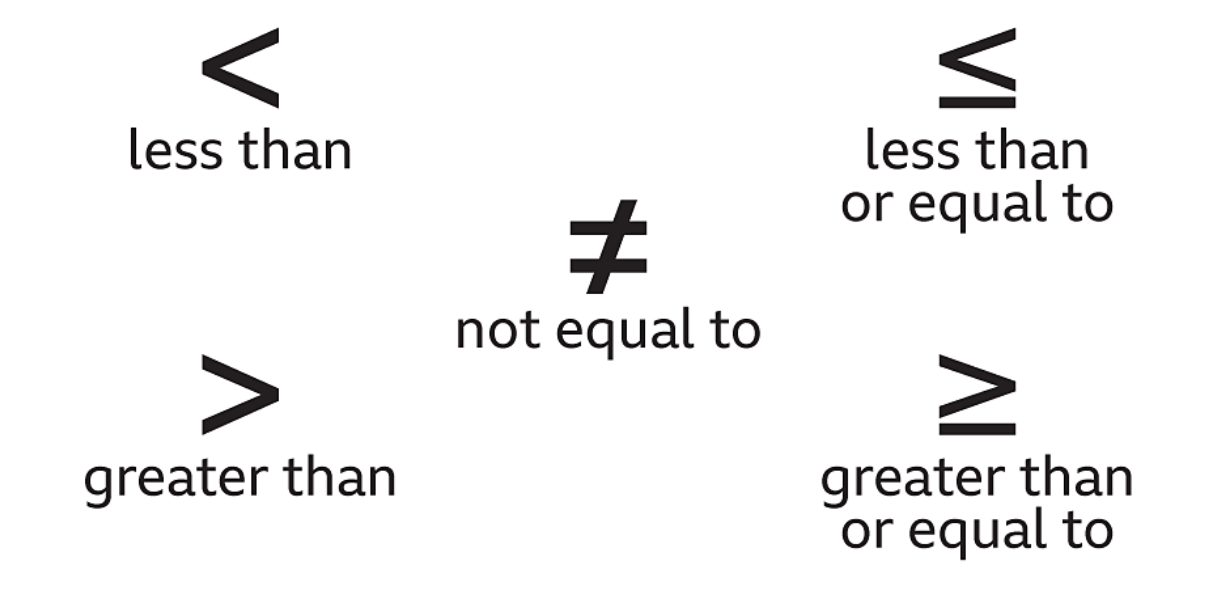
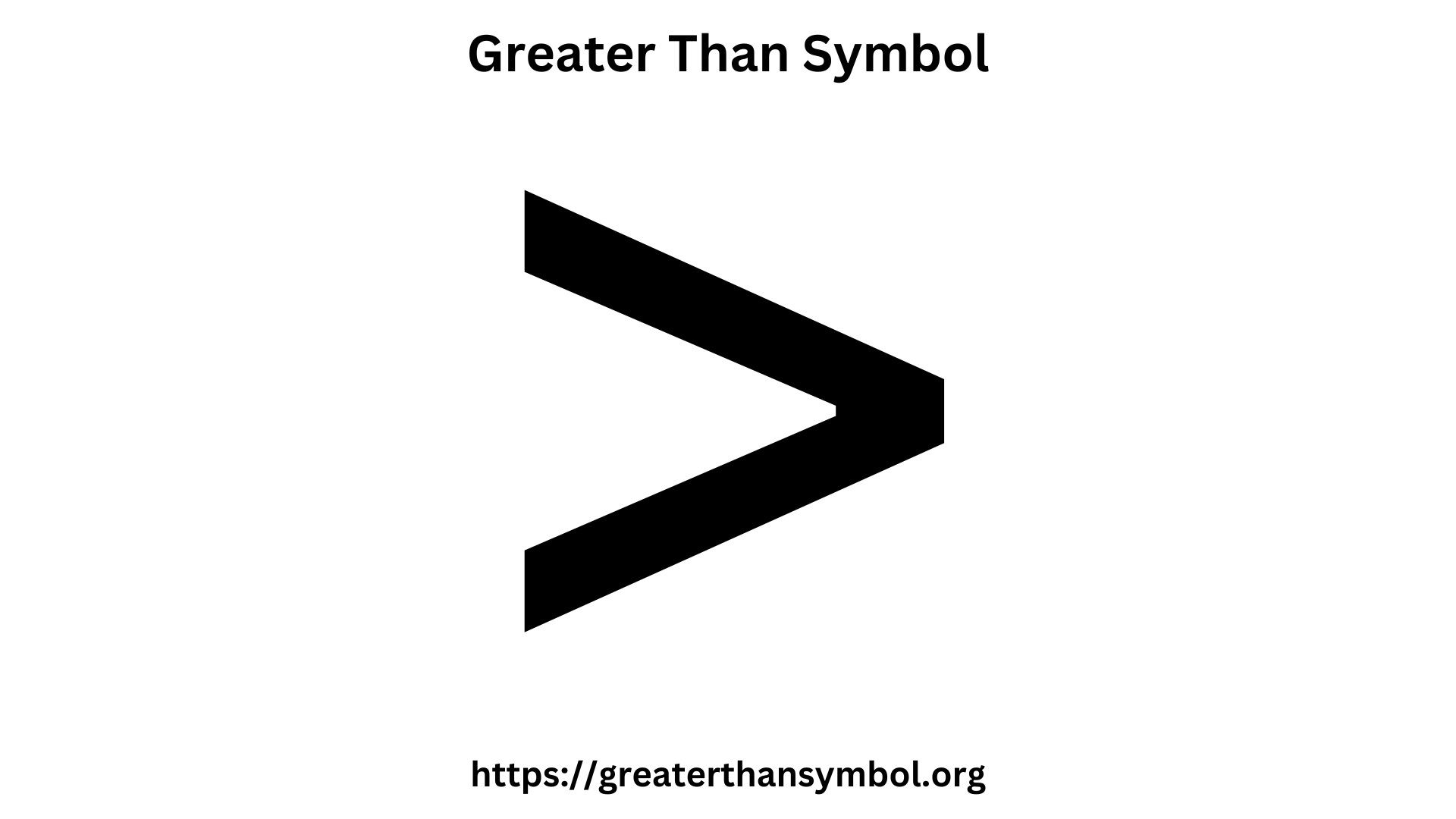
In mathematics, the “greater than” sign (>) is a binary relational operator used to compare two values. When placed between two numbers or expressions, it asserts that the value on the left side is larger or of a higher magnitude than the value on the right side. For example, “5 > 3” reads as “five is greater than three,” which is a true statement. Conversely, “2 > 7” is false. Its counterpart is the “less than” sign (<), and together with “equal to” (=), “greater than or equal to” (≥), and “less than or equal to” (≤), they form the bedrock of comparative mathematics.
The visual representation of the sign, often described as an open mouth pointing towards the larger value, makes it intuitively understandable. This simplicity belies its critical role in establishing order, making decisions, and evaluating conditions across countless scenarios, both abstract and concrete.
Historical Context and Universality
The mathematical symbols we use today have evolved over centuries, with many becoming standardized relatively recently. The symbols for “greater than” and “less than” were introduced by English mathematician Thomas Harriot in his work Artis Analyticae Praxis in 1631, though the book was published posthumously. While Harriot’s initial usage might have differed slightly from modern conventions, his introduction laid the groundwork for their widespread adoption.
Today, the “>” symbol is universally recognized across cultures and programming languages. This universality is crucial for technology, enabling developers worldwide to collaborate on software and algorithms without linguistic barriers for core logical operations. It ensures that a piece of code written in one country comparing two values will be interpreted identically by a compiler or interpreter anywhere else, a testament to the power of standardized mathematical notation.
Basic Applications Beyond Arithmetic
While seemingly confined to basic arithmetic, the “greater than” sign’s conceptual power extends far beyond simple number comparisons. In logic, it helps define relationships and establish precedence. For instance, in set theory, one set can be “greater than” another in terms of cardinality (number of elements) or if it’s a proper superset. In statistics, it helps compare values against thresholds or averages. This inherent ability to establish a hierarchical relationship between entities makes it an invaluable tool for structuring information and decision-making, directly paving the way for its applications in the digital world.
The Greater Than Sign in the Digital Realm: Programming and Algorithms
The leap from abstract mathematical concept to concrete technological utility is most evident in programming. The “greater than” sign is not just a symbol on a whiteboard; it’s an active command that dictates the flow and behavior of software applications, underpinning almost every decision-making process within a computer.
Conditional Statements and Flow Control
The cornerstone of all programming logic is the conditional statement, typically implemented using if, else if, and else constructs. These statements allow programs to make decisions based on whether certain conditions are met. The “greater than” sign is an indispensable component of these conditions.
Consider a simple example: displaying a message to a user.
age = 18
if age > 16:
    print("You are old enough to drive.")
else:
    print("You are not old enough to drive yet.")
Here, age > 16 is the condition. If it evaluates to True, the first block of code executes; otherwise, the else block runs. This seemingly trivial comparison is at the heart of complex applications, controlling everything from user access rights (e.g., if user_level > 5: grant_admin_privileges()) to game logic (e.g., if player_score > high_score: update_leaderboard()). Without the ability to compare values, programs would be linear and unresponsive, incapable of adapting to different inputs or states.
Data Comparison and Sorting Algorithms
Data is the lifeblood of modern technology, and the ability to organize, search, and retrieve it efficiently is paramount. Sorting algorithms, which arrange data in a specific order (e.g., ascending or descending), rely heavily on comparison operators like “>”. Whether it’s sorting a list of numbers, alphabetizing names, or ranking products by price, the underlying mechanism involves repeatedly comparing elements to determine their relative order.
For instance, in a bubble sort algorithm, adjacent elements are compared, and if one is found to be “greater than” the other (according to the desired sort order), they are swapped. This iterative comparison process, using operators like >, ultimately leads to a fully sorted dataset. Similarly, search algorithms might use comparisons to quickly narrow down a dataset, for example, if current_value > target_value: search_left_half(). The efficiency of these algorithms directly impacts the performance of databases, search engines, and any application that manages large volumes of information.
Boolean Logic and Operators
In the digital world, everything boils down to binary states: true or false, 1 or 0. Boolean logic, named after George Boole, provides a framework for evaluating and combining these states. Comparison operators like “>” produce a Boolean result: True or False. This Boolean output can then be combined with other Boolean values using logical operators such as AND, OR, and NOT to form more complex conditions.
For example, if (temperature > 30) AND (humidity > 70): print("High heat warning"). Here, two “greater than” conditions are combined to trigger a specific action. This layered approach to logic is fundamental to building sophisticated decision-making systems, where multiple criteria must be met or evaluated to determine a course of action. It’s the engine behind complex access control systems, sophisticated query filters, and the intricate state management in modern software.
Enhancing User Experience and Functionality through Comparison
The utility of the “greater than” sign isn’t confined to the backend logic of software; it directly impacts how users interact with technology, ensuring robustness, relevance, and intelligent behavior.
Input Validation and Error Handling
User input is notoriously unpredictable. Technology must be robust enough to handle valid data, invalid data, and everything in between. The “greater than” sign plays a crucial role in input validation, ensuring that data entered by users meets specified criteria before being processed.
For instance, when a user enters their age, a program might check if age > 0 to ensure a positive value, or if age > 120 to flag an improbable input. Similarly, a password strength checker might verify if password_length > 8 to enforce minimum security standards. By establishing these comparison-based rules, applications can prevent common errors, enhance data integrity, and guide users towards providing correct information, thereby improving the overall user experience and application stability.
Performance Metrics and Thresholds
In many technological contexts, performance is measured against predefined thresholds. Whether it’s network latency, CPU usage, or the remaining battery life of a device, the “greater than” sign helps monitor and react to these metrics.
- Alert Systems: An IT monitoring system might trigger an alert if
server_load > 80%orfailed_login_attempts > 5within a short period. - Dynamic Scaling: Cloud services might automatically provision more resources (e.g., add more servers) if
traffic_volume > predefined_thresholdto handle increased demand. - User Feedback: A progress bar might turn red if
download_percentage > 90but the estimated time remaining is still very high, indicating a potential issue.
These dynamic responses, all driven by “greater than” comparisons, enable systems to be proactive, adaptive, and resilient, ensuring optimal performance and reliability without constant human intervention.
AI, Machine Learning, and Decision Trees
The field of Artificial Intelligence, particularly machine learning, heavily leverages comparison operations. Decision trees, a popular algorithm for classification and regression, are fundamentally built upon a series of “greater than” (or “less than”) questions. Each node in a decision tree represents a feature and a threshold. For example, a node might ask if 'age' > 30. Based on the answer, the data point traverses down a specific branch, leading to further comparisons until a classification or prediction is made.
In neural networks, while the comparisons are less explicit, the activation functions often involve thresholds (e.g., if the weighted sum of inputs is greater than a certain value, activate the neuron). Furthermore, in reinforcement learning, agents often compare the reward for an action to a predicted value, or compare their current score to a target score, using “greater than” logic to optimize their behavior and learn optimal strategies. The ability to discern and act upon relative magnitudes is central to how AI learns, reasons, and makes intelligent decisions.
Beyond Basic Comparison: Advanced Applications in Tech
The utility of the “greater than” sign extends into more specialized and advanced technical domains, demonstrating its foundational importance across the technology spectrum.
Database Queries and Filtering
Databases are repositories of structured information, and querying them effectively is crucial for retrieving relevant data. SQL (Structured Query Language), the standard language for managing relational databases, uses comparison operators extensively to filter and select data.
For example, to retrieve all customers who have spent more than $1000, a SQL query might look like:
SELECT * FROM Customers WHERE total_spend > 1000;
This simple WHERE clause, powered by the “>” operator, allows users and applications to extract precisely the subsets of data they need from vast datasets. Similar logic applies to non-relational databases and search engines, where filters based on numerical ranges or criteria are fundamental for refining search results and presenting relevant information to users.
Cybersecurity and Anomaly Detection
In cybersecurity, identifying anomalous behavior is critical for detecting threats. The “greater than” sign is an unsung hero in this domain, helping to establish baselines and flag deviations.
- Traffic Monitoring: A firewall might block IP addresses from which
connection_attempts > 100in a minute, indicating a potential brute-force attack. - User Behavior Analytics: If a user’s
login_frequency > average_frequencyby a significant margin, it could trigger an alert for a compromised account. - Resource Usage: Sudden spikes in
CPU_usage > normal_thresholdordata_transfer > expected_volumemight signal malware activity or a denial-of-service attack.
By constantly comparing current system states and metrics against established norms or security thresholds, cybersecurity systems leverage the “greater than” sign to identify potential threats, protect sensitive data, and maintain the integrity of digital infrastructure.
Scientific Computing and Simulation
Scientific computing, which uses computers to solve complex scientific and engineering problems, relies heavily on mathematical modeling and simulation. In these fields, “greater than” comparisons are fundamental for controlling the flow of simulations, evaluating convergence criteria, and making decisions based on calculated values.
For instance, in a weather simulation, a model might compare current_temperature > freezing_point to determine if precipitation should be simulated as rain or snow. In engineering simulations, stress_level > material_yield_strength could indicate a structural failure. Moreover, iterative numerical methods often continue calculations while error_margin > tolerance, meaning the process continues as long as the error is greater than an acceptable threshold, ensuring precision and accuracy in scientific research and development.
Best Practices for Using Comparison Operators in Tech Development
While the concept of “greater than” is straightforward, its effective and robust application in technology requires adherence to certain best practices. Overlooking these can lead to subtle bugs, performance issues, or security vulnerabilities.
Precision and Data Types
In programming, the type of data being compared matters immensely. Comparing integers, floating-point numbers, or strings requires careful consideration. Floating-point comparisons (numbers with decimal points) can be particularly tricky due to potential precision issues. For instance, 0.1 + 0.2 > 0.3 might evaluate to False in some languages due to the way floating-point numbers are represented internally, leading to tiny discrepancies. Developers often use a small epsilon value for “fuzzy” comparisons, checking if (value1 - value2) > epsilon rather than direct equality. Similarly, comparing strings lexicographically using > might not always align with human intuition unless strict alphabetical order is intended.
Readability and Maintainability
Clear and concise code is paramount for long-term project success. While multiple comparison operators can achieve the same logical outcome, choosing the most straightforward and readable one improves code maintainability. Overly complex nested if statements with many comparisons can become difficult to understand and debug. Using helper functions or clearly named variables for complex conditions involving “greater than” comparisons can significantly enhance code clarity.
Edge Cases and Error Prevention
When dealing with comparisons, developers must always consider edge cases: the minimum and maximum possible values, zero, null/undefined values, and empty inputs. What happens if a number is exactly equal to the threshold? What if a value expected to be a number is actually text? Robust code anticipates these scenarios and handles them gracefully, often through additional checks (e.g., if value is not None and value > 0). Failing to account for edge cases in “greater than” comparisons can lead to unexpected program behavior, crashes, or security loopholes.
In conclusion, the simple “greater than” sign, a humble mathematical symbol, is a titan in the world of technology. Its ability to facilitate basic comparisons forms the bedrock of complex decision-making, data manipulation, and intelligent systems. From dictating the flow of software to safeguarding digital assets and powering the most advanced AI, the “>” sign is a testament to how fundamental mathematical logic transcends its initial purpose, becoming an indispensable tool that underpins virtually every aspect of our technologically driven lives. Understanding its role is key to comprehending the intricate logic that makes our digital world function.
aViewFromTheCave is a participant in the Amazon Services LLC Associates Program, an affiliate advertising program designed to provide a means for sites to earn advertising fees by advertising and linking to Amazon.com. Amazon, the Amazon logo, AmazonSupply, and the AmazonSupply logo are trademarks of Amazon.com, Inc. or its affiliates. As an Amazon Associate we earn affiliate commissions from qualifying purchases.