
In the fast-paced world of branding, every detail contributes to the overarching narrative a company tells about itself. From the meticulously chosen logo font to the precise tone of voice in a marketing campaign, consistency and professionalism are paramount. Yet, amidst the grand strategies and creative explosions, a subtle but significant element often goes overlooked: linguistic precision. The seemingly minor distinction between homophones like “there,” “their,” and “they’re” might appear trivial, but in the realm of brand identity, such errors can silently erode credibility, diminish professionalism, and subtly undermine the very message a brand strives to convey.
This isn’t merely about adhering to grammar rules; it’s about safeguarding your brand’s reputation. In an age where consumers scrutinize every piece of content and form opinions based on the minutiae, perfect grammar is not a luxury—it’s an essential component of strategic branding. This article will dissect these three commonly confused words, not just to clarify their individual meanings, but to underscore their profound impact on your brand’s perception, authority, and ultimate success.
The Imperative of Linguistic Precision in Branding
A brand is built on trust, perception, and consistency. Every touchpoint, from an email to a billboard, is an opportunity to reinforce these values or inadvertently weaken them. Grammatical errors, particularly with such fundamental distinctions, send unintended signals to your audience.
The Silent Language of Professionalism: How Correct Grammar Builds Trust and Credibility
Imagine encountering a marketing email or a website banner from a reputable company, only to spot a glaring error like “their going to love our new product” instead of “they’re going to love our new product.” While some might dismiss it as a typo, many discerning customers will unconsciously—or consciously—register a dip in professionalism. In their minds, if a brand can’t get basic grammar right, what else are they being sloppy about?
This silent judgment is a powerful force. Brands that consistently present error-free communication signal an attention to detail, a commitment to quality, and an overall sense of competence. This builds a bedrock of trust, assuring consumers that the brand is meticulous in all its operations, from product development to customer service. Conversely, a brand riddled with grammatical slips might be perceived as careless, unprofessional, or even incompetent, leading to skepticism and a reluctance to engage. Trust, once eroded, is incredibly difficult to rebuild, making linguistic precision a non-negotiable aspect of professional brand communication.
Brand Authority and Perceived Intelligence: The Link Between Linguistic Accuracy and Market Leadership
Establishing brand authority means being recognized as an expert, a thought leader, and a reliable source within your industry. This authority is not solely derived from innovative products or services, but also from how that expertise is communicated. A brand that articulates its ideas with clarity, precision, and grammatical correctness projects an image of intelligence and sophistication. It reinforces the idea that the brand understands its domain deeply and can communicate complex concepts effectively.
Conversely, a brand that struggles with fundamental language usage inadvertently signals a lack of intellectual rigor. If a brand’s white papers, blog posts, or social media updates are marred by errors, it can diminish its perceived intelligence and weaken its authoritative voice. Why would customers trust a brand’s insights on financial planning or advanced technology if its basic written communication is flawed? Linguistic accuracy is a subtle yet powerful tool for demonstrating intellectual prowess, elevating a brand’s status, and solidifying its position as a market leader. It suggests that the brand pays attention to the details, which is often a hallmark of genuine expertise.
The Cost of Carelessness: How Grammatical Errors Erode Brand Equity and Impact Customer Perception
The consequences of grammatical carelessness extend beyond fleeting impressions; they can inflict tangible damage on a brand’s equity. Brand equity, the commercial value derived from consumer perception of the brand name of a particular product or service, is a fragile asset. Every positive interaction contributes to it, and every negative one detracts. Grammatical errors, particularly those involving common distinctions like “there,” “their,” and “they’re,” represent negative interactions.
Consider the cumulative effect: a series of poorly worded ads, an error-laden social media campaign, or an email newsletter filled with mistakes. Each instance chips away at the brand’s perceived quality, reliability, and professionalism. This erosion can lead to a decrease in customer loyalty, a reluctance to recommend the brand to others, and ultimately, a negative impact on sales and market share. Customers, subconsciously associating these errors with a lack of care or competence, may opt for competitors who present a more polished and professional image. In the competitive marketplace, where differentiation is key, meticulous attention to language can be a surprisingly powerful competitive advantage, while its neglect can be a significant liability.
Deconstructing the Trio: “There,” “Their,” and “They’re” in Brand Communication
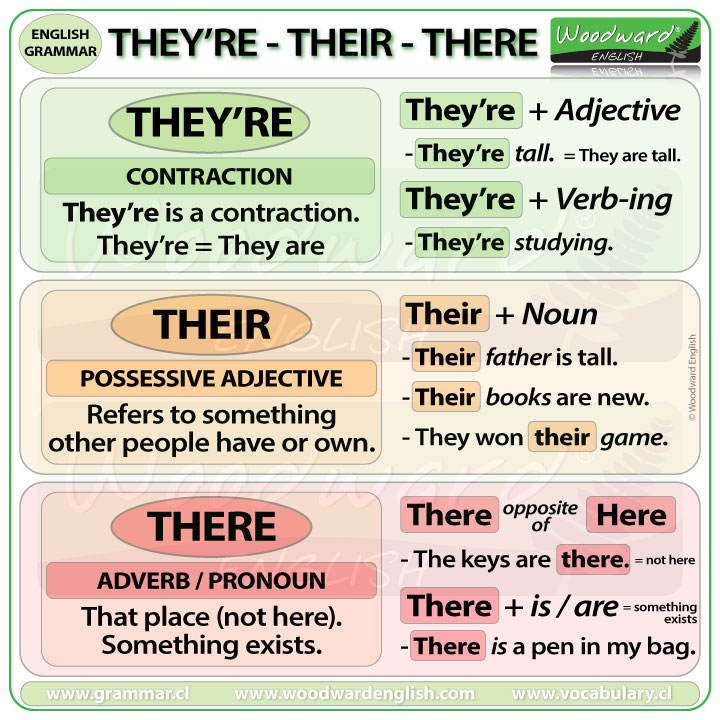
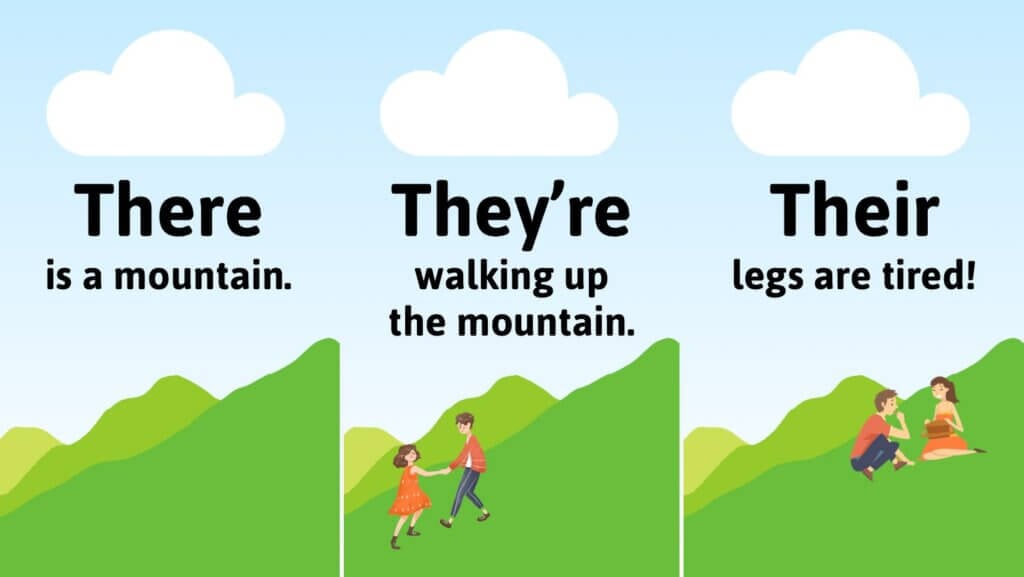
Understanding the distinct roles of these three words is the first step toward impeccable brand communication. While their pronunciations are identical, their meanings and grammatical functions are entirely separate.
“There”: The Location & Existence Indicator
“There” primarily serves two functions:
- Indicating a place or position: Often answering the question “where?”
- Example in Branding: “Our flagship store is there, in the heart of the city.” (Points to a specific location)
- Example in Branding: “We’ve identified a gap in the market, and there lies our opportunity.” (Indicates a conceptual location for an idea)
- Introducing a sentence (an expletive pronoun) or indicating existence: Often used with “is,” “are,” “was,” “were.”
- Example in Branding: “There are numerous benefits to choosing our premium package.” (Indicates the existence of benefits)
- Example in Branding: “There‘s no doubt that customer satisfaction is our top priority.” (Indicates certainty of a fact)
Brands frequently use “there” to direct customers, highlight opportunities, or assert facts about their offerings. Misusing “their” or “they’re” in these contexts (“Their is a new product launch,” or “They’re are many reasons to buy”) immediately signals a lack of editorial rigor.
“Their”: The Possessive Powerhouse
“Their” is a possessive pronoun, indicating ownership or association belonging to them. It tells us who something belongs to or is associated with.
- Example in Branding: “Our customers love their personalized experience.” (The experience belongs to the customers)
- Example in Branding: “We value their feedback as it helps us refine our services.” (The feedback originates from and belongs to the customers)
- Example in Branding: “The team presented their innovative solution at the industry conference.” (The solution belongs to the team)
In branding, “their” is crucial for connecting with target audiences, acknowledging customer agency, and describing collective attributes. Correctly using “their” shows respect for your audience and clearly attributes ownership where it belongs. Using “there” or “they’re” instead (“There feedback is important,” or “They’re products are cutting edge”) muddles the message and reflects poorly on the brand’s attention to detail.
“They’re”: The Contraction of Clarity
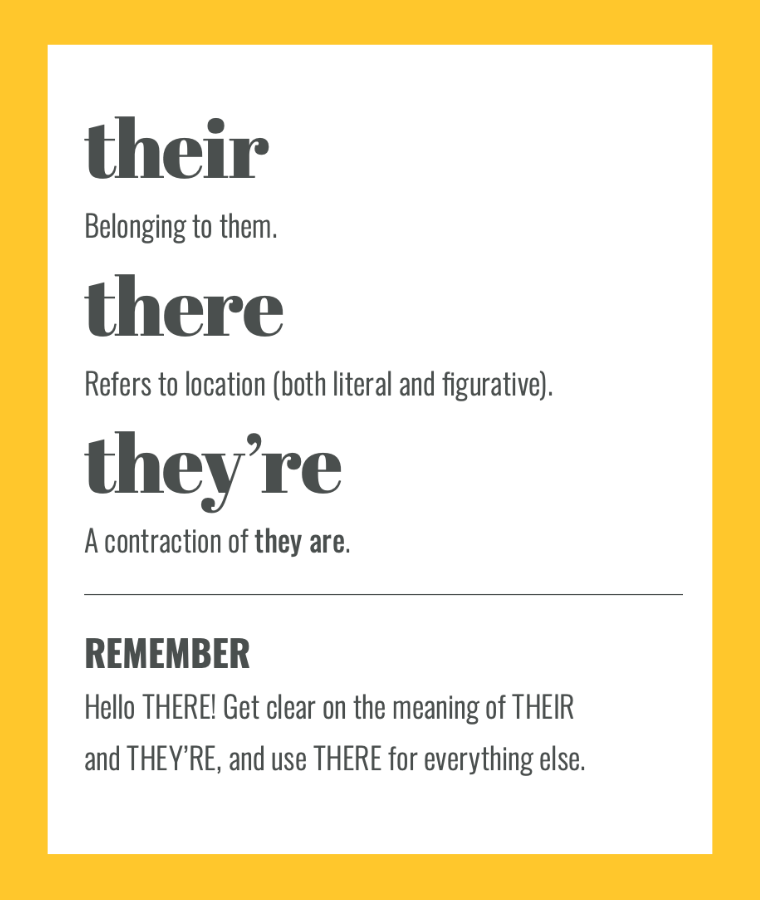
“They’re” is a contraction of “they are.” It’s a shorthand, combining the pronoun “they” with the verb “are.”
- Example in Branding: “They’re committed to delivering exceptional quality.” (Meaning: They are committed)
- Example in Branding: “Our competitors? They’re often playing catch-up to our innovations.” (Meaning: Our competitors are often playing catch-up)
- Example in Branding: “Customers who choose our sustainable products often say they’re making a positive impact.” (Meaning: Customers often say they are making an impact)
“They’re” is frequently used in brand communication to describe the actions, states, or characteristics of people, groups, or entities. It allows for a more conversational and succinct tone, but only when used correctly. Substituting it with “there” or “their” (“There committed to quality,” or “Their innovating rapidly”) creates grammatical chaos and undermines the brand’s attempt at clear, direct communication. Each error, however small, introduces a moment of confusion or distraction for the reader, pulling them away from the intended message and towards a critique of the brand’s basic literacy.
Beyond the Basics: Advanced Strategies for Brand-Consistent Language
While understanding the individual meanings of “there,” “their,” and “they’re” is foundational, a truly brand-centric approach requires a systematic integration of linguistic excellence into all communication strategies.
Implementing a Brand Style Guide: Integrating Grammatical Standards into Overall Brand Guidelines
A comprehensive brand style guide is an indispensable tool for maintaining consistency across all brand touchpoints. Beyond defining logos, colors, and tone of voice, it should explicitly address grammatical standards, punctuation, capitalization, and common usage pitfalls. This includes a clear directive on differentiating between “there,” “their,” and “they’re.” By codifying these rules, a brand style guide empowers everyone involved in content creation—from marketing teams and copywriters to social media managers and customer service representatives—to uphold the brand’s linguistic integrity. It serves as the single source of truth, ensuring that every piece of communication, internal or external, reflects the brand’s commitment to precision and professionalism. This proactive approach minimizes errors and fosters a cohesive brand voice that resonates with authority and reliability.
Leveraging Editorial Oversight: The Role of Proofreaders and Copy Editors in Protecting Brand Integrity
Even with a robust style guide, human error is inevitable. This is where professional editorial oversight becomes critical. Incorporating dedicated proofreaders and copy editors, or at least a strict peer-review process, into the content creation workflow is a powerful safeguard against grammatical slip-ups. These professionals possess a keen eye for detail, a deep understanding of linguistic nuances, and the objectivity needed to spot mistakes that originators might overlook.
For a brand, copy editors and proofreaders are not merely grammar police; they are guardians of brand integrity. They ensure that all public-facing content—be it website copy, ad campaigns, press releases, or social media posts—is flawless, impactful, and aligned with the brand’s voice and standards. Their work directly contributes to maintaining brand credibility, enhancing perceived intelligence, and preventing the costly erosion of brand equity that can result from careless communication. Investing in professional editorial oversight is an investment in the brand’s reputation and long-term success.
Training and Awareness for Brand Stewards: Empowering Employees to Be Grammar Advocates
Every employee who communicates on behalf of the brand, in any capacity, is a brand steward. This extends beyond the marketing department to sales teams, customer support, and even internal communications. Providing training and fostering awareness about the importance of linguistic precision is vital. Workshops, internal guidelines, and accessible resources can empower employees to understand why grammar matters to the brand and how to apply core rules consistently.
For instance, a customer service representative’s email response that correctly uses “their” to refer to customer feedback or “they’re” to explain a policy decision reinforces the brand’s professionalism, even in a one-on-one interaction. Conversely, a casual grammatical error in an official communication can undo much of the careful branding work done elsewhere. By cultivating a culture where linguistic accuracy is valued and understood by all, brands can create an army of grammar advocates, ensuring that the commitment to excellence permeates every level of communication.
Technology as an Ally, Not a Crutch: Using Tools Effectively Without Sacrificing Human Oversight
In the digital age, numerous technological tools—from spell checkers and grammar software to AI-powered writing assistants—offer invaluable support for identifying and correcting linguistic errors. These tools can act as a first line of defense, catching obvious mistakes and streamlining the editing process. However, it’s crucial for brands to view technology as an ally, not a crutch.
While helpful, automated tools often lack the nuanced understanding of context, tone, and specific brand voice that human editors possess. They might flag correct usage as an error or miss more subtle stylistic inconsistencies. Relying solely on technology can lead to generic, sometimes awkward, phrasing that deviates from the brand’s authentic voice. Brands should integrate these tools into their workflow as a preliminary check, always followed by careful human review. This balanced approach harnesses the efficiency of technology while preserving the critical human element of judgment, creativity, and deep understanding of brand identity, ensuring that communications are not just grammatically correct but also perfectly aligned with the brand’s strategic objectives.
The Long-Term ROI of Grammatical Excellence
The argument for impeccable grammar in branding is not merely about avoiding mistakes; it’s about making a strategic investment that yields substantial returns over time.
Fostering a Culture of Detail: How Attention to Grammar Reflects Broader Operational Excellence
A brand that is meticulous about its language signals a deeper commitment to excellence across all its operations. If a company sweats the small stuff in its written communication, it implies a similar dedication to detail in its product development, service delivery, and overall customer experience. This cultural mindset of precision and thoroughness is incredibly valuable. It permeates internal processes, encourages high standards, and ultimately leads to better quality outputs in every department. For consumers, this translates into a perception of a reliable, high-quality brand that genuinely cares about every facet of its offering, reinforcing trust and encouraging long-term engagement.
Enhancing Marketing Effectiveness: Clear Messaging Leads to Better Conversions
In marketing, clarity is king. Confusing or grammatically incorrect messaging can lead to misinterpretations, diluted calls to action, and ultimately, lower conversion rates. When a brand’s message is perfectly articulate and free of errors, it resonates more powerfully and directly with the target audience. The audience can focus entirely on the value proposition, unimpeded by grammatical distractions. This enhanced clarity ensures that marketing efforts are more effective in conveying benefits, building desire, and guiding consumers towards desired actions. The subtle investment in linguistic precision thus translates into a more efficient use of marketing budgets and a stronger return on investment.
Building Unshakeable Brand Loyalty: Trust and Respect Cultivated Through Professionalism
At its core, brand loyalty is built on a foundation of trust and respect. Consumers choose to repeatedly engage with brands they trust to deliver quality, consistency, and a positive experience. Professionalism, demonstrated through every aspect of interaction including flawless communication, is a key driver of this trust. A brand that consistently presents itself with clarity, confidence, and linguistic perfection earns the respect of its audience. This respect, cultivated over time through myriad error-free interactions, solidifies into unshakeable loyalty. Consumers feel a greater sense of confidence in and affinity for brands that demonstrate such an unwavering commitment to excellence, making linguistic precision a powerful, if understated, tool for long-term brand success and advocacy.
In conclusion, the seemingly minor differences between “there,” “their,” and “they’re” are far from insignificant in the world of branding. They are minute reflections of a brand’s broader commitment to quality, professionalism, and attention to detail. In an increasingly scrutinizing marketplace, impeccable grammar is not a mere compliance with rules; it is a strategic imperative that builds trust, reinforces authority, enhances communication effectiveness, and ultimately strengthens a brand’s equity and loyalty. Brands that master these linguistic nuances don’t just communicate; they elevate their entire presence, proving that every word counts.
aViewFromTheCave is a participant in the Amazon Services LLC Associates Program, an affiliate advertising program designed to provide a means for sites to earn advertising fees by advertising and linking to Amazon.com. Amazon, the Amazon logo, AmazonSupply, and the AmazonSupply logo are trademarks of Amazon.com, Inc. or its affiliates. As an Amazon Associate we earn affiliate commissions from qualifying purchases.