
In the realm of personal and professional finance, the ability to calculate a percentage of a number is more than just a middle-school math requirement; it is a fundamental pillar of financial literacy. Whether you are navigating the complexities of investment returns, determining the true cost of a business loan, or simply trying to optimize your monthly household budget, percentages are the language of money. Understanding how these figures work allows you to peel back the layers of marketing jargon and see the raw data beneath, empowering you to make decisions that lead to long-term wealth and stability.
This guide explores the mechanics of percentage calculations through the lens of money management, providing you with the tools to master your financial destiny.
The Fundamental Mathematics of Money: Why Percentages Matter
Before diving into complex financial scenarios, one must master the basic mechanics of the percentage. At its core, the word “percent” originates from the Latin per centum, meaning “by the hundred.” In the financial world, viewing numbers as parts of a hundred allows for a standardized comparison between different assets, costs, and growth rates.
Understanding the Formula: The Basics of Part over Whole
The most basic way to calculate a percentage of a number is to follow a simple three-step process: identify the “whole” (the total amount), identify the “part” you are interested in, and then divide the part by the whole. To turn this into a percentage, you multiply the resulting decimal by 100.
For example, if you have a total investment portfolio of $10,000 and $2,500 of that is invested in gold, you can find the percentage of your portfolio allocated to gold by dividing 2,500 by 10,000. This equals 0.25. Multiplying by 100 gives you 25%. In financial reporting, this “Part / Whole” logic is the basis for everything from expense ratios to asset allocation.
Decimal Conversions: The Secret to Quick Mental Math
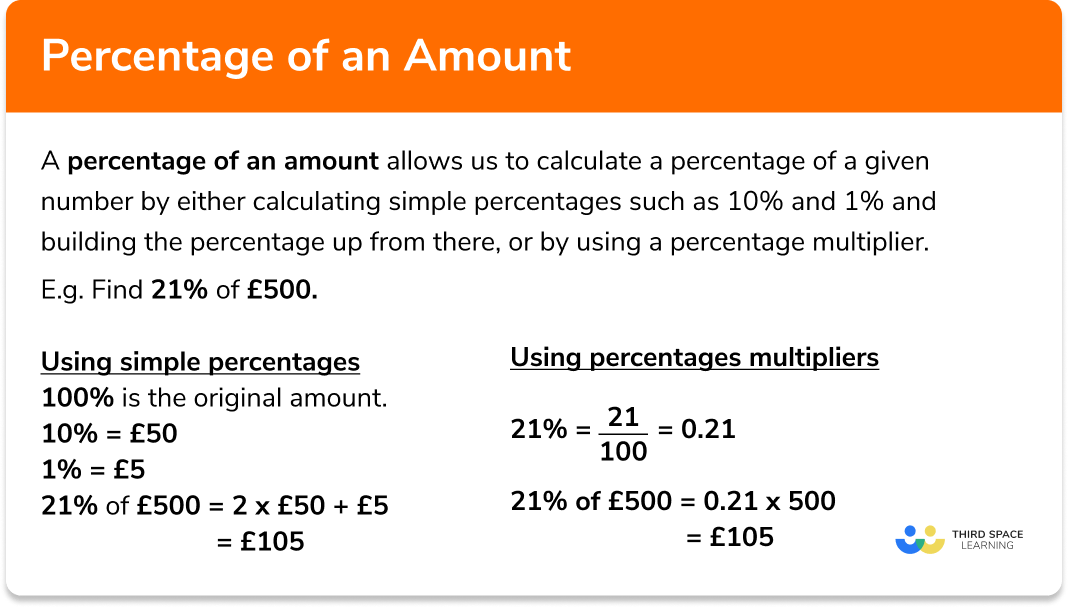
While the “divide and multiply by 100” method is the standard, financial professionals often use the decimal method for speed. To find a percentage of a number quickly, convert the percentage into a decimal by moving the decimal point two places to the left, then multiply it by the total number.
If you need to calculate a 15% tip on a $120 dinner bill, convert 15% to 0.15. Multiplying $120 by 0.15 gives you $18. This method is particularly useful when calculating sales tax or quick discounts while shopping. Mastering the conversion between percentages and decimals is the first step toward developing the “money intuition” necessary for successful investing and budgeting.
Practical Applications in Personal Finance
Translating mathematical theory into everyday financial practice is where the true value of percentage calculation lies. For the average individual, percentages appear daily in the form of discounts, taxes, and budgeting frameworks.
Navigating Sales and Discounts: Don’t Get Fooled by Marketing
Retailers often use percentages to create a sense of urgency. However, without a firm grasp of how to calculate these numbers, consumers can easily overspend. When you see a “30% off” sign on a $150 item, the calculation is straightforward: $150 multiplied by 0.30 equals $45 in savings. The final price is $105.
A more advanced financial habit is calculating “reverse percentages.” If an item is on sale for $80 and the tag says this is “20% off,” how do you find the original price? You recognize that $80 represents 80% of the original cost (100% – 20%). By dividing $80 by 0.80, you find the original price was $100. This skill is vital for assessing whether a “deal” is actually a value or merely a psychological anchor.
Managing Your Budget: The 50/30/20 Rule
One of the most popular personal finance frameworks is the 50/30/20 rule, which relies entirely on percentage-based allocation. In this model, 50% of your net income goes toward “needs” (housing, utilities, groceries), 30% goes toward “wants” (entertainment, dining out), and 20% is dedicated to “savings and debt repayment.”
To apply this, you must first calculate your total take-home pay. If you earn $5,000 a month after taxes, calculating 50% ($2,500), 30% ($1,500), and 20% ($1,000) provides a clear, data-driven roadmap for your spending. When your income fluctuates—perhaps due to a bonus or a side hustle—knowing how to recalculate these percentages ensures that your lifestyle doesn’t outpace your savings.
Mastering Interest Rates and Investment Returns

In the world of investing, percentages represent growth and risk. Whether you are looking at a savings account’s Annual Percentage Yield (APY) or the volatile swings of the stock market, your ability to calculate these figures determines your success as an investor.
Simple vs. Compound Interest: The Power of Growth
Interest is essentially the “rent” paid on borrowed money or the “reward” earned on saved money, expressed as a percentage. Simple interest is calculated only on the principal amount. If you invest $1,000 at a 5% simple interest rate per year, you earn $50 annually ($1,000 x 0.05).
However, the real wealth-builder is compound interest, where the percentage is applied to the principal plus the interest already earned. In year two of the previous example, a 5% interest rate would be applied to $1,050, resulting in $52.50 in earnings. Over decades, the ability to calculate and understand these percentage-based growth curves is what separates the wealthy from the average earner.
Calculating Return on Investment (ROI)
ROI is the ultimate metric for any investor. It tells you the efficiency of an investment as a percentage of the original cost. The formula is: ((Current Value – Original Cost) / Original Cost) x 100.
If you bought a share of stock for $200 and sold it for $250, your profit is $50. To find the percentage return, divide $50 by the original $200. The result is 0.25, or a 25% ROI. Investors use this percentage to compare the performance of different asset classes—such as real estate versus stocks—to determine where their capital is treated most favorably.
Business Finance and Profitability Metrics
For entrepreneurs and business owners, percentage calculations are the pulse of the company. It is impossible to scale a business or manage cash flow without a granular understanding of margins and growth rates.
Gross vs. Net Profit Margins
A business may have high revenue, but if its margins are low, it is in a precarious position. The Gross Profit Margin is calculated by subtracting the Cost of Goods Sold (COGS) from Total Revenue, then dividing that number by Total Revenue.
For instance, if a company sells $1,000,000 worth of products and the materials cost $600,000, the gross profit is $400,000. The gross margin is 40% ($400,000 / $1,000,000). The Net Profit Margin goes further by subtracting all operating expenses, taxes, and interest. If the net profit is only $50,000, the net margin is a slim 5%. Calculating these percentages allows a business owner to identify where costs are eating away at the bottom line.
Year-Over-Year (YoY) Growth Calculations
To understand if a business or a personal side hustle is truly expanding, you must calculate the percentage change over time. The formula for percentage increase or decrease is: ((New Value – Old Value) / Old Value) x 100.
If your business earned $100,000 in 2022 and $125,000 in 2023, the growth is $25,000. Dividing $25,000 by the original $100,000 results in a 25% YoY growth rate. In the financial markets, consistent double-digit percentage growth is often the primary driver of high stock valuations and investor interest.
Advanced Financial Tools and Modern Calculating Techniques
While mental math and manual formulas are essential for quick decisions, modern financial management often requires precision that goes beyond basic arithmetic.
Leveraging Spreadsheet Software for Complex Data
Tools like Microsoft Excel or Google Sheets are built on the logic of percentages. In a spreadsheet, you don’t need to manually move decimal points. By formatting a cell as a “Percentage,” you can simply multiply a total by the percentage cell.
For complex financial modeling—such as calculating the percentage of a monthly mortgage payment that goes toward interest versus principal—spreadsheets use built-in functions that handle the heavy lifting. Mastering these digital tools allows you to visualize your financial data through charts and graphs, making the percentages much more tangible.

Financial Calculators and Fintech Apps
We live in an era of “Fintech,” where apps can automatically calculate what percentage of your spending goes toward “Dining Out” versus “Insurance.” However, the savvy user doesn’t just trust the app; they understand the logic behind it. Using a financial calculator for things like debt-to-income ratios (DTI) is a standard practice when applying for a mortgage. Lenders typically look for a DTI of 36% or less. Knowing how to calculate this yourself—by dividing your total monthly debt payments by your gross monthly income—gives you the upper hand when negotiating with financial institutions.
In conclusion, knowing how to calculate a percentage of a number is the “skeleton key” of the financial world. It unlocks the ability to compare investments, manage household expenses, and run a profitable business. By internalizing these formulas and applying them with a professional, disciplined mindset, you move from being a passive observer of your money to an active, informed manager of your wealth. Mathematics, when applied to finance, is not just about numbers; it is about the freedom and security that comes from total clarity.
aViewFromTheCave is a participant in the Amazon Services LLC Associates Program, an affiliate advertising program designed to provide a means for sites to earn advertising fees by advertising and linking to Amazon.com. Amazon, the Amazon logo, AmazonSupply, and the AmazonSupply logo are trademarks of Amazon.com, Inc. or its affiliates. As an Amazon Associate we earn affiliate commissions from qualifying purchases.