
The Dow Jones Industrial Average (DJIA) is one of the most closely watched stock market indexes in the world. For decades, it’s served as a barometer of the U.S. stock market’s health and a key indicator for investors trying to understand market sentiment. But what exactly is the Dow, and how do companies get chosen to be a part of this exclusive club? This article will break down the composition of the Dow, exploring its historical significance, the criteria for inclusion, and what its components might tell us about the broader economic and technological landscape.

Understanding the Dow Jones Industrial Average: More Than Just 30 Stocks
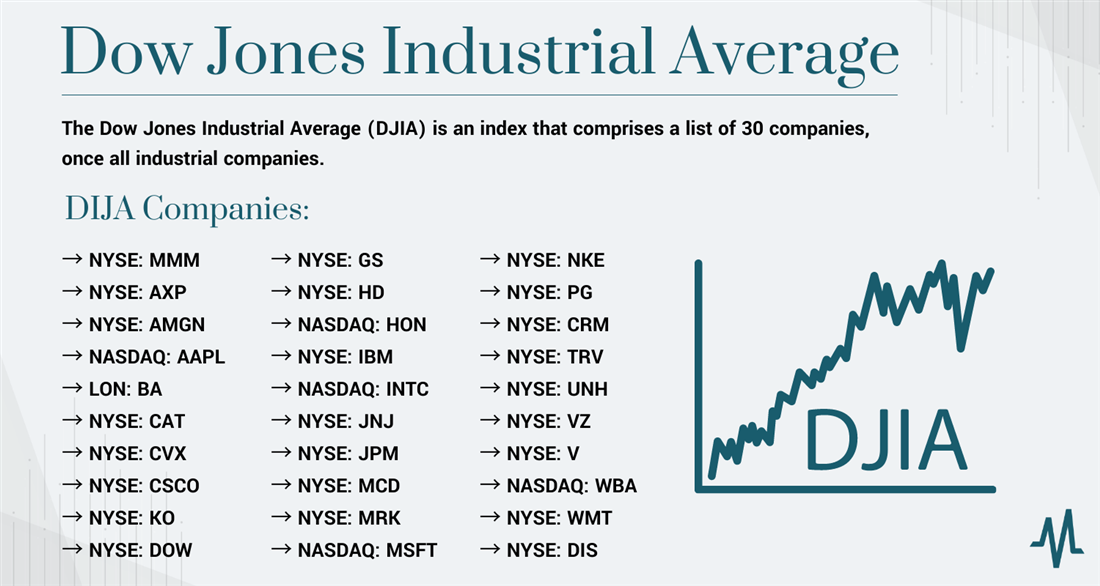
The Dow Jones Industrial Average, often simply called “the Dow,” is a stock market index that represents 30 large, publicly traded companies based in the United States. It’s the second-oldest U.S. market index, trailing only the Dow Jones Transportation Average. Created by Charles Dow and his colleague Edward Jones in 1896, its initial purpose was to provide a snapshot of how the industrial sector of the American economy was performing.
The Evolution of the Dow: From Industry to a Broader Economic Snapshot
Initially, the Dow was heavily weighted towards industrial companies like railroads, steel, and oil. However, as the U.S. economy evolved, so did the composition of the Dow. Today, while it still includes some traditional industrial giants, it has broadened significantly to encompass a diverse range of sectors, including technology, healthcare, finance, consumer goods, and energy. This evolution reflects the changing nature of the U.S. economy, which has seen a significant shift from manufacturing to a more service- and technology-driven landscape.
It’s crucial to understand that the Dow is a price-weighted index. This means that stocks with higher share prices have a greater impact on the index’s movement than those with lower share prices, regardless of the company’s overall market capitalization (the total value of all its outstanding shares). This weighting methodology is a unique characteristic of the Dow and differentiates it from market-capitalization-weighted indexes like the S&P 500. This price-weighting can sometimes lead to counterintuitive movements where a company with a high stock price but relatively smaller market cap can move the Dow more than a company with a lower stock price but a much larger market cap.
Why is the Dow Important?
The Dow’s enduring relevance stems from several factors:
- Historical Significance: Its long history makes it a valuable tool for analyzing long-term market trends and economic cycles.
- Public Awareness: It’s arguably the most recognizable stock market index to the general public, often cited in news headlines.
- Indicator of Economic Health: As a proxy for the performance of major U.S. corporations, its movements are widely interpreted as an indicator of the overall health of the U.S. economy and business confidence.
- Benchmark for Investors: While not the most comprehensive index, it serves as a benchmark for many investors and fund managers.
How are Companies Selected for the Dow?
Unlike indexes like the S&P 500, which have a more formulaic approach based on market capitalization and other quantitative criteria, the selection process for the Dow Jones Industrial Average is more qualitative and subjective. The Dow Jones Indexes Committee, a team of editors from The Wall Street Journal, makes the decisions. There are no strict numerical rules for inclusion; instead, the committee considers several factors:
- Reputation and Sustained Growth: The companies chosen are generally well-established, reputable, and have a history of consistent growth and financial stability.
- Public Interest: Companies that are widely followed by investors and the public are often favored.
- Diversification: The committee aims for a representative sample of the U.S. economy, ensuring that different sectors are included. This doesn’t mean perfect sector balance, but rather a broad representation of prominent industries.
- Price-Weighting Appropriateness: The committee considers how a company’s stock price might impact the index’s overall movement due to the price-weighted nature of the Dow. A company with an extremely high stock price might disproportionately influence the index.
When a company is added or removed from the Dow, it’s usually due to a significant event such as a merger, acquisition, or a fundamental shift in a company’s business model or its standing in the economy. The committee aims to make changes that reflect the evolving U.S. industrial and economic landscape.
The Pillars of the Dow: Today’s Top Companies
As of late 2023 and early 2024, the 30 companies comprising the Dow Jones Industrial Average represent a significant cross-section of American corporate powerhouses. While the exact list can change, a look at the typical components provides valuable insights into which industries and brands are currently considered the bedrock of the U.S. economy.
Technology’s Growing Influence: Innovation at the Forefront

The technology sector has seen a remarkable rise in its representation and influence within the Dow. This reflects the increasing digitization of our lives and the transformative power of innovation.
- The Tech Giants: Companies like Apple (AAPL), Microsoft (MSFT), and Salesforce (CRM) are now integral to the Dow. Apple’s dominance in consumer electronics and services, Microsoft’s pervasive presence in software and cloud computing, and Salesforce’s leadership in customer relationship management software highlight the centrality of technology to modern business operations and consumer life. Their inclusion underscores the shift towards an economy where software, data, and digital platforms are paramount.
- The AI Revolution: The rapid advancements in Artificial Intelligence (AI) are also implicitly represented within the Dow’s tech components. While there isn’t a dedicated “AI stock,” the innovation happening at companies like Microsoft (through its partnership with OpenAI and its Azure AI services) and Alphabet (Google’s parent company, a significant player in AI research and development) demonstrates how these giants are at the forefront of this transformative technology. Their investments in AI tools and applications are shaping future productivity and business models across various sectors.
The presence of these tech titans signifies more than just their individual success; it points to the broader trend of how technology is interwoven into every aspect of commerce and daily life. From the apps on our phones to the enterprise software powering businesses, these companies are the architects of our digital present and future.
Brand Power and Corporate Identity: Leaders in Consumer and Industrial Goods
Beyond technology, the Dow remains a strong representation of established brands that have shaped consumer behavior and industrial standards for decades. These companies often possess immense brand equity and a deep understanding of marketing and corporate identity.
- Consumer Staples and Discretionary: Brands like Coca-Cola (KO), Procter & Gamble (PG), and McDonald’s (MCD) are enduring members, signifying the consistent demand for essential goods and familiar dining experiences. Their ability to maintain strong brand loyalty across economic cycles is a testament to their marketing prowess and understanding of consumer psychology.
- Industrial Strength and Infrastructure: Companies like 3M (MMM), Caterpillar (CAT), and Boeing (BA) represent the backbone of industrial production and infrastructure development. Their products and services are crucial for global commerce and construction, and their inclusion highlights the continued importance of manufacturing and engineering in the U.S. economy.
- Healthcare and Pharmaceuticals: Giants like Johnson & Johnson (JNJ) and Merck & Co. (MRK) are vital components, reflecting the significant role of healthcare innovation and services in the economy. Their focus on research, development, and reaching a global market through strong branding strategies makes them key players.
The presence of these companies in the Dow is a clear indicator of the power of a well-established brand. Their success often hinges on sophisticated marketing, consistent design, and the ability to build and maintain a strong corporate identity that resonates with consumers and business partners alike. Case studies of their marketing campaigns and brand evolution often serve as benchmarks for other businesses seeking to build enduring market presence.
Financial Engines and Economic Stability: The Money Behind the Markets
The financial sector is, understandably, a significant presence in an index focused on the broader economy. These companies are the conduits of capital, influencing investments and the flow of money.
- Banking and Financial Services: Major banks like JPMorgan Chase (JPM), Bank of America (BAC), and Wells Fargo (WFC) are cornerstones of the financial system. Their operations encompass everything from personal finance and lending to corporate finance and investment banking. Their performance is often closely tied to the overall health of the economy, influencing everything from interest rates to the availability of credit for businesses and individuals.
- Investment and Insurance: Companies like Goldman Sachs (GS) and American Express (AXP) represent key aspects of investment management and consumer credit. Their activities directly impact the investing landscape and provide essential financial tools for both individuals and corporations.
- The Flow of Capital: The inclusion of these financial institutions highlights the critical role of money management, investing, and business finance in driving economic growth. Their strategic decisions, financial tools, and market insights are fundamental to how businesses operate, how individuals manage their personal finance, and how new ventures like online income streams and side hustles gain traction.
The financial companies within the Dow are not just participants in the economy; they are often its facilitators. Their health, stability, and innovative financial tools are crucial for fostering investment, enabling business expansion, and supporting the broader ecosystem of personal and business finance.
What the Dow’s Composition Tells Us About Investing and the Economy
The 30 companies that make up the Dow Jones Industrial Average offer a compelling narrative about the current state and trajectory of the U.S. economy and the global market. For investors, understanding these components goes beyond simply tracking stock prices; it involves recognizing the underlying trends in technology, brand building, and financial markets.
Navigating the Investment Landscape: Insights from Dow Components
The Dow’s constituents provide a valuable lens through which to view investment opportunities and economic trends.
- Diversification and Sector Exposure: While the Dow aims for diversification, its composition can still offer insights into which sectors are currently perceived as strong performers or essential to the economy. The increasing presence of technology, for instance, signals the growing importance of digital transformation in investment portfolios.
- Brand Strength as an Investment Metric: The enduring presence of strong brands in the Dow reinforces the idea that brand equity and consumer loyalty are critical factors for long-term investment success. Investors can learn from the marketing and branding strategies of these companies.
- The Role of Financial Health: The financial companies in the Dow underscore the importance of robust business finance and sound personal finance management. Their inclusion highlights how economic stability and access to capital are foundational to market growth.
By analyzing the companies within the Dow, investors can gain a better understanding of the macroeconomic forces at play, identify companies with strong fundamentals and brand recognition, and make more informed decisions about where to allocate their capital. The Dow, in its curated selection of 30 industrial giants, continues to serve as a significant indicator of corporate America’s strength and direction.
aViewFromTheCave is a participant in the Amazon Services LLC Associates Program, an affiliate advertising program designed to provide a means for sites to earn advertising fees by advertising and linking to Amazon.com. Amazon, the Amazon logo, AmazonSupply, and the AmazonSupply logo are trademarks of Amazon.com, Inc. or its affiliates. As an Amazon Associate we earn affiliate commissions from qualifying purchases.