
Choosing which business to start is one of the most significant financial decisions an individual can make. It is not merely a question of passion or hobbyism; it is a strategic maneuver designed to build wealth, generate sustainable income, and create long-term equity. In a volatile economic landscape, the “right” business is one that aligns market demand with a scalable financial model.
To answer the question of what business to start, one must look through the lens of personal finance and business economics. This guide explores the most viable paths for aspiring entrepreneurs, focusing on low-overhead entries, recurring revenue models, and the financial frameworks required to ensure a high return on investment (ROI).

Analyzing the Financial Foundation: Profitability vs. Passion
While popular advice often suggests “following your passion,” a financially sound approach prioritizes market viability and profit margins. A business is ultimately a vehicle for capital growth. Before committing resources, an entrepreneur must analyze the unit economics of their proposed idea.
The Unit Economics of a Successful Startup
Every business idea must be stress-tested through its unit economics—the direct revenues and costs associated with a single unit of sale. To determine what business you should start, calculate the Contribution Margin. If the cost of acquiring a customer (CAC) exceeds the lifetime value (LTV) of that customer, the business model is fundamentally flawed.
For instance, a service-based business with zero inventory costs may have high margins, but it is limited by the “hours for dollars” trap. Conversely, a product-based business might offer scalability but requires significant upfront capital for inventory. The ideal business for a beginner often lies in digital services or “asset-light” models where the margin for error is wider due to lower fixed costs.
Identifying Market Gaps with High ROI Potential
Financial success is often found in solving “pain points” rather than providing “vitamins.” A “pain point” business solves a specific, urgent problem that consumers or other businesses are willing to pay to eliminate. When evaluating what business to start, look for industries with high friction—where processes are slow, expensive, or inefficient.
Financial tools, specialized consulting, and niche B2B (business-to-business) services often command higher price points and better retention rates than consumer-facing lifestyle brands. By focusing on high-utility sectors, you position yourself in a market where budgets are already allocated, reducing the financial risk of your venture.
Low-Overhead Digital Ventures: The Path to Immediate Cash Flow
For many, the best business to start is one that requires minimal initial investment while offering a high ceiling for earnings. Digital ventures have revolutionized personal finance by lowering the barrier to entry, allowing entrepreneurs to bootstrap their way to a six-figure income without traditional bank loans.
High-Ticket Consulting and Service Arbitrage
If you possess a specialized skill—such as financial auditing, data analysis, or corporate strategy—consulting is the fastest path to positive cash flow. Unlike retail, consulting has no inventory costs and minimal overhead. The financial objective here is to move from a generalist role to a “high-ticket” specialist.
Once a consulting practice is established, the next financial evolution is service arbitrage. This involves hiring junior contractors to fulfill the work while you focus on business development and high-level strategy. This shifts the business from a self-employment model to a scalable enterprise where profit is decoupled from your personal labor hours.
E-commerce and the Evolution of Lean Inventory
E-commerce remains a powerhouse for online income, but the financial strategy has shifted. The traditional model of buying thousands of units of inventory from overseas is risky for a first-time founder. Instead, many are turning to “Print on Demand” or curated dropshipping to test market fit without financial exposure.
However, the most profitable e-commerce businesses today focus on “Micro-Brands” that utilize a direct-to-consumer (DTC) model. By focusing on a narrow niche with high repeat-purchase behavior—such as specialized health supplements or eco-friendly office supplies—you can build a loyal customer base that provides predictable monthly revenue, which is a key metric for any business looking to eventually be sold for a high multiple.

Building Wealth Through Scalable Business Models
To move from “making a living” to “building wealth,” a business must be scalable. Scalability refers to the ability of a business to increase its revenue without a proportional increase in its operating costs. This is the “holy grail” of business finance.
Software as a Service (SaaS) and Recurring Revenue
The SaaS model is widely considered the most attractive business model from a financial perspective. Because software can be replicated at near-zero marginal cost, the profit margins are exceptionally high once the initial development costs are recouped.
The primary financial benefit of SaaS is Monthly Recurring Revenue (MRR). Unlike a retail store that starts every month at zero, a SaaS business starts every month with the revenue from its existing subscribers. This predictability allows for more aggressive reinvestment and makes the business much more attractive to investors or buyers. Even “Micro-SaaS” products—small tools that solve a specific problem for a specific group of people—can generate significant passive-style income for an individual owner.
Content Licensing and Intellectual Property
In the modern economy, intellectual property (IP) is a powerful financial asset. Starting a business centered on content—whether that is an educational platform, a specialized newsletter, or a proprietary database—allows you to monetize your knowledge multiple times.
Digital products, such as online courses or premium research reports, are “build once, sell twice” assets. The financial beauty of this model is the elimination of fulfillment costs. Once the asset is created, every subsequent sale is almost 100% profit. For an entrepreneur focused on personal finance, building a portfolio of IP-based assets is a robust strategy for creating “evergreen” income streams that require minimal maintenance.
Risk Management and Capital Requirements
The question of “what business should I start” is inseparable from the question of “how will I fund it?” Understanding the relationship between risk and capital is vital for long-term financial survival.
The Bootstrapping Methodology
Bootstrapping is the practice of starting a company with little capital, relying on personal savings and initial revenue to fund growth. From a wealth-management perspective, bootstrapping is often superior because the founder retains 100% equity.
When you bootstrap, you are forced to be disciplined with your business finance. You cannot afford to waste money on “vanity metrics” like expensive office space or premature hiring. This lean approach ensures that the business stays focused on profitability from day one. For most first-time entrepreneurs, bootstrapping a service-based or digital product business is the safest way to learn the ropes of commerce without risking financial ruin.
Navigating Seed Funding and Financial Leverage
If you are starting a business that requires significant infrastructure—such as a manufacturing plant or a complex tech platform—you may need to seek external capital. This involves pitching to angel investors or venture capitalists (VCs).
While external funding provides a “war chest” for rapid growth, it comes with a high financial cost: the dilution of your ownership. Before seeking funding, it is crucial to understand “valuation.” A business is valued based on its assets, its revenue, and its growth potential. By waiting until you have a “Minimum Viable Product” (MVP) and some initial revenue, you can command a higher valuation and retain more of your company. Using leverage—whether through equity or debt—should always be a calculated decision aimed at accelerating a proven model, rather than a desperate attempt to find one.
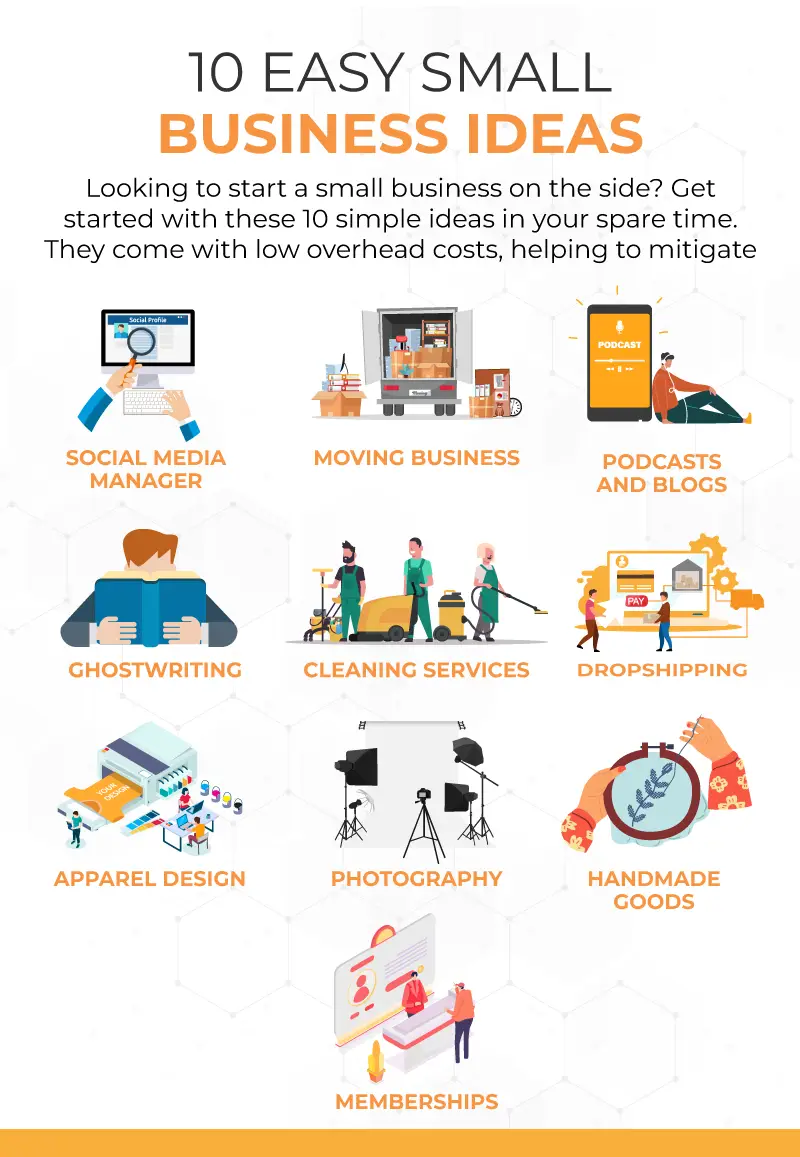
Conclusion: Strategic Decision Making for Financial Freedom
Ultimately, the business you should start depends on your financial goals, your risk tolerance, and the amount of capital you have at your disposal. If you need immediate income with zero risk, a high-ticket service or consulting business is the most logical choice. If you are looking for long-term wealth and scalability, a SaaS or IP-based model offers the highest upside.
Successful business ownership is less about a “lightbulb moment” and more about disciplined financial management. By focusing on high margins, recurring revenue, and scalable systems, you can transition from an employee mindset to an owner mindset. The goal of starting a business is not just to work for yourself, but to build an asset that eventually works for you, providing the financial freedom and security that is the hallmark of true entrepreneurship.
aViewFromTheCave is a participant in the Amazon Services LLC Associates Program, an affiliate advertising program designed to provide a means for sites to earn advertising fees by advertising and linking to Amazon.com. Amazon, the Amazon logo, AmazonSupply, and the AmazonSupply logo are trademarks of Amazon.com, Inc. or its affiliates. As an Amazon Associate we earn affiliate commissions from qualifying purchases.