
In the dynamic world of technology, few components within the Linux operating system spark as much discussion and, at times, division as systemd. For new users and even seasoned administrators, understanding what systemd is, why it’s become so prevalent, and what its implications are can be a complex undertaking. This article aims to demystify systemd, breaking down its core functionalities, its impact on the Linux ecosystem, and why it’s a critical piece of modern tech infrastructure, particularly relevant to our focus on technology trends and efficient software.
The Evolution of Linux Boot Processes: Before systemd
To truly appreciate systemd, we must first understand what it replaced. For decades, Linux distributions relied on a more traditional approach to managing services and the boot process. This typically involved SysVinit (System V initialization) or Upstart.
SysVinit: The Foundation of Early Linux
SysVinit was the de facto standard for many years. Its fundamental concept revolved around runlevels, which defined distinct operating states of the system (e.g., single-user mode, multi-user mode with networking, graphical mode). Each runlevel had a set of scripts that were executed in a specific order to start or stop services.
- How it worked: When the system booted, it would transition through runlevels. For instance, booting into multi-user mode would trigger scripts located in
/etc/rc.d/rc3.d/(or similar directories depending on the distribution). These scripts were responsible for starting daemons (background processes) like web servers, databases, or SSH servers. - The “S” and “K” scripts: Scripts were typically named starting with an “S” for “Start” or a “K” for “Kill” (stop). Numbers following “S” or “K” indicated the order of execution within a runlevel.
- Limitations: While functional, SysVinit had several drawbacks.
- Sequential execution: Services were started one after another. If one service depended on another that hadn’t started yet, it would cause delays or failures. This was particularly problematic for complex systems.
- Dependency management: Managing complex interdependencies between services was often a manual and error-prone process, relying on shell scripting and careful ordering.
- Lack of standardization: While the core concept was similar, different distributions implemented SysVinit with variations, leading to some portability issues.
- Resource inefficiency: The sequential nature could lead to underutilization of multi-core processors during boot.
Upstart: An Attempt at Improvement
Recognizing the limitations of SysVinit, some distributions, notably Ubuntu, adopted Upstart. Upstart aimed to address the shortcomings by introducing an event-driven system.
- Event-driven paradigm: Instead of relying solely on runlevels and sequential script execution, Upstart responded to events. When a specific event occurred (e.g., a network interface becoming available, a file appearing), Upstart would trigger the corresponding service.
- Parallelization: This event-driven approach allowed for more parallel execution of services, potentially speeding up the boot process.
- Improved dependency handling: Upstart introduced a more structured way to define service dependencies.
- A stepping stone: While an improvement over SysVinit, Upstart itself had its own complexities and was eventually superseded by systemd in many of its original user bases.
Enter systemd: A Modern Approach to System Management
Systemd emerged as a comprehensive system and service manager designed to replace the traditional init system. Its primary goal was to provide a more robust, efficient, and standardized way to manage system processes, services, devices, and configurations. Created by Lennart Poettering and Kay Sievers, systemd has become the default init system for a vast majority of popular Linux distributions, including Debian, Ubuntu, Fedora, CentOS, RHEL, and Arch Linux.
Core Components and Philosophy
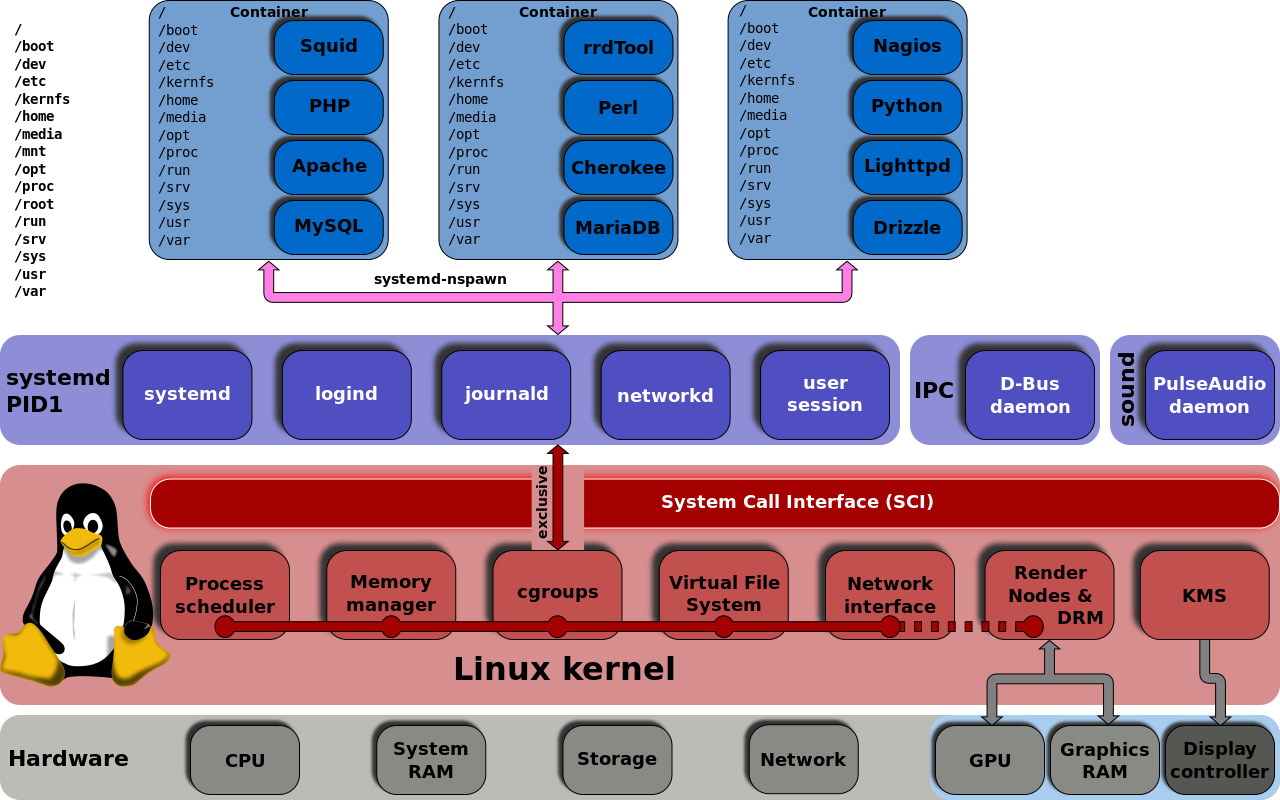
Systemd’s design is modular, with various components working together to achieve its goals. At its heart is the systemd daemon itself, PID 1, which takes over from the old init process upon boot.
- Units: The fundamental building blocks of systemd are “units.” These represent various system resources and can be one of several types:
- Service units (
.service): These manage daemons and background processes. They define how to start, stop, reload, and check the status of a service. - Socket units (
.socket): These listen for network connections or IPC messages and can start services when activity is detected. This is a powerful feature for on-demand service activation. - Target units (
.target): These are similar to SysVinit runlevels, grouping units together to achieve a specific system state. For example,multi-user.targetis analogous to the traditional multi-user mode. - Device units (
.device): These represent hardware devices. - Mount units (
.mount): These manage filesystem mount points. - Timer units (
.timer): These act as cron-like schedulers, allowing services to be run at specific times or intervals.
- Service units (
- Dependency Management: Systemd excels at managing dependencies between units. It uses directives like
Requires=,Wants=,Before=, andAfter=within unit files to define complex relationships. This allows for intelligent parallelization and ensures that services are started in the correct order. - Parallelization: By analyzing dependencies, systemd can start multiple independent services concurrently. This significantly speeds up the boot process, especially on multi-core systems, leading to faster system startup times.
- On-Demand Activation: Socket activation is a key feature where services are only started when they are actually needed, for example, when a connection is made to their associated socket. This conserves system resources and improves responsiveness.
- Logging (Journald): Systemd includes its own logging daemon,
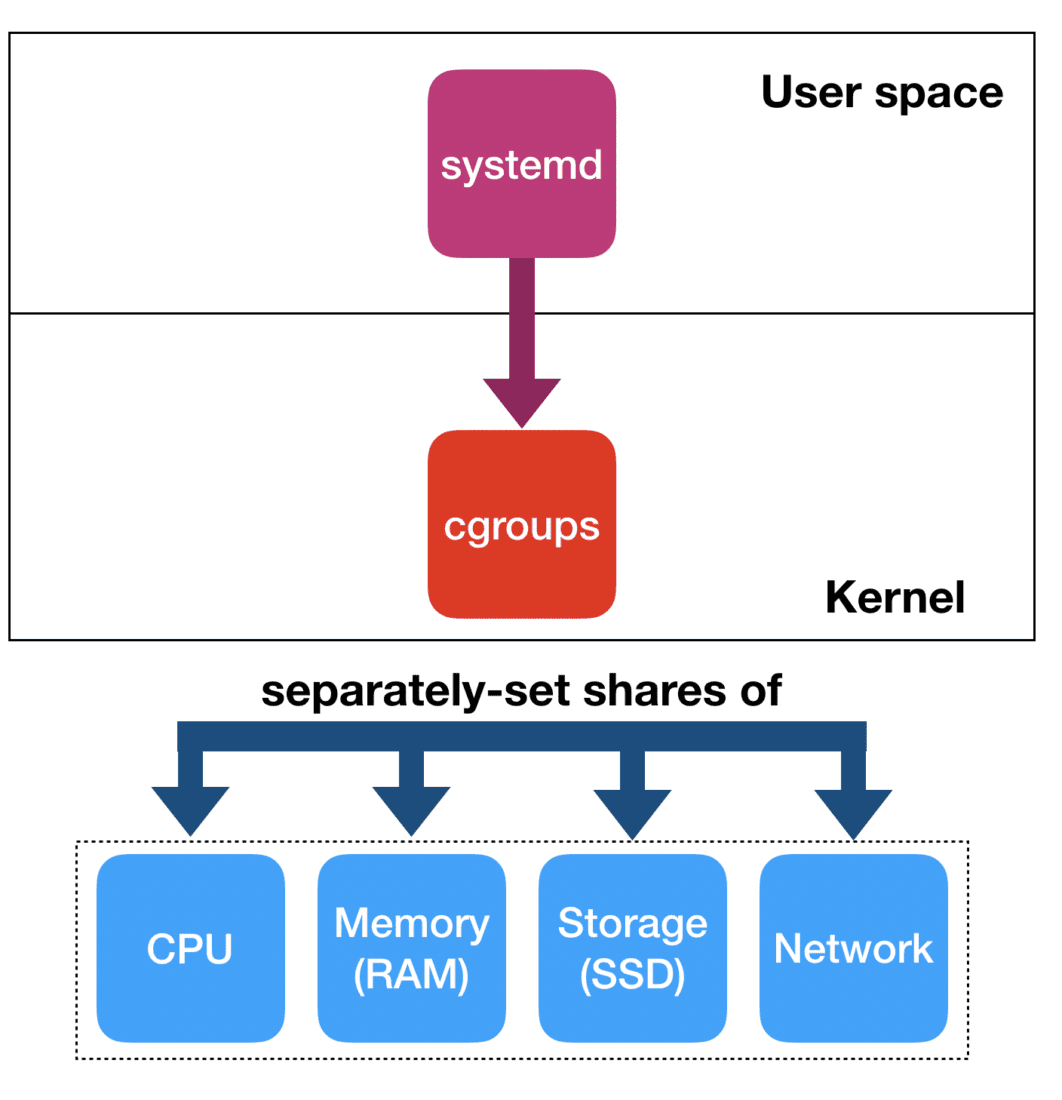
journald, which collects logs from all system processes and daemons in a structured, binary format. This makes log analysis and searching much more efficient and reliable than traditional syslog.journalctlis the command-line utility for accessing these logs. - Resource Control (cgroups): Systemd leverages Linux Control Groups (cgroups) to manage and limit the resources (CPU, memory, I/O) that services consume. This enhances system stability and prevents runaway processes from impacting overall performance.
- State Management: Systemd actively monitors the state of services and processes, automatically restarting them if they crash or fail. This significantly improves system reliability.
Key Systemd Commands for Administration
Understanding systemd involves knowing how to interact with it. Here are some of the most frequently used commands:
systemctl status <unit>: Checks the status of a specific unit (service, target, etc.). This is your go-to command for troubleshooting.systemctl start <unit>: Starts a specified unit.systemctl stop <unit>: Stops a specified unit.systemctl restart <unit>: Restarts a specified unit.systemctl enable <unit>: Enables a unit to start automatically at boot.systemctl disable <unit>: Disables a unit from starting automatically at boot.systemctl is-enabled <unit>: Checks if a unit is enabled.systemctl list-units --type=service: Lists all active service units.systemctl list-units --type=target: Lists all active target units.systemctl reboot: Reboots the system.systemctl poweroff: Shuts down the system.journalctl: Used to view logs managed by journald. You can filter by unit, time, and more. For example,journalctl -u <unit>shows logs for a specific unit.
Why the Controversy? Systemd’s Impact and Criticisms
Despite its widespread adoption and the significant technical improvements it brings, systemd has been a source of considerable debate within the Linux community. Some of these criticisms stem from its radical departure from established conventions, while others are more technical in nature.
Arguments in Favor of Systemd:
- Speed and Efficiency: As mentioned, parallelization and on-demand activation significantly reduce boot times and improve resource utilization.
- Reliability: Automatic restarts, robust dependency management, and integrated logging contribute to a more stable system.
- Standardization: Systemd provides a consistent interface and configuration format across many distributions, simplifying administration and software development.
- Modern Features: Features like socket activation, timers, and integrated logging offer capabilities that were difficult or impossible to achieve with older init systems.
- Reduced Complexity (for developers): While the learning curve can be steep, systemd’s structured approach often simplifies the process of packaging and running services compared to the intricate shell scripting of SysVinit.
Common Criticisms of Systemd:
- “Not Unix-like”: This is perhaps the most frequent philosophical objection. Critics argue that systemd breaks the Unix philosophy of “do one thing and do it well.” Instead of being just an init system, it integrates many functionalities (logging, network management, device management, login management, etc.) into a single suite of tools, creating a monolithic design.
- Complexity and Learning Curve: For administrators accustomed to SysVinit or Upstart, systemd’s new concepts, unit files, and extensive command set can be overwhelming.
- “Bloat”: Due to its integrated nature, some users perceive systemd as overly large and consuming more resources than a minimalist init system.
- Forced Adoption: The rapid adoption of systemd by major distributions without offering clear alternatives led to frustration and a feeling of being forced to use a system they didn’t fully embrace.
- Bugs and Stability Concerns: While generally stable, early versions of systemd had bugs that caused concern. The complexity of its integrated nature can also make it harder to isolate and fix issues.
- Licensing: Some components of systemd are licensed under the LGPL, which is compatible with most open-source licenses, but its integration with certain other libraries and tools has sometimes been a point of contention for some developers.
Systemd in the Broader Tech Landscape
From a Technology Trends perspective, systemd represents a significant shift towards integrated, high-performance system management. Its adoption mirrors a broader trend in software development towards more comprehensive frameworks and platforms that aim to simplify complex tasks and enhance efficiency. For developers and system administrators working with modern Linux deployments, mastering systemd is no longer optional; it’s a fundamental requirement.
The Digital Security implications are also substantial. Systemd’s robust resource control via cgroups helps isolate services and prevent them from impacting system stability, which is a critical aspect of security. Its integrated logging makes it easier to detect and investigate security incidents. However, the sheer breadth of functionality within systemd also means that a vulnerability in one part of the system could potentially have wider-reaching consequences. Securely configuring and managing systemd services is paramount.
For Productivity, systemd’s ability to speed up boot times and improve system responsiveness directly translates into more efficient workflows. Administrators can deploy and manage services more rapidly, and users experience faster access to their systems and applications.
While systemd itself doesn’t directly fall under Brand or Money, its widespread use influences the technological landscape upon which brands build their products and businesses. Companies offering Linux-based solutions, cloud services, or embedded systems must contend with systemd. Understanding its architecture and how to optimize for it can be a competitive advantage. From a financial perspective, faster deployment and more reliable systems can lead to reduced operational costs and increased uptime, directly impacting a company’s bottom line.
Conclusion: The Undeniable Influence of systemd
Systemd is more than just an init system; it’s a fundamental shift in how Linux systems are managed. While the debates surrounding its design and philosophy will likely continue, its ubiquity in modern Linux distributions is undeniable. For anyone involved in building, deploying, or administering Linux systems, a solid understanding of systemd – its components, its capabilities, and its management – is an essential skill. It represents the ongoing evolution of operating system architecture, driven by the need for greater efficiency, reliability, and scalability in the ever-advancing world of technology. Embracing systemd is, for many, the key to unlocking the full potential of modern Linux.
aViewFromTheCave is a participant in the Amazon Services LLC Associates Program, an affiliate advertising program designed to provide a means for sites to earn advertising fees by advertising and linking to Amazon.com. Amazon, the Amazon logo, AmazonSupply, and the AmazonSupply logo are trademarks of Amazon.com, Inc. or its affiliates. As an Amazon Associate we earn affiliate commissions from qualifying purchases.