
The economic engine of any nation is a complex beast, and understanding its performance is crucial for individuals and businesses alike. While headline GDP figures grab attention, a more nuanced metric, per capita real GDP, offers a clearer picture of individual economic well-being and a nation’s true productive capacity. This article will unpack this essential economic indicator, exploring its significance for those navigating the worlds of technology, brand building, and personal finance.
Understanding the Building Blocks: GDP and Real GDP
Before we dive into the “per capita” aspect, let’s solidify our understanding of the core components.
What is Gross Domestic Product (GDP)?
Gross Domestic Product (GDP) is the total monetary value of all the finished goods and services produced within a country’s borders in a specific time period. Think of it as the sum of everything a nation has made and sold – from the semiconductors powering your smartphone to the consulting services that shape a corporate brand, to the financial advice that helps you manage your investments.
GDP is a vital indicator of a country’s economic size and activity. A growing GDP generally signifies a healthy and expanding economy, while a shrinking GDP can signal a recession. Governments, economists, and businesses closely monitor GDP to gauge the overall health of the economy.
Why “Real” GDP Matters: Accounting for Inflation
The raw GDP figure, often referred to as nominal GDP, has a significant drawback: it doesn’t account for inflation. Inflation is the general increase in prices and the fall in the purchasing value of money. If nominal GDP rises, it could be due to either an actual increase in the production of goods and services, or simply because prices have gone up. This can be misleading when comparing economic performance over time or between countries.
This is where real GDP comes into play. Real GDP adjusts nominal GDP for inflation by using prices from a specific base year. By stripping out the impact of price changes, real GDP provides a more accurate measure of the actual volume of goods and services produced. In essence, real GDP tells us how much more or less stuff a country is producing, irrespective of how much its price has changed. This is particularly relevant for technology, where rapid innovation and falling prices are common, and for finance, where purchasing power is paramount.
The Power of “Per Capita”: Dividing the Pie
Now, let’s add the crucial “per capita” element.
Defining Per Capita Real GDP
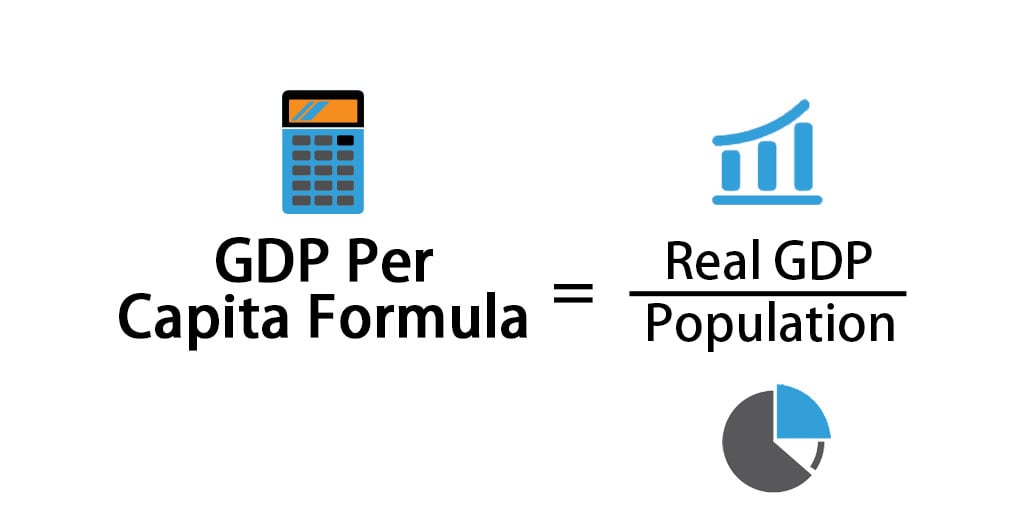
Per capita real GDP is calculated by dividing a country’s real GDP by its total population. The formula is straightforward:
Per Capita Real GDP = Real GDP / Total Population
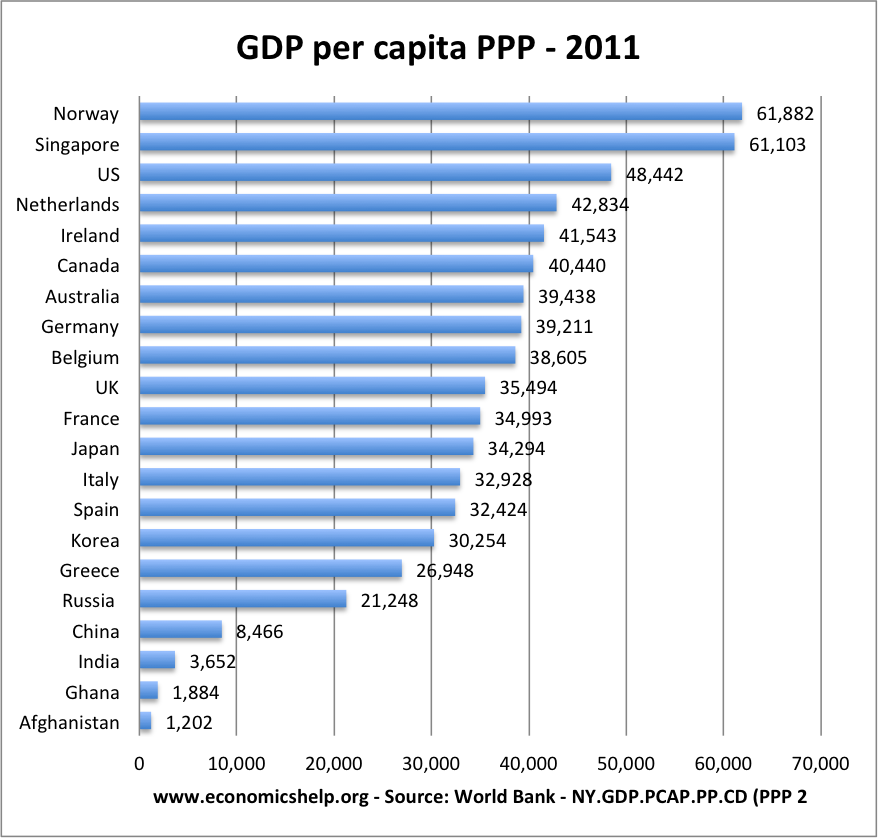
This metric essentially represents the average economic output per person in a country. It’s a crucial indicator because it moves beyond the sheer size of an economy and focuses on the economic prosperity and living standards of its citizens. A high per capita real GDP suggests that, on average, each individual contributes significantly to the nation’s economic output and, by extension, has the potential for a higher standard of living.
Think about it this way: a country might have a massive nominal GDP due to a huge population, but if that GDP is spread thinly across billions of people, the individual economic well-being might be quite low. Per capita real GDP helps to correct this perspective.
Why is Per Capita Real GDP a Better Indicator of Living Standards?
While total GDP measures the size of an economy, per capita real GDP provides a more personal perspective on wealth and productivity. Here’s why it’s a superior measure of living standards:
- Individual Productivity: It reflects how productive each individual in the economy is, on average. A higher per capita real GDP suggests that individuals are contributing more to the economy through their labor, innovation, and entrepreneurship.
- Purchasing Power: While not a direct measure of purchasing power, a higher per capita real GDP is generally correlated with greater purchasing power. It indicates that there are more goods and services available per person, which can translate to better access to essential items, education, healthcare, and discretionary spending.
- Economic Development: It’s a key metric for assessing a country’s level of economic development. Developed nations typically have significantly higher per capita real GDP than developing nations, reflecting their advanced infrastructure, technological capabilities, and skilled workforce.
- Policy Effectiveness: Governments often aim to increase per capita real GDP as a primary goal of economic policy. Policies that foster innovation, improve education and healthcare, and create a favorable business environment can all contribute to a higher per capita real GDP.
For those in the Tech sector, understanding per capita real GDP is vital. It highlights markets where there’s greater disposable income for new gadgets and advanced software, and where demand for innovative solutions is likely to be higher. A country with a soaring per capita real GDP might be a prime target for launching new AI tools or expanding app services.
For Brand strategists, per capita real GDP provides insights into consumer behavior and market potential. A higher figure suggests a consumer base with greater capacity to spend on premium products and services, and a greater awareness of global brands. It can inform market entry strategies, product positioning, and marketing campaign investments. A luxury brand, for instance, would be highly interested in countries with strong per capita real GDP growth.
In the realm of Money, per capita real GDP is fundamental. It directly impacts personal finance decisions, investment opportunities, and the viability of side hustles and online income streams. A rising per capita real GDP often correlates with increased opportunities for wealth creation, higher returns on investment, and a greater likelihood of success for new business ventures. Understanding this metric can guide decisions about where to invest, how to budget, and what career paths offer the greatest economic potential.
Applications and Implications Across Key Sectors
Let’s explore how per capita real GDP influences decisions and strategies within our core areas of interest.
2.1 Tech: Fueling Innovation and Market Adoption
The technology sector thrives on progress and adoption. Per capita real GDP plays a crucial role in both.
- Market Potential: Countries with high per capita real GDP often have a larger segment of the population with disposable income to purchase the latest gadgets, subscribe to premium software, and embrace emerging technologies. This makes them attractive markets for tech companies to target for sales, marketing, and expansion. For instance, a company developing cutting-edge AI tools for creative professionals would look for countries where artists and designers have the financial capacity to invest in such solutions.
- R&D Investment: A strong per capita real GDP can also indicate a nation’s capacity for research and development. Governments and private companies in such economies are more likely to invest heavily in R&D, fostering an environment where new technological breakthroughs are more probable. This creates a positive feedback loop, with innovation further driving economic growth.
- Digital Infrastructure: Higher economic output per person often correlates with better digital infrastructure – faster internet speeds, wider smartphone penetration, and greater access to cloud services. This is essential for the deployment and success of many tech products and services.
- Talent Pool: Countries with a strong economic foundation and high per capita real GDP tend to invest more in education, producing a more skilled and educated workforce. This creates a richer talent pool for tech companies, fostering innovation and operational efficiency.
2.2 Brand: Building Value in Affluent Markets
Brand perception and loyalty are significantly influenced by the economic context in which they operate.
- Consumer Spending Power: For brands, especially those targeting premium or discretionary goods and services, per capita real GDP is a direct indicator of consumer spending power. A high per capita real GDP suggests that consumers have more discretionary income to spend on non-essential items, making them more receptive to brand messaging and willing to invest in quality and perceived value.
- Market Segmentation: Understanding per capita real GDP helps in effective market segmentation. It allows brands to identify countries or regions where their target demographic is likely to have the financial means to purchase their products or services. This informs market entry strategies, pricing models, and the type of marketing channels to utilize.
- Brand Reputation and Aspiration: In countries with higher per capita real GDP, consumers are often more exposed to global trends and have higher aspirations. Brands that align with these aspirations, offering quality, innovation, and a desirable lifestyle, are more likely to resonate and build strong reputations.
- Case Studies and Success: Analyzing the success of established brands in high per capita real GDP markets can provide valuable case studies for aspiring brands. Understanding the marketing strategies, product development, and brand positioning that led to success in these affluent economies can offer a roadmap for growth.
2.3 Money: Guiding Personal Finance and Investment
For individuals and businesses focused on their financial well-being, per capita real GDP offers critical insights.
- Personal Finance and Budgeting: For individuals, a rising per capita real GDP in their country can signal growing economic opportunities, potential for salary increases, and a generally more favorable financial climate. This can influence budgeting decisions, savings goals, and the pursuit of larger purchases.
- Investment Opportunities: Investors look to countries with strong and growing per capita real GDP as indicators of potential investment returns. Higher economic output per person often translates to a more stable and growing market, with increased opportunities for businesses to thrive. This can guide decisions about where to invest in stocks, bonds, or real estate.
- Online Income and Side Hustles: The economic prosperity reflected in per capita real GDP directly impacts the viability of online income streams and side hustles. In economies where people have more disposable income, there’s a greater demand for online services, digital products, and freelance expertise. This creates fertile ground for entrepreneurs and freelancers.
- Business Finance: For business owners, per capita real GDP is a key factor in assessing market demand, revenue potential, and overall business growth prospects. A strong per capita real GDP indicates a larger and more capable consumer base, which can support higher sales volumes and profitability. It also influences a business’s ability to secure financing and attract investment.
Beyond the Numbers: Nuances and Limitations
While per capita real GDP is a powerful metric, it’s important to acknowledge its limitations.
Income Inequality
One of the most significant limitations is that per capita real GDP is an average. It doesn’t tell us how wealth is distributed within a country. A country might have a very high per capita real GDP, but if that wealth is concentrated in the hands of a few, the majority of the population might not be experiencing high living standards. Income inequality can mask significant disparities. For example, a country with a few billionaires and millions living in poverty could still show a deceptively high per capita real GDP.
Quality of Life Factors
Per capita real GDP focuses solely on economic output. It doesn’t account for crucial aspects of quality of life such as:
- Environmental quality: A country might achieve high GDP through polluting industries.
- Healthcare access and outcomes: High GDP doesn’t guarantee good health for all citizens.
- Education levels and quality: Economic output is important, but so is the knowledge and skill base of the population.
- Social well-being and happiness: Economic prosperity is not the sole determinant of a happy and fulfilling life.
- Leisure time and work-life balance: A high per capita real GDP achieved through excessive working hours might not translate to a high quality of life.
Informal Economy and Non-Market Activities
GDP calculations, and consequently per capita real GDP, primarily capture market transactions. They often exclude:
- The informal economy: Unreported or untaxed economic activities, which can be significant in some developing nations.
- Household production: Goods and services produced for personal consumption, like home-cooked meals or DIY repairs.
- Volunteer work: Contributions to society that aren’t financially compensated.

Conclusion: A Crucial Lens for Economic Understanding
In conclusion, per capita real GDP is an indispensable tool for anyone seeking to understand the economic landscape. It moves beyond the headline figures to provide a more granular and meaningful measure of a nation’s productive capacity and the potential economic well-being of its citizens.
For Tech innovators, it highlights markets ripe for adoption and investment. For Brand builders, it guides strategies for reaching affluent consumers and creating aspirational value. And for individuals and businesses focused on Money, it illuminates opportunities for growth, investment, and financial success.
While acknowledging its limitations, particularly concerning income inequality and quality of life factors, per capita real GDP remains a cornerstone of economic analysis. By understanding this metric, we gain a more informed perspective on the forces shaping our global economy, empowering us to make smarter decisions in our professional and personal lives.
aViewFromTheCave is a participant in the Amazon Services LLC Associates Program, an affiliate advertising program designed to provide a means for sites to earn advertising fees by advertising and linking to Amazon.com. Amazon, the Amazon logo, AmazonSupply, and the AmazonSupply logo are trademarks of Amazon.com, Inc. or its affiliates. As an Amazon Associate we earn affiliate commissions from qualifying purchases.