
While the title “What is Osmosis and Diffusion” might initially suggest a purely academic biological discussion, these fundamental processes are far more intertwined with our world than meets the eye. From the intricate workings of our own bodies to the development of cutting-edge technological solutions and even the strategic branding of successful companies, the principles of movement and equilibrium that define osmosis and diffusion are at play. This article will explore these biological concepts, not just in their traditional scientific context, but also by drawing parallels and highlighting their relevance within the broader domains of Technology, Brand, and Money.
The Core Concepts: Understanding Osmosis and Diffusion
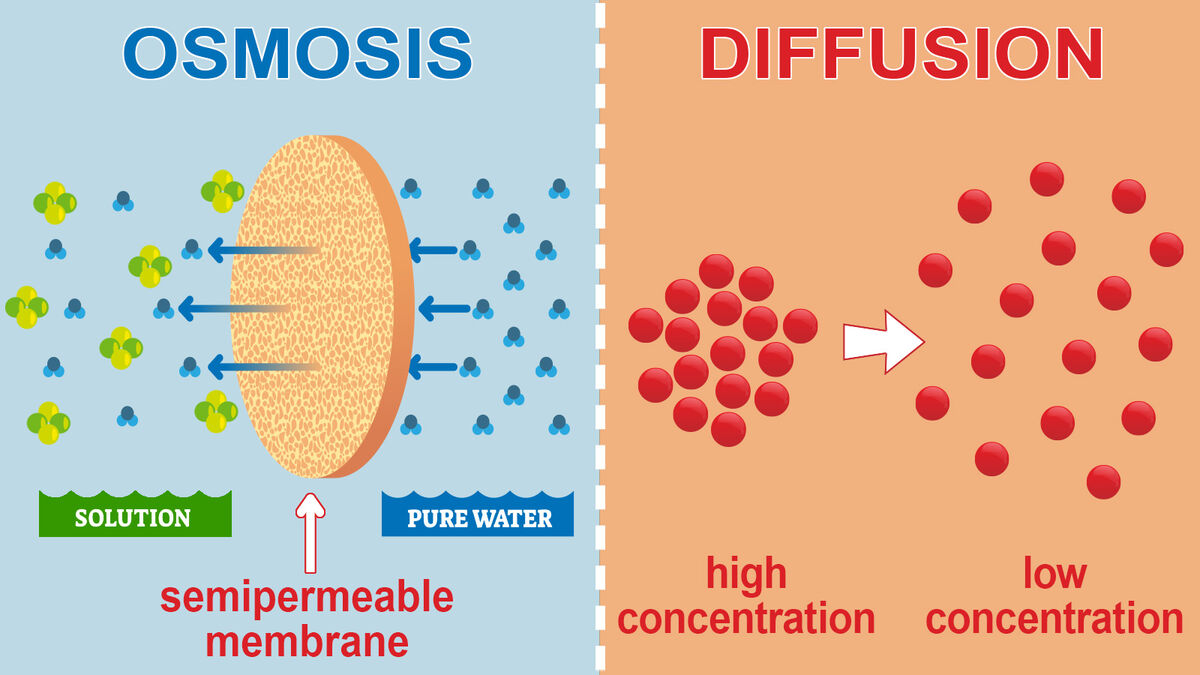
At their most basic, osmosis and diffusion are both types of passive transport, meaning they don’t require the cell to expend energy. They are driven by the natural tendency of molecules to move from an area of higher concentration to an area of lower concentration. Think of it like a crowded room – people naturally spread out to find more personal space.
Diffusion: The General Movement of Molecules
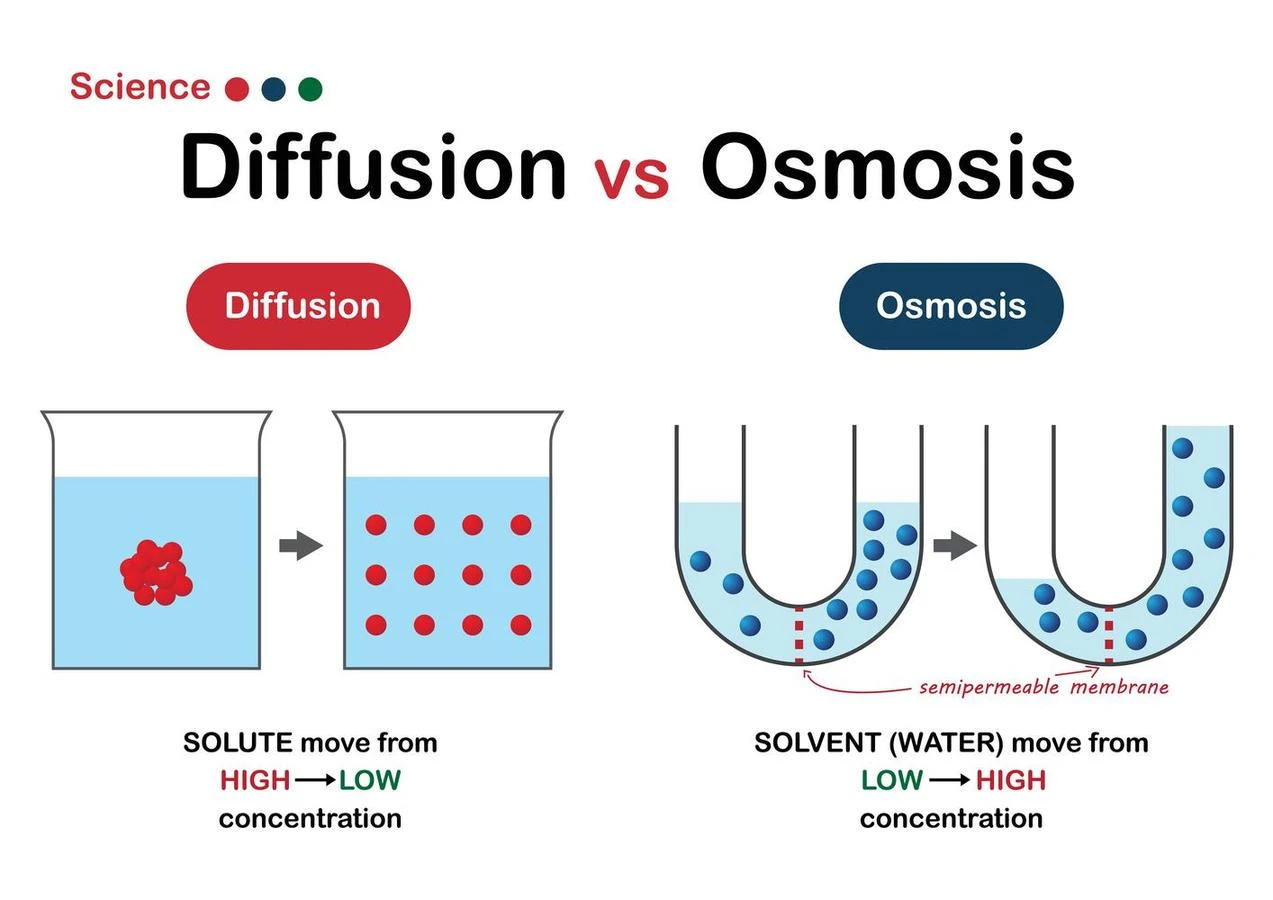
Diffusion is the overarching principle. It describes the net movement of any substance (like a gas, liquid, or dissolved solid) from a region where it is more concentrated to a region where it is less concentrated. This movement continues until the substance is evenly distributed throughout the available space, reaching a state of equilibrium.
Imagine a drop of ink released into a glass of water. Initially, the ink is highly concentrated in one spot. Over time, the ink molecules will spread out, diffusing through the water until the entire glass is uniformly colored. This happens because the ink molecules possess kinetic energy, causing them to move randomly. Where there are many ink molecules, there are more collisions, pushing them into areas with fewer ink molecules.
In biological contexts, diffusion plays a vital role in the exchange of gases like oxygen and carbon dioxide across cell membranes and within tissues. It’s also how nutrients can move into cells and waste products can move out.
Osmosis: Diffusion of Water Across a Semi-Permeable Membrane
Osmosis is a special case of diffusion, specifically referring to the movement of water molecules across a semi-permeable membrane. A semi-permeable membrane is a barrier that allows certain molecules to pass through but restricts others. In biology, cell membranes are excellent examples of semi-permeable membranes.
The key difference from general diffusion is the presence of this membrane and the focus on water. Water moves from an area of higher water concentration (which means lower solute concentration) to an area of lower water concentration (higher solute concentration). This is because the solute molecules are often too large to pass through the membrane, effectively “taking up space” and reducing the relative concentration of water.
Think of a raisin placed in a bowl of water. The raisin’s cells have a higher concentration of sugars and other solutes compared to the surrounding water. The cell membranes of the raisin are semi-permeable. Water will move from the area of high water concentration (the bowl) into the raisin’s cells to try and dilute the solutes. This causes the raisin to swell. Conversely, if you were to place a cell in a highly concentrated salt solution, water would move out of the cell, causing it to shrink – a process known as crenation.
Osmosis and Diffusion in Biological Systems
These processes are fundamental to life. Without them, cells couldn’t obtain the resources they need or eliminate waste products.
Cellular Respiration and Nutrient Uptake
Oxygen, essential for cellular respiration, diffuses from the lungs into the bloodstream and then into cells where its concentration is low. Carbon dioxide, a waste product of respiration, diffuses from cells into the bloodstream and then to the lungs to be exhaled. Similarly, nutrients like glucose and amino acids are absorbed into cells via diffusion and facilitated diffusion (a type of diffusion that requires the help of membrane proteins).
Maintaining Cell Volume and Turgor Pressure
Osmosis is critical for maintaining the internal environment of cells. In plant cells, osmosis causes water to enter the vacuole, creating turgor pressure. This pressure pushes the cell membrane against the cell wall, providing structural support to the plant. This is why plants wilt when they don’t receive enough water – turgor pressure is lost. Animal cells lack a rigid cell wall, making them more vulnerable to changes in osmotic pressure.
The Tech Connection: Diffusion and Osmosis in Innovation
While osmosis and diffusion are biological phenomena, their principles of movement, concentration gradients, and equilibrium have inspired technological advancements and are directly relevant in various tech applications.
Data Flow and Network Equilibrium
The movement of data across networks, from the internet to local area networks, can be analogized to diffusion. Data packets, like molecules, tend to spread out and seek the path of least resistance to reach their destination. Network protocols are designed to manage this flow, ensuring efficient and equitable distribution of data. Congestion, where too much data tries to occupy a limited space, is akin to a high concentration area, prompting strategies to “diffuse” the load, perhaps by rerouting or throttling.

AI and Machine Learning: Finding Equilibrium in Data
In the realm of Artificial Intelligence and Machine Learning, the concept of finding equilibrium is central. Training algorithms involves adjusting parameters to minimize errors and find an optimal state, much like molecules seeking a state of uniform distribution. Gradient descent, a core optimization algorithm, works by iteratively moving towards a minimum of a cost function, effectively “diffusing” the error towards zero. Understanding how information and “learning” spread within neural networks can also be seen as a form of diffusion, where initial inputs propagate and influence the network’s output.
Material Science and Nanotechnology: Controlled Diffusion
The development of new materials, particularly in nanotechnology, often relies on controlled diffusion. For instance, designing drug delivery systems involves understanding how active pharmaceutical ingredients will diffuse out of a carrier matrix over time, ensuring a sustained release. Similarly, in semiconductor manufacturing, diffusion is a crucial step for doping materials, where impurity atoms are diffused into a silicon substrate to alter its electrical properties. This requires precise control over temperature and concentration to achieve the desired diffusion profile.
Brand Resonance: Diffusion of Influence and Osmotic Branding
The concepts of diffusion and osmosis can also be applied to the world of brands and marketing, explaining how ideas spread and how brands establish their presence and influence.
Brand Awareness as Diffusion
Building brand awareness is essentially a process of diffusion. A message, an idea, or a product’s value proposition starts from a source (the company) and spreads outwards. Initially, awareness is concentrated among early adopters or a target audience. Through marketing efforts, word-of-mouth, and social media, the brand’s presence “diffuses” into the wider market. The goal is to achieve widespread recognition and familiarity, a state of brand equilibrium where the brand is a familiar concept to a large portion of the population.
Viral Marketing and the Osmosis of Influence
Viral marketing campaigns leverage the principles of diffusion and even osmosis to achieve rapid spread. A compelling piece of content, designed to be shared, creates a high concentration of interest in a specific online community. This interest then “diffuses” outwards as people share it with their networks. In some cases, it can be like osmosis, where the compelling content (high concentration) draws in the audience (lower concentration) across the “membrane” of their attention. The shared experience creates a sense of collective understanding and engagement, influencing perceptions and driving brand association.
Brand Identity and Permeability
A strong brand identity can be seen as having a certain level of “permeability.” It needs to be recognizable and consistent enough to maintain its core identity, but also flexible enough to adapt to different platforms and audiences. Think of a well-established brand like Coca-Cola. Its core identity is like a concentrated solute, and it diffuses its brand message across countless advertisements, sponsorships, and product variations. The “membrane” here is the context of consumption, and Coca-Cola’s brand essence successfully permeates these different environments while retaining its core characteristics.
Financial Implications: Diffusion of Capital and Osmotic Growth
The financial world, driven by the movement of money and the pursuit of growth, also exhibits parallels with osmosis and diffusion.
Investment and Capital Diffusion
The flow of investment capital can be viewed as a form of diffusion. When a promising sector or company emerges, capital tends to concentrate there initially. However, as opportunities are realized or perceived to be saturated, capital diffuses into other areas, seeking new avenues for growth. This constant redistribution, driven by market forces and investor sentiment, is akin to molecules seeking a more even distribution of wealth and opportunity.
Personal Finance and the Osmosis of Wealth
For individuals, understanding financial principles can lead to a form of “osmotic growth” in their wealth. By implementing sound financial strategies, such as saving, investing, and responsible spending, individuals create a more favorable internal financial “environment.” This can draw in more capital (income, investment returns) and lead to the gradual accumulation of wealth, much like water moving into a region of higher solute concentration to achieve balance. Conversely, poor financial habits can create an environment where wealth “diffuses” out through debt and unnecessary spending.
Side Hustles and Income Stream Diffusion
The rise of the gig economy and side hustles can be seen as individuals strategically diffusing their skills and time across multiple income streams. Instead of relying on a single “high concentration” of income from one job, individuals diversify, allowing their earning potential to spread and become more resilient. This diffusion of effort aims to create a more stable and potentially larger overall financial “pressure.”
Conclusion: The Pervasive Influence of Movement and Equilibrium
Osmosis and diffusion, seemingly simple biological processes, reveal a profound underlying principle: the inherent tendency of systems to move towards balance and distribution. Whether observing the intricate dance of molecules within a cell, the rapid spread of information across digital networks, the subtle art of brand influence, or the complex flow of global finance, these fundamental concepts provide a valuable framework for understanding how change occurs and how equilibrium is achieved. By recognizing these patterns, we can not only deepen our appreciation for the natural world but also gain insights into the strategies that drive success in technology, branding, and personal prosperity. The world is a dynamic place, and at its heart, much of that dynamism is governed by the elegant principles of osmosis and diffusion.
aViewFromTheCave is a participant in the Amazon Services LLC Associates Program, an affiliate advertising program designed to provide a means for sites to earn advertising fees by advertising and linking to Amazon.com. Amazon, the Amazon logo, AmazonSupply, and the AmazonSupply logo are trademarks of Amazon.com, Inc. or its affiliates. As an Amazon Associate we earn affiliate commissions from qualifying purchases.