
For the average consumer or small business owner, the distinction between a financial app and a traditional bank has become increasingly blurred. You can receive your paycheck via direct deposit into PayPal, spend money using a PayPal-branded debit card, and even earn interest on your balance. This leads to a fundamental question for anyone managing their personal or business finances: What bank is PayPal?
The short answer is that PayPal itself is not a bank; it is a global financial technology company (fintech). However, to offer banking services, it operates through a complex web of partnerships with established, chartered financial institutions. Understanding this structure is crucial for managing your money effectively, ensuring your deposits are insured, and leveraging the full suite of financial tools available in the digital age.
The Fundamental Question: Is PayPal a Bank?
To navigate your personal finances effectively, you must first understand the regulatory framework that governs where you store your money. While PayPal provides many services that look and feel like banking, it does not hold a federal or state banking charter in the United States.
The Legal Distinction: Fintech vs. Traditional Banking
In the United States, a “bank” is a specific legal entity that is authorized to accept deposits and make loans, regulated by agencies such as the Office of the Comptroller of the Currency (OCC) or the Federal Reserve. Because PayPal is not a bank, it is instead classified as a Money Service Business (MSB).
As an MSB, PayPal is subject to different regulations than a traditional bank. It must maintain money transmitter licenses in every state where it operates. This means that while it can facilitate payments and hold funds in an account, it does not have the same inherent right to use your deposits for fractional reserve banking (lending out your money to others) in the same way a traditional bank does—unless it does so through a partner bank.
How PayPal Holds Your Money
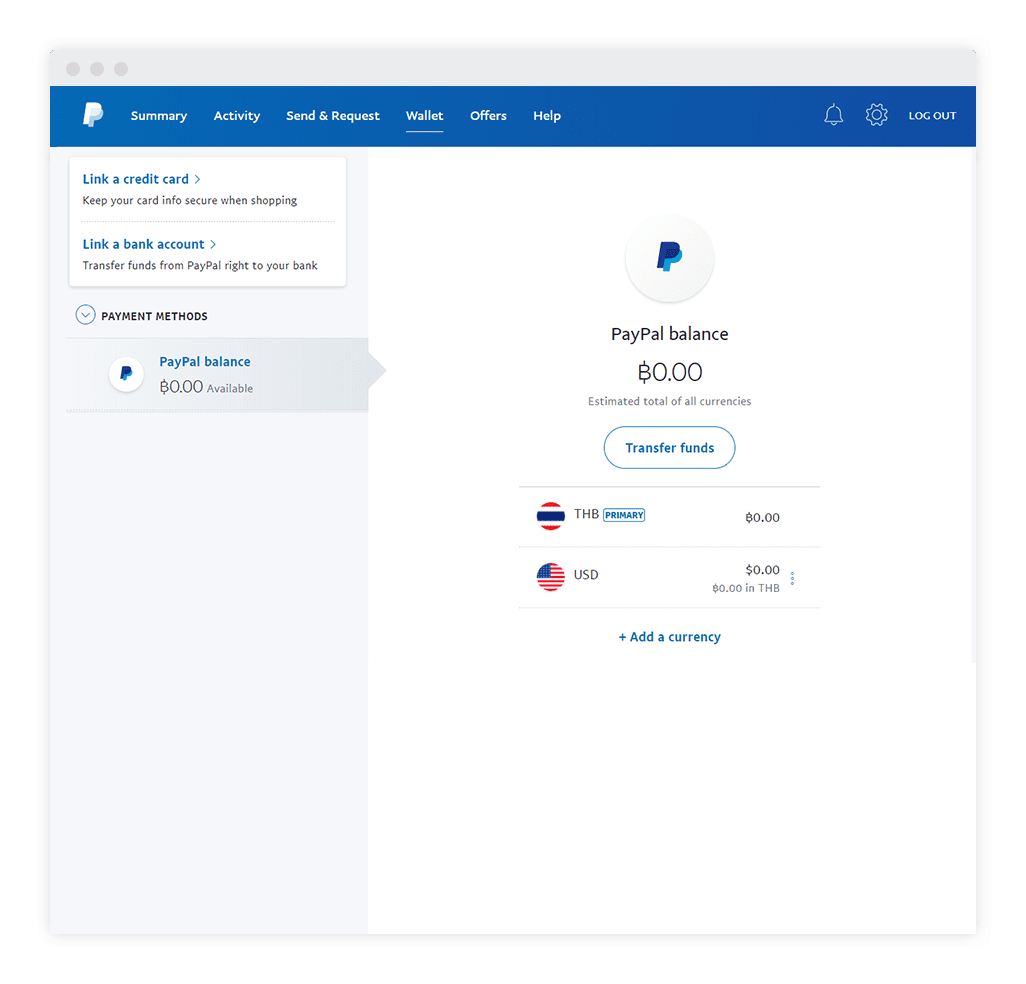
When you maintain a balance in your PayPal account, that money isn’t just sitting in a digital vault at PayPal headquarters. Depending on how you use your account, your funds are either held in “custodial” accounts at various banks or invested in liquid assets like U.S. Treasuries.
For users who have opted into specific features, such as the PayPal Savings account or the PayPal Debit Card, the funds are technically moved to a partner bank where they can be protected by federal insurance. If you simply have a “Personal” or “Premier” account without these features, your balance might not have the same level of protection as a standard checking account.
PayPal’s Strategic Partnerships: The Banks Behind the Scenes
Since PayPal cannot legally act as a bank, it acts as the “front-end” interface for several “back-end” banks. When you ask “what bank is PayPal,” you are usually asking about the institutions that underwrite their cards and hold their savings deposits.
Synchrony Bank and PayPal Credit
The most prominent partner in the PayPal ecosystem is Synchrony Bank. If you use a PayPal Cashback Mastercard® or the PayPal Credit line, you are technically a customer of Synchrony Bank.
Synchrony is one of the largest issuers of private-label credit cards in the United States. By partnering with Synchrony, PayPal can offer credit products to its users without having to manage the massive regulatory and capital requirements of being a lender itself. This partnership is what allows PayPal to offer competitive rewards and credit limits that rival traditional high-street banks.
Wells Fargo and The Bancorp Bank
When it comes to the PayPal Debit Mastercard®, the underlying banking infrastructure is often provided by The Bancorp Bank or Wells Fargo. These institutions handle the transaction processing and the movement of funds through the ACH (Automated Clearing House) network.
If you use the “Direct Deposit” feature to get your paycheck sent to PayPal, your “routing number” and “account number” are actually linked to one of these partner banks. This setup allows PayPal to mimic the functionality of a checking account while remaining a tech-focused platform.
The Role of FDIC Insurance via Partner Institutions
One of the biggest concerns in personal finance is the safety of your deposits. Traditional bank accounts are insured by the Federal Deposit Insurance Corporation (FDIC) up to $250,000.
PayPal provides “pass-through” FDIC insurance to its users, but only under specific conditions. For example, if you have a PayPal Savings account (which is provided through Synchrony Bank) or if you have a PayPal Debit Card and have completed the necessary identity verification, your funds are eligible for FDIC insurance. The insurance “passes through” PayPal to the partner bank where the money is actually held. This ensures that even if PayPal as a company were to face financial instability, your insured deposits would be protected by the U.S. government.
Banking Features Offered by PayPal for Personal Finance
For many, PayPal has evolved from a simple “checkout button” into a comprehensive financial tool. By integrating various banking features, it allows users to manage their entire financial life within a single app.
PayPal Savings: High-Yield Interest via Synchrony
In recent years, PayPal launched a dedicated Savings feature to compete with traditional and online banks. This account is provided by Synchrony Bank, Member FDIC.
The primary draw for users is the competitive Annual Percentage Yield (APY). Often, PayPal Savings offers an interest rate significantly higher than the national average for traditional savings accounts. For a user focused on “Money” and wealth growth, this makes PayPal a legitimate tool for an emergency fund or short-term savings goal, provided they understand that Synchrony is the entity actually managing the interest-bearing account.
Direct Deposit and Early Access to Funds
PayPal has moved aggressively into the “banking-as-a-service” space by offering direct deposit. Users can have their salary, government benefits, or tax refunds deposited directly into their PayPal balance.
A significant advantage of this feature is “Early Access.” Because PayPal processes the incoming electronic transfer as soon as it receives notification from the employer, users can often access their money up to two days earlier than they would at a traditional bank. This is a powerful liquidity tool for individuals managing tight monthly budgets or side hustles.
Bill Pay and Peer-to-Peer Transfers
Beyond saving and receiving money, PayPal serves as a hub for disbursements. The “Bill Pay” feature allows users to pay utilities, credit cards, and insurance premiums directly from their PayPal balance or linked bank accounts. Combined with its industry-standard peer-to-peer (P2P) transfer system, PayPal functions as a comprehensive digital wallet that manages the outflow of capital with high efficiency.
PayPal for Business: Managing Corporate Cash Flow
For entrepreneurs and freelancers, the question of “what bank is PayPal” is even more pertinent. Business owners need robust financial tools to manage cash flow, and PayPal offers a suite of “bank-like” services tailored for the commercial sector.
Merchant Services and Payment Processing
At its core, PayPal is a payment processor. For a business, this means it acts as the bridge between the customer’s bank and the business’s bank. However, many businesses now choose to keep their revenue within the PayPal ecosystem to simplify their accounting. By using the PayPal Business Debit Mastercard, owners can spend their earnings immediately without waiting for a transfer to a traditional bank account.
Business Loans and Capital Financing
Perhaps the most “bank-like” service for businesses is PayPal Working Capital and PayPal Business Loans. Unlike traditional bank loans that require extensive paperwork and collateral, PayPal uses the merchant’s sales history on the platform to determine creditworthiness.
These loans are technically issued by WebBank, another one of PayPal’s strategic partners. This allows small businesses to access growth capital based on their actual cash flow rather than just their credit score, illustrating how fintech partnerships can provide more flexible financial tools than traditional institutions.
Pros and Cons: Should You Use PayPal as Your Primary Financial Hub?
As we have established, PayPal is a “fintech” powered by a network of banks. But does this make it the right choice for your primary financial activities?
The Benefits of All-in-One Integration
The primary advantage of using PayPal as a bank alternative is convenience. Having your payments, savings, credit, and business revenue in one dashboard allows for a holistic view of your financial health. The integration with e-commerce platforms and the speed of P2P transfers are benefits that traditional banks often struggle to match. Furthermore, the high-yield savings rates offered through the Synchrony partnership are often superior to those found at big-box banks like Chase or Bank of America.
Limitations and Regulatory Protections
However, there are risks to consider. Unlike a traditional bank, PayPal has been known to “freeze” or “hold” accounts for security or compliance reasons with very little notice. While a traditional bank is also subject to anti-money laundering laws, the automated nature of PayPal’s risk management can sometimes lead to frustrations for legitimate users.
Additionally, while “pass-through” FDIC insurance exists, it is not universal for all PayPal products. Users must be diligent in ensuring their account type (such as a PayPal Balance account) is properly set up to receive those protections.
Final Thoughts
So, what bank is PayPal? It isn’t one. Instead, it is a sophisticated financial ecosystem that utilizes the charters of Synchrony Bank, Wells Fargo, and WebBank to provide a modern alternative to traditional banking. For the savvy consumer or business owner, PayPal represents a powerful tool for managing money, provided one understands the distinction between the digital interface they see and the regulated banks working behind the scenes. By leveraging these partnerships, you can enjoy the innovation of tech with the security of established financial institutions.
aViewFromTheCave is a participant in the Amazon Services LLC Associates Program, an affiliate advertising program designed to provide a means for sites to earn advertising fees by advertising and linking to Amazon.com. Amazon, the Amazon logo, AmazonSupply, and the AmazonSupply logo are trademarks of Amazon.com, Inc. or its affiliates. As an Amazon Associate we earn affiliate commissions from qualifying purchases.