
While our website typically delves into the dynamic worlds of Tech, Brand, and Money, understanding crucial aspects of health and medicine is vital for informed decision-making in all areas of life. This article shifts focus to a powerful pharmaceutical agent: Levophed. Often encountered in critical care settings, Levophed, also known by its generic name norepinephrine, plays a significant role in managing life-threatening conditions. Understanding its uses, mechanisms, and implications is crucial, not just for medical professionals, but for anyone seeking a comprehensive grasp of modern healthcare.
The Critical Role of Vasopressors in Cardiovascular Health
To grasp what Levophed is used for, we first need to understand the broader category of medications it belongs to: vasopressors. In essence, vasopressors are drugs that cause blood vessels to constrict, thereby increasing blood pressure. This seemingly simple action has profound implications in situations where the body’s circulatory system is failing to maintain adequate blood flow and oxygenation to vital organs.
What is the Circulatory System and Why is Blood Pressure So Important?
Our circulatory system is a complex network of the heart, blood vessels (arteries, veins, and capillaries), and blood. Its primary function is to transport oxygen, nutrients, hormones, and other essential substances to all the cells in our body, while simultaneously removing waste products like carbon dioxide.
Blood pressure is the force exerted by circulating blood against the walls of our blood vessels. It’s essentially the driving force that pushes blood through this vast network. Think of it like water pressure in a plumbing system; without sufficient pressure, the water won’t reach all the faucets effectively. Similarly, without adequate blood pressure, our organs, especially the brain, heart, kidneys, and liver, won’t receive the oxygen and nutrients they need to function.
When blood pressure drops too low, a condition known as hypotension, the body struggles to perfuse its vital organs. This can lead to a cascade of detrimental effects, including organ damage, shock, and even death. This is where vasopressors like Levophed come into play.
Understanding Shock: A Life-Threatening Imbalance
Shock is a critical, life-threatening condition that occurs when the body is not getting enough blood flow. This lack of blood flow means that the cells aren’t receiving enough oxygen and nutrients. There are several types of shock, each with different underlying causes:
- Hypovolemic Shock: This occurs due to a significant loss of blood volume, such as from severe bleeding or dehydration.
- Cardiogenic Shock: This happens when the heart muscle is unable to pump enough blood to meet the body’s needs, often due to a heart attack or severe heart failure.
- Distributive Shock: This is characterized by a widespread dilation of blood vessels, leading to a drop in blood pressure. Examples include:
- Septic Shock: A severe response to infection where the body’s immune system releases chemicals that cause widespread inflammation and blood vessel dilation.
- Anaphylactic Shock: A severe allergic reaction that causes the airways to constrict and blood vessels to dilate.
- Neurogenic Shock: Caused by damage to the nervous system, which can disrupt the body’s ability to regulate blood vessel tone.
In all these forms of shock, maintaining adequate blood pressure is paramount to prevent irreversible organ damage.
Levophed: Mechanism of Action and Primary Uses
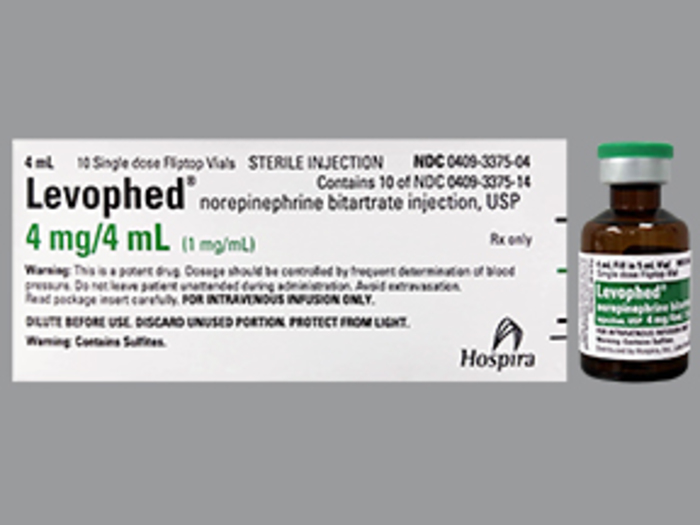
Levophed, with its active ingredient norepinephrine, is a potent vasoconstrictor. It primarily works by stimulating specific receptors on the smooth muscle cells of blood vessels and on the heart.
The Alpha and Beta Adrenergic Receptors: Levophed’s Targets
Norepinephrine is a naturally occurring hormone and neurotransmitter in the body. It exerts its effects by binding to adrenergic receptors, which are found on various cells. The two main types of adrenergic receptors that Levophed targets are:
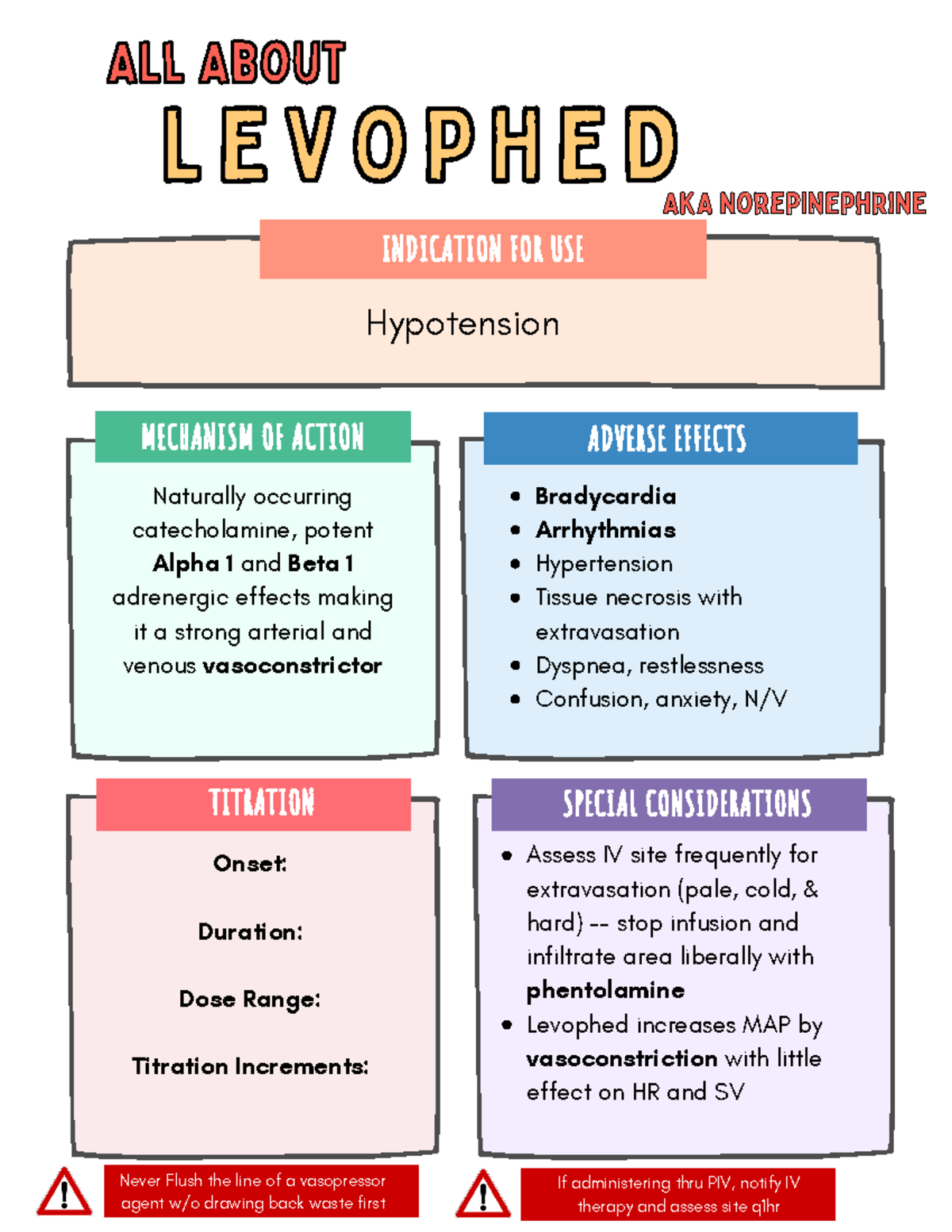
- Alpha-1 Receptors: When norepinephrine stimulates alpha-1 receptors, it causes the smooth muscles in the walls of blood vessels to contract. This constriction narrows the blood vessels, which in turn increases resistance to blood flow and raises blood pressure. This is a key mechanism for combating hypotension.
- Beta-1 Receptors: Stimulation of beta-1 receptors in the heart leads to an increase in the heart’s contractility (how forcefully it pumps) and heart rate. This further contributes to increasing cardiac output and blood pressure.
What is Levophed Used For? The Primary Indications
Given its powerful vasoconstricting and inotropic (increasing contractility) effects, Levophed is primarily used in critical care settings to manage severe hypotension. Its main applications include:
- Septic Shock: This is perhaps the most common and critical indication for Levophed. In septic shock, the body’s inflammatory response to infection leads to widespread vasodilation, causing blood pressure to plummet. Levophed helps to counteract this vasodilation, restoring blood pressure and improving blood flow to vital organs.
- Cardiogenic Shock: While other medications might be used to support heart function, Levophed can be employed when persistent hypotension is a concern, helping to maintain perfusion to the heart and brain.
- Anaphylactic Shock (as a second-line agent): While epinephrine is the first-line treatment for anaphylaxis, if blood pressure remains dangerously low despite epinephrine administration, Levophed may be used.
- Severe Hypotension from Other Causes: In situations where blood pressure is critically low due to other medical emergencies, Levophed may be considered to stabilize the patient.
The goal of administering Levophed is to achieve and maintain a target mean arterial pressure (MAP), a measure of the average arterial pressure during a single cardiac cycle, which indicates adequate blood flow to organs.
Administration and Considerations for Levophed
Levophed is a potent medication that requires careful administration and continuous monitoring. It is not a drug that is taken orally or administered in a typical outpatient setting.
The Importance of Intravenous Infusion and Central Access
Levophed is exclusively administered intravenously (IV). Due to its potent vasoconstrictive effects, it can cause tissue damage (necrosis) if it leaks out of the vein into the surrounding tissues (extravasation). Therefore, it is typically given via a central venous catheter, which is a larger catheter placed into a major vein, usually in the neck, chest, or groin. This ensures that the medication is delivered directly into the bloodstream, minimizing the risk of local damage.
The administration of Levophed is always done as a continuous infusion, meaning it is given at a steady rate. The dosage is meticulously titrated, or adjusted, based on the patient’s response, vital signs, and target blood pressure.
Monitoring and Potential Side Effects
Patients receiving Levophed require intensive monitoring by a dedicated healthcare team, often in an Intensive Care Unit (ICU). This monitoring includes:
- Continuous Blood Pressure Monitoring: This is essential to ensure the medication is effectively raising blood pressure without causing it to become too high.
- Heart Rate and Rhythm Monitoring: To detect any adverse cardiac effects.
- Urine Output Monitoring: To assess kidney function, as adequate blood flow is crucial for kidney health.
- Assessment of Peripheral Perfusion: Checking for signs of adequate blood flow to the extremities.
Like all powerful medications, Levophed can have side effects. Some of the potential adverse reactions include:
- Arrhythmias: Irregular heartbeats.
- Hypertension: Blood pressure becoming too high.
- Bradycardia: A slow heart rate.
- Extravasation Injury: Damage to surrounding tissues if the medication leaks from the vein.
- Anxiety and Headache: Common side effects of adrenergic stimulation.
- Peripheral Ischemia: Reduced blood flow to the extremities, leading to coldness, pallor, and pain.
Contraindications and Precautions
Levophed is not suitable for all patients. There are certain contraindications and precautions that healthcare providers must consider:
- Hypersensitivity: Patients who have a known allergy to norepinephrine or any component of the formulation should not receive Levophed.
- Patients with certain vascular conditions: Individuals with severe peripheral vascular disease or mesenteric (intestinal) ischemia may be at higher risk of complications.
- Pregnancy and Breastfeeding: The safety of Levophed during pregnancy and breastfeeding has not been definitively established, and it is generally used only when the potential benefits outweigh the risks.
Levophed in the Broader Context of Medical Technology and Critical Care
The use of Levophed highlights the sophisticated advancements in medical technology and the critical role of specialized care in managing life-threatening conditions.
The Evolution of Critical Care and Pharmaceutical Interventions
Modern critical care medicine has evolved dramatically, driven by technological innovation and a deeper understanding of human physiology and disease. Medications like Levophed are part of a comprehensive treatment strategy that often involves mechanical ventilation, fluid resuscitation, antibiotics, and advanced hemodynamic monitoring. The development and refinement of such medications are a testament to the ongoing progress in pharmaceutical research and development.
From the perspective of Tech, the accurate and continuous monitoring of vital signs, essential for managing Levophed, relies heavily on sophisticated medical devices, algorithms for data analysis, and secure systems for transmitting patient information. The development of precise infusion pumps that can deliver medications at extremely accurate rates is another crucial technological enabler.
The Financial Implications of Critical Care
The use of Levophed and the intensive care required for patients receiving it also carry significant financial implications. Money considerations are paramount in healthcare. The cost of the medication itself, coupled with the extensive resources of an ICU – highly trained staff, specialized equipment, and prolonged hospital stays – contributes to the substantial expenditure associated with critical care. Efficient resource allocation and effective treatment strategies are crucial for managing these costs.
Furthermore, the Brand of a hospital or healthcare system is often associated with its ability to provide advanced critical care. The availability of life-saving medications like Levophed and the expertise of the medical teams who administer them contribute to a facility’s reputation and its ability to attract and retain patients and skilled professionals.
Conclusion: A Vital Tool in the Medical Arsenal
In summary, when asking “what is Levophed used for,” the answer points to its critical role in combating severe hypotension, particularly in the life-threatening context of septic shock. It is a powerful vasopressor that constricts blood vessels and increases heart contractility, thereby restoring blood pressure and ensuring vital organ perfusion. Its administration requires meticulous attention, advanced medical technology, and a highly skilled healthcare team. While its typical applications lie within the realm of critical care, understanding its function provides valuable insight into the complex and life-saving interventions that are possible in modern medicine.
aViewFromTheCave is a participant in the Amazon Services LLC Associates Program, an affiliate advertising program designed to provide a means for sites to earn advertising fees by advertising and linking to Amazon.com. Amazon, the Amazon logo, AmazonSupply, and the AmazonSupply logo are trademarks of Amazon.com, Inc. or its affiliates. As an Amazon Associate we earn affiliate commissions from qualifying purchases.