
In the modern financial landscape, the ability to accurately calculate various economic metrics is the bridge between guesswork and strategic wealth management. Whether you are a retail investor, a small business owner, or someone looking to optimize their personal budget, understanding how to navigate a calculator—specifically a financial calculator—is a fundamental skill. The difference between a 5% and a 7% return over thirty years isn’t just two percentage points; it is often the difference between a comfortable retirement and a delayed one. To bridge this gap, one must move beyond basic arithmetic and master the specialized functions that govern time, value, and interest.

The Strategic Role of Calculation in Wealth Management
Calculators are often viewed as simple tools for addition and subtraction, but in the context of personal finance, they are sophisticated instruments for forecasting. When we talk about “calculating” in a financial sense, we are usually referring to the Time Value of Money (TVM). This concept dictates that a dollar today is worth more than a dollar tomorrow due to its potential earning capacity.
The Importance of Accuracy in Personal Finance
Every financial decision involves a degree of risk and opportunity cost. When you calculate the potential growth of an investment or the total cost of a mortgage, accuracy is paramount. Even a slight error in interest rate input or a misunderstanding of compounding frequency can lead to significant financial missteps. Professional financial calculators, such as the HP 12C or the TI BA II Plus, as well as their digital equivalents in app form, allow users to input variables like “N” (number of periods), “I/Y” (interest rate per year), “PV” (present value), and “FV” (future value) to solve for the missing piece of a financial puzzle.
Scientific vs. Financial Calculators
It is essential to distinguish between a standard scientific calculator and a financial one. While a scientific calculator excels at trigonometry and calculus, a financial calculator is pre-programmed with algorithms for amortizing loans, calculating internal rates of return (IRR), and determining net present value (NPV). Mastering these specific keys allows an individual to perform complex wealth projections in seconds that would otherwise require deep spreadsheet knowledge or hours of manual long-form math.
Core Investment Calculations Every Individual Should Know
For those focused on building a portfolio, the most critical calculations involve growth and returns. Understanding how your money multiplies over time allows you to set realistic goals and adjust your savings rate accordingly.
Calculating Compound Interest
Compound interest is often called the eighth wonder of the world. To calculate the future value of an investment on a financial calculator, you must define four main variables. Suppose you invest $10,000 (your Present Value, or PV) at an annual interest rate of 8% (I/Y) for 20 years (N). By setting the calculator to solve for Future Value (FV), you can instantly see how your principal grows. The insight here isn’t just the final number, but the ability to “stress test” the calculation. What happens if the interest rate drops to 6%? What if you add a monthly payment (PMT)? The calculator becomes a playground for “what-if” scenarios.
Determining Compound Annual Growth Rate (CAGR)
Investors often need to look backward to evaluate performance. If you bought a stock five years ago and sold it today, how do you determine your actual annual return? This is the CAGR. On a calculator, you input your starting price as PV, your ending price as FV, and the number of years as N. Solving for I/Y provides the smoothed annual return. This is a crucial metric for comparing the performance of different asset classes, such as real estate versus the stock market, on an apples-to-apples basis.
The Rule of 72: The Mental Calculator
While digital tools are indispensable, a quick mental calculation known as the Rule of 72 provides a rapid check on your calculator’s output. By dividing 72 by your expected annual rate of return, you can estimate how many years it will take for your money to double. For example, at a 10% return, your investment doubles every 7.2 years. If your calculator shows a result vastly different from this rule of thumb, it serves as an immediate red flag that a variable was entered incorrectly.
Managing Liability: Loan and Debt Calculations
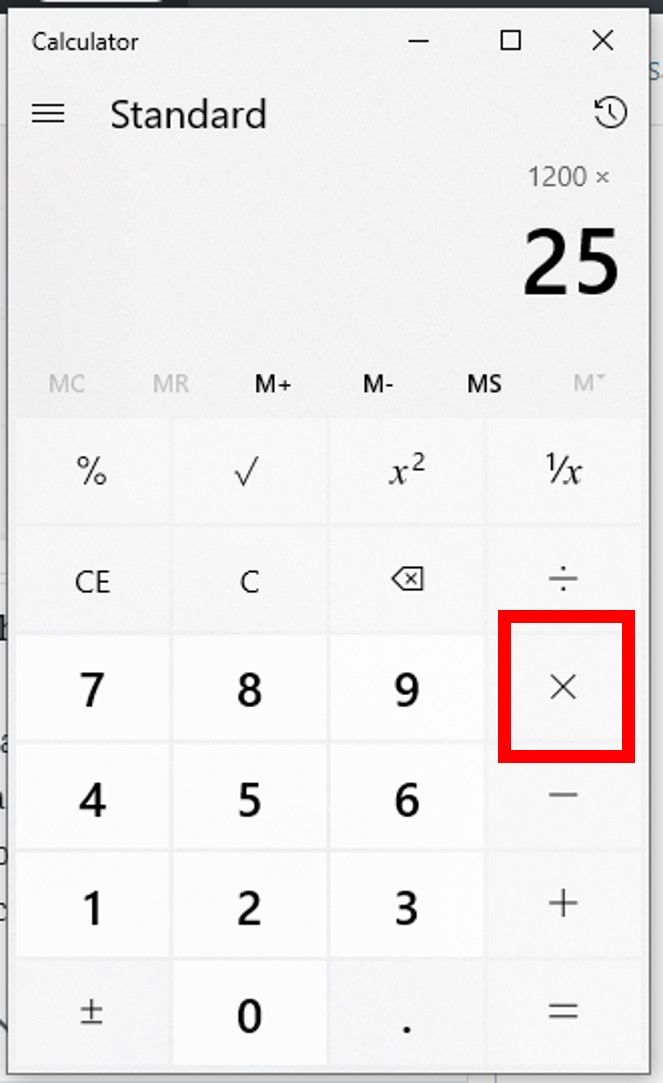
On the other side of the balance sheet lies debt. Calculating the true cost of borrowing is perhaps the most eye-opening exercise in personal finance. Most consumers focus on the monthly payment, but the real story is told through the total interest paid over the life of the loan.
Amortization and Monthly Payments
When you take out a mortgage or an auto loan, the bank provides a monthly payment figure. However, calculating this yourself allows you to understand how much of that payment goes toward the principal versus the interest. Using the PMT (payment) function on a calculator, you can input the loan amount (PV), the interest rate, and the duration.
An insightful exercise is to calculate the impact of making “one extra payment” per year. By slightly increasing the PMT value in your calculation and solving for N (number of periods), you can see exactly how many months or years you can shave off a 30-year mortgage. This calculation often reveals that a small increase in monthly output can save tens of thousands of dollars in long-term interest.
Calculating the Total Cost of Debt
Many credit card users fall into the trap of making only the minimum payment. By using a financial calculator to set the PV as the current balance, the PMT as the minimum payment, and the I/Y as the credit card’s high interest rate (often 20% or more), you can solve for N. The result is often shocking—sometimes revealing decades of debt for a relatively small initial purchase. This calculation is a powerful psychological tool that can motivate aggressive debt repayment strategies.
Advanced Business Metrics for the Modern Entrepreneur
For those running a business or engaging in side hustles, “calculating” moves into the realm of profitability and capital budgeting. This is where tools like Net Present Value (NPV) and Internal Rate of Return (IRR) become essential.
Net Present Value (NPV) and Cash Flow
If you are considering an investment in a new piece of equipment or a marketing campaign, you need to know if the future cash flows generated by that investment are worth the cost today. The NPV function on a calculator allows you to input an initial outlay (as a negative value) and a series of expected future cash inflows. By discounting these future returns back to today’s dollars at a specific discount rate, the calculator tells you if the project is “value-added.” A positive NPV means the investment is expected to generate wealth above the required return.
Margin vs. Markup: Avoiding Common Errors
One of the most frequent mistakes in business finance is confusing margin with markup. If a product costs $70 to produce and you want a 30% profit margin, many people incorrectly calculate this by adding 30% to $70 (which is a markup). To calculate a true 30% margin, you must use the formula: Cost / (1 – Desired Margin). In this case, $70 / 0.70 = $100. A calculator makes these quick conversions seamless, ensuring that a business owner doesn’t accidentally underprice their services and erode their bottom line.
Leveraging Digital Tools and Calculator Apps for Modern Wealth Management
While the physical financial calculator remains a staple in boardrooms and classrooms, the transition to digital tools has made these calculations more accessible than ever. Mobile apps and specialized web-based calculators allow for complex modeling on the go.
The Integration of Spreadsheets and Handheld Calculators
For many, the “calculator” is now a spreadsheet like Excel or Google Sheets. These platforms use the same logic as handheld financial calculators but allow for the visualization of data. For example, using the =PMT() function in a spreadsheet is identical to pressing the PMT button on an HP 12C. The advantage of the digital transition is the ability to create “amortization tables” that show the progress of a loan or investment over hundreds of periods simultaneously.

Selecting the Right Financial Tool
Not all calculators are created equal. When choosing a tool for your financial journey, look for ones that allow for “Reverse Polish Notation” (RPN) if you prefer efficiency, or standard algebraic entry if you prefer simplicity. More importantly, ensure your digital tools offer “Sensitivity Analysis.” This allows you to see how changing one variable—such as an inflation rate or a tax bracket—affects the entire financial plan.
Mastering how to calculate on a financial calculator is more than a technical skill; it is a shift in mindset. It moves the individual from a passive recipient of financial products to an active architect of their own wealth. By understanding the mechanics of interest, the reality of debt, and the power of compounding, you gain the clarity needed to navigate a complex economic world with confidence and precision.
aViewFromTheCave is a participant in the Amazon Services LLC Associates Program, an affiliate advertising program designed to provide a means for sites to earn advertising fees by advertising and linking to Amazon.com. Amazon, the Amazon logo, AmazonSupply, and the AmazonSupply logo are trademarks of Amazon.com, Inc. or its affiliates. As an Amazon Associate we earn affiliate commissions from qualifying purchases.