
In the complex landscape of corporate finance, the decision to issue stock is among the most significant milestones a company can reach. Whether it is an Initial Public Offering (IPO) or a secondary offering by a seasoned public corporation, the act of selling ownership stakes to the public or private investors is a calculated move designed to transform a company’s financial trajectory. While many see the stock market as a platform for trading and speculation, for the issuing company, it is a sophisticated tool for capital management.

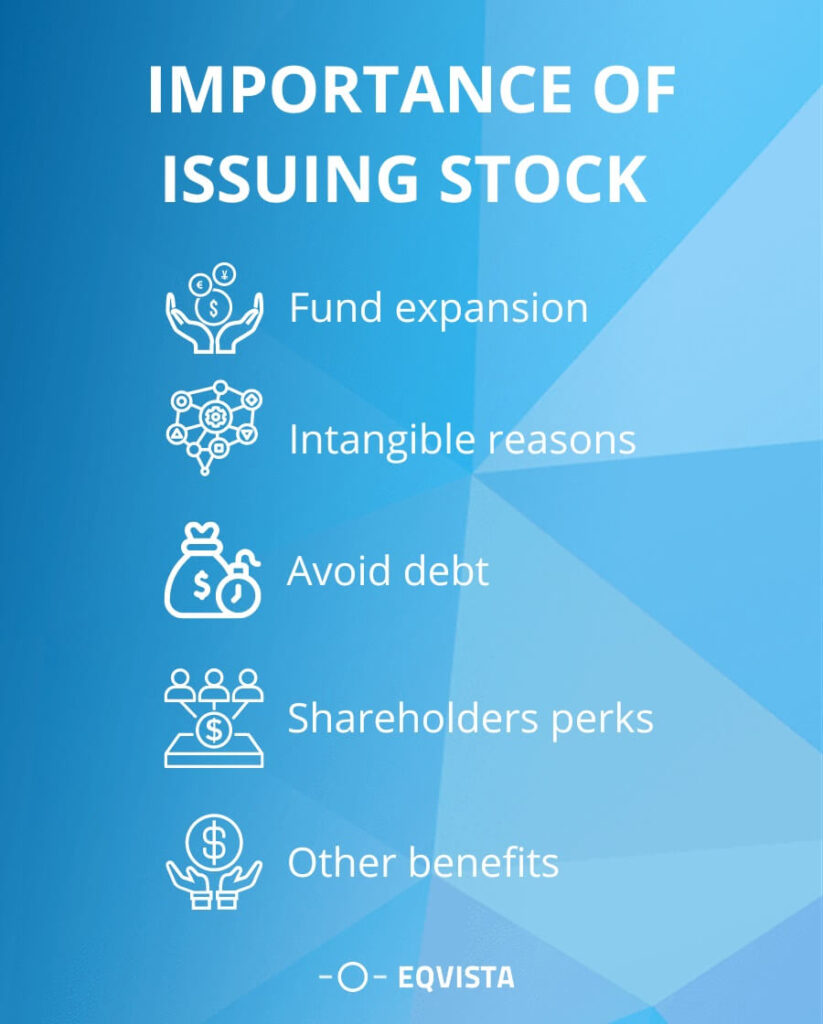
The fundamental reason a company issues stock is to raise capital without the baggage of traditional debt. Unlike a bank loan, equity financing does not require monthly interest payments or the eventual repayment of the principal amount. Instead, the company exchanges ownership for cash, a trade-off that carries profound implications for its growth, governance, and long-term stability.
Fueling Growth and Large-Scale Capital Expenditures
The most common motivation for issuing stock is the immediate need for a massive influx of liquid capital. For most companies, the organic cash flow generated from day-to-day operations is sufficient for maintenance but insufficient for transformative growth. When a business identifies a high-potential opportunity—such as entering a new global market, building a massive manufacturing plant, or launching an entirely new product line—it needs more money than its current treasury can provide.
Funding Research and Development
In sectors like biotechnology, aerospace, and high-end software development, the cost of innovation is staggering. A pharmaceutical company, for example, may spend billions of dollars over a decade to bring a single drug to market through various stages of clinical trials. There is no guarantee of success, and debt financing is often unavailable or prohibitively expensive for such high-risk ventures. By issuing stock, the company can secure the long-term capital needed to fund these research-heavy years. Investors, in turn, provide this capital in exchange for the “upside”—the potential for massive returns if the product becomes a breakthrough success.
Scaling Infrastructure and Operations
Physical expansion requires an enormous amount of upfront investment. A retail chain looking to go national, or a logistics company aiming to build a network of automated warehouses, cannot wait for years of accumulated profits to fund that expansion. Issuing stock allows these companies to “front-load” their growth. By selling shares, they can buy the real estate, hire the thousands of employees, and build the infrastructure necessary to achieve economies of scale far faster than their competitors. This speed-to-market is often the difference between becoming an industry leader and being left behind.
Debt Management and Financial Flexibility
While debt is a standard tool in business finance, it carries inherent risks. Loans and corporate bonds come with strict repayment schedules and interest obligations that must be met regardless of the company’s performance. During economic downturns or periods of low revenue, these fixed costs can lead to insolvency. Issuing stock provides a safer alternative that strengthens the company’s financial foundation.
Avoiding the Burden of Interest Payments
Debt is a “fixed cost.” Equity is not. When a company issues stock, it does not promise the investor a specific monthly payment. If the company has a bad quarter, it can choose not to pay dividends (if it pays them at all) and use its cash to weather the storm. This lack of mandatory interest payments provides a financial cushion that can be vital for survival during volatile market conditions. For a company with high debt levels, issuing new stock to pay off existing loans—a process often called “deleveraging”—can dramatically improve its credit rating and lower its overall risk profile.
Optimizing the Debt-to-Equity Ratio
The debt-to-equity ratio is a key metric used by analysts and lenders to judge a company’s financial health. If a company is “over-leveraged”—meaning it has too much debt relative to its equity—it may find it impossible to borrow more money or may be forced to pay very high interest rates. By issuing stock, the company increases the “equity” side of the balance sheet. This optimization makes the company look more stable to creditors, which can actually make it easier and cheaper to borrow money in the future if they choose to use a mix of debt and equity.
Strategic Mergers, Acquisitions, and Market Dominance
In the corporate world, growth is not always organic. Often, the fastest way to expand is to buy another company. However, multi-billion-dollar acquisitions are rarely paid for in pure cash. This is where the power of issuing stock becomes a strategic weapon in corporate development.
Stock as an Acquisition Currency
When a large company wants to acquire a smaller competitor or a complementary business, it often uses its own shares as a form of currency. By issuing new shares and “swapping” them for the shares of the target company, the acquirer can complete a massive transaction without draining its cash reserves. This allows the combined entity to keep its cash for operations while the shareholders of the acquired company become shareholders of the new, larger parent organization. This “paper” transaction is a staple of Wall Street and is how many of the world’s largest conglomerates were built.
Strengthening the Competitive Position
Beyond just buying other companies, issuing stock can be used to “muscle out” competition. A company that has successfully raised a large amount of capital via a public offering can afford to operate at a loss for years to gain market share, invest in superior technology, or hire away the best talent from rivals. This financial “war chest” serves as a deterrent to competitors and signals to the market that the company has the resources to win a long-term battle for dominance.
Liquidity, Exit Strategies, and Talent Retention
While much of the focus is on the company as an entity, the human element—the founders, early investors, and employees—is a primary reason for stock issuance, particularly during an IPO.
Providing an Exit for Early Investors
Early-stage companies are often funded by venture capitalists, angel investors, and the founders’ personal savings. These investors do not want to hold their stake forever; they eventually need to “exit” to realize their profits and return capital to their own limited partners. Issuing stock to the public provides a liquid market where these early backers can sell their shares. Without the ability to eventually go public and issue stock to a wider audience, the initial high-risk capital that fuels the startup ecosystem would likely dry up.
Attracting Top Talent through Equity Compensation
In the modern economy, especially in the technology and finance sectors, the best employees are not just looking for a salary; they want a piece of the pie. Companies issue stock—often in the form of stock options or Restricted Stock Units (RSUs)—to attract and retain high-performing executives and engineers. When a company is public or planning to go public, these stock-based incentives become incredibly valuable. It aligns the interests of the employees with the interests of the shareholders; if the company performs well and the stock price rises, the employees become wealthy. This mechanism allows a company to compete for talent that they might not be able to afford on a pure cash-salary basis.
The Long-Term Implications of Public Equity
Issuing stock is not without its costs. While it brings in capital, it also brings in new “bosses” in the form of shareholders and regulators. The transition from a private company to a public one, or the issuance of new shares in a secondary offering, changes the fundamental nature of how a business is managed.
Regulatory Oversight and Transparency
Once a company issues stock to the public, it is subject to rigorous oversight by bodies like the Securities and Exchange Commission (SEC). This requires the company to disclose its financial health, executive compensation, and potential risks in quarterly and annual reports. While this transparency builds trust with investors and can lower the cost of capital, it also requires a significant investment in accounting, legal, and compliance teams. The company can no longer keep its strategies or its failures a secret.

Balancing Founder Control with Shareholder Interests
Perhaps the most significant trade-off in issuing stock is the dilution of control. Every new share issued represents a small piece of the voting power. If a founder sells too much of the company to the public, they may lose the ability to steer the company’s direction. This has led to the rise of “dual-class” stock structures, where founders hold shares with superior voting rights, but even then, the pressure from public shareholders for short-term results can be intense. A public company must constantly balance its long-term vision with the quarterly expectations of the market, a tension that defines the daily lives of modern CEOs.
In conclusion, a company issues stock because it is the most powerful way to fund ambition. It provides the capital necessary for unprecedented growth, offers a safeguard against the rigidities of debt, serves as a currency for expansion, and creates a mechanism to reward the people who built the business. While it necessitates a move toward transparency and a sharing of control, the trade-off is often the only path toward becoming a global, enduring enterprise. For the company, the stock market is not just a place where prices go up and down—it is the engine of corporate evolution.
aViewFromTheCave is a participant in the Amazon Services LLC Associates Program, an affiliate advertising program designed to provide a means for sites to earn advertising fees by advertising and linking to Amazon.com. Amazon, the Amazon logo, AmazonSupply, and the AmazonSupply logo are trademarks of Amazon.com, Inc. or its affiliates. As an Amazon Associate we earn affiliate commissions from qualifying purchases.