
October 19, 1987, remains etched in the psyche of the financial world as “Black Monday.” On that single day, the Dow Jones Industrial Average (DJIA) plummeted by 508 points, losing 22.6% of its value. To put that into perspective, a similar percentage drop today would see the Dow shed over 8,000 points in a single session. It was a collapse so sudden and so severe that it defied the standard economic models of the time. Unlike the crash of 1929, which preceded the Great Depression, or the 2008 financial crisis, which was rooted in a housing bubble and subprime mortgages, Black Monday was a systemic failure—a perfect storm of technological innovation, macroeconomic instability, and psychological panic.
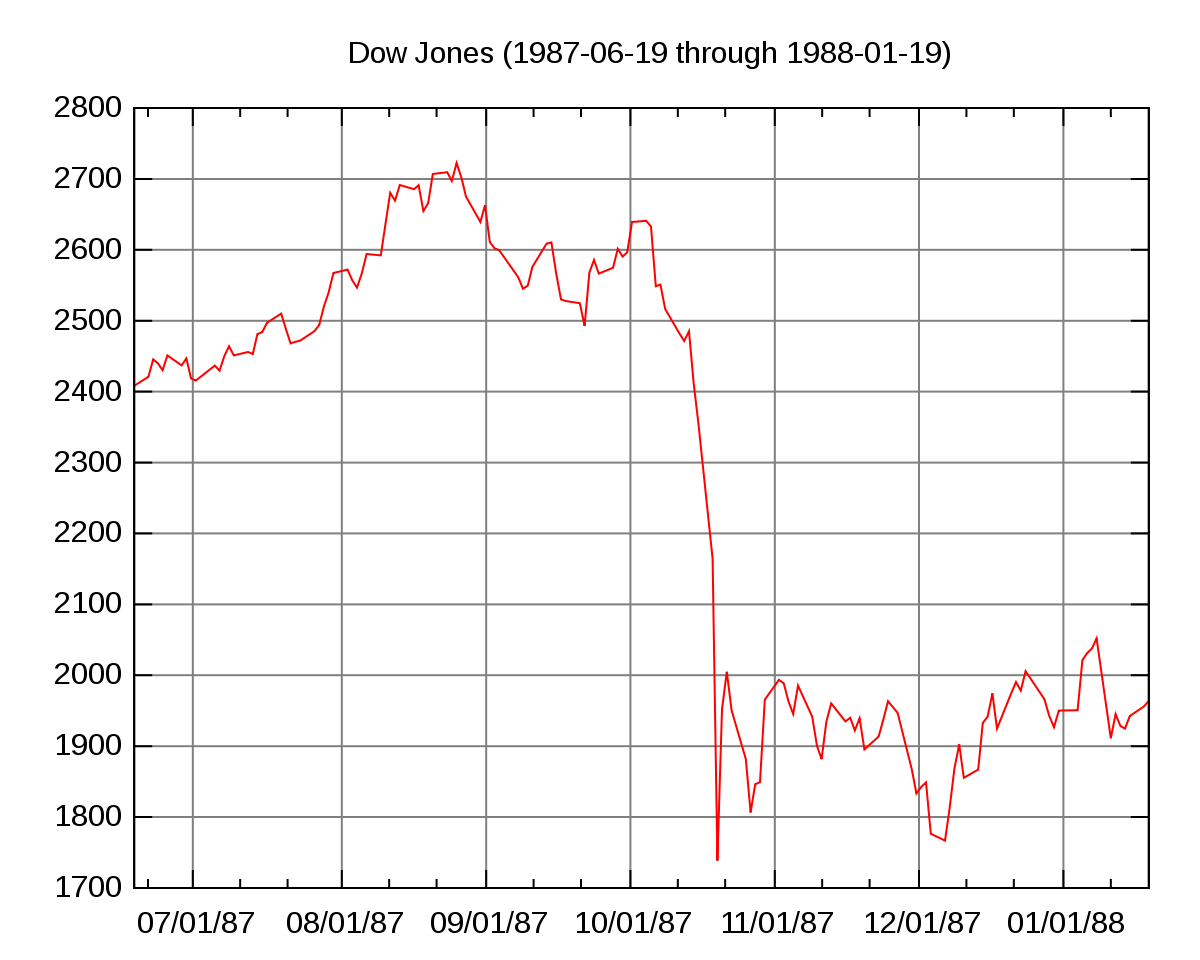
Understanding why Black Monday happened requires looking beyond a single cause. It was not triggered by a singular catastrophic event like a war or a bank failure. Instead, it was the result of several interlocking factors that created a feedback loop of selling that the markets were, at the time, unequipped to handle.
The Prelude: A Decade of Excessive Growth and Rising Tension
The years leading up to 1987 were characterized by a massive bull market. From 1982 until the summer of 1987, the stock market had been on an incredible run. Investors were enjoying a period of deregulation, corporate takeovers, and high-yield “junk bond” financing. By August 1987, the DJIA had gained 44% in just seven months.
The Overvaluation of the 1980s Bull Market
By the late summer of 1987, many analysts were beginning to worry that the market was overextended. The price-to-earnings ratios were at historic highs, and the dividend yields were reaching historic lows. While the economy was growing, the pace of the stock market’s ascent was far outstripping the underlying economic fundamentals. This created a fragile environment where any negative catalyst could potentially trigger a significant correction.
Macroeconomic Pressures and the Weakening Dollar
In the background of the stock market boom, the global economy was grappling with trade imbalances. The United States was running a massive trade deficit, and the value of the dollar was under pressure. In 1985, the Plaza Accord was signed by the G5 nations to devalue the U.S. dollar against the Japanese yen and German mark. However, by 1987, the U.S. was pushing for the Louvre Accord to stabilize the dollar.
Tensions between the U.S. and West Germany regarding interest rates added fuel to the fire. When West Germany raised interest rates, it put pressure on the U.S. to do the same to protect the dollar. Rising interest rates are traditionally a headwind for stocks, as they make fixed-income investments more attractive and increase borrowing costs for corporations. On the Friday before Black Monday, a significant decline in the markets occurred after news broke of a larger-than-expected trade deficit, setting the stage for a nervous weekend.
The Technological Culprits: Program Trading and Portfolio Insurance
Perhaps the most unique aspect of the 1987 crash was the role played by technology. Black Monday is often cited as the first crash of the “computer age.” For the first time, automated systems were making high-volume decisions without human intervention, and the results were disastrous.
The Rise of Program Trading
Program trading involved the use of computer algorithms to execute large trades based on specific market conditions. One common strategy was index arbitrage, where computers would look for price discrepancies between the S&P 500 futures market in Chicago and the actual stocks traded on the New York Stock Exchange (NYSE). When a gap appeared, the computers would automatically buy in one market and sell in the other. On Black Monday, as prices began to slide, these automated systems triggered massive sell orders, putting immediate and intense pressure on the market.
The Flaw of Portfolio Insurance
The most significant technological contributor was a strategy known as “portfolio insurance.” Developed by academics and marketed to institutional investors, portfolio insurance used stock index futures to hedge an equity portfolio against a market decline. The logic was simple: if stock prices fell, the models would direct the manager to sell short S&P 500 futures. As the market fell further, they would sell even more.
The fatal flaw in portfolio insurance was that it assumed the market would always have enough liquidity to absorb the sales. On Black Monday, the strategy backfired. As the market started to drop, the models triggered sell orders in the futures market. This drove futures prices down, which in turn dragged down the cash prices of stocks on the NYSE. The lower stock prices then triggered more portfolio insurance sell orders. This created a “cascading effect” or a “death spiral.” The very tool designed to protect investors from a crash ended up accelerating it.
The Breakdown of Market Liquidity and Communication

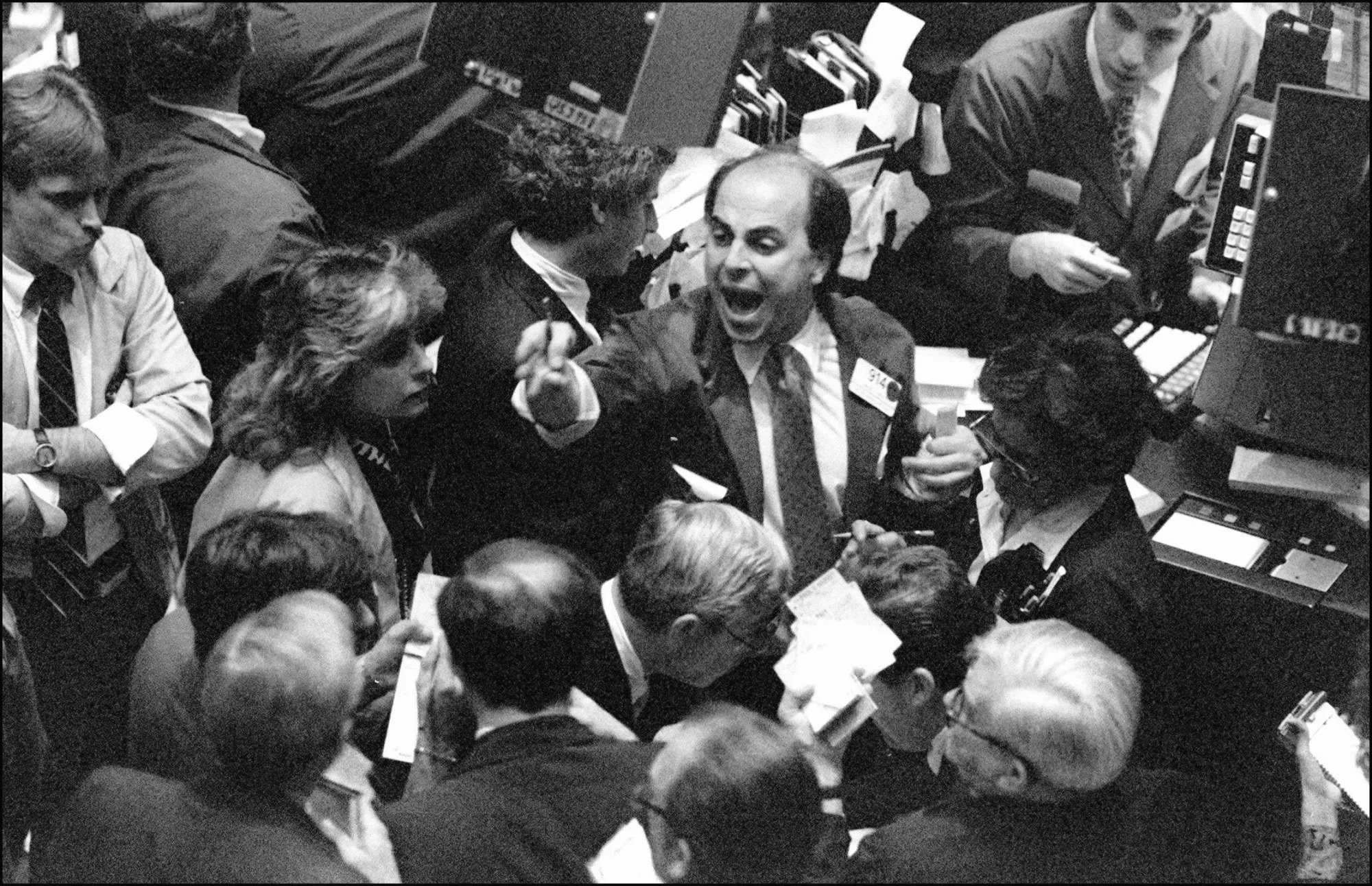
As the sell-off intensified, the physical and logistical infrastructure of the financial markets began to crumble. In 1987, trading was still largely done through human specialists on the floor of the NYSE. These specialists were tasked with maintaining an orderly market, but they were quickly overwhelmed by the sheer volume of sell orders.
The Disconnect Between New York and Chicago
A critical factor in the chaos was the breakdown in communication between the stock market in New York and the futures market in Chicago. Normally, these two markets move in lockstep. However, on Black Monday, the system for transmitting data became lagged. Prices on the ticker tape were running up to an hour behind actual trades.
Investors looking at the tape thought they were seeing current prices, but they were actually looking at the past. When they attempted to sell, they found the real prices were significantly lower than what was being reported. This uncertainty turned into blind panic. Many specialists on the NYSE floor simply stopped trading certain stocks because they couldn’t find buyers, leading to “trading halts.” These halts further spooked investors, who felt trapped in their positions with no way to exit.
The Failure of the Specialist System
The NYSE relied on “market makers” or specialists to buy stocks when no one else would. However, the volume on Black Monday was so enormous that many specialists ran out of capital. They were being asked to buy millions of shares of crashing stocks while their own net worth was evaporating. Without the specialists to provide a floor, prices fell into a vacuum. The lack of liquidity meant that even a small sell order could cause a massive drop in a stock’s price because there were no bids on the other side.
The Psychological Domino Effect: Fear and Herd Behavior
While technology and macroeconomics provided the fuel and the spark, human psychology was the oxygen that kept the fire burning. Black Monday was a classic example of herd behavior in a financial context.
The “Weekend Effect” and Monday Morning Panic
The Friday before Black Monday had already seen a record-breaking drop. Over the weekend, investors had time to ruminate on the trade deficit news and the Friday decline. By the time the markets opened on Monday morning, there was a massive backlog of sell orders. When the opening bell rang, the sheer pressure of these orders caused an immediate gap down. Seeing the market open so sharply lower triggered a “flight to safety,” where investors sold regardless of price or value.
The Fear of a 1929 Repeat
In 1987, the memory of the Great Depression was still a part of the cultural consciousness, and the parallels were being drawn in real-time by the media. As the numbers on the screen turned redder, the fear became decouple from reality. Investors weren’t selling because the companies they owned were failing; they were selling because they were afraid the entire financial system was collapsing. This psychological feedback loop ensured that the selling stayed aggressive until the very end of the trading day.
Legacy and Lessons: How Black Monday Reshaped Modern Investing
The aftermath of Black Monday led to a complete overhaul of how global markets operate. Regulators and exchange officials realized that the “laissez-faire” approach to market volatility was no longer sustainable in an era of high-speed trading.
The Introduction of Circuit Breakers
The most immediate change was the implementation of “circuit breakers.” These are mandatory market-wide trading halts that trigger when the market drops by a certain percentage (e.g., 7%, 13%, and 20%). The goal is to give investors and traders a “time out” to digest information and prevent the kind of algorithmic death spiral seen in 1987. These circuit breakers were famously triggered during the COVID-19 market volatility in March 2020, proving their enduring relevance.
Improved Coordination and Federal Intervention
Black Monday also changed the role of the Federal Reserve. Alan Greenspan, who had only been the Fed Chairman for two months at the time, acted quickly to provide liquidity to the banking system. The Fed issued a brief statement before the markets opened on Tuesday: “The Federal Reserve, consistent with its responsibilities as the Nation’s central bank, affirmed today its readiness to serve as a source of liquidity to support the economic and financial system.”
This signaled to the banks that they should continue lending to broker-dealers, preventing a credit crunch that could have turned the stock market crash into a full-blown economic depression. This “Fed Put”—the idea that the central bank will intervene to support the markets during a crisis—became a cornerstone of monetary policy for decades to follow.
The Evolution of Risk Management
For the private sector, Black Monday was a wake-up call regarding risk management. The failure of portfolio insurance led to the development of more sophisticated risk models, such as Value at Risk (VaR). Institutions learned that liquidity is not a constant; it can disappear exactly when you need it most. Modern investing now places a much higher premium on “stress testing” portfolios against extreme “tail risk” events.
In conclusion, Black Monday was not the result of a single error but a systemic collapse where technology, policy, and psychology collided. It proved that markets are not always rational and that the systems we build to manage risk can, if poorly designed, become the very engines of volatility. For the modern investor, the history of 1987 serves as a reminder that while the tools of the trade have changed, the fundamental human emotions of fear and greed—and the danger of over-reliance on automated systems—remain constant.
aViewFromTheCave is a participant in the Amazon Services LLC Associates Program, an affiliate advertising program designed to provide a means for sites to earn advertising fees by advertising and linking to Amazon.com. Amazon, the Amazon logo, AmazonSupply, and the AmazonSupply logo are trademarks of Amazon.com, Inc. or its affiliates. As an Amazon Associate we earn affiliate commissions from qualifying purchases.