
The question of when the stock market will recover is perhaps the most pressing concern for retail and institutional investors alike. After periods of significant volatility, characterized by fluctuating interest rates, geopolitical tensions, and shifting economic cycles, the desire for a “return to normalcy” is palpable. However, in the world of finance, recovery is rarely a single event. It is a process driven by a complex interplay of macroeconomic indicators, corporate earnings, and investor psychology. To understand when a recovery might solidify, one must look beyond the daily tickers and analyze the structural forces that govern market cycles.

Understanding the Anatomy of a Market Downturn
Before predicting a recovery, it is essential to understand the mechanics of the decline. Market downturns generally fall into three categories: structural, cyclical, or event-driven. A structural bear market is often caused by the bursting of a financial bubble or deep imbalances in the economy, such as the 2008 financial crisis. These take the longest to recover from, often requiring years of deleveraging. Cyclical downturns, on the other hand, are typically tied to the natural ebb and flow of the business cycle—rising interest rates and slowing growth. Event-driven crashes, like the 2020 pandemic-induced dip, are sharp but often result in rapid “V-shaped” recoveries.
The Role of Inflation and Interest Rates
In the current economic landscape, the primary catalyst for market suppression has been the aggressive fight against inflation. When the Federal Reserve and other global central banks hike interest rates, the “discount rate” applied to future corporate earnings increases. This disproportionately affects growth stocks, particularly in tech, where valuations are based on earnings expected years into the future.
A recovery is fundamentally tied to the “Fed Pivot”—the moment when the central bank stops raising rates and begins to hold or cut them. Markets are forward-looking mechanisms; they usually begin to recover six to nine months before the economy officially exits a recession or before inflation hits its 2% target. Therefore, the recovery doesn’t start when the news is good; it starts when the news stops getting worse.
Historical Context: Bull vs. Bear Markets
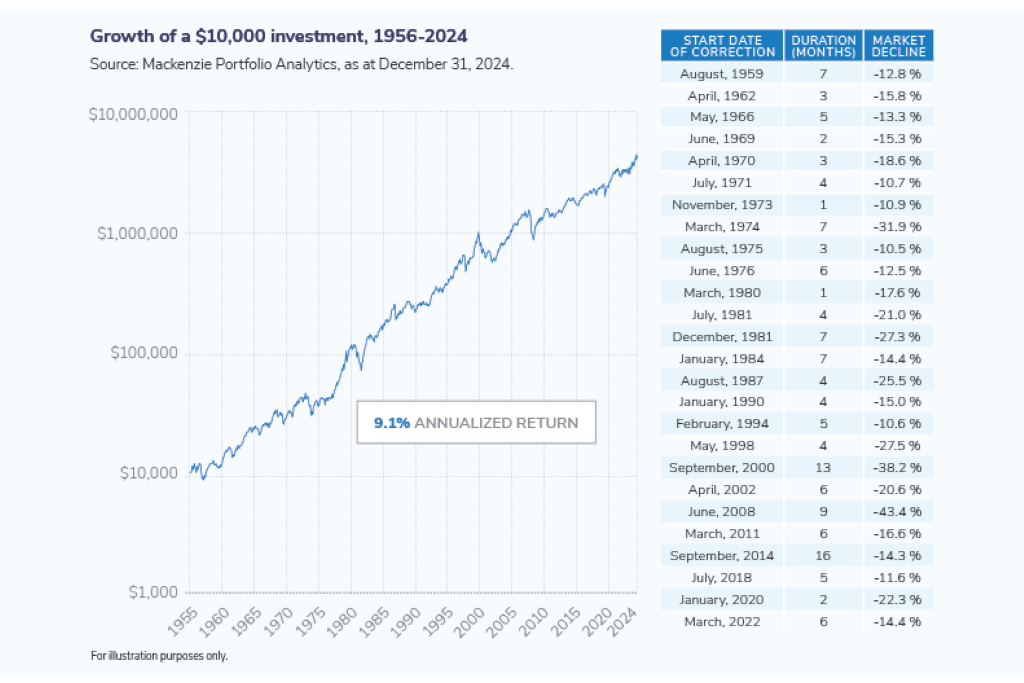
History provides a roadmap, though not a perfect one. Since World War II, the average bear market has lasted roughly 14 months, with an average decline of about 33%. In contrast, the average bull market lasts nearly 70 months. For the long-term investor, this means that while the “pain” of a downturn feels acute and eternal while it is happening, it is statistically a much shorter phase than the periods of growth. Understanding that the market spends significantly more time moving upward than downward is the first step in maintaining the discipline required to see a recovery through.
Leading Indicators of a Potential Recovery
Predicting the exact bottom of a market is a fool’s errand, but identifying the conditions for a sustained rally is possible. Investors should watch for several key indicators that suggest the tide is turning.
The Fed Pivot: The Catalyst Markets Crave
The most significant signal for a stock market recovery is a shift in monetary policy. As long as the Federal Reserve remains “hawkish”—meaning they prioritize fighting inflation over supporting growth—the market will face headwinds. The recovery will likely gain momentum when the “Real Interest Rate” (the Fed funds rate minus the inflation rate) stabilizes. When the market perceives that the terminal rate has been reached, the “uncertainty premium” begins to fade, allowing investors to price assets with more confidence.
Corporate Earnings Resilience
Stocks are, at their core, a claim on future profits. During a downturn, analysts often slash earnings estimates. A recovery is often preceded by a “cleansing” of these estimates. Once companies report earnings that are “less bad” than feared, or when guidance for the following year begins to stabilize, the market finds a floor. Investors should look for sectors where profit margins remain resilient despite higher labor costs and interest expenses. If corporate America can maintain profitability in a high-rate environment, the eventual recovery will be built on much stronger fundamental ground.
Consumer Sentiment and Spending Power
In a consumer-driven economy, the health of the average household is a leading indicator. High employment rates often act as a cushion during market volatility. As long as the labor market remains tight and wages continue to grow, the risk of a deep, prolonged “hard landing” is mitigated. A recovery in the stock market often coincides with a bottoming out of consumer sentiment. When the general public is at its most pessimistic, the market is often already pricing in the worst-case scenario, setting the stage for a rebound on any positive surprise.
Sector-Specific Recovery Timelines
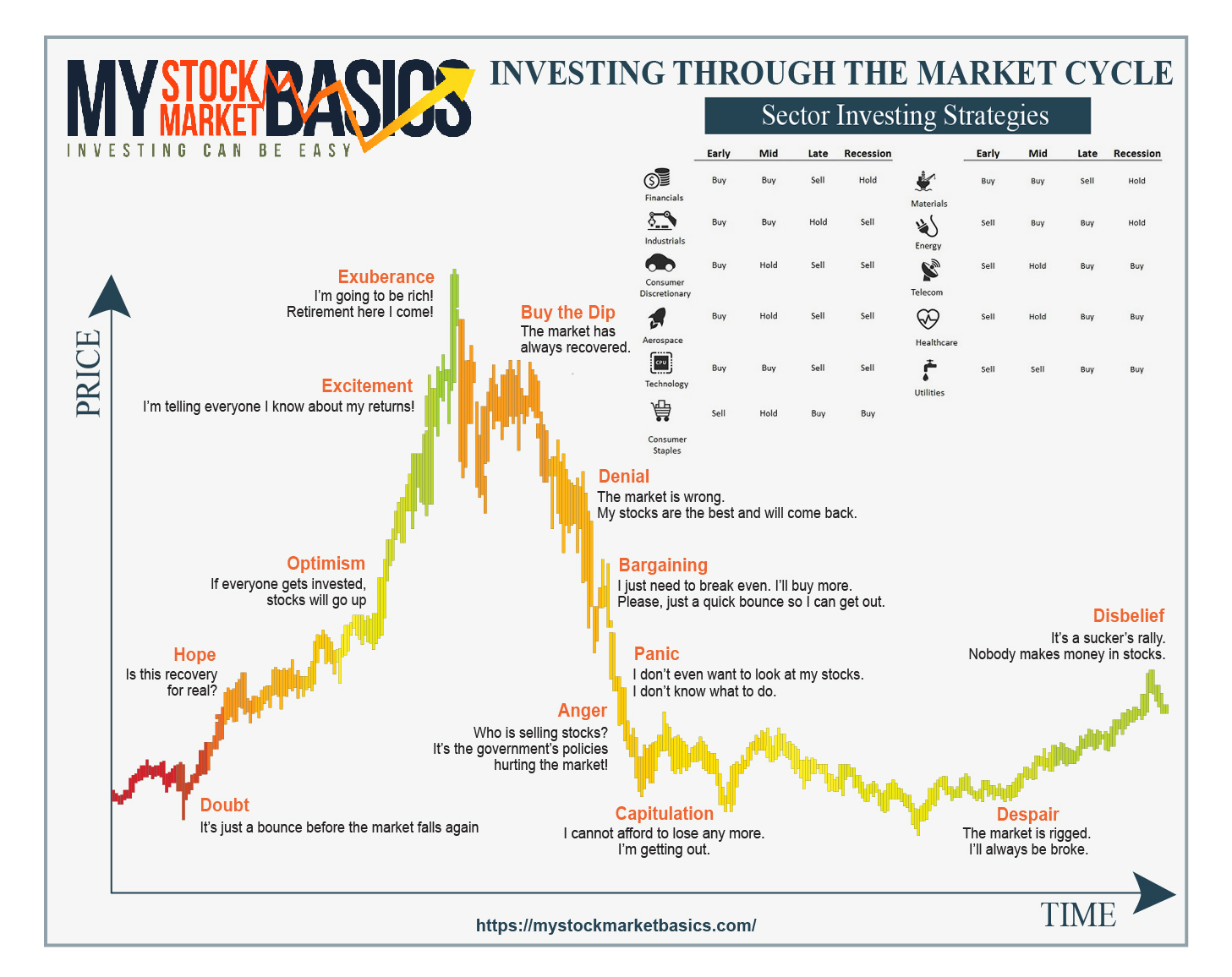
Not all sectors recover at the same pace. The “market” is a collection of different industries, each with its own sensitivity to economic variables.
Growth Stocks vs. Value Plays
Growth stocks, particularly in the technology and biotech sectors, are highly sensitive to interest rates. These companies often reinvest all their capital into expansion and don’t expect significant profits for years. When rates are high, the present value of those future profits drops. Consequently, growth stocks are often the first to fall and may be the last to recover fully—until rates stabilize.
Value stocks—companies in energy, utilities, and financials—often lead the way during the early stages of a recovery. These companies have tangible assets and current cash flows, making them more attractive when capital is expensive. Investors looking for the first signs of a recovery should watch the performance of small-cap value stocks, which are often the “canaries in the coal mine” for domestic economic health.
The Defensives: Healthcare and Utilities
Healthcare and utilities are often viewed as “safe havens.” While they don’t capture the meteoric gains of a bull market, they tend to hold their value during the descent. A rotation out of these defensive sectors and back into “risk-on” sectors like consumer discretionary and technology is a classic sign that institutional investors believe the bottom is in.
Strategies for Navigating the Uncertainty
Waiting for a recovery is not a passive act; it requires a strategic approach to capital allocation to ensure that you are positioned to profit when the trend reverses.
Dollar-Cost Averaging in a Volatile Market
One of the most effective strategies for the individual investor is Dollar-Cost Averaging (DCA). By investing a fixed amount of money at regular intervals, regardless of the price, you naturally buy more shares when prices are low and fewer when prices are high. This removes the emotional burden of trying to “time the bottom.” Since the recovery often happens in violent, sudden bursts, being “in the market” is more important than “timing the market.”
Portfolio Rebalancing and Risk Mitigation
A downturn is an excellent time to prune a portfolio. Investors should look at their holdings and ask if the fundamental thesis for each stock still holds in a “higher-for-longer” interest rate environment. This is the time to move away from speculative companies with no path to profitability and toward “quality” companies with strong balance sheets and low debt-to-equity ratios. Rebalancing ensures that you aren’t over-leveraged in one sector that might be slow to recover.
Tax-Loss Harvesting
In the realm of personal finance, a market downturn offers a silver lining: tax-loss harvesting. This involves selling securities at a loss to offset capital gains tax liabilities. By realizing a loss, you can reduce your tax bill, effectively “subsidizing” the market decline. If you still believe in the sector, you can purchase a similar (but not substantially identical) asset to maintain your market exposure.
The Long-Term Perspective: Why Time in the Market Beats Timing the Market
The psychological toll of a stagnant or declining market often leads investors to make the mistake of moving to cash. However, data from the last century of trading consistently shows that the cost of being out of the market during the initial stages of a recovery is devastating to long-term returns.
The Cost of Missing the Best Days
Historical analysis of the S&P 500 reveals that if an investor missed only the ten best performing days of the market over a 20-year period, their total return would be nearly cut in half. Crucially, the “best days” almost always occur within weeks of the “worst days.” If you exit the market to avoid further losses, you are almost certain to miss the explosive rally that marks the beginning of a recovery.
The Inevitability of Growth
While the timing of a recovery is uncertain, the long-term trajectory of the market is driven by innovation, population growth, and increasing productivity. Businesses exist to solve problems and generate profit; as long as that fundamental drive continues, the stock market will eventually find its footing and reach new highs.
The recovery will not be announced by a megaphone. It will happen quietly, amidst lingering skepticism and “climbing a wall of worry.” For the disciplined investor, the question isn’t “when will stocks recover,” but rather “how much will I own when they do?” By focusing on fundamentals, maintaining a diversified portfolio, and utilizing strategies like dollar-cost averaging, you can navigate the current uncertainty and position yourself for the inevitable expansion that follows every contraction.
aViewFromTheCave is a participant in the Amazon Services LLC Associates Program, an affiliate advertising program designed to provide a means for sites to earn advertising fees by advertising and linking to Amazon.com. Amazon, the Amazon logo, AmazonSupply, and the AmazonSupply logo are trademarks of Amazon.com, Inc. or its affiliates. As an Amazon Associate we earn affiliate commissions from qualifying purchases.