
In the world of high-stakes finance, timing is often just as critical as the assets being traded. For the modern investor, the “opening bell” is more than just a ceremonial sound; it marks the commencement of liquidity, the realization of overnight price discoveries, and the beginning of a daily cycle that moves trillions of dollars around the globe. Understanding when stock exchanges open and close is fundamental for anyone looking to navigate the complexities of the financial markets, whether you are a retail day trader or a long-term institutional investor.
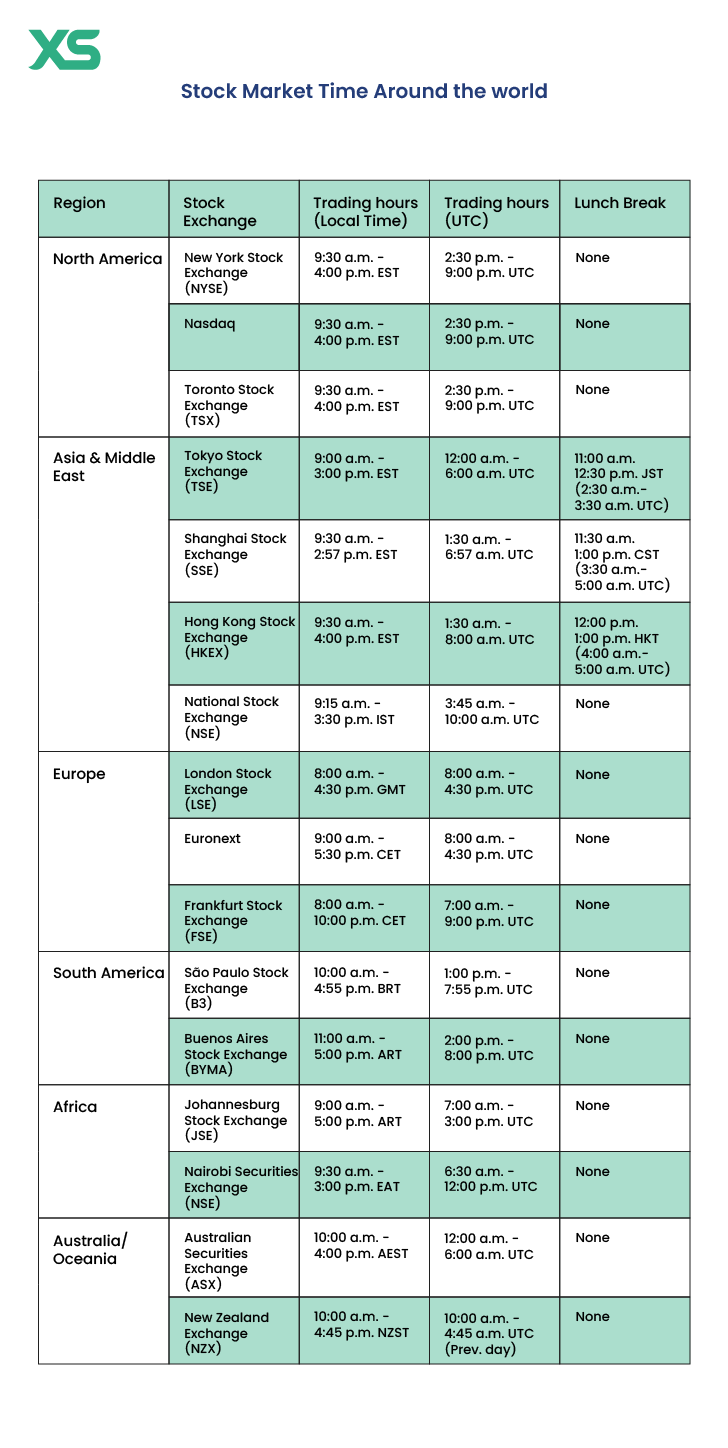
While the digital age has made it possible to monitor portfolios 24/7, the actual buying and selling of equities are still largely governed by the operational hours of physical and electronic exchanges located in specific time zones. These hours dictate when volatility is highest, when spreads are tightest, and when economic data is most likely to catalyze significant price movements.
Understanding the Core Hours: The Major Global Hubs
Global finance never truly sleeps, but it does follow a rhythmic rotation as the sun moves across the Earth’s time zones. Each major financial hub has its own set of “Core Trading Hours,” during which the vast majority of its volume is processed. For the investor, recognizing these windows is essential for executing trades at optimal prices.
North American Markets (NYSE and NASDAQ)
The most influential stock exchanges in the world are located in the United States. The New York Stock Exchange (NYSE) and the NASDAQ both operate on a synchronized schedule. The standard trading session begins at 9:30 AM Eastern Time (ET) and concludes at 4:00 PM ET. This six-and-a-half-hour window is characterized by intense activity, particularly at the open and the close.
The U.S. markets do not observe a lunch break, a feature that distinguishes them from several Asian counterparts. Consequently, trading continues through the midday hours, though volume typically dips between 12:00 PM and 2:00 PM ET as traders step away. For global investors, the U.S. market hours are a focal point because the “Closing Cross” at 4:00 PM often sets the tone for the following day’s international sessions.
European Markets (LSE and Euronext)
The European markets bridge the gap between the Asian closing and the American opening. The London Stock Exchange (LSE), one of the oldest and most prestigious in the world, opens at 8:00 AM Greenwich Mean Time (GMT) or British Summer Time (BST) and closes at 4:30 PM.
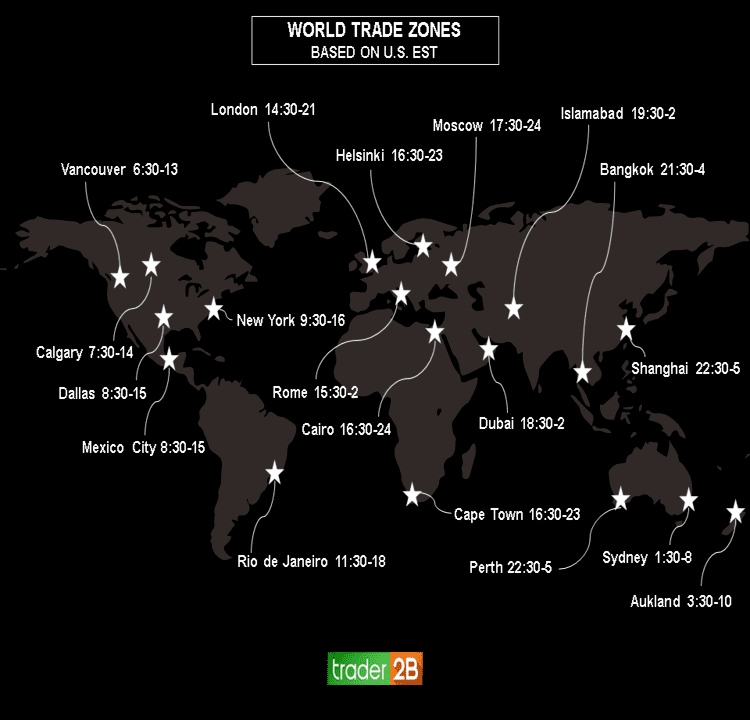
Across the channel, the Euronext exchanges (which include Paris, Amsterdam, and Brussels) and the Frankfurt-based Deutsche Börse (Xetra) operate on Central European Time (CET). Most European exchanges open at 9:00 AM CET and close at 5:30 PM CET. A critical period for European traders is the “overlap” with the U.S. markets, which occurs starting at 2:30 PM GMT/3:30 PM CET. This window often sees a significant surge in volume and volatility as participants on both sides of the Atlantic react to American economic data releases.
Asian and Pacific Markets (Tokyo, Hong Kong, and Shanghai)
The trading day begins in the East. The Tokyo Stock Exchange (TSE) generally opens at 9:00 AM Japan Standard Time (JST) and closes at 3:00 PM JST. Unlike Western markets, many Asian exchanges include a mandatory lunch break. In Tokyo, the market closes from 11:30 AM to 12:30 PM.
The Hong Kong Stock Exchange (HKEX) and the Shanghai Stock Exchange (SSE) follow similar patterns, typically opening around 9:30 AM local time. Hong Kong features a lunch break from 12:00 PM to 1:00 PM, while Shanghai’s break is longer, usually from 11:30 AM to 1:00 PM. These breaks serve to reduce volatility during a period of lower liquidity and allow traders to recalibrate before the afternoon session.
Beyond the Opening Bell: Pre-Market and After-Hours Trading
Standard trading hours represent only a portion of the daily activity. In the modern financial ecosystem, “Extended-Hours Trading” allows participants to buy and sell securities outside the 9:30 AM to 4:00 PM ET window. This is facilitated through Electronic Communication Networks (ECNs) that match buyers and sellers digitally.
The Mechanics of Extended Trading
Pre-market trading in the United States can begin as early as 4:00 AM ET, though the bulk of the activity starts around 8:00 AM ET. After-hours trading begins immediately following the 4:00 PM ET close and can run until 8:00 PM ET. These sessions are primarily used by institutional investors and high-net-worth individuals to react to news that breaks outside of standard hours, such as quarterly earnings reports or geopolitical events.
However, retail investors have increasingly gained access to these sessions through modern brokerage platforms. While extended hours offer the opportunity to act quickly on news, they come with unique structural characteristics that differ from the regular session.
Risks and Rewards of Trading Outside Standard Hours
The primary advantage of extended trading is the ability to react instantly to market-moving information. If a major tech company releases a disappointing earnings report at 4:05 PM, an investor in the after-hours market can liquidate their position before the broader market reacts the following morning.
However, the risks are substantial. The most significant risk is lower liquidity. Because there are fewer participants, the “bid-ask spread”—the difference between what a buyer is willing to pay and what a seller is willing to accept—is often much wider. This can lead to “slippage,” where a trade is executed at a price significantly worse than expected. Furthermore, price movements in extended hours can be deceptive; a stock may jump 5% in the pre-market on low volume, only to reverse and finish the regular session down 2% once the full weight of the market’s participants is felt.
Market Holidays and Calendar Anomalies
An investor’s schedule is not just governed by the clock, but also by the calendar. Stock exchanges do not operate every day, and holiday schedules vary significantly from one country to another. Forgetting a market holiday can lead to missed opportunities or the inability to exit a position during a global crisis.
Regional Holidays and Cultural Impacts
In the United States, markets are closed for several federal holidays, including Martin Luther King Jr. Day, Presidents’ Day, Memorial Day, Juneteenth, Independence Day, Labor Day, Thanksgiving, and Christmas. It is important to note that the stock market does not always follow the same holiday schedule as the bond market or the federal government.
Internationally, holidays can create unique trading dynamics. For instance, the “Golden Week” in China can shut down the Shanghai and Shenzhen exchanges for an entire week, leading to a temporary lull in regional liquidity. Similarly, the Lunar New Year affects markets across East Asia. In Europe, many exchanges close for May Day (International Workers’ Day) and Easter Monday, days which are typically active trading days in the U.S.
Early Closures and Modified Trading Schedules
In addition to full-day closures, many exchanges observe “half-days” or early closures. In the U.S., the day after Thanksgiving (Black Friday) and Christmas Eve (if it falls on a weekday) typically see the market close at 1:00 PM ET. These sessions are historically known for extremely low volume and “thin” trading, which can sometimes result in erratic price swings if a large order is placed. Investors must be aware of these shortened sessions to ensure their orders are placed within the active window.
Strategic Implications of Trading Times
The specific time of day a trade is executed can have a profound impact on its success. Market participants often categorize the trading day into distinct phases, each with its own personality and risk profile.
Volatility at the Open and Close
The first 30 to 60 minutes of the trading day, known as “The Opening,” are often the most volatile. This period represents the “unmetabolized” news and orders that accumulated overnight. Day traders often thrive in this environment, looking for quick momentum plays. However, for the conservative investor, the open can be a “trap” where prices fluctuate wildly before finding a stable direction.
Conversely, the “Closing Auction” or “The Power Hour” (the final hour of trading) sees a surge in volume as institutional funds rebalance their portfolios to match the closing price. Many algorithmic strategies are designed specifically for the close, as this price point is used to calculate Net Asset Values (NAV) for mutual funds and ETFs.
The Concept of “The Lunch Break” and Midday Lulls
For exchanges that do not have a formal break, such as the NYSE, the midday period (roughly 12:00 PM to 2:00 PM ET) is often referred to as the “midday lull.” During this time, trading volume typically dries up, and prices may drift sideways in a tight range. Professionals often warn against placing large market orders during this time, as the lack of liquidity can lead to less favorable executions. This period is often best used for research and planning rather than active execution.
Navigating Time Zones in a Global Economy
In an era of globalized portfolios, an investor in New York may hold stocks in London, Tokyo, and Sydney. Managing such a portfolio requires a masterful understanding of time zone conversions and the overlap between markets.
Tools for Tracking Market Sessions
Modern financial tools have made tracking these sessions simpler. Most high-end trading platforms offer “market clocks” that show the status of every major exchange in real-time. Additionally, economic calendars are essential; they list not only the opening times but also the specific times for “Central Bank” announcements (like the Fed or the ECB), which can cause massive volatility across all open markets regardless of their physical location.

The 24-Hour Market Cycle
While stock exchanges have set hours, other financial instruments trade nearly 24 hours a day. The Foreign Exchange (Forex) market and the Cryptocurrency markets are active around the clock. For the equity investor, the 24-hour nature of these related markets is vital. For example, if the Japanese Yen moves sharply at 3:00 AM ET, it may signal how U.S.-based multinational companies will trade once the NYSE opens at 9:30 AM.
Understanding when stock exchanges open is not merely a matter of rote memorization; it is about recognizing the flow of global capital. By aligning your trading activity with the hours of peak liquidity and being mindful of the risks associated with extended hours and holiday schedules, you can protect your capital and enhance your ability to capitalize on market opportunities. In finance, as in life, being in the right place at the right time is often the key to success.
aViewFromTheCave is a participant in the Amazon Services LLC Associates Program, an affiliate advertising program designed to provide a means for sites to earn advertising fees by advertising and linking to Amazon.com. Amazon, the Amazon logo, AmazonSupply, and the AmazonSupply logo are trademarks of Amazon.com, Inc. or its affiliates. As an Amazon Associate we earn affiliate commissions from qualifying purchases.