
The rhythm of the global financial system is dictated by the ticking of the clock. For investors, traders, and financial professionals, knowing when the markets open is not merely a matter of logistics; it is a critical component of a successful investment strategy. The “opening bell” represents more than just the start of a business day—it triggers a surge of liquidity, price discovery, and volatility that can define the trajectory of a portfolio for weeks or even months.
In an era of 24/7 digital connectivity, it is easy to forget that traditional stock exchanges still operate within strict temporal boundaries. Understanding these windows of opportunity across different time zones is essential for anyone looking to navigate the complexities of modern finance. This guide explores the operational hours of the world’s major exchanges, the nuances of extended-hours trading, and the strategic implications of the market open.
Understanding the Standard Operating Hours of the Major U.S. Exchanges
For the vast majority of retail investors in North America and those tracking global trends, the focal point of the financial world is Wall Street. The two primary exchanges, the New York Stock Exchange (NYSE) and the NASDAQ, follow a synchronized schedule that provides the heartbeat for the domestic economy.
The Core Session: 9:30 AM to 4:00 PM ET
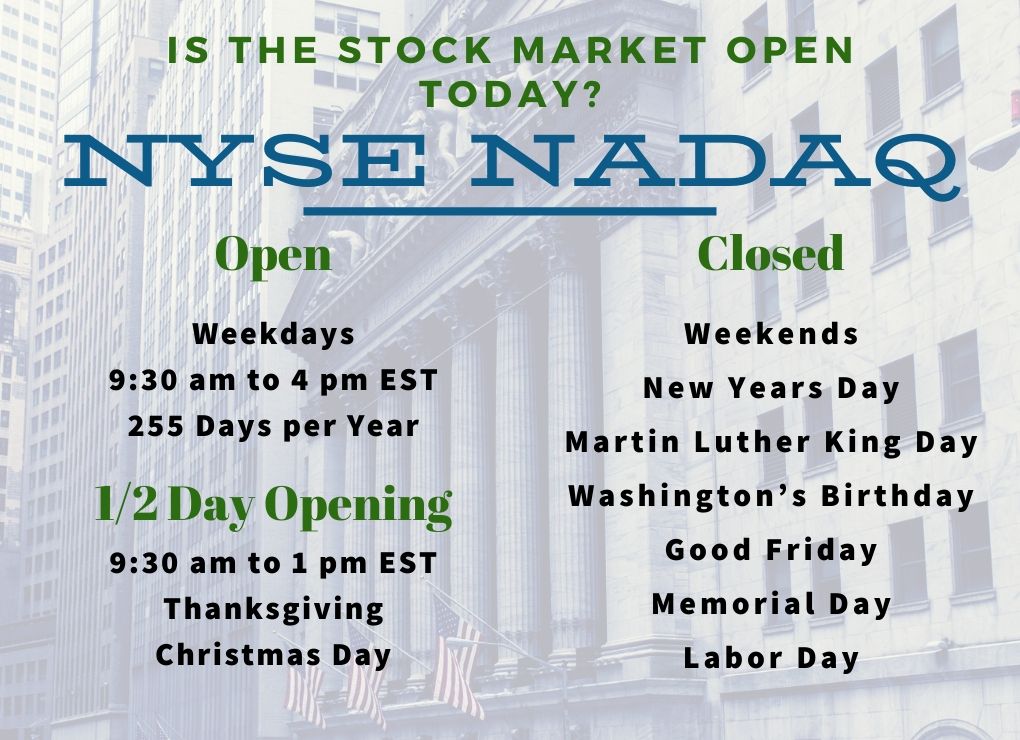
The standard trading session for the U.S. stock market begins at 9:30 AM Eastern Time and concludes at 4:00 PM Eastern Time, Monday through Friday. This 6.5-hour window is when the highest volume of trading occurs. During these hours, institutional investors, mutual funds, and high-frequency trading algorithms are most active, ensuring that “bid-ask spreads”—the difference between what a buyer is willing to pay and what a seller is willing to accept—are at their narrowest.
For the individual investor, the core session is generally the safest time to execute trades. The high level of liquidity means that orders are filled quickly and at prices that closely reflect the true market value of the security.
Why the Opening Bell Matters
The first few minutes after 9:30 AM ET are often the most volatile of the day. This period is known as the “opening cross” or price discovery phase. Overnight news, such as corporate earnings reports, geopolitical shifts, or changes in economic data, builds up like water behind a dam. When the market opens, that pressure is released.
Traders use this initial burst of activity to gauge market sentiment. If a stock opens significantly higher than its previous close (a “gap up”), it suggests strong buying pressure. Conversely, a “gap down” indicates a rush to sell. Because of this high volatility, many seasoned professionals advise novice investors to wait 15 to 30 minutes after the open before placing trades, allowing the initial “noise” to settle into a clearer trend.
Beyond the Bell: Pre-Market and After-Hours Trading Sessions
While the core session is the main event, the digital transformation of finance has extended the trading day significantly. Electronic Communication Networks (ECNs) allow participants to trade outside of the standard 9:30 AM to 4:00 PM window.
Early Bird Trading: The Pre-Market Session
U.S. pre-market trading can begin as early as 4:00 AM ET, though the bulk of the activity typically picks up around 8:00 AM ET. This session is primarily used by institutional investors and active traders to react to news that breaks overnight or early in the morning, such as the Bureau of Labor Statistics’ monthly jobs report, which is usually released at 8:30 AM ET.
Trading in the pre-market is characterized by significantly lower volume than the standard session. This lack of liquidity can lead to extreme price swings. For example, a single large sell order that would barely move the needle at noon might cause a 5% drop in a stock’s price at 6:00 AM.
Late Night Moves: Post-Market Trading
The after-hours or post-market session begins immediately after the closing bell at 4:00 PM ET and can run until 8:00 PM ET. This session is critical for reacting to corporate earnings. Most major companies wait until the market closes to release their quarterly results to ensure that all investors have equal access to the information before trading resumes.
The price action during after-hours trading is often a precursor to how the market will open the following morning. However, much like the pre-market, the post-market is thin on liquidity, and the prices seen at 5:00 PM may not hold when the full weight of the market returns the next day.
The Risks and Rewards of Extended Hours
Extended-hours trading offers the advantage of immediate reaction. If a company announces a catastrophic failure or a breakthrough innovation at 4:15 PM, traders in the after-hours market can act before the general public. However, the risks are substantial. Wide spreads mean you might pay significantly more or receive significantly less than the “fair” price. Furthermore, many brokerage firms require the use of “limit orders” during these times, meaning your trade will only execute if the stock hits a specific price, providing a layer of protection against unexpected volatility.
A Global Perspective: International Market Opening Times
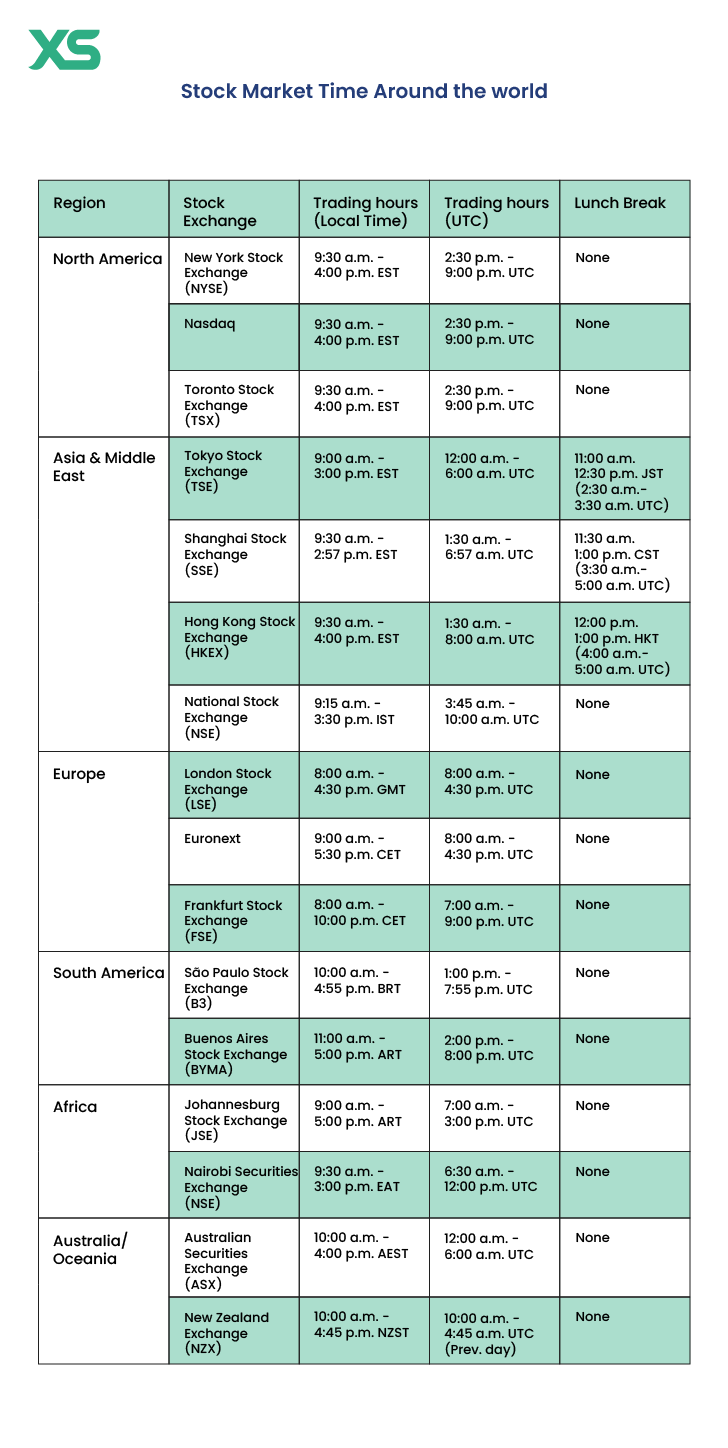
For the diversified investor, the sun never truly sets on the financial markets. As the U.S. markets close, others across the Pacific are just beginning their day. Monitoring global opening times is essential for understanding the “macro” picture, as developments in London or Tokyo frequently dictate the opening direction of the S&P 500.
The European Landscape: London and the Euronext
The London Stock Exchange (LSE) is one of the oldest and most influential markets in the world. It typically opens at 8:00 AM local time (GMT/BST) and closes at 4:30 PM. For traders in New York, the LSE open occurs at 3:00 AM ET.
There is a critical “overlap” period between 9:30 AM and 11:30 AM ET when both the U.S. and European markets are open simultaneously. This window is often the most liquid period for global forex pairs and large-cap multinational stocks, as capital flows freely across the Atlantic.
The Asian Powerhouses: Tokyo, Hong Kong, and Shanghai
The Asian markets are the first to react to the new calendar day. The Tokyo Stock Exchange (TSE) opens at 9:00 AM JST (7:00 PM ET) and includes a scheduled lunch break—a practice less common in Western markets. The Hong Kong Stock Exchange (HKEX) and the Shanghai Stock Exchange follow similar schedules, opening around 9:30 PM ET.
These markets provide early signals regarding global manufacturing, tech supply chains, and consumer demand in the world’s second-largest economy. If the Hang Seng Index in Hong Kong sees a sharp decline overnight, U.S. futures will often trade lower in sympathy.
The 24-Hour Cycle of the Foreign Exchange (Forex) Market
Unlike the stock market, the Foreign Exchange (Forex) market operates 24 hours a day, five days a week. It begins its week at 5:00 PM ET on Sunday (when the Sydney, Australia market opens) and runs continuously until 5:00 PM ET on Friday. This constant flow is necessary because international trade and currency conversion do not pause for time zones. For the retail trader, Forex offers the most flexibility, though it requires a deep understanding of how different “sessions” (Asian, European, and North American) impact currency volatility.
Strategic Considerations for Market Openings
Knowing when the market opens is the first step; knowing how to act during those times is where the profit lies. Market timing is a controversial subject in personal finance, but understanding temporal patterns is undeniably useful for risk management.
Navigating Monday Morning Volatility
The Monday morning open is unique because it must account for 48 hours of accumulated global news. Weekends are often when major geopolitical events, government policy shifts, or unexpected corporate scandals are revealed. Consequently, the Monday open is frequently characterized by “gaps” in pricing. For long-term investors, these gaps are often noise, but for those managing a business’s cash flow or short-term portfolio, they represent significant risk.
The Impact of Economic Reports and Earnings Calls
In the United States, the most impactful economic data is released at 8:30 AM ET, exactly one hour before the market opens. This includes the Consumer Price Index (CPI), Gross Domestic Product (GDP) estimates, and unemployment figures. The 60-minute gap between the data release and the opening bell allows professional traders to digest the numbers and set their “opening prints.” Understanding this schedule prevents investors from being blindsided by a sudden market swing the moment their trading app refreshes at 9:30 AM.
Holiday Schedules and Early Closures
Market participants must also be aware of the “Modified Holiday Schedule.” The NYSE and NASDAQ close for several U.S. federal holidays, such as Thanksgiving, Christmas Day, and Independence Day. However, there are also “early close” days—typically the day after Thanksgiving and the day before Christmas—where the market shuts down at 1:00 PM ET. Trading volume on these days is notoriously low, which can lead to erratic price movements. Checking the exchange’s annual calendar is a fundamental task for any serious investor at the beginning of each year.

Tools and Platforms for Monitoring Market Status
In the digital age, keeping track of market hours is easier than ever, but it requires the right tools. Most modern brokerage platforms provide “market clocks” that show the countdown to the open and close of various global exchanges. Additionally, financial news websites offer “Global Market Monitors” that display the status (Open, Closed, or Pre-market) of every major index worldwide.
For those trading across borders, time zone converters specifically designed for traders are invaluable. These tools help synchronize the 24-hour UTC clock with local time, ensuring that an investor in California doesn’t miss the 6:00 AM ET start of a crucial European central bank announcement.
Ultimately, the opening of the market is the moment where theory meets reality. It is the transition from speculative research to actual capital allocation. By mastering the clock, an investor gains a level of discipline and foresight that separates the professional from the amateur. Whether you are a long-term “buy and hold” enthusiast or an active day trader, the hours between the opening and closing bells are the most vital hours of your financial life. Knowing when they start is your first advantage.
aViewFromTheCave is a participant in the Amazon Services LLC Associates Program, an affiliate advertising program designed to provide a means for sites to earn advertising fees by advertising and linking to Amazon.com. Amazon, the Amazon logo, AmazonSupply, and the AmazonSupply logo are trademarks of Amazon.com, Inc. or its affiliates. As an Amazon Associate we earn affiliate commissions from qualifying purchases.