
In the world of high-stakes finance and personal investing, time is more than just a measurement; it is a fundamental variable that determines liquidity, volatility, and opportunity. For the uninitiated, the concept of trading hours might seem like a simple matter of a “9-to-5” workday for bankers. However, for the serious investor, understanding when the “opening bell” rings across different time zones is crucial for executing strategies, managing risk, and maximizing returns. Trading hours define the specific windows during which financial instruments—such as stocks, bonds, currencies, and commodities—can be bought and sold on formal exchanges.

Understanding these windows is essential because the financial world never truly sleeps, yet it does pulse with varying intensities. Whether you are a day trader looking for the peak volatility of the London-New York overlap or a long-term investor concerned about after-hours price gaps, the schedule of the global markets dictates the rhythm of your financial life.
Understanding Market Sessions: The Mechanics of Global Trading
The architecture of a trading day is often divided into several distinct phases. While the “core” hours are when the bulk of the volume occurs, the periods surrounding these hours are equally significant for price discovery and strategic positioning.
The Standard Market Day: Pre-market, Core, and After-hours
Most major stock exchanges operate on a schedule that includes more than just the primary trading session.
-
Pre-market Trading: This occurs before the official opening of the exchange. In the United States, for example, pre-market trading can begin as early as 4:00 AM ET. This period is characterized by lower liquidity and wider bid-ask spreads. It is often driven by overnight news, international market movements, or early-morning earnings releases.
-
Core Trading Hours: This is the “regular” session. For the New York Stock Exchange (NYSE) and NASDAQ, this is 9:30 AM to 4:00 PM ET. During these hours, liquidity is at its peak, and institutional investors are most active.
-
After-hours Trading: After the closing bell, trading continues in electronic communication networks (ECNs). This session usually runs until 8:00 PM ET. Like the pre-market, this period is prone to high volatility, especially when companies release quarterly earnings reports immediately after the close.
Why Trading Hours Matter for Investors
For a retail investor, the importance of these hours cannot be overstated. Liquidity—the ease with which an asset can be converted into cash without affecting its price—is highest during core hours. If you attempt to trade a large position during the pre-market or after-hours sessions, you may suffer from “slippage,” where the execution price is significantly different from the expected price due to a lack of buyers or sellers. Furthermore, the “opening cross” and “closing print” are specific moments during the day where massive volumes of shares are moved to set the official opening and closing prices, often serving as benchmarks for mutual funds and institutional portfolios.
Equities and Stock Exchanges: Following the Sun
The global equity market is a relay race that begins in the East and moves West. As one market closes, another is usually preparing to open, creating a continuous cycle of price discovery.
North American Markets: The Powerhouses
The NYSE and the NASDAQ are the two largest stock exchanges in the world by market capitalization. Their operating hours of 9:30 AM to 4:00 PM ET set the tone for global risk appetite. Because many of the world’s largest tech and industrial firms are listed here, the opening of the U.S. market often triggers reactions in other asset classes, including gold and oil. Interestingly, unlike some Asian markets, North American exchanges do not close for a lunch break; trading remains continuous throughout the day.
European Markets: The Middle Ground
European exchanges, such as the London Stock Exchange (LSE), Euronext (Paris/Amsterdam), and the Frankfurt Stock Exchange (DAX), typically open as the Asian sessions are winding down. The LSE, for instance, operates from 8:00 AM to 4:30 PM GMT. One of the most critical periods in the daily financial calendar is the “overlap” between the European afternoon and the U.S. morning (roughly 8:00 AM to 11:30 AM ET). During this window, the world’s two largest pools of capital are active simultaneously, leading to the highest trading volumes of the day.
Asian and Pacific Markets: The First Movers
The trading day begins in places like Sydney, Tokyo, Hong Kong, and Shanghai. The Tokyo Stock Exchange (TSE) typically operates from 9:00 AM to 3:00 PM JST, but with a notable distinction: a lunch break from 11:30 AM to 12:30 PM. This mid-day pause is a common feature in several Asian markets, including the Hong Kong Stock Exchange (HKEX). For Western investors, the Asian session is often a precursor, showing how markets are reacting to news that broke while the West was asleep.
The 24/5 Cycle: Forex and Commodities
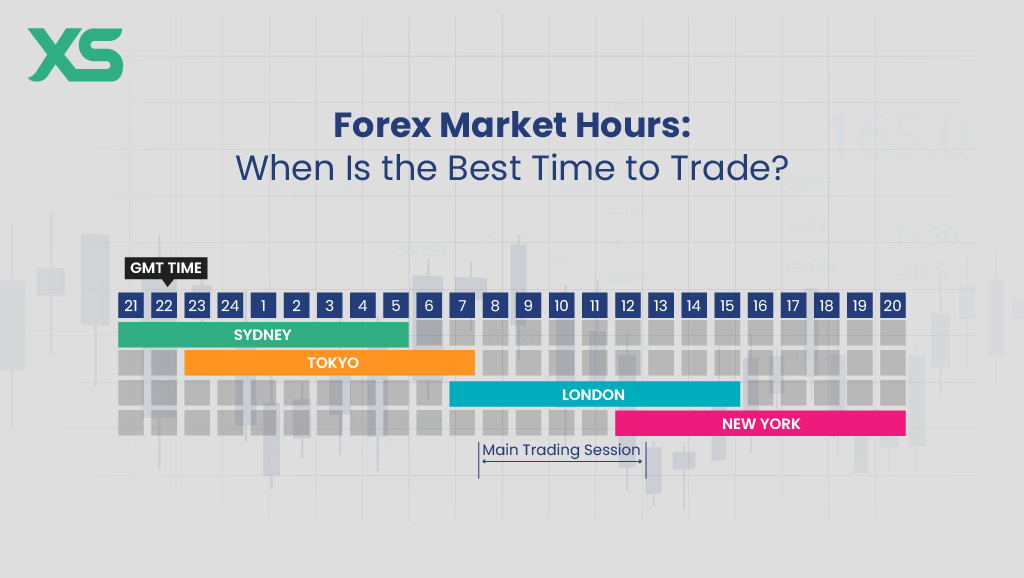
While stock markets have rigid schedules dictated by physical exchanges, the Foreign Exchange (Forex) and Commodities markets operate on a much more fluid, decentralized basis.
Currency Market Overlaps and Volatility
The Forex market is the largest and most liquid financial market in the world, trading over $7 trillion daily. It operates 24 hours a day, five days a week. It starts on Sunday evening (ET) as the Sydney market opens and continues until Friday afternoon (ET) when the New York market closes.
The 24-hour nature of Forex is made possible by the “follow-the-sun” model, where trading moves from Sydney to Tokyo, then to London, and finally to New York. The most profitable opportunities often arise during “session overlaps.” When the Tokyo and London sessions overlap, or the London and New York sessions overlap, the surge in volume creates the price movements that traders rely on. Outside of these hours—for example, the “dead zone” between the New York close and the Sydney open—spreads can widen, and the market can become erratic.
Futures and Commodities Scheduling
Commodities like gold, silver, and crude oil are primarily traded on futures exchanges like the Chicago Mercantile Exchange (CME). Most futures contracts trade nearly 24 hours a day during the business week, but they do have brief daily “maintenance breaks” where trading halts for 30 to 60 minutes. For an investor in oil, the trading hours are almost constant, reflecting the global demand for energy that doesn’t stop for a closing bell. However, the most significant price moves in commodities often occur during the pit-trading hours or the core hours of the relevant physical markets.
The New Frontier: 24/7 Cryptocurrency Trading
In the last decade, the rise of digital assets has introduced a concept that was previously unthinkable in traditional finance: a market that never closes.
Advantages of Constant Market Access
Cryptocurrency markets, including Bitcoin and Ethereum, operate 24 hours a day, 7 days a week, 365 days a year. This is possible because crypto exchanges are entirely digital and decentralized, with no central clearing house that requires downtime for settlement. For the retail investor, this offers unparalleled flexibility. You can trade at 2:00 AM on a Sunday or during a major national holiday when every other bank and exchange is shuttered. This accessibility has democratized finance, allowing individuals to react to global events in real-time.
Risks of Non-Stop Price Action
However, the 24/7 nature of crypto introduces unique risks. Market participants must be aware that “flash crashes” or massive price swings can occur on Christmas morning or in the middle of the night. Because there is no “market close” to allow for a cooling-off period, volatility can cascade quickly. For the personal financier, this necessitates the use of automated tools such as stop-loss orders and limit orders to protect capital while they are away from their screens.
Strategic Considerations for Different Time Zones
Success in investing is not just about what you buy, but when you execute the trade. Navigating trading hours requires a strategic approach to time management and risk assessment.
Capitalizing on Market Openings
The first 30 minutes of any market opening—often called the “amateur hour” by professionals, though it is filled with institutional activity—are some of the most volatile. This is when the market “prices in” all the news and events that happened while the exchange was closed. For a disciplined investor, the opening can be a time to find mispriced assets. Conversely, many conservative investors wait until the “mid-day lull” when the initial volatility has settled and the true trend of the day has been established.

Managing Risk During Low-Liquidity Periods
One of the most dangerous times to trade is during “thin” markets. This occurs during holidays (like the U.S. Thanksgiving or the Lunar New Year in Asia) or in the late-night hours between major sessions. In a low-liquidity environment, even a relatively small trade can move the price of an asset significantly. Sophisticated investors often avoid making major portfolio adjustments during these times to prevent being caught in “liquidity traps” where they cannot exit a position at a fair price.
Furthermore, investors must stay cognizant of “triple witching” days—the third Friday of March, June, September, and December—when the expirations of stock options, stock index futures, and stock index options all coincide. On these days, the final hour of trading (the “closing bell”) often sees massive surges in volume and volatility as institutional players rebalance their hedges.
In conclusion, “trading hours” are far more than a schedule; they are the framework within which global wealth is managed. By understanding the nuances of different exchange sessions, the overlaps of the Forex market, and the relentless 24/7 cycle of cryptocurrency, an investor can better navigate the complexities of the financial world. Whether you are managing a personal retirement account or actively trading for income, aligning your strategy with the clock is a fundamental step toward financial mastery.
aViewFromTheCave is a participant in the Amazon Services LLC Associates Program, an affiliate advertising program designed to provide a means for sites to earn advertising fees by advertising and linking to Amazon.com. Amazon, the Amazon logo, AmazonSupply, and the AmazonSupply logo are trademarks of Amazon.com, Inc. or its affiliates. As an Amazon Associate we earn affiliate commissions from qualifying purchases.