
In the world of high finance and personal investing, the term “security” is used with high frequency, often interchangeably with “stocks” or “shares.” However, for the serious investor, understanding the precise definition and the structural nuances of a security is fundamental to building a sophisticated portfolio. At its core, a security is a fungible, negotiable financial instrument that holds some type of monetary value. It represents an ownership position in a publicly-traded corporation (via stock), a creditor relationship with a governmental body or a corporation (represented by owning that entity’s bond), or rights to ownership as represented by an option.
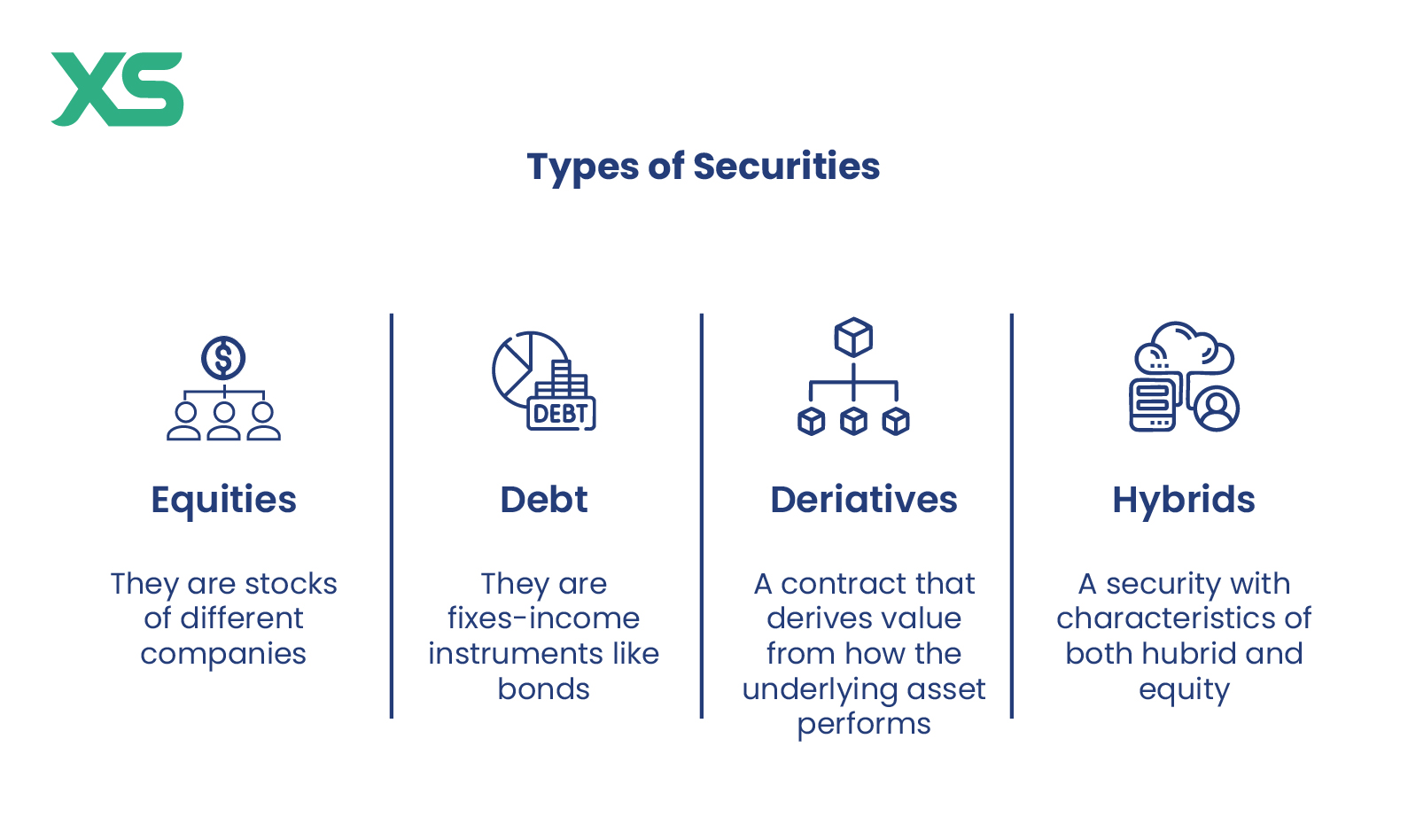
When we talk about a “security in stocks,” we are specifically looking at equity securities. These are the lifeblood of the global financial markets, serving as the primary vehicle through which companies raise capital and individual investors build long-term wealth. To navigate the markets effectively, one must look beyond the ticker symbol and understand the legal, financial, and regulatory framework that defines what a security is and how it functions within the broader economy.
Defining Securities: The Framework of Financial Value
While the average person might view a stock as just a digital line on a brokerage app, the financial industry views it as a specific class of security. To understand securities in the context of stocks, we must first distinguish them from other financial assets and understand the regulatory definitions that govern them.
Debt Securities vs. Equity Securities
The financial universe is broadly divided into debt and equity. Equity securities, which we commonly refer to as stocks, represent ownership interest held by shareholders in an entity (a corporation, partnership, or trust), realized in the form of shares of capital stock. Unlike debt securities—such as bonds or certificates of deposit—equity securities do not require the issuer to pay back the principal investment. Instead, the “payback” for the investor comes through capital appreciation (the stock price going up) or dividend payments.
Debt securities, conversely, represent money that is borrowed and must be repaid, with terms that stipulate the size of the loan, interest rate, and maturity or renewal date. While both are “securities,” the risk-reward profile of equity is significantly different. Equity holders are essentially the last in line during a liquidation, but they enjoy unlimited upside potential, whereas debt holders have priority for repayment but capped returns.
The Role of the Securities and Exchange Commission (SEC)
In the United States, the definition of a security is not just a matter of finance, but a matter of law. The Securities Act of 1933 and the Securities Exchange Act of 1934 created the legal bedrock for what we trade today. The SEC defines a security to ensure that investors are protected through transparency and disclosure. When a company issues a security, it enters into a contract with the public, promising to provide regular financial updates and adhere to strict accounting standards. This regulatory oversight is what separates a regulated “security” from a private loan or a simple speculative gamble.
Types of Equity Securities in the Stock Market
Not all stocks are created equal. When an investor asks “what is a security in stocks,” they are often surprised to find that equity can take several different forms, each with unique rights, risks, and roles within a diversified portfolio.
Common Stock: The Standard Unit of Ownership
Common stock is the most prevalent type of equity security. When people talk about “buying stocks,” they are almost always referring to common stock. This security represents a claim on profits (dividends) and confers voting rights to the holder. Investors typically receive one vote per share to elect the board of directors and vote on corporate policies.
The primary allure of common stock is its potential for long-term capital growth. Historically, common stocks have outperformed most other investment classes over long horizons. However, they are also the most volatile. In the event of corporate bankruptcy, common stockholders are the last to receive any remaining assets, making them “residual claimants.”
Preferred Stock: The Hybrid Security
Preferred stock is a unique security that sits somewhere between a bond and a common stock. It is technically an equity security because it represents ownership, but it functions much like a fixed-income instrument. Preferred stockholders usually do not have voting rights, but they have a higher claim on assets and earnings than common stockholders.
The “preferred” status means that these shareholders receive dividends before common stockholders. These dividends are often fixed, providing a steady stream of income similar to bond interest. For income-focused investors, preferred securities offer a way to participate in a company’s success with lower volatility than common shares, though they generally offer less potential for explosive price appreciation.
American Depositary Receipts (ADRs)
For the modern investor looking for international exposure, ADRs are a critical type of security. An ADR is a security that represents shares of a foreign company but is traded on U.S. financial markets. These are issued by U.S. depository banks and denominated in U.S. dollars. ADRs allow investors to hold “stocks” in global giants like Toyota, SAP, or Alibaba without dealing with the complexities of foreign currency exchange or international cross-border trading regulations. They are a prime example of how the definition of a security has evolved to facilitate global capital flow.

Why Securities Matter to the Individual Investor
Understanding the nature of a security is more than an academic exercise; it is the foundation of risk management and wealth creation. Securities are the tools used to convert current savings into future purchasing power.
Capital Appreciation and the Power of Compounding
The primary reason individuals engage with equity securities is the prospect of capital appreciation. When a company grows its earnings, the value of the security—the share of the company—increases. Because securities are liquid and easily tradable, investors can realize these gains relatively quickly. Over decades, the compounding of these gains, along with reinvested dividends, is the most reliable path to financial independence. Unlike physical assets like real estate, securities allow for “fractional” ownership, meaning an investor can start with as little as a few dollars.
Ownership Rights and Corporate Governance
A security is a legal contract that grants the holder specific rights. Beyond the potential for profit, holding a security means you have a seat at the table—however small. You have the right to inspect corporate books (under certain conditions), the right to sue for wrongful acts by the board, and the right to vote on major structural changes like mergers and acquisitions. This “agency” is a crucial aspect of the capitalist system, ensuring that management remains accountable to the owners (the shareholders).
Risk Management and Diversification
One of the greatest advantages of securities is the ability to diversify. Because securities are standardized and traded on central exchanges, an investor can spread their capital across hundreds of different companies, industries, and geographies. This mitigates “unsystematic risk”—the risk that a single company will fail. By holding a basket of various equity securities, an investor can capture the growth of the overall economy while insulating themselves from the downfall of any single entity.
How Securities are Regulated and Traded
The functionality of a security depends entirely on the infrastructure of the market. Without a secondary market and a clear regulatory framework, a stock would simply be a piece of paper with no path to liquidity.
The Howey Test: Defining the Boundary
To understand if a financial arrangement qualifies as a “security,” the legal system uses the “Howey Test,” originating from a 1946 Supreme Court case. Under this test, a transaction is a security if it involves:
-
An investment of money.
-
In a common enterprise.
-
With a reasonable expectation of profits.
-
Derived from the efforts of others.
This definition is why stocks are securities. You invest money in a company (common enterprise) expecting to make money (profits) based on the work of the CEO and employees (efforts of others). This distinction is vital today as regulators determine whether new assets, like certain cryptocurrencies or digital tokens, should be regulated under the same strict rules as stocks.
The Primary and Secondary Markets
Securities live in two worlds. The primary market is where the security is born—this is the Initial Public Offering (IPO). Here, the company sells shares directly to investors to raise capital for expansion. Once those shares are in the hands of the public, they trade on the secondary market (like the NYSE or NASDAQ). In the secondary market, investors trade with each other. The company does not receive money from these trades, but the liquidity provided by the secondary market is what gives the security its value. If you couldn’t sell your security to someone else tomorrow, you would be much less likely to buy it today.
The Future of Securities: Digital Assets and Tokenization
As we look toward the future of personal finance and investing, the very definition of a “security in stocks” is undergoing a digital transformation. The financial industry is moving toward “tokenization,” where ownership of a stock is recorded on a blockchain rather than a traditional centralized ledger.
Security Tokens vs. Traditional Equities
A security token is a digital representation of a traditional security. While it functions exactly like a stock—representing ownership and granting dividend rights—it can be traded 24/7 without the need for traditional clearinghouses. This evolution aims to reduce the “friction” in the market, making it faster and cheaper to trade securities. For the investor, this means potentially higher returns as fees decrease and market access increases.

The Evolution of Market Liquidity
The shift toward digital securities could also democratize access to previously illiquid assets. Imagine a world where “stock” in a private startup, a piece of commercial real estate, or even a fine art collection is securitized and traded with the same ease as Apple or Microsoft shares. This expansion of the “security” definition would allow individual investors to build even more robust and diversified portfolios, further blurring the lines between different asset classes while maintaining the legal protections that the “security” label provides.
In conclusion, a security in stocks is far more than a entry on a balance sheet; it is a sophisticated legal and financial instrument designed to facilitate the growth of capital. By understanding the different types of securities, the rights they confer, and the regulatory environment that protects them, investors can move beyond speculation and toward a disciplined, professional approach to wealth management. Whether you are holding common stock for growth, preferred stock for income, or ADRs for global reach, you are participating in a system that has been the primary engine of global economic progress for over a century.
aViewFromTheCave is a participant in the Amazon Services LLC Associates Program, an affiliate advertising program designed to provide a means for sites to earn advertising fees by advertising and linking to Amazon.com. Amazon, the Amazon logo, AmazonSupply, and the AmazonSupply logo are trademarks of Amazon.com, Inc. or its affiliates. As an Amazon Associate we earn affiliate commissions from qualifying purchases.