
When the evening news anchor announces that “the market is up today,” they are most frequently referring to the movement of the Dow Jones Industrial Average (DJIA). Often shortened simply to “the Dow,” this index is one of the most cited, oldest, and most recognizable financial barometers in the world. Despite its ubiquity, many investors—both novice and experienced—frequently misunderstand how it is calculated, what it represents, and why it remains relevant in an era of high-frequency trading and complex algorithms.
To understand the Dow is to understand the history of the American stock market itself. It is more than just a number; it is a carefully curated selection of companies designed to reflect the health of the broader United States economy. As a price-weighted index of 30 prominent “blue-chip” companies, it serves as a psychological and practical anchor for global financial sentiment.
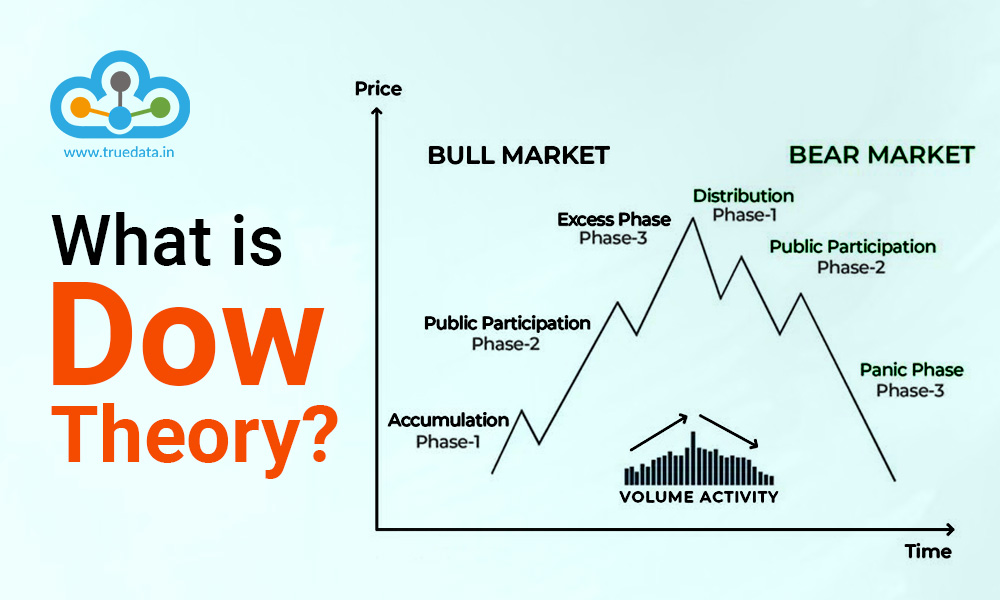
The Origins and Evolution of the Dow Jones Industrial Average
The story of the Dow begins in the late 19th century, a period of massive industrial expansion in the United States. It was created by Charles Dow, the editor of the Wall Street Journal and co-founder of Dow Jones & Company, along with his business partner Edward Jones. Charles Dow sought a way to simplify the chaos of the daily stock market into a single figure that could tell investors whether the overall economy was moving forward or backward.
The Vision of Charles Dow and Edward Jones
When the index was first published on May 26, 1896, it consisted of only 12 companies. These were primarily industrial firms involved in railroads, cotton, gas, sugar, tobacco, and oil. In the eyes of Charles Dow, these companies represented the “smoke-stack” industries that powered the nation. At the time, the calculation was simple: Dow added up the stock prices of the 12 companies and divided by 12.
The original list included companies like American Cotton Oil, Distilling & Cattle Feeding, and U.S. Leather. Of the original 12, only General Electric remained in the index for a significant duration, though it too was eventually removed in 2018. This evolution highlights a fundamental truth about the Dow: it is not a static list, but a living representation of economic dominance.
From 12 to 30: How the Index Grew
As the American economy diversified and grew, so did the index. In 1916, it expanded to 20 stocks, and by 1928, it reached its current number of 30 components. The term “Industrial” in the Dow Jones Industrial Average has become somewhat of a historical misnomer. While it originally focused on heavy industry, today’s Dow includes companies from the technology, healthcare, retail, and financial services sectors.
The selection process is unique compared to other major indices. There is no rigid formula for inclusion. Instead, the components are selected by a committee at S&P Dow Jones Indices. They look for companies that have an excellent reputation, demonstrate sustained growth, and are of interest to a large number of investors. This subjective element makes the Dow a “curated” index of American corporate leadership.
How the Dow Works: Mechanics of a Price-Weighted Index
The most significant technical distinction of the Dow is that it is a price-weighted index. This is fundamentally different from the S&P 500 or the Nasdaq, which are market-capitalization-weighted. In a market-cap-weighted index, companies are weighted based on their total market value (share price multiplied by total shares outstanding). In the Dow, the weight of a company is determined solely by its share price.
The Price-Weighting Methodology
In a price-weighted system, a stock with a higher price per share has a greater influence on the index’s daily movement than a stock with a lower price per share, regardless of the actual size of the company. For example, if a company with a stock price of $200 sees a 1% move, it will impact the Dow significantly more than a company with a stock price of $50 seeing a 1% move—even if the $50-per-share company has a much larger total market capitalization.
This methodology is often criticized by modern economists because it can lead to distortions. A single high-priced stock can swing the entire index, even if the other 29 companies are stable. This is also why many companies in the Dow are hesitant to undergo stock splits; a split would lower their share price and, consequently, their influence within the index.
The Dow Divisor: Adjusting for Splits and Changes
Because the Dow is price-weighted, simple addition and division no longer work when a company splits its stock or when one company is replaced by another. If a $200 stock splits 2-for-1 and becomes a $100 stock, the index would “drop” purely due to the math, even if the value of the company hadn’t changed.
To solve this, the index uses the “Dow Divisor.” This is a continuously adjusted numerical value used to maintain the continuity of the index. Instead of dividing the sum of the prices by 30, the sum is divided by this specific divisor (which is currently much less than one). This ensures that corporate actions like splits, spin-offs, or substitutions do not cause artificial jumps or drops in the index level. Whenever the divisor changes, it ensures that the index value remains the same immediately before and after the event.
The 30 Blue-Chip Stocks: Who Makes the Cut?
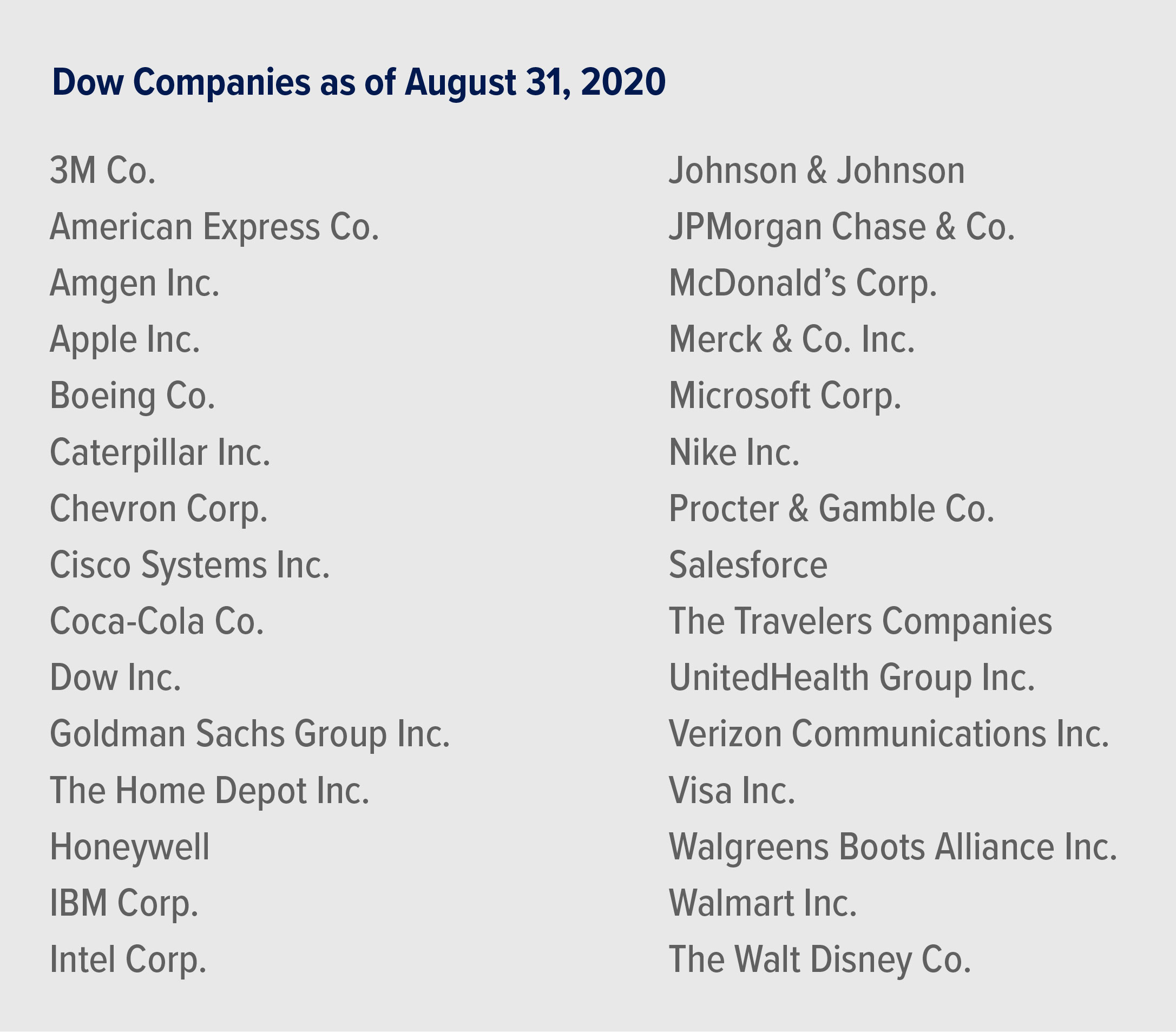
The 30 stocks that comprise the Dow are often referred to as “Blue Chips.” This term, borrowed from the game of poker where blue chips have the highest value, refers to companies that are high-quality, reliable, and capable of operating profitably during both good and bad economic times.
Criteria for Inclusion
The committee responsible for the Dow’s composition looks for companies that are headquartered in the United States and listed on the NYSE or Nasdaq. While there are no quantitative rules, the committee generally selects companies that represent the largest portions of the U.S. Gross Domestic Product (GDP).
A key requirement for the Dow is that the company must be a leader in its industry. When the economy shifts—such as the transition from a manufacturing-based economy to a service and technology-based economy—the committee replaces companies that are no longer representative of the current landscape. This is why we have seen the removal of companies like Sears, Alcoa, and ExxonMobil in favor of modern giants like Apple, Microsoft, and Salesforce.
The Modern Composition of the DJIA
The current Dow is a snapshot of the modern American consumer and corporate landscape. It includes:
-
Technology: Microsoft, Apple, Cisco, and IBM.
-
Financials: Goldman Sachs, JPMorgan Chase, Visa, and American Express.
-
Healthcare: UnitedHealth Group, Johnson & Johnson, and Amgen.
-
Consumer Goods & Retail: Walmart, Home Depot, Coca-Cola, and McDonald’s.
By spreading the 30 spots across these sectors, the Dow attempts to provide a panoramic view of the economy. If consumers are spending less, Walmart and Coca-Cola might show it. If businesses are scaling back, Microsoft and Salesforce might reflect that. If interest rates are shifting, the financial components react. It is this multi-sector representation that allows the Dow to function as a reliable “pulse” of the nation’s financial health.
The Dow vs. Other Market Indices
To truly understand what the Dow is, one must understand what it is not. It is frequently compared to the S&P 500 and the Nasdaq Composite, but these three indices measure very different things.
Dow vs. S&P 500: Diversification and Weighting
The S&P 500 consists of 500 of the largest U.S. companies and is weighted by market capitalization. Because it includes 500 stocks across all sectors, most professional investors consider the S&P 500 a much more accurate reflection of the total U.S. equity market. The Dow’s limitation of 30 stocks means it can miss trends in mid-cap companies or emerging industries.
However, the Dow and the S&P 500 tend to correlate highly over the long term. When one goes up, the other usually follows. The main difference lies in volatility. Because the Dow focuses on established, profitable blue-chip firms, it can sometimes be less volatile than the S&P 500 during periods of tech-driven speculation.
Dow vs. Nasdaq: The Tech Factor
The Nasdaq Composite is heavily weighted toward the technology and biotechnology sectors. It includes over 2,500 companies listed on the Nasdaq exchange. While the Dow includes tech giants like Apple and Microsoft, it also includes “old economy” stocks like Boeing and 3M. During periods of rapid technological advancement, the Nasdaq will often outperform the Dow. Conversely, during tech “bubbles” or corrections, the Dow often proves more resilient because of its industrial and value-oriented components.
Why the Dow Still Matters to Modern Investors
In an era where data is infinite and we can track thousands of stocks simultaneously, some argue that the Dow is an antiquated relic. With only 30 stocks and a “flawed” price-weighting system, why does the financial world still hang on its every point move?
A Barometer for Economic Sentiment
The Dow’s value is largely psychological and historical. Because it has existed for over a century, it provides a consistent yardstick for measuring the market’s performance across generations. It survived the Great Depression, two World Wars, the 2008 financial crisis, and the COVID-19 pandemic. For the general public, “the Dow” is synonymous with “the market.” When the Dow hits a milestone—such as 30,000 or 40,000—it generates headlines that boost investor confidence and attract capital into the markets.
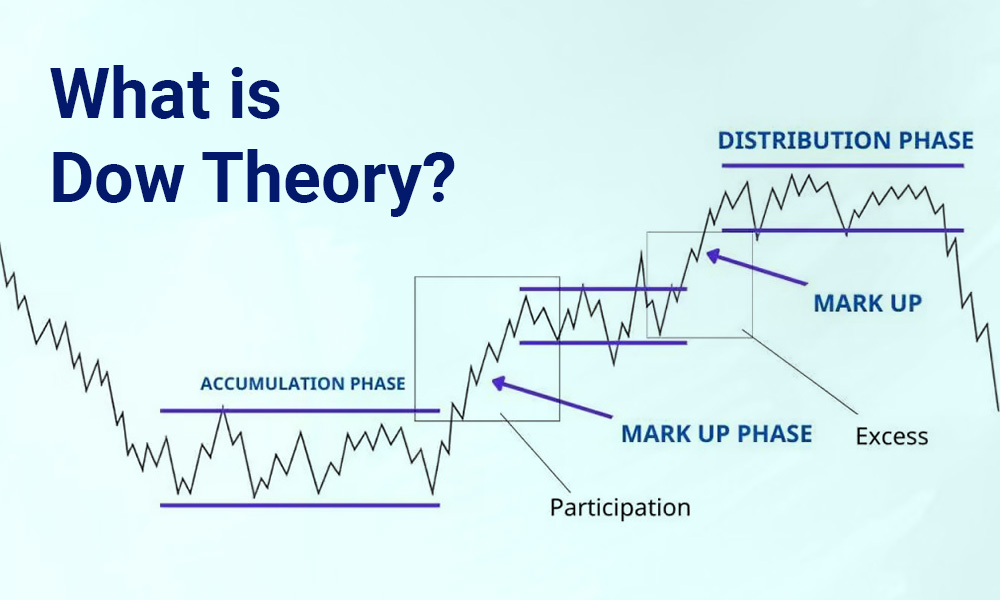
Limitations and Criticisms
Investors should be aware of the Dow’s limitations. It does not include transportation or utilities (which have their own specific Dow Jones averages). Furthermore, because it only tracks 30 companies, it is not a “diversified” portfolio in the modern sense. An investor who only tracks the Dow might miss out on the growth of the thousands of small and mid-sized companies that drive innovation in the American economy.
Ultimately, the Dow Jones Industrial Average remains a vital tool for understanding the “big picture” of American capitalism. It is a curated collection of the winners of the corporate world, offering a simplified but powerful look at the health of the giants that employ millions and provide the goods and services that define modern life. While it may not be the most mathematically perfect index, its longevity and cultural significance ensure that as long as there is a stock market, the world will be watching the Dow.
aViewFromTheCave is a participant in the Amazon Services LLC Associates Program, an affiliate advertising program designed to provide a means for sites to earn advertising fees by advertising and linking to Amazon.com. Amazon, the Amazon logo, AmazonSupply, and the AmazonSupply logo are trademarks of Amazon.com, Inc. or its affiliates. As an Amazon Associate we earn affiliate commissions from qualifying purchases.