
To the modern investor, buying a stock feels as simple as ordering a pizza or streaming a movie. With a few taps on a smartphone screen or clicks of a mouse, you can become a partial owner of a global powerhouse like Apple, Tesla, or Microsoft. The interface is sleek, the execution is nearly instantaneous, and the confirmation email arrives within seconds. However, beneath this polished digital surface lies one of the most complex, highly regulated, and fascinating mechanical systems in the world of finance.
When you click “buy,” you aren’t just updating a number in an app; you are initiating a multi-layered sequence of events involving brokerages, exchanges, clearinghouses, and custodians. Understanding this process is essential for any investor who wants to move beyond the surface level of personal finance and grasp how the machinery of global capital actually functions.
The Front-End Experience: From Order to Execution
The journey of a stock purchase begins with your brokerage. Whether you use a traditional firm or a zero-commission fintech app, the broker acts as your agent in the marketplace. Because individuals cannot trade directly on major exchanges like the New York Stock Exchange (NYSE) or the Nasdaq, the broker serves as the licensed gateway.
Market Orders vs. Limit Orders
The first step in the “buy” process is defining the parameters of your trade. When you submit a market order, you are instructing your broker to buy the stock immediately at the best available current price. In a highly liquid market, this happens in milliseconds. However, if the market is volatile, the price you pay might be slightly different from the last price you saw on your screen.
Alternatively, a limit order allows you to set a maximum price you are willing to pay. In this scenario, your order will only execute if the stock hits your specific price or lower. While this provides price protection, there is no guarantee the trade will actually happen if the stock stays above your limit.
Order Routing and the Bid-Ask Spread
Once you hit the button, your broker routes your order to a execution venue. This could be a public exchange, but it might also be a “dark pool” (a private forum for trading securities) or a wholesale market maker. Market makers are firms that stand ready to buy or sell stocks at all times, providing liquidity to the market.
They profit from the “bid-ask spread”—the difference between the price at which they buy and the price at which they sell. In many modern brokerage models, particularly those offering “zero-commission” trades, the broker may receive “payment for order flow” (PFOF) for routing your trade to a specific market maker. Regardless of the route, the goal is “best execution,” a regulatory requirement that ensures your order is filled at the most favorable terms available.
Behind the Curtain: The Clearing and Settlement Process
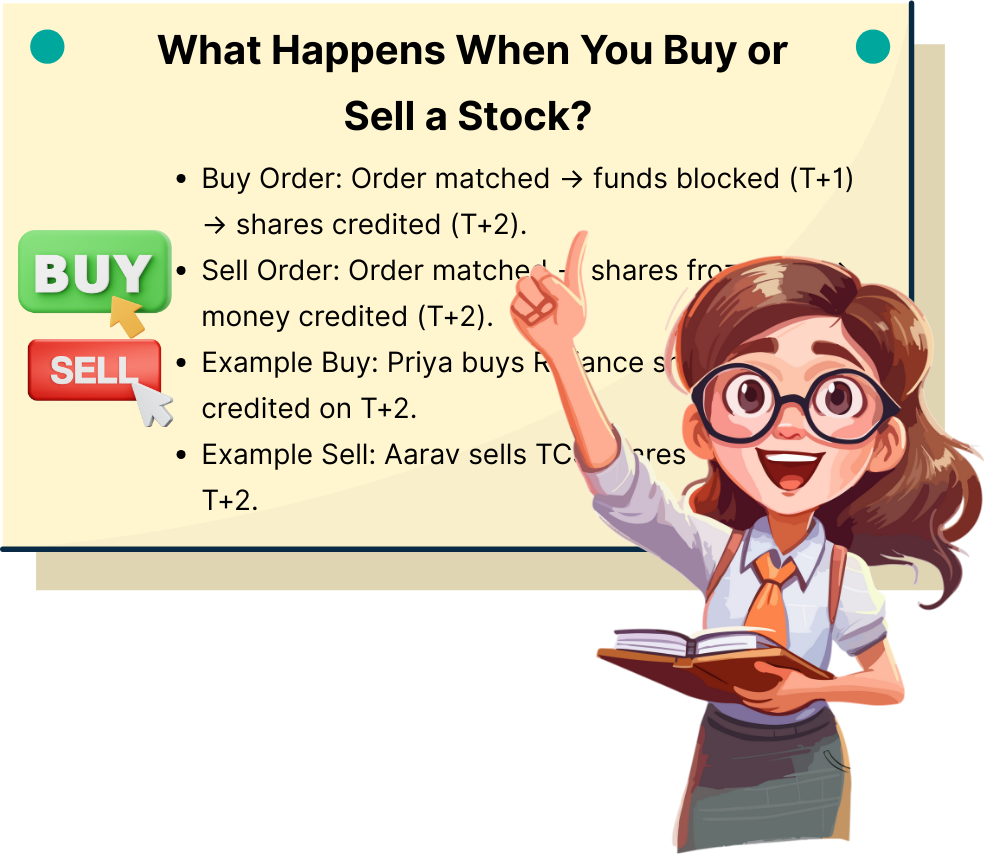
While your app may show that you “own” the stock the moment the trade is executed, the actual transfer of money and ownership takes a bit longer. This is known as the clearing and settlement process. Until recently, this was a two-day process (T+2), but the financial industry has moved toward a T+1 cycle—meaning settlement occurs one business day after the trade.
The Role of the Clearinghouse
The invisible glue of the stock market is the clearinghouse. In the United States, the primary entity responsible for this is the National Securities Clearing Corporation (NSCC), a subsidiary of the Depository Trust & Clearing Corporation (DTCC).
The clearinghouse acts as an intermediary, ensuring that the buyer has the money and the seller has the shares. By stepping into the middle of the transaction, the clearinghouse eliminates “counterparty risk.” You don’t have to worry about whether the person selling you the stock is trustworthy because the clearinghouse guarantees the trade. They aggregate thousands of trades, netting them out so that only the final balances of shares and cash need to be moved at the end of the day.
The Digital Vault: Central Securities Depositories
In the era of paper certificates, buying a stock meant physical delivery of a piece of paper. Today, stocks exist almost exclusively as digital entries. The Depository Trust Company (DTC) serves as the world’s largest central securities depository. It holds the “master” records for the vast majority of securities in the U.S. market. When you buy a stock, no physical certificate moves; instead, the DTC updates its electronic ledger to reflect that the shares have moved from the seller’s broker to your broker.
Legal Ownership vs. Beneficial Ownership
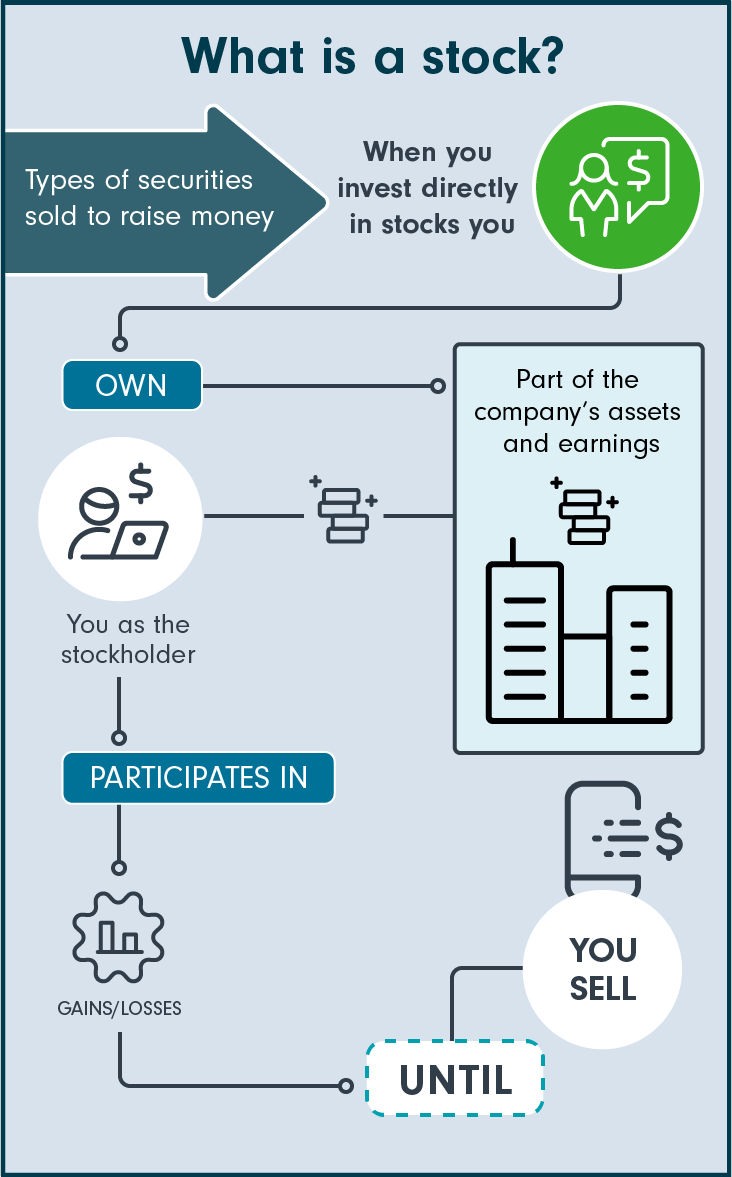
One of the most surprising aspects of buying a stock is the realization that, in most cases, your name is not actually on the official share registry of the company. Instead, you are what is known as a “beneficial owner.”
Street Name Registration
When you buy shares through a brokerage, they are typically held in “street name.” This means the shares are technically registered in the name of the brokerage firm on the company’s books, but the broker records in its own internal database that you are the true owner entitled to the economic benefits of those shares.
Holding shares in street name is the industry standard because it makes trading incredibly efficient. If every trade required the company to update its official legal registry with the names of thousands of individual retail investors, the system would grind to a halt. By holding shares in street name, the broker can trade shares back and forth instantly, only requiring a change in their internal ledger.
Direct Registration (DRS)
For investors who want their names officially recorded by the company’s transfer agent, there is the Direct Registration System (DRS). This removes the broker as the intermediary and places the shares directly in the investor’s name on the company’s books. While this provides a sense of ultimate security and direct communication with the company, it makes selling the stock more cumbersome and slower, as the shares must be moved back to a broker before a trade can be executed.
The Financial Ripple Effect: What Changes for You and the Company
When the settlement is finalized and you are the beneficial owner of the stock, your relationship with the company and the market changes. You have transitioned from an observer to a stakeholder with specific legal rights and economic interests.
Becoming a Shareholder: Voting and Dividends
As a shareholder, you generally have the right to vote on key corporate matters, such as electing the board of directors or approving executive compensation. This is typically done through “proxy voting,” where the company sends you digital materials to cast your vote.
Furthermore, if the company pays a dividend, you are now entitled to your pro-rata share of those profits. When the company distributes cash, it flows from the company to the transfer agent, then to the DTC, then to your broker, and finally into your account. This chain of payments happens automatically, but it relies on the accurate record-keeping established during the buy process.
Capital Allocation and Market Liquidity
From the company’s perspective, your purchase contributes to the “secondary market.” While the company doesn’t receive the cash from your purchase (unless you bought during an Initial Public Offering or a secondary offering), your activity is vital. High trading volume and a healthy share price allow companies to use their stock as “currency” for acquisitions, attract top talent with stock-based compensation, and raise more capital in the future at a lower cost. Your individual “buy” is a small but necessary vote of confidence in the company’s future cash flows.
Managing Your Position After the Buy
The “buy” is only the beginning of the investment lifecycle. Once the shares are in your account, they become a component of your overall financial strategy, requiring ongoing management and awareness of broader market dynamics.
Portfolio Diversification and Risk
A single stock purchase changes your risk profile. Professional investors view a stock not in isolation, but in the context of a portfolio. Every new acquisition should ideally reduce overall risk through diversification or align with a specific growth thesis. As the stock price fluctuates, the “weight” of that stock in your portfolio changes, which may eventually require “rebalancing”—selling some of a winning position to buy more of an underperforming one to maintain your desired risk level.
Tax Implications and Long-Term Strategy
The moment you buy a stock, the “tax clock” begins. In many jurisdictions, holding a stock for more than a year qualifies you for long-term capital gains tax rates, which are typically lower than short-term rates. The “cost basis”—the price you paid plus any commissions—is recorded by your broker. This figure is crucial because when you eventually decide to sell, the difference between your cost basis and the sale price determines your tax liability.
The Evolution of the Trade
The process of buying a stock has evolved from shouted orders on a trading floor to silent, lightning-fast digital exchanges. While the speed has increased, the underlying principles of trust, verification, and legal ownership remain the bedrock of the system.
By understanding what happens when you buy a stock, you gain a deeper appreciation for the stability of the financial system. You realize that your “buy” order is supported by a massive infrastructure designed to ensure that ownership is certain, transactions are secure, and markets remain liquid. This knowledge transforms an everyday digital interaction into a meaningful participation in the global economy, empowering you to navigate the world of investing with professional insight and confidence.
aViewFromTheCave is a participant in the Amazon Services LLC Associates Program, an affiliate advertising program designed to provide a means for sites to earn advertising fees by advertising and linking to Amazon.com. Amazon, the Amazon logo, AmazonSupply, and the AmazonSupply logo are trademarks of Amazon.com, Inc. or its affiliates. As an Amazon Associate we earn affiliate commissions from qualifying purchases.