
In the world of finance, few terms are as foundational or as frequently discussed as “stock.” For the seasoned investor, stock represents a vehicle for wealth creation and a stake in the global economy. For the beginner, it can seem like a complex abstract concept tied to fluctuating numbers on a screen. At its core, however, the definition of stock is remarkably straightforward: it is a claim on a portion of a corporation’s assets and earnings.
When you buy stock, you are purchasing equity. This means you become a fractional owner of a company. Whether you own one share or one million, you possess a piece of that business’s future. Understanding what is meant by stock requires looking beyond the ticker symbols and diving into the mechanics of corporate finance, market dynamics, and the strategic role that equity plays in a diversified financial portfolio.
The Fundamentals of Stock Ownership and Equity
To understand stock, one must first understand the concept of a corporation. A corporation is a legal entity that is separate from its owners. To grow, innovate, and expand, these entities require significant capital. While a company can borrow money—known as debt financing—it can also raise funds by selling pieces of itself to the public. This is known as equity financing.
The Concept of a Share
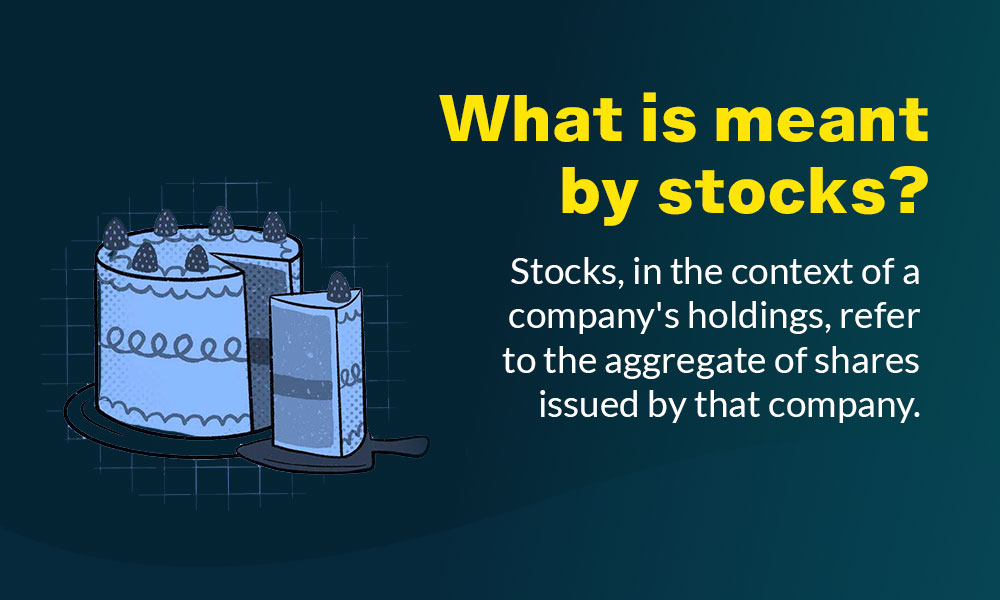
The unit of stock is called a “share.” If a company issues 1,000 shares and you buy 100 of them, you own 10% of the company. In the modern era, with multi-billion dollar corporations, shares are issued by the millions or even billions, meaning an individual investor usually owns a very small percentage. However, the principle remains the same: the share represents your “slice of the pie.”
Ownership Rights and Capitalization
Ownership through stock typically grants the investor specific rights. The most common of these is the right to vote on corporate policy and the board of directors. Furthermore, as an owner, you are entitled to a share of the profits. If a company performs well, the value of your shares may increase, and the company may choose to distribute a portion of its earnings directly to you in the form of dividends.
The total value of all a company’s outstanding shares is known as its market capitalization, or “market cap.” This is calculated by multiplying the current share price by the total number of shares available. Market cap is a primary tool used by investors to categorize the size of a company and its risk profile, ranging from “penny stocks” (micro-cap) to “blue-chip stocks” (large-cap).
Types of Stocks and Their Roles in a Portfolio
Not all stocks are created equal. Depending on the company’s structure and its goals, the stock it issues can vary significantly in terms of risk, reward, and the rights it confers to the holder.
Common vs. Preferred Stock
The most frequent type of stock people refer to is “common stock.” This provides the potential for capital appreciation (the stock price going up) and dividends, along with voting rights. However, in the event of a company’s liquidation, common stockholders are last in line to receive any remaining assets, behind creditors and preferred shareholders.
“Preferred stock,” on the other hand, functions somewhat like a hybrid between a stock and a bond. Preferred shareholders usually do not have voting rights, but they have a higher claim on assets and earnings. They receive dividends at a fixed rate, which must be paid out before any dividends are paid to common shareholders. This makes preferred stock more attractive to those seeking steady income rather than aggressive growth.
Growth vs. Value Stocks
From an investment strategy perspective, stocks are often categorized into growth and value. Growth stocks belong to companies that are expected to grow at a rate significantly above the average for the market. These companies often reinvest their earnings back into the business to fund expansion rather than paying dividends. Technology companies are classic examples of growth stocks.
Value stocks are shares of companies that are currently trading below what they are actually worth based on their fundamentals (like earnings or sales). These are often established, stable companies that may be temporarily out of favor with the market. Investors buy value stocks with the expectation that the market will eventually recognize the company’s intrinsic value, leading to a price increase.
Sector Categorization
Stocks are also grouped by the industry or “sector” they belong to, such as Healthcare, Energy, Technology, or Consumer Staples. Different sectors react differently to economic cycles. For instance, “cyclical stocks” (like automotive or luxury goods) perform well when the economy is booming, while “defensive stocks” (like utilities or food producers) tend to remain stable even during a recession because people still need electricity and groceries regardless of the financial climate.
How the Stock Market Functions

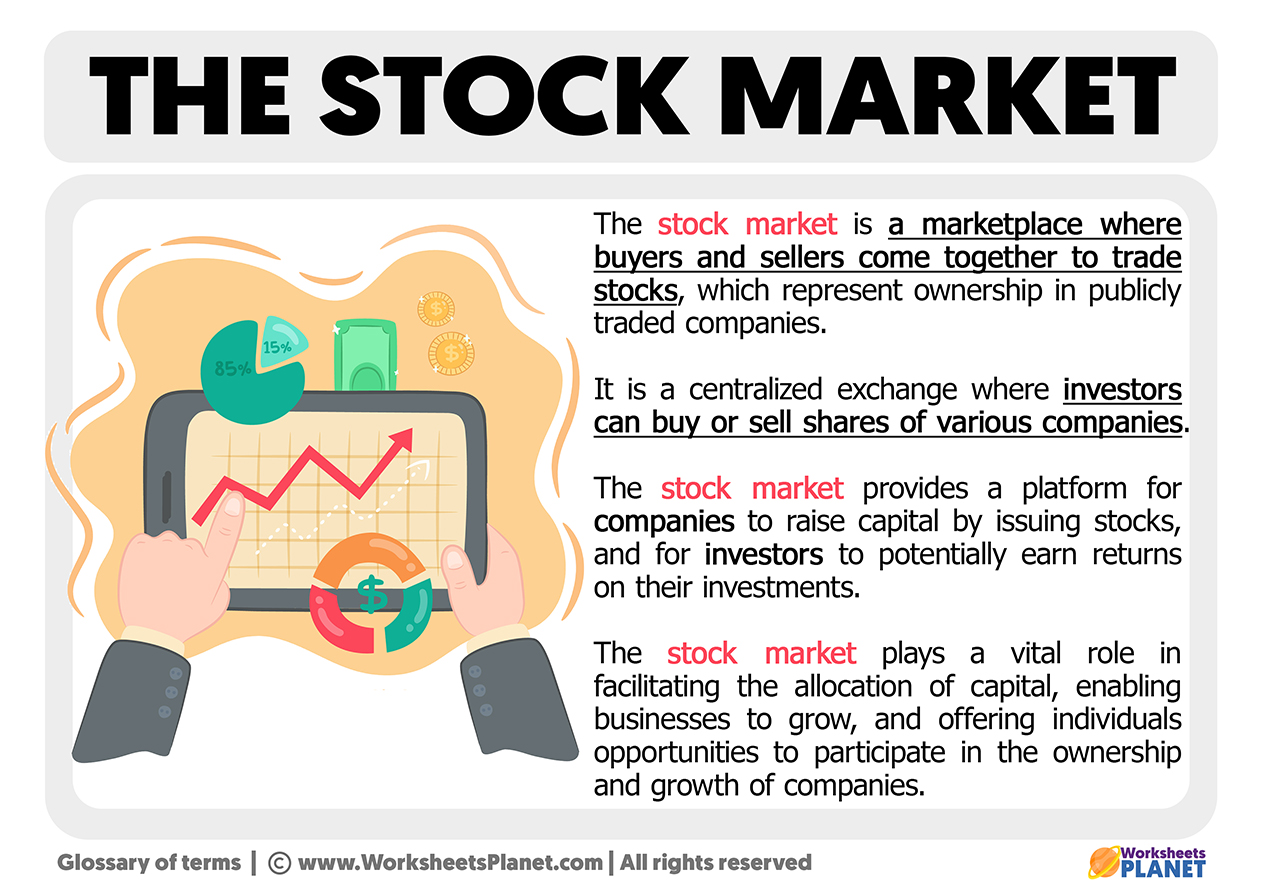
The stock market is the secondary market where investors buy and sell shares of publicly traded companies. It acts as a continuous auction house that facilitates liquidity, allowing investors to convert their shares into cash quickly.
The Initial Public Offering (IPO)
The journey of a stock usually begins with an Initial Public Offering (IPO). This is the first time a private company offers its shares to the general public. It is a transformative moment for a business, as it provides a massive influx of capital to fuel growth. Once the IPO is complete, the shares begin trading on an exchange, such as the New York Stock Exchange (NYSE) or the NASDAQ.
Price Discovery and Market Sentiment
The price of a stock is not set by the company itself; it is determined by the market through a process called price discovery. This is driven by the law of supply and demand. If more people want to buy a stock (demand) than sell it (supply), the price goes up. Conversely, if bad news breaks and investors rush to sell, the price drops.
What drives demand? Usually, it is a combination of fundamental factors—such as revenue growth, profit margins, and debt levels—and market sentiment. Sentiment is the collective “feeling” of investors about the future. Even a profitable company might see its stock price fall if investors believe the industry is facing a long-term decline.
The Role of Stock Exchanges and Indices
Exchanges provide the infrastructure for trading, ensuring that transactions are fair, transparent, and regulated. To track the performance of the market as a whole, we use “indices.” The S&P 500, for example, tracks the performance of 500 of the largest companies in the United States. When people say “the market is up,” they are usually referring to the movement of these major indices.
The Benefits and Risks of Stock Investing
Investing in stock is one of the most effective ways to build long-term wealth, but it is not without its challenges. Understanding the balance between risk and reward is essential for any financial plan.
Wealth Accumulation and Compounding
Historically, the stock market has provided higher average annual returns than savings accounts, bonds, or gold over long periods. The primary benefit is capital appreciation—the increase in the share price over time. When combined with the reinvestment of dividends, investors benefit from compounding, where you earn returns on your previous returns. Over decades, this can turn modest contributions into a substantial nest egg.
Dividends as Passive Income
For many, stock ownership is a way to generate passive income. Many mature companies pay out a portion of their profits to shareholders every quarter. For retirees or those looking to supplement their salary, a portfolio of high-quality dividend-paying stocks can provide a consistent cash flow that often grows over time as companies increase their payouts.
Market Volatility and Risk
The trade-off for high potential returns is risk. Stock prices can be volatile, fluctuating wildly based on economic reports, geopolitical events, or company-specific scandals. There is no guarantee that a stock’s value will increase; in fact, a company can go bankrupt, leaving shareholders with a total loss.
Market risk, or “systematic risk,” refers to the possibility that the entire market declines, affecting all stocks. This is why financial experts emphasize that stock investing should be viewed as a long-term endeavor. Short-term fluctuations are common, but the long-term trajectory of the market has historically been upward.
Building a Strategic Portfolio
Owning stock is not just about picking a single “winner.” It is about constructing a portfolio that aligns with your financial goals and risk tolerance.
The Importance of Diversification
The golden rule of stock investing is diversification: “Don’t put all your eggs in one basket.” By owning stocks across different sectors, industries, and even geographic regions, you reduce the impact of a single company’s failure on your overall wealth. Many modern investors achieve this through Mutual Funds or Exchange-Traded Funds (ETFs), which allow them to own a tiny piece of hundreds of different stocks through a single investment.
Fundamental vs. Technical Analysis
Investors generally use two methods to decide which stocks to buy. Fundamental analysis involves looking at a company’s financial statements, management team, and market position to determine its “intrinsic value.” Technical analysis, meanwhile, ignores the company’s internal health and focuses on chart patterns and price trends to predict future movement. For long-term personal finance, fundamental analysis is typically considered the more reliable approach.
Determining Your Investment Horizon
What you mean by “stock” depends largely on your timeline. If you are 25 years old and saving for retirement, stocks are a growth engine that can weather decades of volatility. If you are 60 and need the money in two years, your relationship with stock must be more conservative, perhaps focusing on low-volatility, dividend-paying shares.
In conclusion, stock is more than just a financial instrument; it is a gateway to participation in the global economy. By understanding that stock represents real ownership in real businesses, investors can move away from speculative gambling and toward a disciplined, strategic approach to building wealth. Whether through individual shares or broad-market funds, owning stock remains one of the most powerful tools available for achieving financial independence.
aViewFromTheCave is a participant in the Amazon Services LLC Associates Program, an affiliate advertising program designed to provide a means for sites to earn advertising fees by advertising and linking to Amazon.com. Amazon, the Amazon logo, AmazonSupply, and the AmazonSupply logo are trademarks of Amazon.com, Inc. or its affiliates. As an Amazon Associate we earn affiliate commissions from qualifying purchases.