
Investing in the stock market is often viewed through a lens of complexity, yet the fundamental mechanisms by which stocks generate wealth are grounded in clear economic principles. To understand how stocks make money, one must look beyond the flickering red and green tickers and into the heart of corporate ownership. When you purchase a stock, you are buying a fractional piece of a living, breathing business entity. The wealth generated from that ownership primarily manifests through two distinct channels: capital appreciation and dividend income. Together, these elements form the “total return” of an investment, a metric that serves as the ultimate barometer for success in the financial markets.

The Primary Engine of Wealth: Capital Appreciation
Capital appreciation, commonly referred to as “growth,” is the increase in the market price of a stock over time. This is the “buy low, sell high” aspect of investing that captures the public imagination. When the demand for a company’s shares exceeds the supply available on the open market, the price rises. However, this demand is rarely arbitrary; it is typically driven by the company’s underlying performance and its prospects for future profitability.
Supply, Demand, and Market Sentiment
The stock market functions as a continuous auction. On a day-to-day basis, stock prices fluctuate based on market sentiment—the collective mood and expectations of investors. If a company announces a breakthrough product or reports higher-than-expected earnings, more investors want to own a piece of that success. Because the number of shares outstanding is relatively fixed in the short term, this surge in demand forces the price upward.
Conversely, market sentiment can be influenced by broader economic factors. In a bullish market, optimism prevails, and investors are often willing to pay a premium for future growth. In a bearish market, fear takes hold, and even fundamentally sound companies may see their stock prices drop as investors flee to safer assets like bonds or cash. For the long-term investor, capital appreciation is realized not through daily fluctuations, but through the steady growth of the company’s intrinsic value over years or decades.
The Role of Corporate Earnings
At its core, a stock price is a reflection of a company’s current and future earnings. Profits are the lifeblood of any business. When a company grows its revenue and manages its expenses efficiently, its net income increases. Wall Street analysts and institutional investors track “Earnings Per Share” (EPS) as a primary indicator of health. As EPS grows, the company becomes more valuable.
Investors use valuation multiples, such as the Price-to-Earnings (P/E) ratio, to determine how much they are willing to pay for every dollar of a company’s profit. If a company is expected to grow its earnings at an accelerated rate, investors might grant it a higher P/E ratio, further driving capital appreciation. This synergy between actual profit growth and investor expectation is what allows stocks to outperform many other asset classes over the long term.
Generating Passive Income: The Power of Dividends
While capital appreciation represents the growth of your “paper wealth,” dividends represent actual cash flow into your brokerage account. Dividends are a portion of a company’s earnings that its board of directors decides to distribute back to shareholders. Not all companies pay dividends—many high-growth tech firms prefer to reinvest 100% of their profits back into the business—but for many established corporations, dividends are a primary way to reward loyal investors.
Cash Dividends vs. Stock Dividends
The most common form of distribution is the cash dividend, usually paid out on a quarterly basis. For example, if a company declares a $0.50 per share dividend and you own 100 shares, you will receive $50 in cash. This provides a steady stream of passive income regardless of whether the stock price is moving up or down.
Less common are stock dividends, where the company issues additional shares to existing stockholders instead of cash. While this doesn’t immediately put money in your pocket, it increases your total share count, which can lead to greater wealth if the stock price appreciates in the future.
Dividend Growth Investing and the Yield on Cost
Sophisticated investors often look for “Dividend Aristocrats”—companies that have not only paid dividends but have increased them every year for at least 25 consecutive years. This strategy focuses on the “yield on cost.” If you buy a stock today with a 3% dividend yield, and the company doubles its dividend over the next decade, your personal yield on your original investment becomes 6%. This creates a powerful income engine that often outpaces inflation, providing a “raise” for the investor every year without them having to lift a finger.
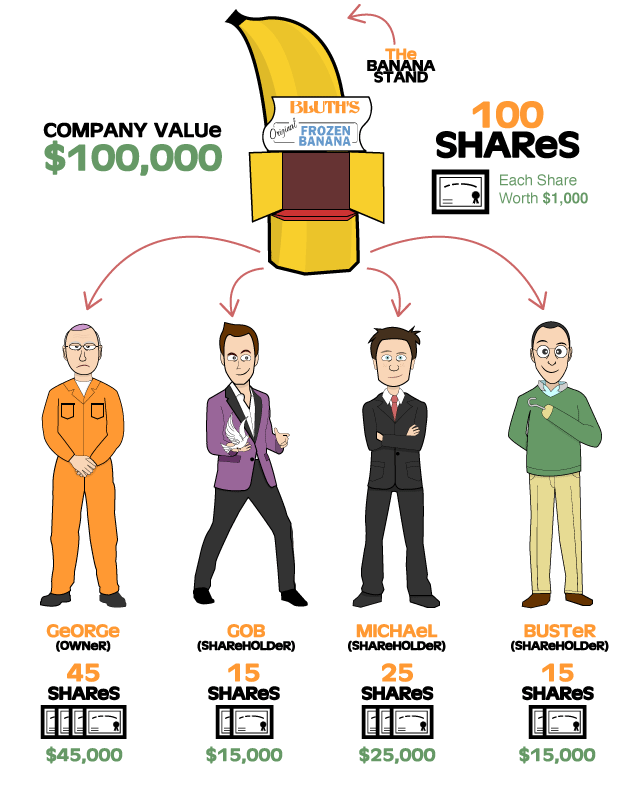
Total Return and the Magic of Compounding
To truly understand how stocks make money, one must look at the synergy between capital appreciation and dividends, known as total return. While a stock’s price might only increase by 5% in a year, a 3% dividend yield brings the total return to 8%. Over long periods, the difference between price appreciation and total return is staggering, primarily due to the phenomenon of compounding.
Dividend Reinvestment Plans (DRIPs)
One of the most effective ways to maximize the money-making potential of stocks is through a Dividend Reinvestment Plan (DRIP). Instead of taking your dividend as cash, you use that money to automatically purchase more shares of the same stock—even fractional shares.
This creates a virtuous cycle: your dividends buy more shares, which in turn generate more dividends, which buy even more shares. Over twenty or thirty years, the number of shares you own can grow exponentially without you ever contributing another dollar of your own capital. This is where the true “wealth” in the stock market is built; it turns the market into a compounding machine that leverages time to produce outsized results.
The Long-Term Horizon: Smoothing Out Volatility
Compounding requires time to work its magic. In the short term, the stock market is volatile and unpredictable. However, historically, the longer an investor holds a diversified portfolio of stocks, the lower the probability of a negative return. By focusing on total return over a decade or more, investors allow the underlying growth of the economy and the productivity of corporations to smooth out the “noise” of temporary market crashes or economic recessions.
The Fundamental Drivers of Stock Value
Stocks do not exist in a vacuum. Their ability to make money for investors is tied to the broader economic environment and the specific competitive advantages of the companies themselves. Understanding these drivers helps investors identify which stocks are most likely to provide superior returns.
Macroeconomic Factors and Interest Rates
The broader economy plays a significant role in how stocks perform. During periods of economic expansion, consumer spending increases, businesses invest in new equipment, and corporate profits generally rise. Conversely, interest rates act as “gravity” for stock prices. When the Federal Reserve or other central banks raise interest rates, borrowing becomes more expensive for companies, and future cash flows are discounted at a higher rate, often leading to lower stock valuations. Successful investors monitor these trends to understand the “macro” tailwinds or headwinds their investments may face.
Competitive Moats and Innovation
At the micro level, a company’s ability to make money depends on its “moat”—a term popularized by Warren Buffett to describe a company’s competitive advantage. This could be a powerful brand, a patent on a unique technology, high switching costs for customers, or a massive scale that allows for lower costs. Companies with wide moats can maintain high profit margins over long periods, which translates directly into higher stock prices and consistent dividends. Innovation is the other side of this coin; companies that successfully disrupt industries or create new markets often see the most explosive capital appreciation.
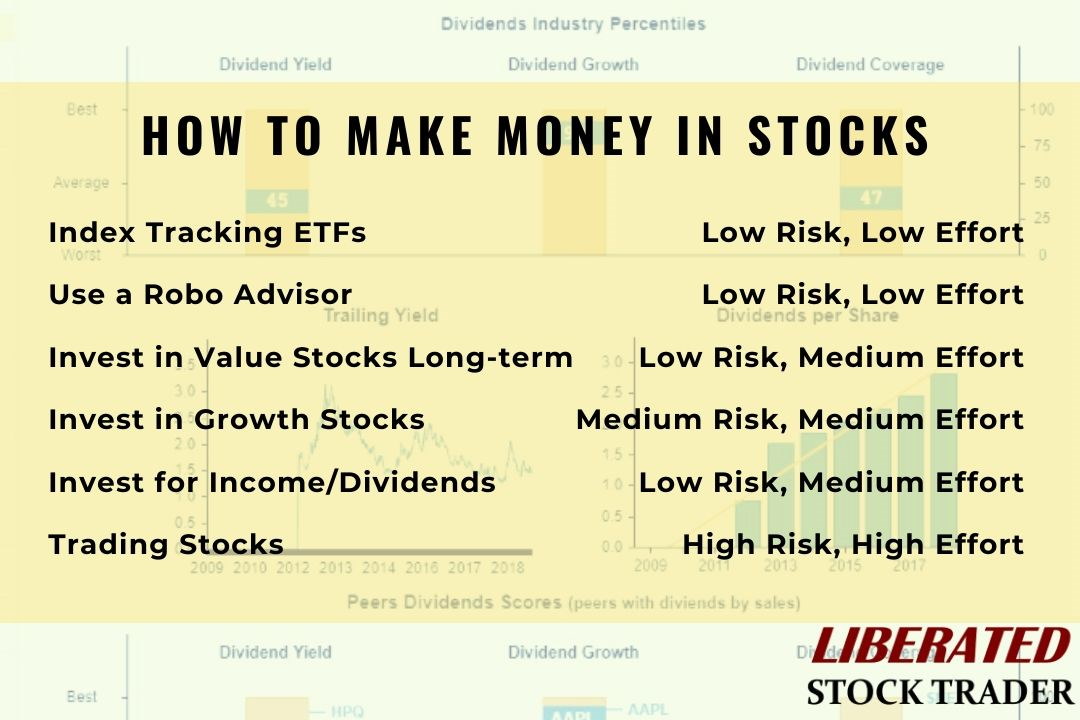
Realizing Your Gains: Selling and Tax Considerations
The final step in making money from stocks is the “exit.” Until you sell a stock, your gains are considered “unrealized.” To turn those paper gains into spendable wealth, you must execute a sell order. However, the timing and method of selling can significantly impact your net profit due to taxation.
In many jurisdictions, realized gains are subject to capital gains tax. “Short-term” capital gains (on assets held for less than a year) are often taxed at a higher rate—similar to regular income—than “long-term” capital gains (on assets held for more than a year). Strategic investors often hold stocks for the long term not just for compounding, but to benefit from these preferential tax rates. Additionally, holding stocks in tax-advantaged accounts like IRAs or 401(ks) allows the money to grow tax-free or tax-deferred, further accelerating the wealth-building process.
Ultimately, stocks make money by harnessing the ingenuity of human enterprise. By providing capital to businesses, investors participate in the value those businesses create for society. Through the combination of rising share prices, consistent dividend payouts, and the relentless power of compounding, the stock market remains one of the most accessible and effective vehicles for long-term wealth creation in history.
aViewFromTheCave is a participant in the Amazon Services LLC Associates Program, an affiliate advertising program designed to provide a means for sites to earn advertising fees by advertising and linking to Amazon.com. Amazon, the Amazon logo, AmazonSupply, and the AmazonSupply logo are trademarks of Amazon.com, Inc. or its affiliates. As an Amazon Associate we earn affiliate commissions from qualifying purchases.