
Investing in the stock market is often perceived through two extremes: a high-stakes gamble reserved for Wall Street elites or a complex mathematical puzzle that requires a PhD to solve. In reality, learning to invest is a fundamental skill of financial literacy that is accessible to anyone willing to dedicate time to education and discipline. At its core, the stock market is a mechanism for building long-term wealth by owning a piece of the companies that drive the global economy.
Transitioning from a saver to an investor requires a shift in mindset. While saving focuses on preservation and liquidity, investing focuses on growth and the power of compounding. To navigate this journey effectively, one must understand the foundational principles, the mechanics of the market, and the psychological fortitude required to withstand the inherent volatility of equity ownership.
Establishing the Foundational Mindset and Financial Prerequisites
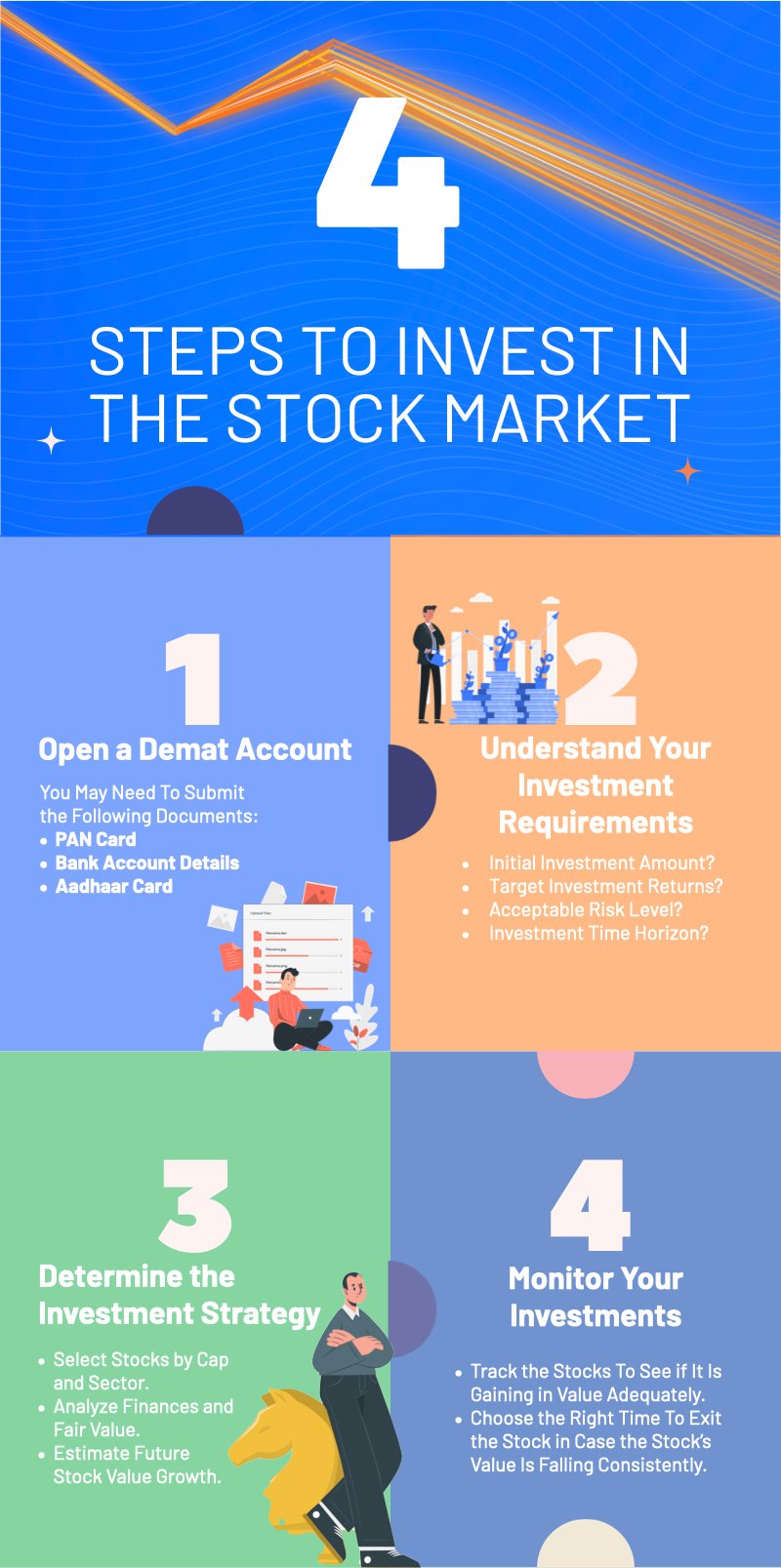
Before purchasing your first share of stock, you must ensure your financial house is in order. Investing is a long-term endeavor; using money that you might need for next month’s rent is a recipe for disaster. The stock market fluctuates, and if you are forced to sell during a downturn because of a personal financial emergency, you lock in losses that could have been avoided.
Assessing Your Financial Health and Emergency Reserves
The first step in learning to invest is conducting a rigorous audit of your current finances. Most financial advisors suggest two prerequisites before entering the market: an established emergency fund and the elimination of high-interest debt. An emergency fund—typically three to six months of living expenses held in a liquid high-yield savings account—acts as a buffer. It ensures that market volatility doesn’t threaten your survival.
Furthermore, if you have credit card debt with interest rates hovering around 20%, any potential return from the stock market (which historically averages about 7-10% annually) will be overshadowed by the cost of that debt. Paying off high-interest debt is a “guaranteed return” that should always precede stock market participation.
Understanding Risk Tolerance and Time Horizons
Every investor has a different “stomach” for risk. Your risk tolerance is a combination of your emotional ability to see your account balance drop without panicking and your financial capacity to wait for a recovery. This is closely tied to your time horizon.
If you are 25 years old and investing for retirement, your time horizon is decades. You can afford to be aggressive because you have time to recover from market crashes. Conversely, if you are five years away from retirement, your strategy must shift toward capital preservation. Learning to invest begins with knowing who you are as an investor and setting expectations that align with your life goals.
Deciphering the Mechanics of the Market
The stock market is essentially a giant marketplace where ownership in public companies is traded. When you buy a stock, you are buying a “share” of that company’s future earnings and assets. To navigate this marketplace, you need to understand the different types of investments available and how they are transacted.
Stocks, ETFs, and Mutual Funds
Individual stocks represent ownership in a single company, such as Apple, Amazon, or Tesla. While they offer the potential for high returns, they also carry high risk; if the company fails, your investment could go to zero.
For beginners, Exchange-Traded Funds (ETFs) and Mutual Funds are often better starting points. These are “baskets” of many different stocks. For example, an S&P 500 ETF allows you to buy a small piece of the 500 largest companies in the United States with a single purchase. This provides instant diversification, significantly reducing the risk associated with any single company’s failure. Learning the difference between “active” management (where a human picks stocks) and “passive” management (which tracks an index) is crucial, as the latter typically features lower fees and often outperforms the former over long periods.
How Exchanges and Brokerages Function
Stocks are traded on exchanges like the New York Stock Exchange (NYSE) or the NASDAQ. As an individual, you cannot trade directly on these exchanges; you must use a brokerage. In the modern era, digital brokerage platforms have democratized access to the market.
When you place an “order” to buy a stock, you generally choose between a “Market Order” and a “Limit Order.” A market order executes the trade immediately at the current price, while a limit order allows you to specify the maximum price you are willing to pay. Understanding these basic order types prevents you from overpaying in a fast-moving market.
Developing a Strategic Investment Approach
Once you understand the tools, you must decide on a strategy. Investing without a strategy is simply gambling. Most successful investors follow a philosophy that dictates when they buy, what they buy, and—most importantly—when they sell.

Fundamental vs. Technical Analysis
There are two primary schools of thought in stock evaluation. Fundamental analysis involves looking at a company’s “vitals”—its earnings, revenue growth, debt levels, and management quality. The goal is to determine the company’s intrinsic value and decide if the current stock price is a bargain.
Technical analysis, on the other hand, focuses on price charts and market trends. Technical analysts believe that all known information is already reflected in the stock price, and they look for patterns to predict future movement. For the long-term investor, fundamental analysis is generally more useful, as it focuses on the health of the business rather than the noise of the daily ticker.
The Power of Diversification and Passive Investing
One of the most important lessons in investing is that “there is no free lunch,” except for diversification. By spreading your money across different sectors (Tech, Healthcare, Energy) and different geographies (US, Europe, Emerging Markets), you protect yourself from a localized collapse.
Passive investing—specifically through low-cost index funds—has become the gold standard for individual investors. It follows the “efficient market hypothesis,” which suggests it is nearly impossible to consistently “beat the market” through stock picking. Instead of trying to find the needle in the haystack, passive investors simply buy the whole haystack. This approach requires less time, lower fees, and statistically yields better results for the majority of people.
Practical Steps to Making Your First Investment
Moving from theory to practice can be intimidating. However, the process of actually buying a stock is simpler than most people realize. The key is to start small and remain consistent.
Selecting the Right Brokerage Platform
The modern investor is spoiled for choice. Platforms range from traditional powerhouses like Fidelity and Charles Schwab to app-based innovators like Robinhood or Webull. When choosing, look for three things: zero-commission trades, a user-friendly interface, and access to educational resources.
Additionally, consider the “container” for your investments. If you are investing for retirement, opening an Individual Retirement Account (IRA) or utilizing a 401(k) offers significant tax advantages compared to a standard taxable brokerage account. Learning the tax implications of your investments is just as important as learning the investments themselves.
Executing Your First Trade and Dollar-Cost Averaging
Many beginners wait for the “perfect time” to enter the market. This is known as “timing the market,” and it is notoriously difficult even for professionals. A more effective strategy is “Dollar-Cost Averaging” (DCA).
DCA involves investing a fixed amount of money at regular intervals (e.g., $200 every month), regardless of the stock price. When prices are high, your $200 buys fewer shares; when prices are low, your $200 buys more shares. Over time, this lowers your average cost per share and removes the emotional stress of trying to predict market bottoms or tops. Your first trade should not be a “bet” on a “hot tip,” but rather the first brick in a wall you intend to build over the next twenty years.
Continuous Education and Avoiding Common Pitfalls
The learning process does not end once you’ve clicked “buy.” The stock market is a living entity that responds to global events, economic shifts, and human psychology. Staying informed and disciplined is the final, and perhaps most difficult, stage of learning to invest.
The Importance of Long-Term Consistency
The greatest ally of the investor is time. Compound interest is often called the eighth wonder of the world because it allows your earnings to generate their own earnings. However, compounding takes years, even decades, to show its true power.
The biggest pitfall for new investors is impatience. After a few months of flat or slightly negative returns, many quit, claiming “the market doesn’t work.” Real wealth is built through the “boring” process of holding quality assets through multiple market cycles. Learning to invest is largely about learning to do nothing once you have set a sound strategy in motion.
Managing Emotional Biases and Market Volatility
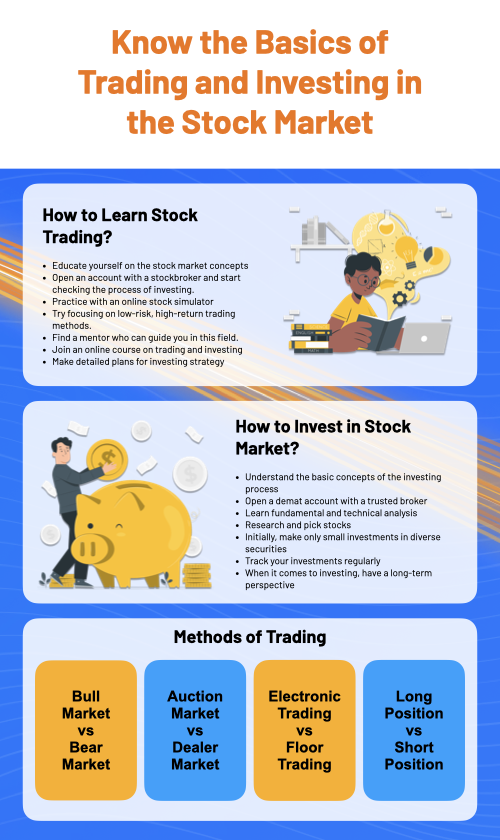
The stock market is a classroom for human psychology. Two emotions drive market cycles: fear and greed. During a “Bull Market,” greed leads people to take excessive risks and buy overvalued stocks (FOMO—Fear of Missing Out). During a “Bear Market,” fear leads people to sell their investments at the exact moment they should be buying more.
To be a successful investor, you must cultivate “temperament.” This means ignoring the sensationalist headlines of financial news and focusing on your long-term goals. Volatility is not the same as risk. Volatility is the price of admission for the higher returns the stock market offers compared to a savings account. Once you accept that the market will inevitably crash from time to time, you stop fearing the downturns and begin to see them as opportunities to buy shares at a discount.
Learning to invest in the stock market is a journey of incremental gains in knowledge. It begins with financial stability, progresses through an understanding of market mechanics, and matures with the development of a disciplined, long-term strategy. By focusing on diversification, minimizing fees, and controlling your emotions, you can transform the stock market from a source of anxiety into a powerful engine for your personal financial freedom.
aViewFromTheCave is a participant in the Amazon Services LLC Associates Program, an affiliate advertising program designed to provide a means for sites to earn advertising fees by advertising and linking to Amazon.com. Amazon, the Amazon logo, AmazonSupply, and the AmazonSupply logo are trademarks of Amazon.com, Inc. or its affiliates. As an Amazon Associate we earn affiliate commissions from qualifying purchases.