
In the landscape of modern personal finance, the “travel hack” has become a cornerstone of wealth preservation. For the budget-conscious traveler, the choice between Frontier Airlines and Spirit Airlines represents more than just a preference for plane livery; it is a calculated decision in cost-benefit analysis. Both carriers operate under the Ultra-Low-Cost Carrier (ULCC) model, a business strategy designed to unbundle services to provide the lowest possible base fare. However, the financial implications of choosing one over the other extend far beyond the initial ticket price.
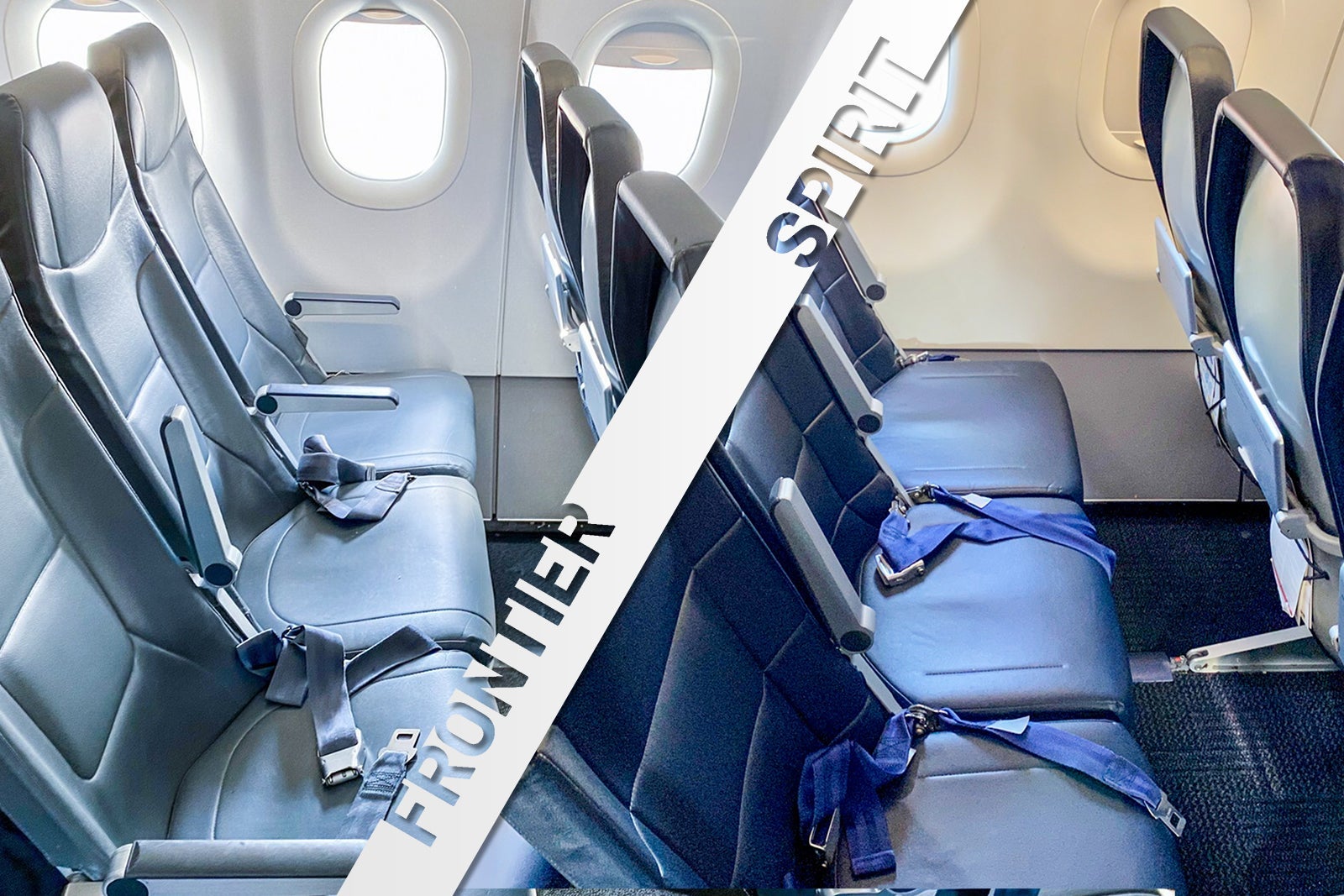
To determine which airline is truly “better” for your wallet, one must look past the marketing and dissect the underlying fee structures, loyalty program returns, and the operational reliability that protects your most valuable asset: time.
The Economics of the Ultra-Low-Cost Model
The foundational principle of both Frontier and Spirit is the “unbundled” fare. In traditional legacy carriers, the ticket price includes “free” carry-on bags, snacks, and seat assignments. In reality, these services are not free; they are baked into a higher base price. Spirit and Frontier peel these layers away, offering a “bare fare” that theoretically allows the consumer to pay only for the services they use.
The Psychology of the Base Fare
From a behavioral finance perspective, these airlines utilize “drip pricing.” By showing a $29 fare in search engines, they capture the consumer’s attention. The financial challenge for the traveler is to remain disciplined as they navigate the checkout process, where a series of upsells—from carry-on bags to shortcut security—can quickly double or triple the final cost. When comparing the two, the “better” airline is often the one whose fee structure aligns most closely with your specific travel habits.
Cost Per Available Seat Mile (CASM)
For the business-minded traveler, understanding CASM explains why these airlines can offer such low prices. Both Spirit and Frontier maintain some of the lowest CASMs in the industry by utilizing fuel-efficient, single-model fleets (primarily Airbus A320 families) and high-density seating. This efficiency is passed to the consumer, but it necessitates a trade-off in comfort. The financial decision here is a matter of ROI: is the $150 saved on a four-hour flight worth the potential physical discomfort or lack of amenities?
Navigating the Fee Maze: A Line-by-Line Comparison
The true cost of a flight is the Total Cost of Ownership (TCO). To find the winner between Frontier and Spirit, we must analyze the “ancillary revenue” strategies—the fees that account for nearly half of these airlines’ total income.
Baggage Fees: The Great Equalizer
Both airlines charge for almost everything beyond a small personal item that fits under the seat. Historically, Spirit’s baggage fees have been slightly higher and more volatile, often fluctuating based on the route and the time of purchase. Frontier has moved toward a more standardized pricing model but remains aggressive in its enforcement of personal item dimensions.
From a financial standpoint, the rule is simple: if you cannot travel with just a backpack, you must factor in $50 to $100 in round-trip baggage fees. If one airline offers a $40 fare and the other $60, but the $60 airline has a cheaper bag fee for that specific route, the “more expensive” ticket is actually the better financial move.
Seat Assignments and the “Big Front Seat”
Spirit offers a unique value proposition with its “Big Front Seat.” For a fraction of the cost of a legacy carrier’s first-class ticket (often $50 to $150 extra), travelers can secure a wide, leather seat with extra legroom. For a business traveler or someone looking for a “budget luxury” experience, Spirit wins this category. Frontier’s equivalent, “Stretch” seating, offers extra legroom but utilizes standard seats, providing a lower perceived value for the additional spend.
The Bundle Strategy: “The Works” vs. “Free Spirit”
To simplify the transaction and capture more upfront cash, both airlines offer bundles. Frontier’s “The Works” and “The Perks” packages include bags, seat selection, and priority boarding. Spirit offers similar “Boosted” or “Bundle” options. Financially, these bundles are almost always cheaper than buying the components a la carte. If you know you need a checked bag and a seat assignment, the airline with the more competitively priced bundle for your specific date will be the superior choice.

Loyalty Programs and Financial Returns
For the frequent flyer, the airline’s loyalty program is a critical component of the long-term financial equation. A well-utilized loyalty program can result in thousands of dollars in “free” travel, making the initial ticket price less relevant.
Frontier Miles and the “Discount Den”
Frontier revamped its loyalty program to be more consumer-friendly, moving toward a system where miles are earned based on dollars spent rather than miles flown—a trend in the industry that rewards higher spenders. However, Frontier’s greatest financial tool is the “Discount Den.” This is a yearly subscription (currently around $59.99 to $99.99) that grants access to the lowest fares and “Kids Fly Free” promotions on select dates. For a family of four, the Discount Den can pay for itself in a single booking, making Frontier the clear winner for households looking to minimize annual travel expenditures.
Free Spirit and the Saver$ Club
Spirit’s “Free Spirit” program and “Saver$ Club” operate on a similar subscription model. The Saver$ Club provides discounted fares and reduced baggage fees. Spirit’s points system is often criticized for its relatively short expiration window (12 months without activity), which requires a more active management strategy to ensure the value isn’t lost. However, for the solo traveler who flies frequently on Spirit’s specific corridors (like Fort Lauderdale to New York), the density of their network can lead to faster point accumulation.
Co-Branded Credit Cards
Both airlines offer co-branded Visa or Mastercards. These cards are essential for avoiding point expiration and unlocking “Zone 1” boarding. When evaluating the two, look at the sign-up bonuses. A 50,000-point bonus on a Spirit card might cover five round-trip short-haul flights, providing a massive return on the annual fee. Frontier’s card often offers a path to elite status through spending, which can waive baggage fees entirely—a massive financial win for the dedicated budget traveler.
Operational Reliability: The Hidden Cost of Delays
In the world of finance, time is money. A “cheap” $20 flight becomes incredibly expensive if a cancellation forces you to book a last-minute $400 ticket on another airline or pay for an unplanned hotel stay.
Network Density and Recovery
Spirit generally maintains a slightly larger fleet and a more robust network in major hubs like Orlando, Las Vegas, and Fort Lauderdale. This density is a financial safeguard. If a Spirit flight is canceled, there is a higher statistical probability that another Spirit flight will depart later that day. Frontier’s network is often “thinner,” with some routes operating only two or three times a week. If a Monday flight is canceled and the next one isn’t until Thursday, the financial fallout in terms of missed work or extra lodging can be catastrophic.
On-Time Performance
Historically, both airlines have struggled with on-time performance compared to legacy carriers like Delta. However, in recent years, Spirit has made significant capital investments in operational technology, often outperforming Frontier in Department of Transportation (DOT) reliability rankings. From a risk management perspective, Spirit is often the safer bet for time-sensitive travel, such as reaching a wedding or a business meeting.

The Verdict: Choosing the Better Financial Move
Determining whether Frontier or Spirit is better is not about brand loyalty; it is about the specific math of your upcoming trip.
Choose Frontier if:
-
You are traveling as a family: The “Kids Fly Free” promotions via the Discount Den are unmatched in the industry for reducing the TCO of family vacations.
-
You are a “Personal Item Only” traveler: Frontier’s base fares are frequently lower than Spirit’s in competitive markets, offering the absolute lowest “get-from-A-to-B” cost.
-
You want to earn status through spending: Their credit card and loyalty revamp make it easier for middle-income travelers to achieve fee-waiving status.
Choose Spirit if:
-
You value “Budget Luxury”: The Big Front Seat is one of the best values in the entire aviation industry, providing first-class space at a premium economy price.
-
You are flying through major hubs: Spirit’s operational footprint in places like Florida and the Caribbean provides more “financial insurance” against delays.
-
You are a solo business traveler: The ability to add “Shortcut Boarding” and “Shortcut Security” allows you to preserve your time-asset more effectively than on Frontier.
In conclusion, both airlines are powerful tools for wealth building. By drastically lowering the cost of domestic and near-international travel, they allow individuals to reallocate capital toward investments, high-yield savings, or debt retirement. The “better” airline is simply the one that, after all fees and risks are accounted for, leaves the most money in your brokerage account. Stay disciplined, read the fine print, and always calculate the TCO before hitting “purchase.”
aViewFromTheCave is a participant in the Amazon Services LLC Associates Program, an affiliate advertising program designed to provide a means for sites to earn advertising fees by advertising and linking to Amazon.com. Amazon, the Amazon logo, AmazonSupply, and the AmazonSupply logo are trademarks of Amazon.com, Inc. or its affiliates. As an Amazon Associate we earn affiliate commissions from qualifying purchases.