
For investors navigating the high-growth landscape of artificial intelligence and voice recognition, few dates on the calendar are as critical as the quarterly earnings release. SoundHound AI (NASDAQ: SOUN) has emerged as a focal point for retail and institutional investors alike, serving as a pure-play entry into the conversational AI market. However, knowing exactly when the company reports its financials—and understanding the nuances of those reports—is essential for any strategic investment approach.
SoundHound typically operates on a standard fiscal year that aligns with the calendar year, ending on December 31st. Consequently, the company follows a predictable cadence for its quarterly filings with the Securities and Exchange Commission (SEC). Understanding this cycle, the metrics that drive the stock price, and the broader financial context of the AI sector is the first step in mastering the “Money” aspect of a SoundHound investment.
The SoundHound Earnings Calendar and Fiscal Cycle
SoundHound AI generally releases its quarterly financial results approximately 40 to 50 days after the conclusion of each fiscal quarter. Because the company’s fiscal year ends in December, the reporting schedule follows a familiar pattern for seasoned market participants.
Quarterly Reporting Windows
Investors can generally expect the following timeline for SoundHound’s earnings announcements:
-
First Quarter (Q1) Results: Usually reported in mid-to-late May. This report is crucial as it sets the tone for the fiscal year and provides the first look at how annual guidance is tracking.
-
Second Quarter (Q2) Results: Typically released in mid-August. This mid-year update often reveals the momentum of new contract wins and the scaling of the company’s voice AI integration across automotive and restaurant sectors.
-
Third Quarter (Q3) Results: Generally scheduled for mid-November. As the penultimate report of the year, this often includes preliminary outlooks for the upcoming fiscal year.
-
Fourth Quarter (Q4) and Full Year Results: Reported in late February or early March. This is arguably the most significant announcement, as it includes audited year-end financials and formal guidance for the new year.
How to Confirm the Exact Date
While the historical windows provide a reliable roadmap, the exact date is usually confirmed by the company’s investor relations department two to three weeks prior to the event. For investors, the most reliable way to stay informed is to monitor the SoundHound Investor Relations website or subscribe to SEC filing alerts. Most earnings releases take place after the market closes (AMC), followed by a conference call where executives provide qualitative context to the quantitative data.
Key Financial Metrics to Watch in SoundHound’s Reports
In the world of growth-stage AI companies, the “top-line” and “bottom-line” only tell a fraction of the story. To truly understand if SoundHound is a sound financial investment, one must look deeper into the specific KPIs (Key Performance Indicators) that the company highlights during its earnings calls.
Revenue Growth and Backlog
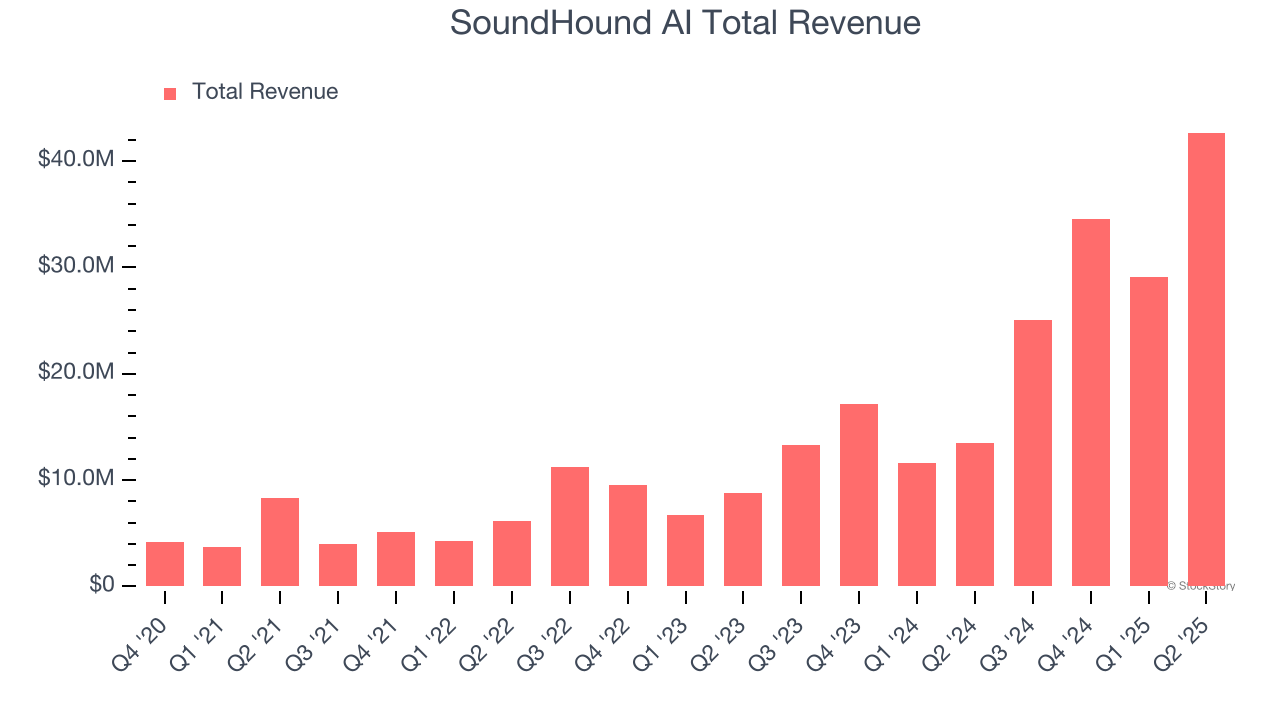
For a company in the expansion phase, revenue growth is the primary driver of valuation. Investors look for consistent year-over-year (YoY) increases, but in SoundHound’s case, the “Cumulative Subscriptions and Bookings Backlog” is often the more significant figure. This metric represents the total value of signed contracts that have not yet been realized as revenue. A growing backlog suggests a strong pipeline of future income and provides a level of predictability that is highly valued in the volatile tech sector.
Gross Margins and Operating Leverage
As SoundHound scales, its ability to maintain or expand gross margins is a testament to the efficiency of its proprietary Houndify platform. Investors analyze whether the cost of revenue is growing at a slower pace than total revenue. High gross margins indicate that the company’s software-centric model is working, allowing more dollars to flow down to cover research and development (R&D) and sales and marketing.
Burn Rate and Cash Runway
SoundHound is currently in a phase of heavy investment. Therefore, the “Net Loss” and “Adjusted EBITDA” are closely scrutinized. More importantly, investors track the “Cash and Cash Equivalents” balance. Does the company have enough capital to reach profitability, or will it need to dilute shareholders through a secondary offering? Analyzing the quarterly cash burn helps investors calculate the “runway”—the amount of time the company can survive at current spending levels before needing additional financing.
How to Trade SoundHound Earnings: Strategies for Volatility
SoundHound is known for its high beta, meaning it often moves more aggressively than the broader market. Earnings reports are the primary catalysts for these swings. Depending on an investor’s risk tolerance and time horizon, there are several ways to approach the reporting date.
The “Buy and Hold” Fundamental Approach
For long-term investors, the specific date of the earnings report is less about short-term price action and more about the “thesis check.” Does the report confirm that the company is winning more market share in the automotive industry? Is the expansion into the QSR (Quick Service Restaurant) space yielding high-margin recurring revenue? If the fundamentals remain intact, long-term investors may use post-earnings dips as an opportunity to “dollar-cost average” into their positions.
Short-Term Speculation and Options
Traders often look at the “Implied Move”—a calculation based on options pricing that predicts how much the stock might swing following the earnings announcement. Because SoundHound is a favorite among retail traders, the volatility can be extreme. Strategies like “straddles” or “strangles” are sometimes used to profit from the movement itself, regardless of direction, though these carry significant risks.
Managing Risk Around the Announcement
The 24 hours following an earnings report are often characterized by “price discovery,” where the market digests the news. It is common to see a “knee-jerk” reaction in after-hours trading that is completely reversed once the conference call begins or when the market opens the following morning. Professional investors often wait for the “settling” of the price action before making significant changes to their portfolio.
The Broader Market Context: SoundHound in the AI Investment Landscape
When SoundHound reports earnings, it does not do so in a vacuum. Its performance is often viewed as a bellwether for the broader “AI Applications” sub-sector.
The NVIDIA Connection
SoundHound gained significant mainstream financial attention when it was revealed that NVIDIA held a stake in the company. Consequently, SoundHound’s stock often trades in sympathy with the broader semiconductor and AI infrastructure giants. If NVIDIA reports a stellar quarter, expectations for SoundHound typically rise. Conversely, if there is a rotation out of tech and into “value” stocks, SoundHound may face headwinds regardless of its individual performance.
Institutional vs. Retail Sentiment
The earnings report is a time when institutional ownership often shifts. Large hedge funds and mutual funds look for “clean” quarters—reports without accounting red flags or unexpected executive turnover. A sharp increase in institutional buying following a report is a strong bullish signal, suggesting that the “smart money” views the current valuation as attractive relative to future growth.

Preparing Your Financial Toolkit for Earnings Day
To maximize the value of SoundHound’s earnings reports, investors should have a structured process for evaluation.
-
Review Previous Guidance: Before the new report drops, look back at what management promised in the previous quarter. Did they hit their targets? Consistent beats lead to multiple expansion (a higher P/S or P/E ratio).
-
Analyze the “Beat or Miss”: Compare the reported EPS (Earnings Per Share) and Revenue against the “Consensus Estimates” provided by Wall Street analysts. A “double beat” (beating both revenue and earnings) is the gold standard for a positive price reaction.
-
Listen to the Tone: Financial numbers are backward-looking. The conference call is forward-looking. Pay attention to management’s tone regarding the “macroeconomic environment” and “customer acquisition costs.”
-
Check the Balance Sheet: In a high-interest-rate environment, debt levels matter. Ensure SoundHound is managing its liabilities effectively while fueling growth.
By understanding the “when” and “why” of SoundHound’s earnings reports, investors move from a position of speculation to one of informed strategy. In the fast-moving world of AI finance, timing is important, but the ability to interpret the data behind the date is what ultimately determines financial success. Whether you are looking for a quick trade or a decade-long hold, the quarterly earnings report remains the most vital tool in your investment arsenal.
aViewFromTheCave is a participant in the Amazon Services LLC Associates Program, an affiliate advertising program designed to provide a means for sites to earn advertising fees by advertising and linking to Amazon.com. Amazon, the Amazon logo, AmazonSupply, and the AmazonSupply logo are trademarks of Amazon.com, Inc. or its affiliates. As an Amazon Associate we earn affiliate commissions from qualifying purchases.