
Securing a small business loan is often the most significant milestone in a company’s lifecycle. Whether you are seeking capital to bridge a seasonal cash flow gap, purchase inventory, or scale operations through a major acquisition, the process of applying for funding is rigorous. Lenders, ranging from traditional commercial banks to online fintech providers and the Small Business Administration (SBA), are inherently risk-averse. They require a comprehensive demonstration of your business’s ability to repay the debt while maintaining a healthy operational margin.
To successfully navigate the application process, entrepreneurs must move beyond a simple request for funds. You must present a compelling, data-driven narrative that proves your business is a safe investment. Understanding exactly what is needed—from specific financial ratios to legal documentation—is the difference between a rejection and an approval that fuels your next phase of growth.
Evaluating Your Financial Health and Loan Readiness
Before you even approach a lender, you must conduct a thorough internal audit of your financial standing. Lenders look at more than just your bank balance; they examine the structural health of your business finance. The primary metric most lenders focus on is the Debt Service Coverage Ratio (DSCR). This ratio measures your business’s available cash flow to pay current debt obligations. Typically, a DSCR of 1.25 or higher is required, meaning for every dollar of debt, you have $1.25 in net operating income.
Cash Flow Consistency
Lenders look for “quality of earnings.” A business that generates $1 million in revenue but experiences wild, unpredictable fluctuations month-to-month is viewed as higher risk than a business generating $500,000 in steady, predictable monthly increments. You will need to provide cash flow statements that demonstrate a clear upward trend or, at the very least, stability that accounts for seasonal variations.
Debt-to-Income and Existing Liabilities
If your business is already leveraged with high-interest short-term debt, such as merchant cash advances or high-interest lines of credit, traditional lenders may be hesitant to add more weight to your balance sheet. You must be prepared to explain how the new loan will either refinance this debt into a more manageable structure or how the projected growth from the new capital will easily absorb the additional monthly payments.
The Core Documentation Framework
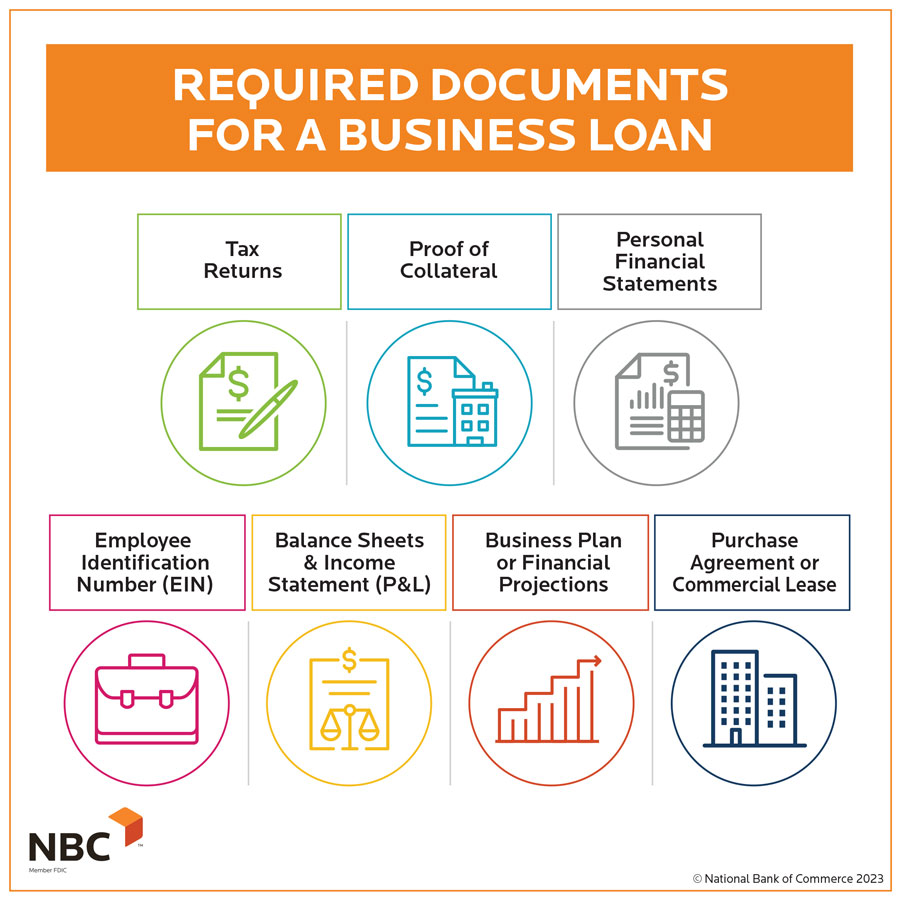
The documentation phase is often where loan applications stall. Lenders require a deep dive into several years of historical data to verify the claims made in your application. Organizing these documents beforehand not only speeds up the process but signals to the lender that you are a disciplined and professional operator.
Personal and Business Tax Returns
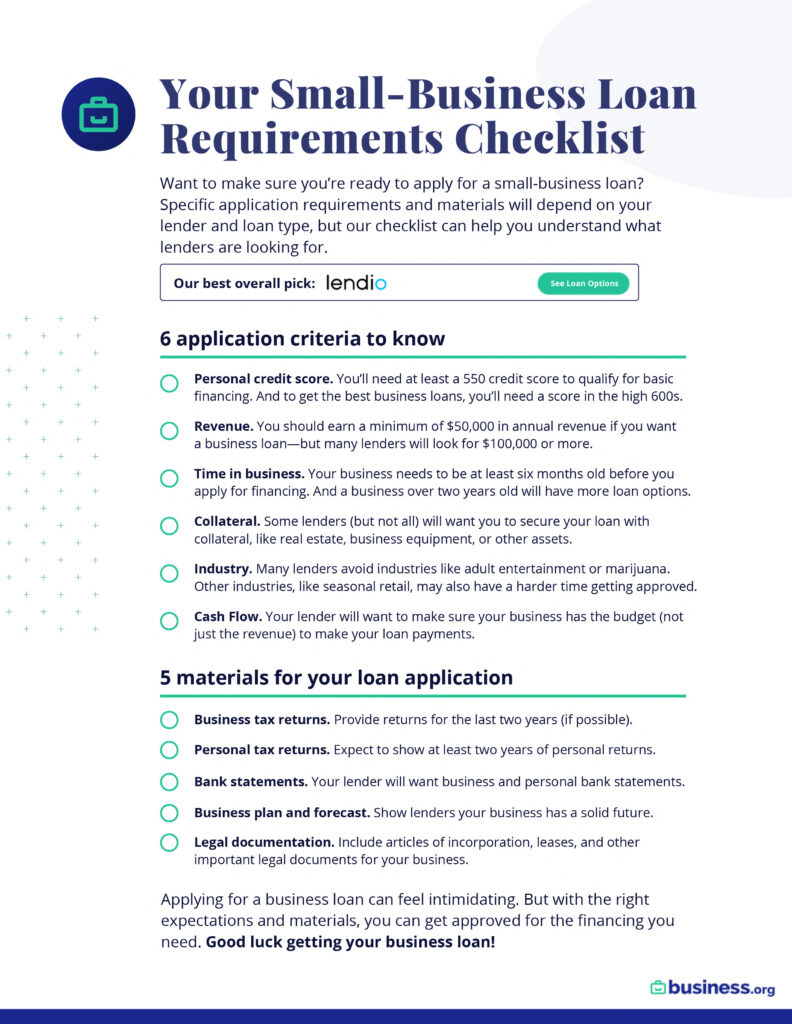
Expect to provide at least three years of both personal and business tax returns. Lenders use these to verify your reported income against what you have officially declared to the IRS. For many small business owners, especially sole proprietorships or LLCs, personal and business finances are closely linked. Therefore, the lender will analyze your personal tax returns to ensure that your personal financial obligations (mortgages, personal loans, etc.) will not interfere with your ability to manage the business debt.
Profit and Loss (P&L) Statements and Balance Sheets
While tax returns show the past, your year-to-date (YTD) financial statements show the present. You will need a current P&L statement, usually updated within the last 60 to 90 days. The balance sheet is equally critical, as it provides a snapshot of your assets, liabilities, and equity. Lenders use the balance sheet to calculate your liquidity ratios and determine if you have enough “skin in the game”—the amount of your own capital invested in the business.
Bank Statements and Legal Documents
Generally, three to six months of business bank statements are required. These are used to verify cash flow and monitor daily ending balances. Additionally, you must provide legal documents that prove the legitimacy and structure of your entity. This includes:
-
Articles of Incorporation or Organization.
-
Operating agreements or bylaws.
-
Business licenses and permits.
-
Commercial leases or property deeds.
-
Contracts with major suppliers or clients that prove future revenue.
The Critical Importance of Creditworthiness

In the world of small business lending, your credit profile acts as your financial reputation. While larger corporations rely on institutional ratings, small business loans are heavily influenced by the personal credit of the owners.
Personal Credit Scores
Most lenders, including the SBA, have a minimum personal credit score requirement—often 680 or higher for traditional bank loans. If your score is lower, you may be relegated to “alternative” lenders who charge significantly higher interest rates. Lenders look for a history of on-time payments and a low credit utilization ratio. If you have any derogatory marks, such as bankruptcies, foreclosures, or tax liens, you will need to provide a written explanation and evidence that those issues have been resolved.
Business Credit Scores
While personal credit is the primary driver, your business credit score (calculated by bureaus like Dun & Bradstreet, Experian Business, or Equifax Small Business) is increasingly important. A strong business credit profile allows you to separate your personal liability from the company’s debts and can lead to better terms. Lenders also utilize the FICO Small Business Scoring Service (SBSS) score, which ranges from 0 to 300, to pre-screen SBA 7(a) loans. A score above 155 is typically the threshold for approval in these cases.
Collateral, Assets, and Personal Guarantees
Lenders seek “secondary sources of repayment.” If the business’s cash flow fails, how will the lender recover their money? This is where collateral and guarantees come into play.
Tangible Collateral
Collateral is an asset that the lender can seize and sell if the loan defaults. Common forms of collateral include:
-
Real Estate: Commercial property or, in some cases, your personal residence.
-
Equipment: The machinery, vehicles, or technology being purchased with the loan.
-
Accounts Receivable: Using your unpaid invoices as security.
-
Inventory: The raw materials or finished goods your business holds.
The Personal Guarantee
For almost all small business loans, especially those for businesses with fewer than 100 employees, lenders require a personal guarantee. This is a legal agreement stating that the business owner is personally responsible for repaying the loan if the business cannot. This effectively pierces the corporate veil, meaning your personal assets (savings, vehicles, home equity) are at risk. Understanding the implications of a personal guarantee is vital before signing any loan agreement.
The Narrative: Business Plans and Use of Funds
Numbers alone rarely tell the whole story. A lender needs to understand the context behind the data and the strategy for the future. This is where your business plan and “use of funds” statement become essential components of the application.
A Robust Business Plan
A bank-ready business plan is not just a marketing document; it is an operational roadmap. It should include a detailed market analysis showing your competitive advantage, a description of your management team’s experience, and a clear explanation of your business model. Lenders are particularly interested in the “Management” section—they want to know that the people running the company have the industry expertise to navigate economic downturns.
Specific Use of Funds
One of the most common reasons for loan denial is a vague request for capital. Asking for $200,000 for “working capital” is far less effective than providing a line-item breakdown. For example, a lender is much more likely to approve a loan if you specify:
-
$80,000 for a specific piece of equipment with a known ROI.
-
$50,000 for inventory to fulfill a confirmed new contract.
-
$70,000 for hiring two specialized technicians to increase production capacity.
Financial Projections
You must provide forward-looking projections, usually for the next three to five years. These should include a projected P&L, balance sheet, and cash flow statement. Crucially, these projections must be realistic. If your historical growth has been 5% annually, but you project 50% growth after receiving the loan, you must provide a very detailed explanation of exactly how the capital will bridge that gap.
By meticulously preparing these components—financial health assessments, exhaustive documentation, credit management, collateral identification, and a strategic narrative—you position your small business as a professional, low-risk candidate for funding. In a competitive lending environment, this level of preparation is not just an advantage; it is a requirement.
aViewFromTheCave is a participant in the Amazon Services LLC Associates Program, an affiliate advertising program designed to provide a means for sites to earn advertising fees by advertising and linking to Amazon.com. Amazon, the Amazon logo, AmazonSupply, and the AmazonSupply logo are trademarks of Amazon.com, Inc. or its affiliates. As an Amazon Associate we earn affiliate commissions from qualifying purchases.