
In the modern landscape of global commerce, the term “startup” is frequently used but often misunderstood. While every startup is a new business, not every new business is a startup. At its core, a startup is a company designed to grow fast. Defined by its relationship with innovation, scalability, and financial risk, a startup represents a unique vehicle for wealth creation and market disruption. Unlike a traditional small business, which may prioritize steady, long-term cash flow and local sustainability, a startup is built to solve a problem on a massive scale, often requiring significant upfront capital and a high-risk, high-reward financial structure.
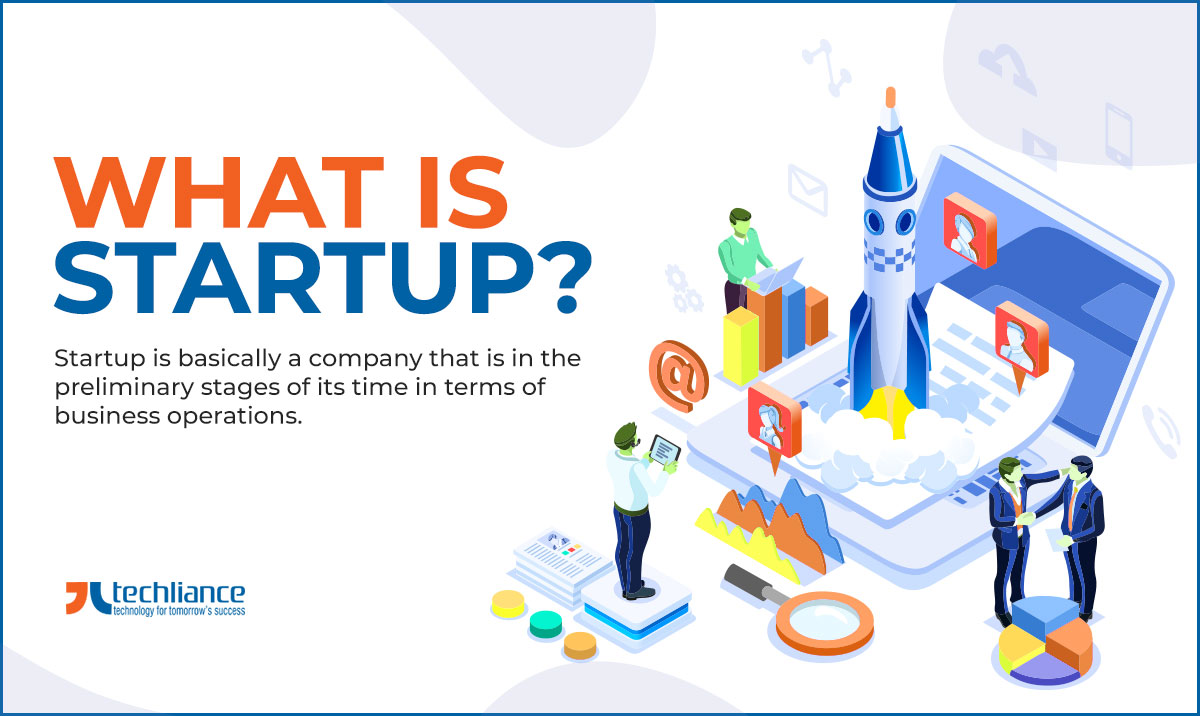
Understanding what constitutes a startup requires looking beyond the sleek office spaces and tech-driven jargon. It involves analyzing the economic mechanics that drive these ventures—from their initial funding rounds to their ultimate goal of a high-value exit.
Defining the Startup: Innovation, Scalability, and Speed
The fundamental distinction between a startup and a traditional business lies in the intent and the architecture of the organization. A startup is an entrepreneurial venture in its early stages, typically characterized by high uncertainty and even higher growth potential.
The Scalability Factor
The primary economic engine of a startup is scalability. A scalable business model is one where the costs of adding new customers do not grow at the same rate as the revenue. For instance, a traditional consulting firm (a small business) scales linearly; to double its revenue, it generally needs to double its staff. Conversely, a software startup can serve one thousand or one million users with relatively similar infrastructure costs. This exponential growth potential is what makes startups attractive to high-stakes investors and distinguishes them from service-oriented small businesses.
The Role of the “Exit Strategy”
While a local grocery store or a boutique law firm is often intended to provide a living for its owners indefinitely, most startups are built with an “exit” in mind. This is a financial event—such as an Acquisition or an Initial Public Offering (IPO)—where the founders and early investors sell their equity for a significant profit. The startup phase is essentially a race toward this liquidity event. Because the goal is a massive payout, the financial management of a startup focuses less on immediate dividends and more on increasing the total valuation of the company.
The Financial Lifecycle of a Startup
A startup’s journey is measured by its funding stages. Because most startups begin with an unproven product and no revenue, they require external capital to fuel their growth. Navigating this lifecycle is a critical skill for any founder or financial strategist.
Bootstrapping and Seed Funding
In the earliest days, many founders “bootstrap,” meaning they fund the business using personal savings and early revenue. However, once the concept is proven, the startup enters the “Seed” stage. Seed funding is the first formal investment, often provided by “Angel Investors”—high-net-worth individuals who provide capital in exchange for equity. This money is typically used for market research, product development, and hiring the first key employees. At this stage, the business is often valued based on its potential rather than its current financial performance.
Venture Capital and the Series Rounds
As a startup proves its product-market fit, it moves into “Series A,” “Series B,” and “Series C” funding rounds. These rounds involve Venture Capital (VC) firms, which manage pools of institutional money. Each round typically involves a higher valuation of the company and a larger influx of cash.
-
Series A: Focuses on optimizing the product and scaling the user base.
-
Series B: Focused on taking the company past the development stage and expanding market reach.
-
Series C: Used to scale the business as quickly and as successfully as possible, often involving international expansion or acquiring other companies.
The Path to an IPO or Acquisition
The final stage of the startup lifecycle is the transition to a mature company. This is usually achieved through an Acquisition, where a larger corporation buys the startup for its technology or market share, or an IPO, where the company’s shares are listed on a public stock exchange. This allows the original investors to realize their gains and provides the company with a massive influx of public capital to continue its operations.
Navigating the Unit Economics of Early-Stage Ventures
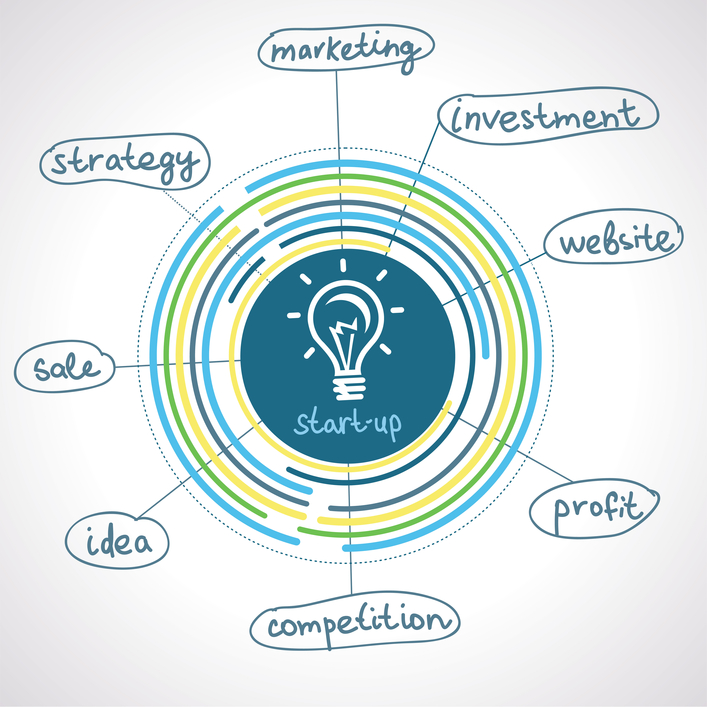
For a startup to be financially viable, it must eventually demonstrate healthy unit economics. This refers to the direct revenues and costs associated with a particular business model, expressed on a per-unit basis. In the money-driven world of startups, two metrics reign supreme: Customer Acquisition Cost (CAC) and Lifetime Value (LTV).
Customer Acquisition Cost (CAC) vs. Lifetime Value (LTV)
The CAC represents the total sales and marketing cost required to earn a new customer. The LTV is the total revenue a business expects to earn from a customer throughout their relationship. For a startup to be profitable in the long term, the LTV must be significantly higher than the CAC—usually by a factor of three or more. Investors scrutinize these numbers to determine if a business is a “money machine” that can be scaled by pouring in more capital. If a startup spends $50 to acquire a customer who only spends $30 over their lifetime, the business is fundamentally broken regardless of how much venture capital it raises.
Burn Rate and Runway
Because many startups prioritize growth over immediate profit, they often operate at a loss for years. This leads to two critical financial concepts: the “Burn Rate” and the “Runway.” The burn rate is the amount of money a startup is losing each month to keep operations running. The runway is the amount of time the company has until it runs out of cash, calculated by dividing the total cash on hand by the monthly burn rate. Managing the runway is the most vital duty of a startup’s financial leadership; running out of runway before reaching profitability or the next funding round is the most common cause of startup failure.
Modern Business Models for Startups
The financial structure of a startup is heavily influenced by its chosen business model. Modern startups have moved away from traditional sales toward models that provide predictable, recurring income streams.
Software as a Service (SaaS) and Recurring Revenue
The SaaS model has become the gold standard for startups. Instead of selling a product once, the company charges a monthly or annual subscription fee. From a financial perspective, this is highly desirable because it creates predictable cash flow and allows for higher valuations. Investors love SaaS companies because the “compounding” effect of recurring revenue makes the growth curve much steeper and more sustainable.
Marketplace Dynamics
Marketplace startups, such as Uber or Airbnb, operate by connecting buyers and sellers and taking a percentage of each transaction (the “take rate”). These businesses are financially complex because they require a balance of supply and demand. However, once a marketplace reaches “liquidity”—meaning there are enough participants for the system to function efficiently—it creates a powerful economic moat that is difficult for competitors to breach.
Direct-to-Consumer (DTC)
DTC startups leverage the internet to sell products directly to customers, bypassing traditional retail middlemen. This allows for higher profit margins and better control over the customer relationship. From a financial standpoint, DTC startups focus heavily on supply chain efficiency and digital marketing ROI to ensure that their margins can support the high costs of shipping and customer acquisition.
Risk Management and the Path to Profitability
High-growth startups are inherently risky. Statistics suggest that the majority of startups fail within their first five years. However, the financial rewards of the survivors are so significant that they justify the risk for both founders and investors.
The Lean Startup Methodology
To mitigate financial risk, many modern startups follow the “Lean Startup” methodology. This involves creating a “Minimum Viable Product” (MVP)—the simplest version of a product that can be sold—to test market demand before committing significant capital. By gathering data early, founders can “pivot” (change their business strategy) or persevere based on actual financial feedback rather than assumptions. This lean approach prevents the catastrophic waste of capital on products that the market does not want.

Achieving Financial Sustainability
The ultimate goal for any startup is “Default Alive”—a state where the company is profitable enough to survive indefinitely without needing another infusion of outside capital. While the early years are defined by external funding and rapid spending, the transition to sustainability is what turns a “startup” into a “corporation.” Financial success in the startup world isn’t just about raising the most money; it’s about building a robust economic engine that can eventually generate its own fuel.
In conclusion, a business startup is a high-speed, high-stakes financial journey. It is a vehicle designed to take an innovative idea and scale it into a market-dominating force using strategic capital, aggressive growth metrics, and a focus on long-term valuation. Whether funded by a founder’s savings or a global venture capital firm, the essence of a startup remains the same: the pursuit of exponential growth in a world of uncertainty.
aViewFromTheCave is a participant in the Amazon Services LLC Associates Program, an affiliate advertising program designed to provide a means for sites to earn advertising fees by advertising and linking to Amazon.com. Amazon, the Amazon logo, AmazonSupply, and the AmazonSupply logo are trademarks of Amazon.com, Inc. or its affiliates. As an Amazon Associate we earn affiliate commissions from qualifying purchases.