
The world of finance is a complex ecosystem, constantly evolving with new strategies and tools designed to facilitate transactions and manage risk. Within this landscape, a particular type of loan known as an “assumption loan” offers a unique pathway for both borrowers and lenders, particularly in real estate. While the term itself might sound a bit abstract, understanding its mechanics is crucial for anyone navigating significant financial decisions, whether personal or business-related. This article will delve into the intricacies of assumption loans, exploring their definition, how they function, their advantages and disadvantages, and their relevance in today’s dynamic financial and technological environment, drawing upon the core pillars of Tech, Brand, and Money.
Understanding the Fundamentals of an Assumption Loan
At its core, an assumption loan allows a buyer to take over the existing mortgage of a seller. Instead of securing a brand-new loan, the buyer “assumes” the seller’s current loan obligations, including the outstanding balance, interest rate, and repayment terms. This means the original loan agreement between the seller and the lender remains in effect, with the buyer stepping into the seller’s shoes as the new primary obligor. This process is distinct from simply paying off the seller’s mortgage with a new loan; it’s a direct transfer of the existing debt.
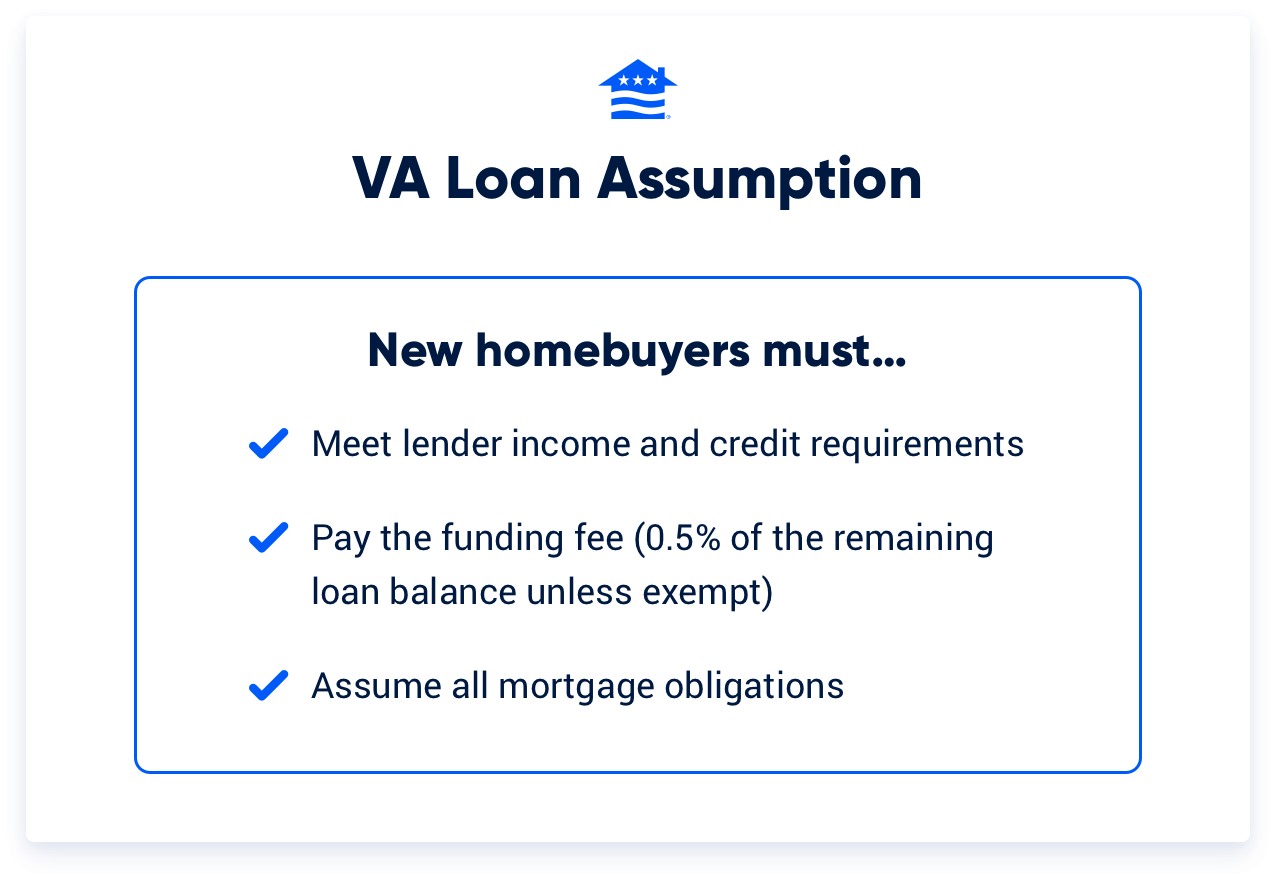
For this to occur, the lender must approve the buyer’s assumption of the loan. This is a critical step, as the lender will typically conduct a thorough credit check and financial assessment of the potential buyer, much like they would for a new mortgage application. The lender’s primary concern is ensuring the buyer has the financial capacity to meet the ongoing loan payments. If approved, the buyer will typically sign an assumption agreement, legally binding them to the loan’s terms. The seller is then generally released from their obligation on that specific mortgage, though sometimes this release is not absolute and depends on the specific loan terms and lender’s policies.
The concept of assumption loans is rooted in the idea of continuity and a less disruptive financial transition. It bypasses the need for a new appraisal, origination fees, and potentially higher interest rates that might be prevalent in the current market when a buyer seeks a new mortgage. This can be particularly attractive when interest rates have risen since the original loan was taken out by the seller, as the buyer can benefit from a lower, locked-in rate.
The Mechanics of Loan Assumption
The process of assuming a loan typically involves several key steps, all governed by the terms of the original mortgage contract and lender policies.
The Assumption Agreement: A Legal Nexus
The cornerstone of any loan assumption is the assumption agreement. This legally binding document formally transfers the seller’s mortgage obligations to the buyer. It outlines the outstanding loan balance, the interest rate, the remaining term, and any other pertinent conditions of the original loan. Both the buyer and the seller, along with the lender, will usually be parties to this agreement. The buyer essentially agrees to all the terms and conditions of the original loan.
Lender Approval: The Gatekeeper’s Role
Crucially, the lender’s approval is mandatory for a loan assumption to be legally valid. The lender is not obligated to allow a loan assumption and will assess the buyer’s creditworthiness and financial stability to ensure they can manage the loan payments. This assessment typically involves:
- Credit History Review: The lender will pull the buyer’s credit report to evaluate their payment history, outstanding debts, and overall credit score.
- Income Verification: Proof of income and employment stability is required to demonstrate the buyer’s ability to make mortgage payments.
- Debt-to-Income Ratio (DTI) Assessment: The lender will calculate the buyer’s DTI to see what proportion of their gross monthly income goes towards debt repayment.
If the buyer does not meet the lender’s criteria, the assumption will be denied. This protects the lender from defaulting borrowers and ensures the loan continues to be serviced reliably.
Release of Liability: The Seller’s Exit Strategy
A significant aspect of a successful loan assumption is the seller’s release of liability. In many cases, once the assumption is finalized and approved by the lender, the seller is no longer responsible for the mortgage payments. This is a key benefit for the seller, as it frees them from the financial obligation associated with the property. However, it’s important to note that the terms of the original mortgage contract and the assumption agreement will dictate the specifics of this release. In some instances, a seller might remain secondarily liable if the buyer defaults, until the loan is fully paid off, depending on the lender’s policy and specific loan type.
Why Consider an Assumption Loan? Advantages and Disadvantages
The decision to pursue or offer a loan assumption is multifaceted, with potential benefits and drawbacks for both parties involved. Understanding these can help in making informed financial decisions.
The Upsides: Why an Assumption Loan Can Be Attractive
For buyers, the allure of an assumption loan often lies in cost savings and a streamlined process, especially in certain market conditions.

- Lower Interest Rates: Perhaps the most compelling advantage for buyers is the ability to assume a loan with a lower interest rate than what might be available in the current market. If interest rates have risen since the seller secured their mortgage, this can translate into significant savings over the life of the loan.
- Reduced Upfront Costs: Assumption loans can often bypass many of the fees associated with obtaining a new mortgage, such as origination fees, appraisal fees, and sometimes even points. This can substantially lower the initial financial outlay for the buyer.
- Faster Closing Process: The assumption process can sometimes be quicker than a traditional mortgage application and approval, as the loan is already in place. This can be advantageous for buyers who need to move quickly.
- No Need for New Appraisal: Since the loan is being assumed, a new appraisal of the property is typically not required, saving the buyer time and money.
For sellers, the ability to offer an assumption can make their property more attractive to potential buyers, especially if the existing mortgage has favorable terms. It can also facilitate a quicker sale.
The Downsides: Potential Pitfalls to Be Aware Of
Despite the advantages, assumption loans are not without their risks and limitations, and certain factors can make them less appealing or even impossible.
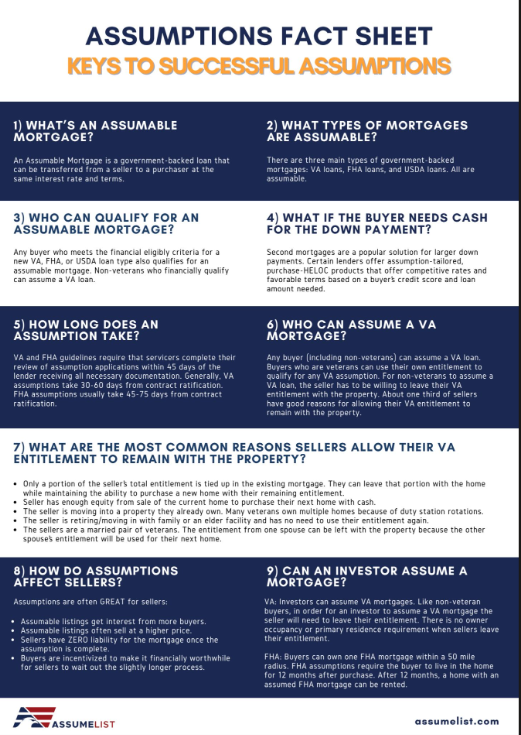
- Lender Restrictions and Loan Types: Not all mortgages are assumable. Loans insured by the Federal Housing Administration (FHA) and the U.S. Department of Veterans Affairs (VA) are generally assumable, provided the buyer meets specific requirements. However, conventional loans often have stricter “due-on-sale” clauses that require the loan to be paid off upon sale of the property, making assumption impossible without lender consent.
- Buyer’s Creditworthiness: If the buyer does not meet the lender’s credit and financial standards, the assumption will not be approved. This is a significant hurdle, as the lender’s primary concern is mitigating their risk.
- Property Condition: While a new appraisal might not be required, the buyer still needs to be comfortable with the property’s current condition. The assumption process doesn’t inherently include the buyer having the property inspected for hidden defects, which is a standard part of a new mortgage process.
- Potential for Higher Total Cost (in certain scenarios): If the seller has already paid down a substantial portion of the principal, the buyer might be assuming a larger loan balance than they would with a new mortgage where they might put down a larger down payment.
- Market Fluctuations: The benefit of assuming a lower interest rate is only advantageous if current rates are indeed higher. If rates have fallen, taking out a new loan might be more beneficial.
Assumption Loans in the Context of Tech, Brand, and Money
The concept of an assumption loan, while primarily a financial mechanism, intersects with the broader themes of technology, branding, and sophisticated money management that are central to the pillars of our platform.
The Digital Transformation of Financial Transactions (Tech)
The process of obtaining loan approvals, verifying financial information, and executing legal agreements has been revolutionized by technology. While the core principle of loan assumption remains the same, the execution is increasingly digital.
- Online Application Portals: Lenders now use sophisticated online platforms for buyers to submit their financial documentation, credit checks, and assumption agreement details. This streamlines the process, reduces paper waste, and allows for faster data processing.
- AI in Underwriting: Artificial intelligence and machine learning algorithms are being employed by lenders to assess borrower risk more accurately and efficiently. This can speed up the approval process for loan assumptions by analyzing vast datasets and identifying patterns that traditional methods might miss.
- Digital Signatures and Document Management: The assumption agreement and other necessary paperwork can now be signed and stored digitally, further accelerating the transaction and enhancing security.
- Fintech Solutions for Verification: Financial technology (Fintech) companies offer advanced tools for instant income verification, employment checks, and asset validation, making the lender’s due diligence for assumption much more efficient.
The technological advancements in banking and lending are making the assumption process, and indeed all financial transactions, more accessible, transparent, and user-friendly. This is crucial for the modern consumer and business owner who expects seamless digital experiences.
Building Trust and Reputation in Financial Dealings (Brand)
In any significant financial transaction, trust and reputation are paramount. For lenders, ensuring the borrower can repay is a matter of mitigating risk, and this hinges on their confidence in the borrower’s financial standing and integrity.
- Lender’s Brand Promise: A lender’s willingness to facilitate loan assumptions can be part of their brand strategy. Offering this option can position them as flexible and customer-centric, attracting a wider pool of borrowers. Conversely, a rigid approach might alienate potential customers.
- Buyer’s Financial Brand: For the buyer, a strong credit history and a reputation for responsible financial management are essentially their “financial brand.” This is what the lender assesses when approving an assumption. A good financial brand makes it easier to qualify for advantageous financial products, including assuming existing loans.
- Seller’s Reputation: While less direct, a seller who has managed their mortgage responsibly can indirectly benefit by making their property more appealing. A history of timely payments on the existing loan adds a layer of reassurance.
- Transparency and Communication: A strong brand in finance is built on transparency and clear communication. Lenders and brokers facilitating assumption loans must clearly articulate the terms, responsibilities, and potential risks involved, building trust with all parties.
Strategic Financial Management and Opportunity (Money)
Assumption loans are a powerful tool within the broader spectrum of personal and business finance, offering strategic advantages for wealth building and cash flow management.
- Leveraging Existing Assets: For buyers, assuming a loan is a way to leverage existing market conditions and potentially acquire a property with favorable financing terms. It’s a strategic move to optimize capital.
- Maximizing Returns on Investment: In real estate, especially for investors, assuming a lower-interest loan can significantly improve the cash-on-cash return on an investment property. This is a fundamental principle of smart money management.
- Debt Management and Restructuring: For sellers, offloading a mortgage through assumption can be part of a larger debt management or financial restructuring strategy, freeing up capital or reducing liabilities.
- Understanding Financial Instruments: The ability to understand and utilize instruments like assumption loans requires a sophisticated grasp of financial markets, interest rate dynamics, and risk assessment – core components of intelligent money management.
- Side Hustle Potential: For real estate investors looking to acquire properties quickly and efficiently, assumption loans can be a valuable tool in their arsenal for building a portfolio of income-generating assets.
Conclusion: A Strategic Financial Tool in a Dynamic Market
In conclusion, an assumption loan is a valuable, albeit often overlooked, financial instrument that allows a buyer to take over a seller’s existing mortgage. While not universally available due to lender policies and loan types, it presents significant opportunities, particularly when interest rates are on the rise. The advantages for buyers – reduced costs, potentially lower interest rates, and a streamlined process – can be substantial. However, it is crucial to navigate the process with a clear understanding of lender requirements, the buyer’s financial standing, and the specific terms of the original loan.
As we’ve seen, assumption loans are not isolated financial mechanisms; they are deeply intertwined with the broader themes of technological innovation, brand perception, and strategic money management. The digital advancements in financial services are making these transactions more efficient, while a strong financial “brand” and sound money management principles are essential for successful qualification. For those looking to make strategic financial moves in real estate or other asset transfers, understanding and potentially leveraging assumption loans can unlock significant benefits in today’s ever-evolving financial landscape.
aViewFromTheCave is a participant in the Amazon Services LLC Associates Program, an affiliate advertising program designed to provide a means for sites to earn advertising fees by advertising and linking to Amazon.com. Amazon, the Amazon logo, AmazonSupply, and the AmazonSupply logo are trademarks of Amazon.com, Inc. or its affiliates. As an Amazon Associate we earn affiliate commissions from qualifying purchases.