
Running a successful business is frequently romanticized as a pursuit of passion and innovation, but at its core, long-term viability is governed by the cold, hard laws of finance. While a great idea might open the door, it is the mastery of capital management, fiscal discipline, and strategic investment that ensures the door stays open. To navigate the complexities of the modern marketplace, an entrepreneur must transition from being a practitioner of a craft to a steward of wealth. Success is not merely about the volume of sales; it is about the efficiency of the engine that converts those sales into sustainable growth and personal wealth.
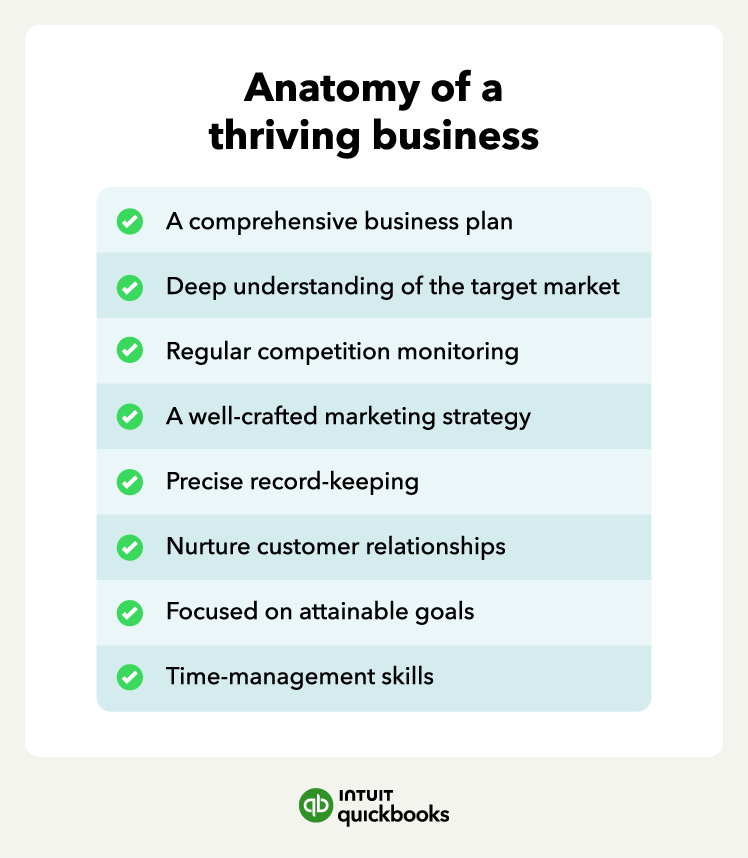
Establishing a Foundation of Financial Literacy and Capital Management
The most common reason for business failure is not a lack of effort, but a lack of financial oxygen. Understanding how money moves through an organization is the first step in moving from a precarious startup to a stabilized enterprise. A successful business owner must be able to read a balance sheet with the same fluency they use to talk about their product.
Understanding Cash Flow vs. Profitability
One of the most dangerous traps for a new business owner is the confusion between profit and cash flow. Profit is an accounting metric—the difference between revenue and expenses over a specific period. Cash flow, however, is the physical movement of money into and out of your accounts. It is entirely possible for a business to be profitable on paper while simultaneously going bankrupt because its capital is tied up in accounts receivable, inventory, or equipment.
Running a successful business requires a relentless focus on the “cash conversion cycle.” This involves shortening the time it takes to convert investments in inventory and other resources into cash flows from sales. By optimizing this cycle, a business remains liquid, allowing it to meet its obligations to employees, vendors, and lenders without the constant threat of a liquidity crisis.
Strategic Capital Allocation and Reinvestment
Once a business achieves positive cash flow, the next hurdle is capital allocation. Every dollar generated by the business presents a choice: should it be paid out as a dividend to the owner, kept in a high-yield reserve, or reinvested back into the company?
The most successful businesses treat reinvestment as a high-stakes investment portfolio. This means calculating the Return on Investment (ROI) for every internal project. Whether it is purchasing more efficient machinery, upgrading software systems, or hiring a key executive, the expenditure must be justified by its ability to generate future cash flows. Successful owners avoid “lifestyle creep” within the business—resisting the urge to spend on vanity assets that do not contribute to the bottom line—and instead focus on compounding their internal capital.
Scaling Revenue Through Diverse Income Streams and Market Analysis
In the realm of personal finance and business growth, diversification is a primary defense against volatility. A business that relies on a single client, a single product, or a single sales channel is inherently fragile. To run a successful business, one must build a robust architecture of revenue that can withstand shifts in the economic climate.
Identifying High-Margin Opportunities
Growth for the sake of growth is a recipe for disaster. Successful business management involves identifying which products or services offer the highest margins and focusing resources there. This is often where the “80/20 Rule” or Pareto Principle applies: 80% of a company’s profits often come from 20% of its activities.
By performing a deep dive into unit economics—the direct revenues and costs associated with a single unit of sale—business owners can identify “loss leaders” that should be phased out and high-margin “cash cows” that should be scaled. High-margin revenue provides a buffer, allowing the business to absorb unexpected costs or economic downturns without immediately slipping into the red.
The Role of Unit Economics in Growth
Scaling a business requires a granular understanding of Customer Acquisition Cost (CAC) and Customer Lifetime Value (LTV). A business is fundamentally successful when its LTV significantly exceeds its CAC. In the world of online income and digital business, this ratio is the heartbeat of the operation.

If it costs $50 to acquire a customer who only spends $40, the business is “scaling” its way to bankruptcy. Conversely, a business that masters its unit economics can confidently invest in marketing and expansion, knowing that every dollar spent on acquisition will return a predictable multiple over time. This data-driven approach to revenue removes the guesswork from growth and allows for aggressive, yet calculated, expansion.
Navigating Business Finance and Risk Mitigation
Managing a business is an exercise in risk management. From fluctuating interest rates to changing tax codes, external financial pressures are constant. Running a successful business involves building a “moat” around the company’s finances to protect it from these external shocks.
Managing Debt and Leveraging Credit Safely
Debt is often viewed with skepticism, but in business finance, it is a tool—one that can either accelerate growth or cause a collapse. Successful business owners distinguish between “good debt” and “bad debt.” Good debt is low-interest capital used to acquire assets that produce a higher rate of return than the cost of the interest. For example, taking a loan to purchase a piece of equipment that doubles production capacity is a strategic move.
However, over-leveraging is a common pitfall. A successful business maintains a healthy debt-to-equity ratio, ensuring that it is not beholden to creditors during a lean month. Maintaining a strong business credit score is also essential, as it provides access to capital at lower interest rates, effectively reducing the cost of doing business and increasing the net profit margin.
Tax Planning and Fiscal Efficiency
One of the largest expenses any successful business will face is taxation. While tax evasion is illegal, tax avoidance—the legal optimization of one’s tax liability—is a hallmark of professional business management. This involves structured planning around depreciation, tax credits, and the selection of the most advantageous business entity (such as an S-Corp, C-Corp, or LLC).
By working with financial professionals to implement a proactive tax strategy, a business owner can retain a significantly higher portion of their earnings. These retained earnings can then be used to bolster the company’s emergency fund or be reinvested into income-generating assets, creating a cycle of wealth creation that extends beyond the daily operations of the business.
Leveraging Financial Tools and Systems for Long-Term Sustainability
The transition from a small operation to a successful enterprise is marked by the implementation of systems. As a business grows, the owner can no longer keep track of every transaction in their head or on a simple spreadsheet. Professional-grade financial tools and rigorous accounting frameworks are the infrastructure upon which success is built.
Implementing Robust Accounting Frameworks
Transparency is the foundation of financial control. A successful business utilizes double-entry bookkeeping and regular financial audits to ensure accuracy. These systems provide the data necessary for “management by exception”—a strategy where the owner only needs to intervene when financial performance deviates from the established plan.
Modern financial tools allow for real-time tracking of Key Performance Indicators (KPIs). By monitoring metrics such as the burn rate, the quick ratio (a measure of liquidity), and accounts receivable turnover, an owner can spot potential problems months before they become critical. This proactive stance is what separates those who “run” a business from those who are simply “run by” their business.
Financial Forecasting and Contingency Planning
The future is uncertain, but it is not unpredictable. Successful business owners use historical data to create forward-looking financial forecasts. This involves modeling various scenarios: what happens if sales drop by 20%? What happens if the cost of raw materials increases by 15%?
By creating a “financial dry run” for various economic climates, a business can develop contingency plans. This might include maintaining a cash reserve equivalent to six months of operating expenses—a “war chest” that allows the business to survive a recession or to pounce on an acquisition opportunity when competitors are struggling. In the world of business finance, the goal is not just to survive the good times, but to be positioned to thrive during the bad ones.
Ultimately, running a successful business is an exercise in disciplined wealth management. It requires the courage to take risks, balanced by the wisdom to protect the downside. By focusing on the fundamentals of cash flow, unit economics, risk mitigation, and systematic financial tracking, an entrepreneur can build more than just a company; they can build a lasting financial legacy. Success is the reward for those who respect the math of their business as much as they value the mission of their brand.
aViewFromTheCave is a participant in the Amazon Services LLC Associates Program, an affiliate advertising program designed to provide a means for sites to earn advertising fees by advertising and linking to Amazon.com. Amazon, the Amazon logo, AmazonSupply, and the AmazonSupply logo are trademarks of Amazon.com, Inc. or its affiliates. As an Amazon Associate we earn affiliate commissions from qualifying purchases.