
In the world of high-stakes commerce and professional services, a business proposal is far more than a simple pitch deck or a polite letter of intent. It is a sophisticated financial instrument designed to bridge the gap between a perceived market need and a profitable solution. Whether you are a solo entrepreneur looking to land your first major contract or a seasoned corporate executive aiming to secure a multi-million dollar investment, the ability to draft a compelling business proposal is a fundamental skill in the pursuit of wealth and business growth. To create a proposal that converts, one must move beyond generalities and focus on the cold, hard logic of fiscal viability, return on investment (ROI), and strategic financial alignment.
Strategic Financial Alignment: Identifying the Profit Motive
Every successful business proposal begins with an understanding of the client’s or investor’s financial landscape. You are not just selling a product or a service; you are selling a financial outcome. Before putting pen to paper, you must identify the “fiscal pain point” your prospect is experiencing. Are they losing money due to inefficient processes? Are they missing out on potential revenue because they lack a specific market presence? Your proposal must position your solution as the most cost-effective way to solve these problems.
Defining the Problem in Fiscal Terms
A generic problem statement carries little weight in a professional business environment. To capture the attention of decision-makers, you must quantify the problem. If a company’s supply chain is inefficient, do not merely state that it is “slow.” Instead, calculate the estimated loss in annual revenue or the increase in operational overhead caused by that slowness. By defining the problem in monetary terms, you create an immediate sense of urgency. The reader realizes that every day they do not accept your proposal is a day they are actively losing capital.
Cost-Benefit Analysis for the Stakeholder
Once the problem is quantified, the proposal must transition into a preliminary cost-benefit analysis. This is where you demonstrate your financial acumen. You must clearly outline what the investment will be and, more importantly, what the anticipated payoff looks like. A winning proposal uses data to show that the cost of your services is significantly lower than the cost of the problem remaining unsolved. This “value-gap” is where the decision to hire you or fund you is actually made.
Structural Elements of a Revenue-Focused Proposal
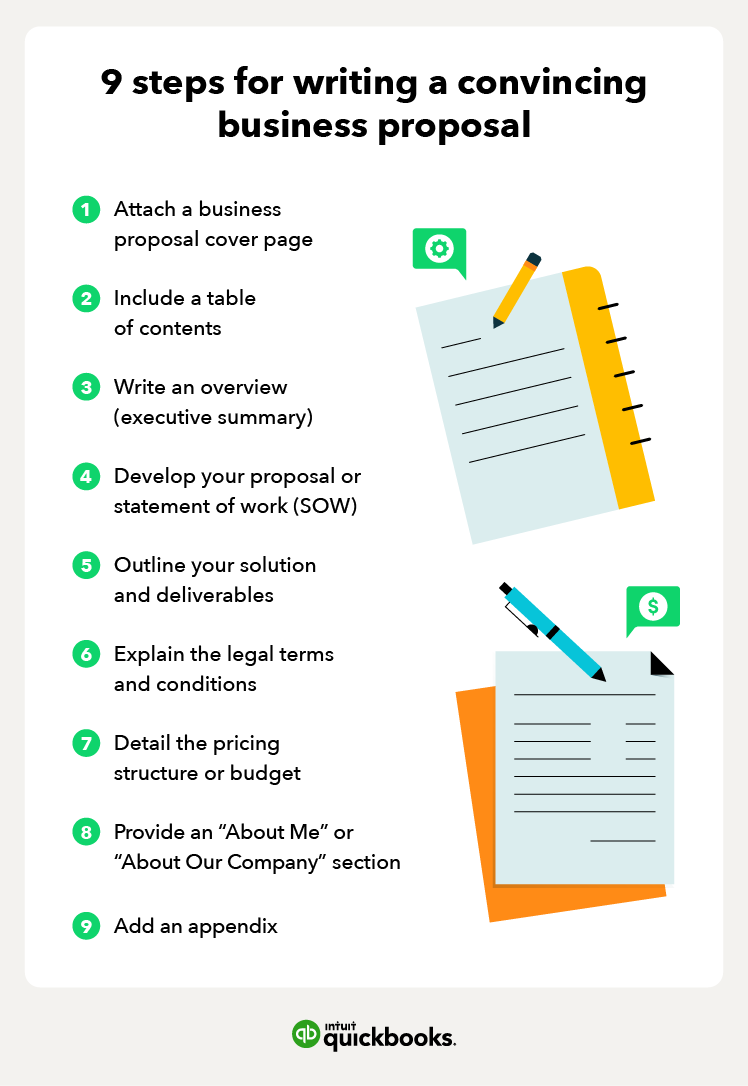
While the content of a proposal varies depending on the industry, the structural integrity of the document remains constant. From a business finance perspective, each section of the proposal should serve as a building block toward a final, logical conclusion: that your project is a sound financial bet.
The Executive Summary: Your Financial Vision
The executive summary is the most critical part of the document. Many stakeholders, particularly those in high-level financial positions, may only read this section. It should not be a summary of the entire document, but rather a high-level pitch of the financial opportunity. It must state clearly what you are offering, how much it will cost, and what the financial upside is for the recipient. If you cannot articulate the ROI in the first two paragraphs, you risk losing the interest of those who control the budget.
Detailed Budgeting and Pricing Models
The “Money” section of your proposal is where transparency becomes your greatest asset. Vague pricing is a red flag for any savvy business person. You should offer a detailed breakdown of costs, categorized by labor, materials, overhead, and any third-party expenses.
Furthermore, choosing the right pricing model can be a strategic move in itself:
-
Fixed-Fee Models: Provide certainty for the client’s budget but require you to have a very precise understanding of your own margins.
-
Performance-Based Models: These are highly attractive to investors because they align your profit with their success. If you save the company $100,000, you take a percentage of that savings.
-
Retainer Structures: These provide the proposal-writer with consistent cash flow, which is essential for long-term business stability.
Projecting Cash Flow and Milestones
A professional business proposal includes a timeline that is intrinsically linked to financial milestones. Instead of just listing dates, list “Value Delivery Dates.” Explain when the client can expect to see the first signs of revenue or cost-savings. In larger corporate proposals, this often includes a schedule for progress payments, ensuring that the project remains cash-flow positive for you while maintaining accountability for the client.

Market Validation and Competitive Financial Analysis
No business operates in a vacuum. To convince a client or an investor to part with their capital, you must prove that you understand the broader financial ecosystem. This requires a deep dive into market dynamics and a clear-eyed assessment of the competition.
Assessing Market Value and Penetration
In this section, you should utilize standard financial metrics such as Total Addressable Market (TAM), Serviceable Addressable Market (SAM), and Serviceable Obtainable Market (SOM). By demonstrating that you know exactly how large the financial pie is—and exactly which slice you intend to grab—you build confidence. Investors look for proposals that show a path to “scalability.” If your proposal outlines a business model that can double its revenue without doubling its costs, you have identified a high-margin opportunity that is difficult to ignore.
Pricing Strategies: Value-Based vs. Cost-Plus
Your proposal should subtly (or explicitly) explain why you have chosen your specific pricing strategy. A “cost-plus” strategy—where you take your costs and add a markup—is safe but often leaves money on the table. A “value-based” pricing strategy is often more lucrative. In a value-based model, you price your proposal based on the financial impact you create. If your work will generate $1 million in new business, a $100,000 fee is a bargain, regardless of how many hours it takes you to complete. Highlighting this logic within the proposal shifts the conversation from “expense” to “investment.”
Risk Management and Fiscal Responsibility
Every financial decision involves risk. One of the most common reasons business proposals are rejected is that the risks are perceived to outweigh the potential rewards. By proactively addressing these risks within your proposal, you demonstrate fiscal responsibility and maturity.
Identifying Financial Red Flags
A transparent proposal acknowledges potential hurdles—such as market volatility, supply chain disruptions, or regulatory changes—and provides a plan for each. This is known as a sensitivity analysis. By showing how your financial projections would hold up under “best-case,” “expected,” and “worst-case” scenarios, you prove that you are not just an optimist, but a disciplined financial strategist.
Scalability and Long-Term ROI
For investors especially, the proposal must answer the question: “What happens after the initial phase?” You should outline the potential for recurring revenue and long-term financial health. Will this project lead to follow-on contracts? Does it create an asset (like proprietary software or a loyal customer base) that adds to the company’s valuation? Proposals that focus on long-term wealth creation rather than short-term gains are more likely to secure significant funding.
The Art of the Financial Close
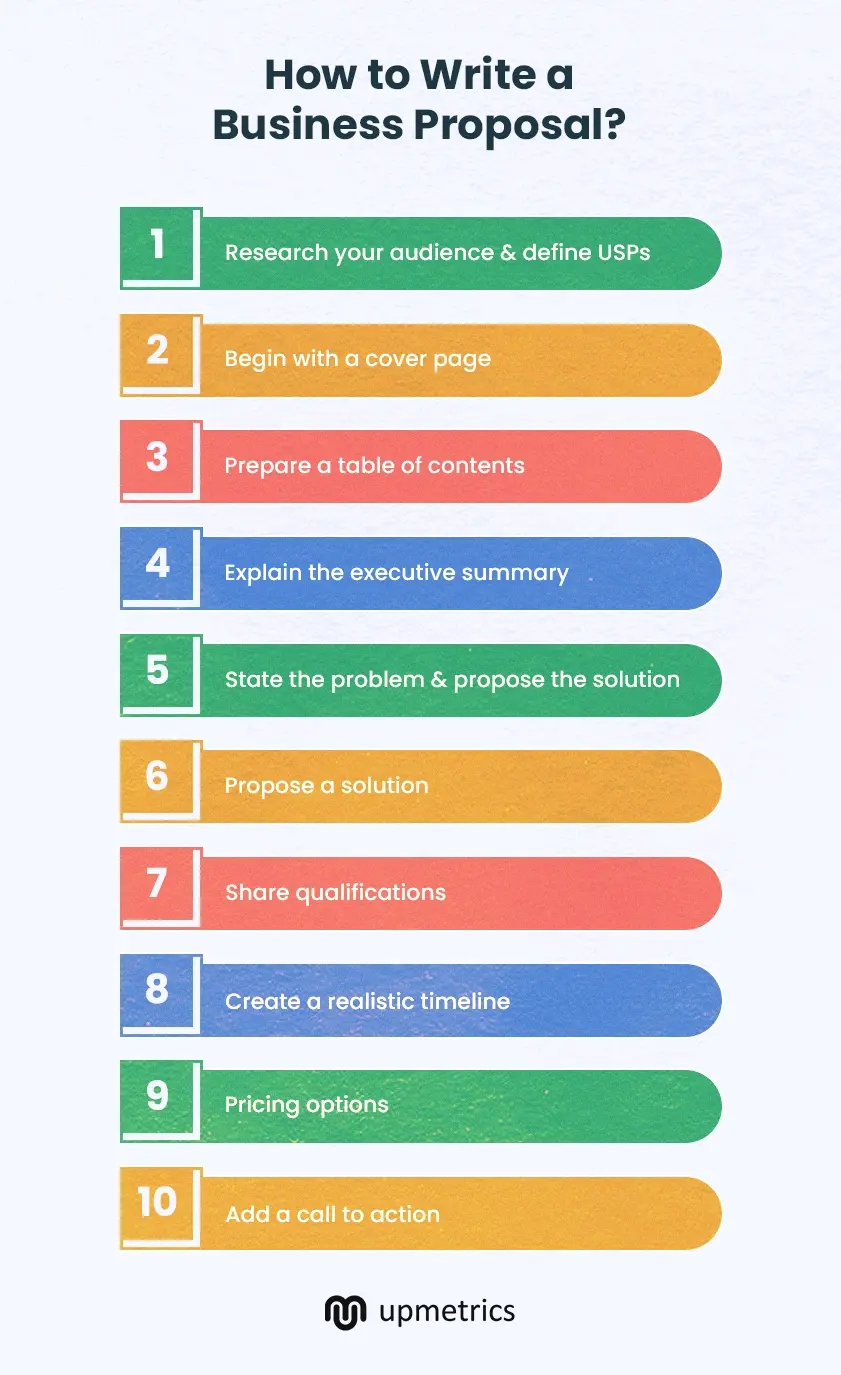
The final section of your business proposal should be a clear, unambiguous call to action that outlines the next steps for the financial agreement. This is where you move from the “what” and the “how” to the “when.”
Negotiation Tactics for Better Margins
A proposal is often the starting point for a negotiation. To protect your profit margins, consider including “tiered options.” By providing a “Basic,” “Professional,” and “Enterprise” level of service, you allow the client to feel in control of the budget while ensuring that you are compensated fairly for the value delivered. This psychological “anchoring” is a powerful tool in business finance; the highest-priced option makes the middle option seem like a conservative, fiscally responsible choice.
Finalizing the Financial Agreement
End the proposal with a clear path to the contract phase. Outline the terms of payment, the duration of the agreement, and any performance guarantees. By making the transition from “proposal” to “signed contract” as seamless as possible—perhaps by including a signature page or a link to a digital payment portal—you reduce the friction that often kills deals in the final hour.
In conclusion, creating a business proposal is a rigorous exercise in financial storytelling. It requires you to look at every aspect of your business through the lens of profitability and capital efficiency. By focusing on quantified problems, transparent budgeting, market validation, and risk mitigation, you transform a simple document into a powerful engine for income generation. A proposal written with a “Money” mindset does not just ask for a deal; it presents a financial opportunity that the recipient cannot afford to pass up.
aViewFromTheCave is a participant in the Amazon Services LLC Associates Program, an affiliate advertising program designed to provide a means for sites to earn advertising fees by advertising and linking to Amazon.com. Amazon, the Amazon logo, AmazonSupply, and the AmazonSupply logo are trademarks of Amazon.com, Inc. or its affiliates. As an Amazon Associate we earn affiliate commissions from qualifying purchases.