
In the modern economic landscape, the barrier to entry for entrepreneurship has never been lower. Historically, starting a business required significant “brick and mortar” investment—leasing physical space, purchasing inventory, and hiring a workforce before the first dollar of revenue was ever generated. Today, the most capital-efficient businesses are those that leverage the digital infrastructure already at our fingertips. When we ask, “What is the cheapest business to start?” the answer invariably points toward models that prioritize intellectual property, service-based labor, and asset-light operations.
The goal of starting a low-cost business is not merely to save money, but to minimize financial risk while maximizing the potential for high-margin returns. In the world of personal finance and business strategy, this is known as “bootstrapping.” By identifying niches where the primary investment is time rather than liquid capital, aspiring entrepreneurs can build sustainable income streams without the burden of debt or venture capital oversight.
Service-Based Models: The Zero-Capital Entry Point
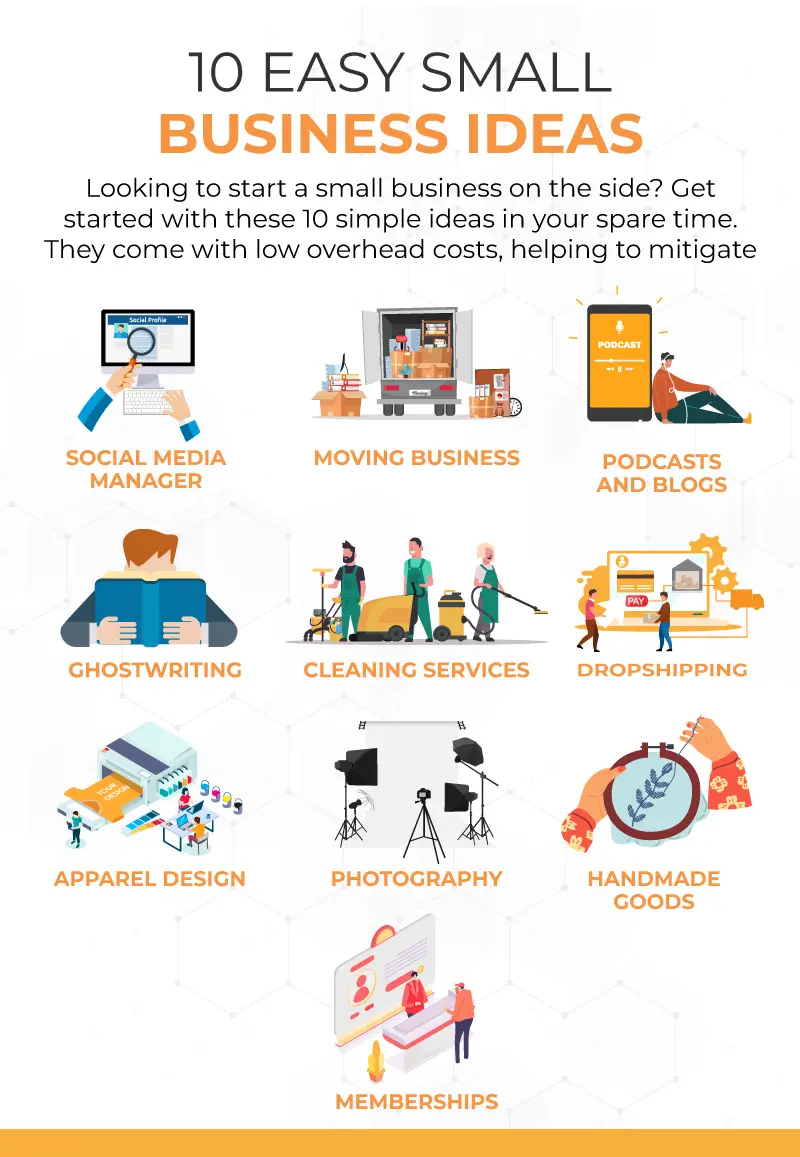
The cheapest business to start is one where you sell your existing skills. Because you are the primary asset, the “inventory” is your time and expertise, which costs nothing to acquire if you already possess the talent. This category of business represents the ultimate low-overhead model because it bypasses the need for manufacturing, shipping, and storage.
Professional Consulting and Freelancing
Consulting is arguably the lowest-cost business model in existence. Whether your expertise lies in financial planning, marketing strategy, human resources, or technical writing, the tools required are minimal. Usually, a laptop, a reliable internet connection, and a professional networking profile (such as LinkedIn) are the only prerequisites.
The financial beauty of consulting lies in its scalability. While it begins as a “time-for-money” trade-off, it can quickly evolve into a productized service. For example, a freelance bookkeeper can eventually sell standardized financial templates or online courses, turning their active service into a passive revenue stream. This transition increases the Return on Investment (ROI) of the business owner’s time.
Virtual Assistance and Specialized Administrative Support
As more companies move toward remote work and lean operations, the demand for specialized administrative support has surged. Starting a virtual assistant (VA) business requires virtually zero upfront capital. Modern businesses often outsource tasks like calendar management, data entry, and customer support to independent contractors to avoid the costs associated with full-time employees, such as benefits and office space.
For the entrepreneur, this provides a low-risk entry point into the business world. By focusing on high-value niches—such as executive support for CEOs or project management for creative agencies—a VA can command higher hourly rates, improving their profit margins from day one.
Content Creation and Digital Assets
While often dismissed as a hobby, content creation is a legitimate business model with incredibly low startup costs. The “Creator Economy” is built on the principle of building an audience first and monetizing later through sponsorships, affiliate marketing, or digital products.
Starting a blog, a newsletter (using platforms like Substack), or a YouTube channel involves negligible costs—often just the price of a domain name or basic recording equipment. The primary investment is consistent effort over time. From a financial perspective, this is a “long-tail” investment. The initial ROI is low, but as the library of content grows, it creates an evergreen asset that generates income 24/7 with zero additional production costs.
Asset-Light Commerce: Profit Without Inventory
If you prefer selling products over services, the cheapest route involves avoiding the traditional “buy low, sell high” inventory model. Traditional retail is capital-intensive because money is locked up in physical goods that may or may not sell. Low-cost commerce models solve this problem by shifting the inventory risk elsewhere.
Print-on-Demand (POD)
Print-on-demand is a retail model where you design products (like t-shirts, mugs, or posters) but only pay for the manufacturing once a customer makes a purchase. This eliminates the need for large upfront orders and warehouse space.
From a business finance perspective, POD is highly attractive because it creates a positive cash flow cycle. The customer pays you first, and you then use a portion of that payment to cover the fulfillment costs. The remaining balance is your profit. The only real costs involve setting up an online storefront (which can be done for a small monthly fee) and any marketing expenses you incur to drive traffic to your designs.
Digital Products and Software-as-a-Service (SaaS) “Lite”
Digital products—such as e-books, online courses, software plugins, or stock photography—are perhaps the most profitable items to sell. Once the product is created, the “marginal cost of reproduction” is zero. This means that selling 1,000 units costs exactly the same as selling one unit.
For those with a background in finance or technical fields, creating “SaaS Lite” tools—such as complex Excel calculators, specialized budget trackers, or Notion templates—is a high-margin business. These products solve specific pain points for consumers and require no physical logistics, making them an ideal choice for an entrepreneur looking to start with a few hundred dollars or less.
Dropshipping with a Focus on Niche Markets
While dropshipping has become a crowded field, it remains one of the cheapest ways to enter the e-commerce space. In this model, you act as the storefront for a manufacturer. When a customer orders from your site, the manufacturer ships the product directly to the consumer.
The key to financial success in dropshipping is not to compete on price—which leads to “race to the bottom” margins—but to focus on high-ticket, niche items or unique branding. By focusing on a specific lifestyle or problem, you can maintain healthy margins while keeping your overhead limited to website hosting and digital advertising.
Navigating the Financial Lifecycle of a Low-Cost Startup
Starting a business cheaply does not mean it should be managed haphazardly. In fact, when capital is limited, financial discipline becomes even more critical. Understanding the lifecycle of a low-cost startup is essential for turning a side hustle into a sustainable enterprise.
Managing Initial Outlays and Bootstrapping
The “Lean Startup” methodology suggests that entrepreneurs should focus on the Minimum Viable Product (MVP). Instead of spending thousands on a high-end website, use a free or low-cost template. Instead of hiring a full-time assistant, use automation tools.
Bootstrapping is the practice of funding your business growth through its own revenue. This requires a disciplined approach to personal finance. Every dollar earned in the early stages should be scrutinized: should it be paid out as a dividend to the owner, or should it be reinvested into software that saves time or marketing that brings in new leads? In the beginning, the cheapest business stays cheap because the owner refuses to take on unnecessary “lifestyle creep” within the business accounts.
The Importance of a Lean Financial Structure
A low-cost business can quickly become expensive if you lose track of “subscription bloat.” It is easy to sign up for dozens of $20-a-month SaaS tools for email marketing, SEO, design, and accounting. While each seems small, they can aggregate into a significant monthly burn rate.
To keep a business truly cheap, entrepreneurs must regularly audit their recurring expenses. Use the “rule of three”: if a tool doesn’t save you three times its cost in time or generate three times its cost in revenue, it may not be necessary for your current stage of growth. Keeping the financial structure lean ensures that the “break-even point”—the moment your revenue equals your expenses—is reached as quickly as possible.
Scaling Without Breaking the Bank
The ultimate challenge of a low-cost business is moving from a solo operation to a scalable company without losing the low-overhead advantage. Scaling usually requires more hands or more sophisticated systems, both of which cost money.
Reinvesting Profits vs. Seeking External Capital
One of the most significant financial decisions a small business owner will make is whether to take on debt to scale. For a business that started “cheap,” taking on a high-interest loan or giving away equity can feel counter-intuitive.
The most financially sound way to scale a low-cost business is through “organic scaling.” This involves using the profits from the first ten clients to fund the marketing for the next fifty. It may be slower than using a massive injection of venture capital, but it allows the founder to retain 100% ownership and ensures that the business model is actually profitable before it becomes large.
Leveraging Technology to Minimize Future Costs
As the business grows, the cost of human labor becomes the largest expense. To keep the business “cheap” even at scale, smart entrepreneurs lean heavily into automation. AI tools for customer service, automated email sequences for sales, and algorithmic ad buying allow a single person to do the work that once required an entire department.
By focusing on “operational efficiency,” a business can increase its revenue significantly while keeping its fixed costs relatively flat. This leads to an “operating leverage” where profits grow at a faster rate than expenses—the holy grail of business finance.

The Financial Mindset of the Modern Entrepreneur
The cheapest business to start isn’t necessarily the one that costs the least amount of cents; it is the one that offers the highest probability of profitability with the lowest amount of financial exposure. Whether you choose to launch a consulting firm, a digital product store, or a service-based agency, the underlying principle remains the same: protect your downside and maximize your upside.
In today’s economy, “cheap” does not mean “low quality.” It means “efficient.” By utilizing the digital tools available and focusing on high-margin, low-overhead models, anyone with a laptop and a marketable skill can transition from an employee to a business owner. The true cost of starting a business in the modern age is no longer measured in dollars, but in the courage to begin and the discipline to manage your finances wisely.
aViewFromTheCave is a participant in the Amazon Services LLC Associates Program, an affiliate advertising program designed to provide a means for sites to earn advertising fees by advertising and linking to Amazon.com. Amazon, the Amazon logo, AmazonSupply, and the AmazonSupply logo are trademarks of Amazon.com, Inc. or its affiliates. As an Amazon Associate we earn affiliate commissions from qualifying purchases.