
The transition from being a disciplined saver to an active investor is one of the most critical shifts in a person’s financial journey. While the act of saving—setting aside a portion of your income and living below your means—is the fundamental building block of wealth, keeping that capital stagnant can be a missed opportunity. Inflation steadily erodes the purchasing power of cash sitting in a standard low-interest savings account. To truly build long-term security and generational wealth, you must deploy your saved money into vehicles that offer growth, income, or strategic advantages.
Deciding what to do with your saved money requires a balanced approach that considers your risk tolerance, time horizon, and current financial obligations. The following guide outlines a comprehensive hierarchy of capital allocation, moving from foundational security to sophisticated wealth-building strategies.
Establishing a Solid Financial Foundation
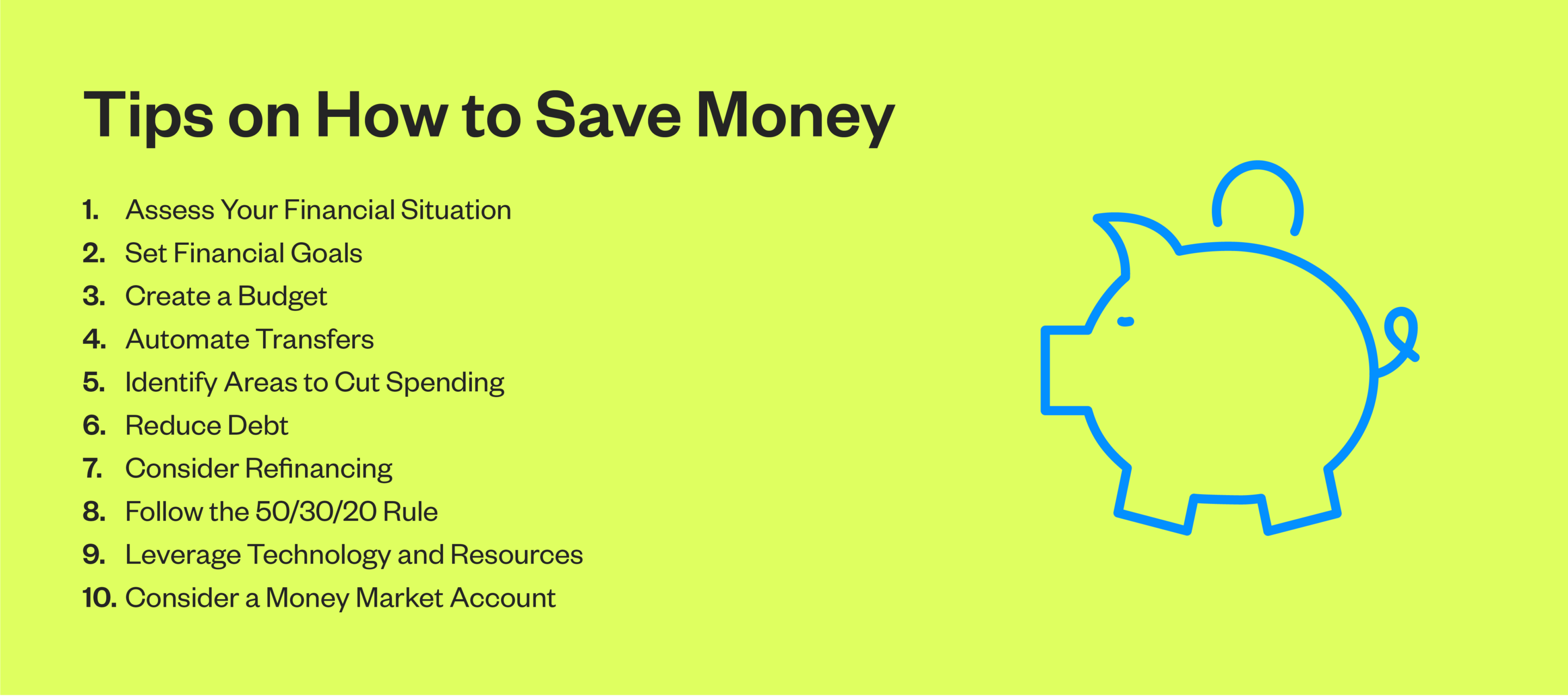
Before exploring high-growth investments or speculative assets, it is imperative to ensure that your financial base is impenetrable. Moving too quickly into volatile markets without a safety net can lead to forced liquidations during market downturns, which is a primary cause of long-term financial loss.
High-Yield Savings and Liquidity
The first destination for any saved money should be a High-Yield Savings Account (HYSA) or a Money Market Account (MMA). Unlike traditional checking or savings accounts that offer negligible interest, HYSAs currently provide rates that can help your cash keep pace with or even slightly exceed inflation. This capital should constitute your emergency fund—typically three to six months of essential living expenses. The goal here is not massive growth but liquidity and capital preservation. Having this “sleep-at-night” fund ensures that if an unexpected medical expense or job loss occurs, you will not have to sell your investments at a loss.
High-Interest Debt Elimination
Mathematically, paying off high-interest debt is equivalent to a guaranteed, risk-free return on your investment. If you have credit card debt with an 18% APR, every dollar you use to pay down that balance provides an 18% return. There is no traditional market investment that can reliably and safely outperform that rate of return. Before allocating savings toward the stock market, focus on the “Debt Avalanche” method—targeting the highest interest rates first—to stop the bleeding of your net worth.
Maximizing Employer Contributions
If you are employed and your company offers a 401(k) or 403(b) match, this is the most effective use of your saved money. An employer match is essentially a 100% return on your investment before the money even hits the market. Failing to contribute enough to capture the full match is leaving “free money” on the table. This should be a top priority once your high-interest debt is managed and your basic emergency fund is established.
Strategic Investing for Long-Term Growth
Once the foundation is secure, the focus shifts to wealth accumulation. This phase involves putting your money to work in the global economy, allowing compound interest to do the heavy lifting over decades.
Tax-Advantaged Retirement Accounts
Beyond the employer match, you should look toward Individual Retirement Accounts (IRAs). The choice between a Traditional IRA and a Roth IRA depends on your current tax bracket versus your expected bracket in retirement. For many, the Roth IRA is a powerful tool because it allows saved money to grow tax-free, and qualified withdrawals in retirement are also tax-free. If you have already maxed out your IRA and 401(k), and you have a high-deductible health plan, contributing to a Health Savings Account (HSA) is a “triple tax-advantaged” strategy: contributions are tax-deductible, growth is tax-free, and withdrawals for medical expenses are tax-free.
Low-Cost Index Funds and ETFs
For the majority of investors, the most reliable way to build wealth in the stock market is through low-cost index funds or Exchange-Traded Funds (ETFs) that track broad market indices like the S&P 500 or the Total Stock Market. These instruments provide instant diversification across hundreds or thousands of companies, significantly reducing the “single-stock risk” associated with picking individual winners. By consistently investing your saved money into these funds—a strategy known as dollar-cost averaging—you capture the long-term upward trajectory of the economy without the need for constant market timing.
Dividend Growth Investing
For those interested in creating a stream of passive income, dividend growth investing is a compelling path. This involves purchasing shares in “Dividend Aristocrats” or “Dividend Kings”—companies that have a long history of not only paying but increasing their dividends every year. Reinvesting these dividends back into more shares creates a powerful compounding effect, eventually providing a cash flow that can cover living expenses without requiring the sale of the underlying principal.
Diversifying into Real Estate and Alternative Assets
As your savings grow, diversification becomes a primary defense against market volatility. Moving into assets that are not perfectly correlated with the stock market can smooth out your returns and provide unique tax advantages.
Real Estate Investment Trusts (REITs)
If you want exposure to the real estate market without the headache of being a landlord, REITs are an excellent option. These are companies that own, operate, or finance income-producing real estate across various sectors (residential, commercial, industrial). By law, REITs must distribute at least 90% of their taxable income to shareholders as dividends. This makes them a high-yield option for your saved money, accessible through any standard brokerage account.
Physical Real Estate and Crowdfunding
For those with a higher amount of saved capital, purchasing physical rental property offers benefits such as leverage (using a mortgage to control a larger asset), depreciation tax breaks, and direct rental income. However, if the barrier to entry for a physical property is too high, real estate crowdfunding platforms allow you to pool your money with other investors to fund specific commercial or residential developments. This provides the benefits of real estate ownership with a much lower capital requirement and more passive management.
Alternative Assets and Commodities
In a well-rounded portfolio, a small percentage (typically 5-10%) may be allocated to alternative assets. This includes gold and precious metals, which historically act as a hedge against currency devaluation. It also includes more modern alternatives like private equity or venture capital through platforms designed for accredited and non-accredited investors. While these carry higher risk, they offer the potential for uncorrelated returns when traditional markets are flat.
Investing in Yourself and Skill Acquisition
The greatest asset you will ever own is your ability to generate income. While financial markets provide passive growth, “human capital” investments often provide the highest internal rate of return.
Education and Certifications
Using saved money to acquire a new certification, a specialized degree, or a high-value skill (such as data science, specialized engineering, or advanced management) can lead to a significant increase in your primary income. If spending $5,000 on a certification leads to a $15,000 annual salary increase, that is a 300% return in the first year alone—a feat rarely matched by the stock market.
Entrepreneurial Capital and Side Hustles
Saved money can serve as the “seed capital” for a business venture. Whether it is launching an e-commerce brand, starting a consulting firm, or buying an existing small business, entrepreneurship offers an uncapped upside. Using your savings to fund the initial overhead of a side hustle allows you to build an additional income stream that diversifies your lifestyle away from total reliance on a single employer.
Tax Optimization and Portfolio Maintenance
The final stage of managing saved money is the ongoing maintenance of your portfolio. It is not just about how much you make, but how much you keep after taxes and fees.
Tax-Loss Harvesting
In taxable brokerage accounts, you can use a strategy called tax-loss harvesting. This involves selling investments that are currently at a loss to offset capital gains realized elsewhere in your portfolio. This can reduce your overall tax liability, effectively leaving more of your saved money working for you rather than going to the government.
Rebalancing and Risk Management
As different assets grow at different rates, your portfolio will naturally drift away from your original intent. For example, if your stocks perform exceptionally well, they may comprise 80% of your portfolio when you intended them to be 60%. Periodic rebalancing—selling a portion of the outperforming assets and buying more of the underperforming ones—forces you to “buy low and sell high” while maintaining your desired risk profile.

The Role of Financial Tools
Utilizing modern financial tools can streamline this entire process. From automated robo-advisors that handle rebalancing and tax-loss harvesting to sophisticated budgeting apps that track your net worth across all asset classes, technology has made high-level financial management accessible to everyone. Use these tools to maintain a bird’s-eye view of your progress and ensure that every dollar of your saved money has a specific, productive purpose.
By following this structured approach—securing your foundation, investing for growth, diversifying into tangible assets, and constantly upgrading your own skills—you transform your saved money from a static pile of cash into a dynamic engine for financial freedom.
aViewFromTheCave is a participant in the Amazon Services LLC Associates Program, an affiliate advertising program designed to provide a means for sites to earn advertising fees by advertising and linking to Amazon.com. Amazon, the Amazon logo, AmazonSupply, and the AmazonSupply logo are trademarks of Amazon.com, Inc. or its affiliates. As an Amazon Associate we earn affiliate commissions from qualifying purchases.