
Budgeting is often perceived as a restrictive practice—a financial straitjacket designed to limit enjoyment and enforce a life of frugality. However, in the realm of sophisticated personal finance, a budget is not a barrier; it is a blueprint. It is the tactical roadmap that transforms earned income into lasting wealth. To budget specifically for the purpose of saving requires a shift from passive observation of one’s bank balance to active, intentional allocation of every dollar.
The objective of a savings-focused budget is to maximize the gap between what you earn and what you spend, then strategically funnel that surplus into vehicles that provide liquidity, security, and growth. This guide explores the methodologies, psychological frameworks, and optimization strategies necessary to master the art of budgeting for wealth.
The Foundations of a Purpose-Driven Budget
Before selecting a specific budgeting math, one must establish the conceptual foundation of why the budget exists. Most people fail at saving because their budget is reactive—they look at what they spent last month and try to do “better.” A professional approach is proactive, treating savings as a non-negotiable expense rather than a residual afterthought.
Defining Your Savings Objectives
A budget without a goal is merely data entry. To save effectively, you must categorize your objectives into three distinct horizons:
-
The Liquidity Horizon: This involves the creation of an emergency fund. Conventional wisdom suggests three to six months of expenses, but in a volatile economy, aiming for twelve months provides a psychological and tactical advantage.
-
The Mid-Term Horizon: These are anticipated costs occurring within one to five years, such as a real estate down payment, a vehicle purchase, or a significant life event.
-
The Wealth Horizon: This is long-term capital intended for the markets. This money is not meant to be “spent” but to be “deployed” to generate passive returns through compounding.
The Mindset Shift: Pay Yourself First
The most critical transition in high-level budgeting is the “Pay Yourself First” principle. In a standard household budget, individuals pay the landlord, the utility company, and the grocer first, then save whatever remains. In a wealth-building budget, the savings contribution is the very first “bill” paid upon the receipt of income. By treating your future self as your most important creditor, you force your lifestyle to adapt to the remaining balance, rather than forcing your savings to adapt to your lifestyle.
Proven Methodologies for Systematic Saving
There is no singular “correct” way to budget, but there are several frameworks that have proven effective for different income levels and psychological profiles. Selecting the right one depends on your need for granular control versus ease of maintenance.
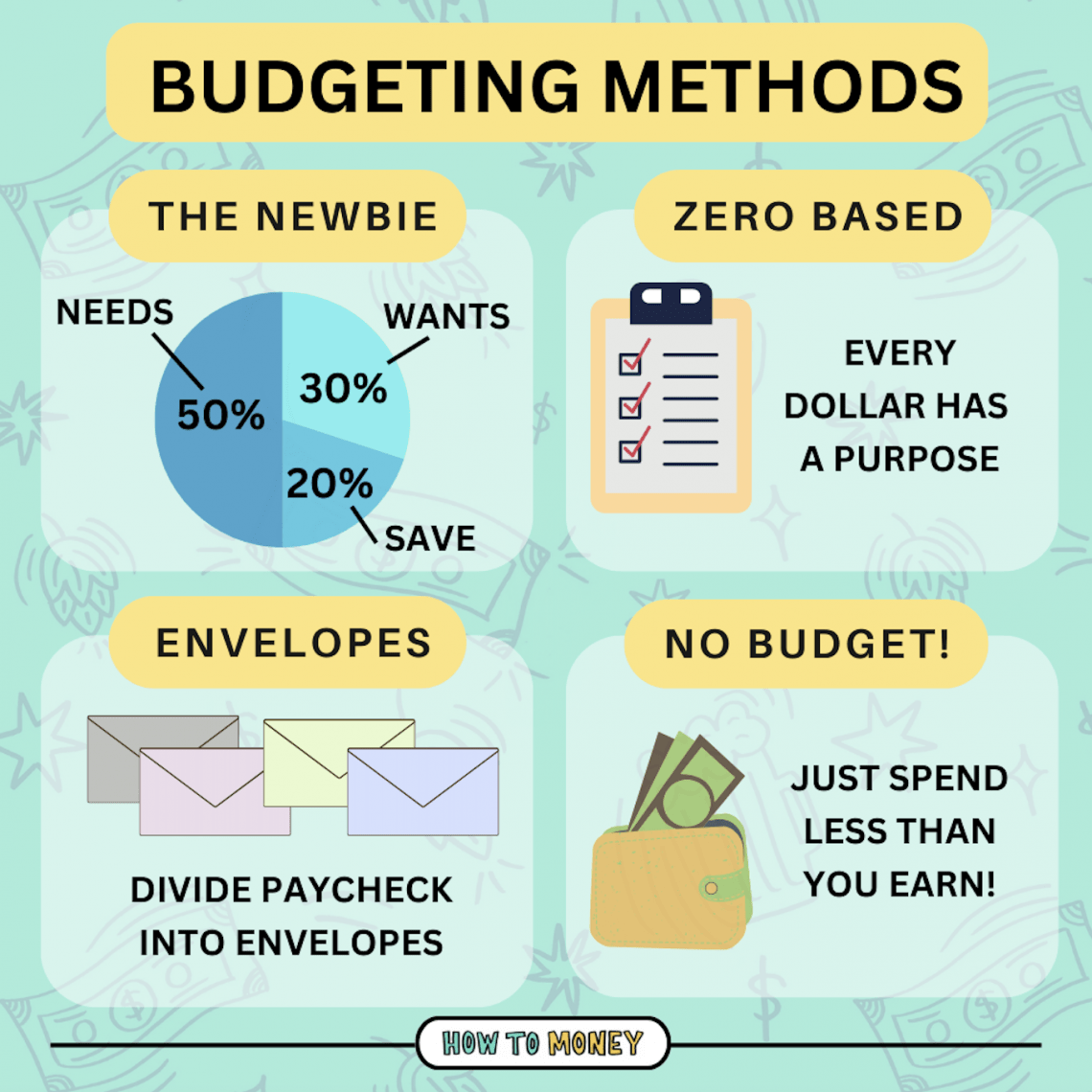
The 50/30/20 Rule: The Balanced Approach
Popularized by Senator Elizabeth Warren, this rule is an excellent starting point for those looking for a simple, sustainable structure. It divides after-tax income into three categories:
-
50% for Needs: Essential costs like housing, insurance, groceries, and utilities.
-
30% for Wants: Discretionary spending, including dining out, travel, and hobbies.
-
20% for Savings and Debt Repayment: This is the core engine of your wealth.
For those serious about accelerated saving, the “inverted” 50/30/20 rule is often recommended, where the 20% and 30% categories are swapped, prioritizing a 30% savings rate.
Zero-Based Budgeting: The Precision Model
Zero-based budgeting (ZBB) requires that every single dollar of income be assigned a specific job. If you earn $5,000 in a month, your budget should account for exactly $5,000 across expenses, savings, and investments, leaving “zero” dollars unallocated at the end of the month.
ZBB is highly effective because it eliminates “leakage”—those small, unmonitored transactions that accumulate and erode your savings capacity. By giving every dollar a destination before the month begins, you prevent the phenomenon of wondering where your money went.
The “Anti-Budget” or Percentage-Based Method
For high-earners or those who find detailed tracking tedious, the anti-budget focuses exclusively on the savings rate. You decide on a target percentage (e.g., 25%) and automate that amount directly into savings and investment accounts the moment you are paid. As long as that 25% is secured, you are free to spend the remaining 75% however you wish. This method prioritizes results over process and is highly effective for maintaining a consistent wealth-building trajectory.
Analyzing and Optimizing Your Cash Flow
To increase the amount you save, you must either increase your income or optimize your expenses. While income growth is vital, expense optimization is the immediate lever you can pull to generate higher savings margins.
Identifying and Eliminating Subscription Fatigue
In the modern digital economy, many consumers suffer from “subscription creep.” Small, recurring monthly payments for streaming services, software, niche publications, and memberships can quietly drain hundreds of dollars from a budget. A quarterly audit of bank statements is essential. If a service has not provided significant value in the last 30 days, it should be liquidated. This “found money” should then be redirected into a high-yield savings account or a brokerage.
The Distinction Between Frugality and Value-Based Spending
Effective budgeting is not about spending as little as possible; it is about maximizing the value of every dollar spent. Frugality often leads to “false economies”—buying a cheap pair of shoes that falls apart in six months, requiring another purchase. Value-based spending involves investing in quality items that last longer or provide higher utility, thereby reducing the long-term cost per use. When you reduce spending on things that don’t matter, you free up capital for the things that do.
Negotiating Fixed Costs
Many “fixed” costs are more flexible than they appear. Insurance premiums, internet packages, and even cell phone plans can often be negotiated downward. Calling your providers once a year to ask for loyalty discounts or to match a competitor’s rate can yield substantial annual savings with minimal effort. These small victories, when aggregated, represent a significant boost to your monthly savings potential.
Engineering an Automated Financial Ecosystem
The greatest enemy of a budget is human willpower. Willpower is a finite resource that fluctuates based on stress, fatigue, and emotion. To ensure your budget succeeds over the long term, you must remove the need for willpower through automation.
The Role of High-Yield Savings Accounts (HYSA)
Keeping your savings in a standard checking account or a low-interest traditional savings account is a strategic error. Inflation erodes the purchasing power of idle cash. By utilizing a High-Yield Savings Account (HYSA), you can earn significantly higher interest rates while maintaining liquidity. Furthermore, keeping your “savings” in a separate institution from your “spending” creates a psychological barrier that reduces the temptation to dip into those funds for non-emergencies.
Sinking Funds for Irregular Expenses
One of the most common budget-killers is the “unexpected” expense that should have been expected—annual car registrations, holiday gifts, or quarterly insurance premiums. A sophisticated budget uses “sinking funds.” These are sub-savings accounts where you contribute a small amount each month toward a specific future expense. By the time the bill arrives, the money is already there, preventing you from having to raid your primary savings or use high-interest credit.
Automating the Surge
Modern banking tools allow for sophisticated automation. You can set your accounts to automatically transfer a specific amount to your brokerage account on payday, or use “round-up” features that invest the change from every transaction. The goal is to create a system where money flows toward your goals by default, requiring a conscious effort to stop it, rather than a conscious effort to start it.
Behavioral Finance: Overcoming Psychological Barriers
Even the most mathematically perfect budget will fail if it does not account for human psychology. Understanding the behavioral triggers that lead to overspending is essential for maintaining a high savings rate.
Combating Lifestyle Creep
As careers progress and incomes rise, there is a natural tendency to increase one’s standard of living proportionally. This is known as lifestyle creep. To budget effectively to save, one must practice “stealth wealth” or “relative frugality.” When you receive a raise or a bonus, a significant portion (e.g., 70% or more) should be diverted directly into savings or debt repayment before it ever touches your lifestyle. By maintaining a standard of living that is one or two steps below your actual income level, you create an enormous engine for wealth creation.
The Power of Delayed Gratification
In an era of one-click purchasing and instant delivery, the ability to delay gratification is a competitive advantage. Implementing a “72-hour rule” for all non-essential purchases over a certain dollar amount can drastically reduce impulse spending. Often, the neurological “itch” to buy fades after three days, and the realization that the item is not a necessity becomes clear.

Monitoring and Iteration
A budget is a living document, not a static monument. It requires monthly review and adjustment. Life circumstances change—rent increases, income fluctuates, and goals evolve. A professional budgeter spends at least thirty minutes each month reviewing the previous month’s performance and making tactical adjustments for the next. This habit of constant iteration ensures that the budget remains relevant and that the individual remains accountable to their long-term financial vision.
By treating budgeting as a strategic exercise in capital allocation rather than a restrictive chore, you position yourself to capture opportunities that others miss. Saving is not about deprivation; it is about buying your future freedom. Through disciplined methodology, ruthless optimization, and automated systems, anyone can master their cash flow and build a foundation of enduring financial security.
aViewFromTheCave is a participant in the Amazon Services LLC Associates Program, an affiliate advertising program designed to provide a means for sites to earn advertising fees by advertising and linking to Amazon.com. Amazon, the Amazon logo, AmazonSupply, and the AmazonSupply logo are trademarks of Amazon.com, Inc. or its affiliates. As an Amazon Associate we earn affiliate commissions from qualifying purchases.