
Determining exactly how much of your income should be set aside each year is one of the most pivotal decisions in personal finance. It is the foundation upon which your future lifestyle, your ability to weather emergencies, and your eventual retirement are built. However, the answer is rarely a single, universal number. Financial landscapes vary wildly based on age, income level, geographic location, and individual long-term goals. While general rules of thumb provide an excellent starting point, a truly effective savings strategy requires a nuanced understanding of economic principles and personal priorities.
In an era of fluctuating inflation and shifting job markets, the concept of saving has evolved from a passive habit into an active strategy for wealth preservation and growth. To build a resilient financial future, you must move beyond the “whatever is left over” approach and transition into a disciplined, percentage-based model that prioritizes your future self.
The Fundamental Benchmarks for Annual Savings
For those seeking a baseline, several economic frameworks offer a roadmap for annual savings. These benchmarks are designed to balance your current quality of life with the necessity of long-term wealth accumulation.
The 50/30/20 Rule
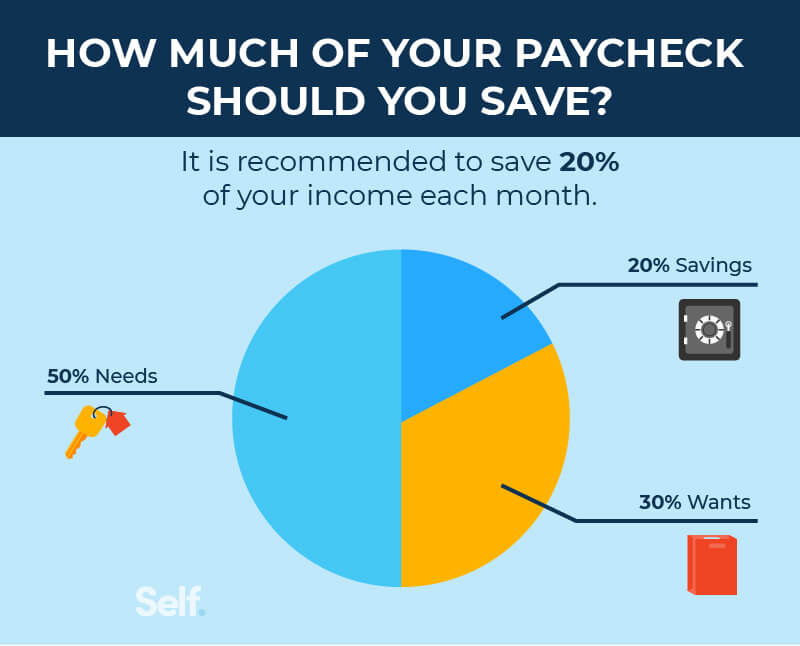
One of the most popular and accessible frameworks is the 50/30/20 rule. Under this model, 50% of your after-tax income goes toward “needs” (housing, utilities, groceries, transportation), 30% toward “wants” (entertainment, dining out, hobbies), and 20% toward “savings and debt repayment.”
Applying this rule suggests that you should aim to save 20% of your take-home pay every year. This 20% should be split between building an emergency fund, contributing to retirement accounts, and investing in brokerage accounts. For many, hitting the 20% mark represents the “gold standard” of personal finance, as it provides enough cushion to build substantial wealth over a 30-year career.
Age-Based Savings Milestones
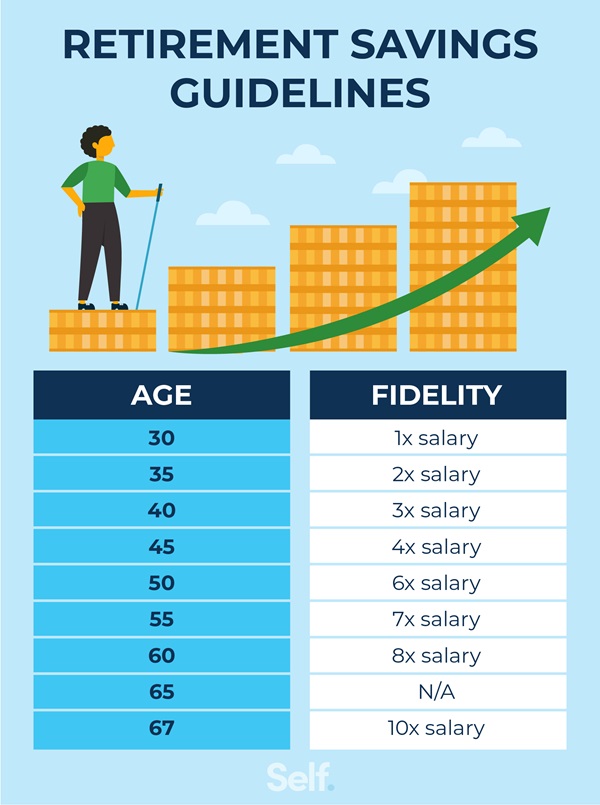
Another way to gauge your progress is through age-based milestones. While these are not strict laws, they serve as useful barometers for whether your annual savings rate is sufficient. Financial experts often suggest the following targets for total retirement savings:
-
By Age 30: Have the equivalent of one year’s salary saved.
-
By Age 40: Have three times your annual salary saved.
-
By Age 50: Have six times your annual salary saved.
-
By Age 60: Have eight times your annual salary saved.
To hit these milestones, your annual savings rate needs to be consistent. If you start in your early 20s, a 15% savings rate might be sufficient. However, if you begin your savings journey in your late 30s or 40s, you may need to save 30% to 40% of your annual income to catch up.
The 15% Retirement Baseline
If the 20% goal feels overwhelming, many financial planners recommend a minimum of 15% specifically for retirement. This figure assumes you will be invested in a diversified portfolio of stocks and bonds, allowing compound interest to do the heavy lifting over several decades. This 15% includes any employer matching contributions, such as those found in a 401(k) plan. If your employer matches 5% and you contribute 10%, you have effectively reached the 15% threshold.
Factors That Influence Your Personal Savings Target
While percentages offer a helpful guide, your specific life circumstances will dictate whether you should save more or less than the average. Personal finance is, by definition, personal.
Debt-to-Income Ratio
The presence of high-interest debt, such as credit card balances or private student loans, significantly alters your savings strategy. In the hierarchy of financial health, paying off high-interest debt (usually defined as anything above 7-8%) is mathematically equivalent to a guaranteed return on investment. Therefore, if you are carrying significant debt, your “savings” per year should primarily be directed toward debt liquidation before you focus on building a large cash surplus.
Cost of Living and Geographic Arbitrage
Where you live plays a massive role in your ability to save. A $100,000 salary in a high-cost-of-living (HCOL) area like New York City or San Francisco may only allow for a 10% savings rate after accounting for exorbitant rent and taxes. Conversely, the same salary in a low-cost-of-living (LCOL) area could allow for a 40% savings rate. Understanding your local economy is vital for setting realistic expectations. If your fixed costs are too high to allow for a 20% savings rate, you may need to look at “geographic arbitrage”—moving to a more affordable area—or increasing your income through career advancement or side hustles.
Career Trajectory and Volatility
Those in stable, high-demand professions (such as healthcare or government) may feel comfortable saving at a steady 15-20% rate. However, individuals in volatile industries, such as tech startups, freelance creative work, or commission-based sales, should aim for a higher annual savings rate during “lean years.” If your income is unpredictable, building a larger-than-average emergency fund (6-12 months of expenses) becomes a prerequisite before focusing on long-term investment goals.
Strategies to Maximize Your Annual Savings Rate
Once you have identified your target, the challenge becomes execution. Human psychology often works against the act of saving, as we are hardwired for immediate gratification. Overcoming this requires structural changes to how you handle money.
Automating the “Pay Yourself First” Philosophy
The most successful savers do not save what is left over at the end of the month; they save first and spend the rest. This is known as “paying yourself first.” By setting up an automatic transfer from your paycheck directly into a savings or investment account, you remove the element of choice. When the money never hits your checking account, you are less likely to miss it, and your lifestyle naturally adjusts to the remaining balance.
Utilizing Tax-Advantaged Accounts
To get the most out of every dollar you save, you must prioritize tax-advantaged accounts. These include:
-
401(k) or 403(b): Contributions are often made pre-tax, reducing your taxable income for the year.
-
IRA (Traditional or Roth): Traditional IRAs offer tax-deferred growth, while Roth IRAs offer tax-free withdrawals in retirement.
-
Health Savings Account (HSA): If you have a high-deductible health plan, an HSA offers a triple tax advantage: contributions are tax-deductible, growth is tax-free, and withdrawals for medical expenses are tax-free.
By maximizing these accounts, you effectively increase your savings rate through tax avoidance, allowing more of your money to stay in your pocket rather than going to the IRS.
The Role of Side Hustles and Passive Income
In a stagnant wage environment, sometimes the only way to significantly increase your annual savings is to increase your total income. Side hustles—ranging from consulting and freelancing to e-commerce and rental properties—provide “extra” money that can be directed entirely toward savings. Because this income is outside of your primary budget for “needs,” it can be a powerful tool for hyper-accelerating your path to financial independence.
Navigating Common Financial Trade-offs
The journey to saving a specific amount per year is often fraught with difficult choices. You cannot fund every goal simultaneously, so prioritization is key.
Saving vs. Investing
There is a distinct difference between saving (keeping money in liquid, low-risk accounts) and investing (buying assets that have the potential to appreciate). For your annual goals, you must balance the two. You “save” for short-term needs like an emergency fund or a down payment on a house. You “invest” for long-term goals like retirement. If you save too much in cash, you lose purchasing power to inflation. If you invest too much, you may be forced to sell assets at a loss during a market downturn to cover an emergency. A healthy annual plan includes contributions to both.
The Emergency Fund: The Essential Safety Net
Before you worry about hitting a 20% investment target, you must establish an emergency fund. Most experts recommend three to six months of essential expenses. This fund acts as insurance for your life. Without it, a single car repair or medical bill could force you into high-interest debt, undoing years of disciplined saving. Your first year of focused saving should be dedicated almost entirely to this safety net.
Combating Lifestyle Inflation
As your career progresses and your income increases, the “hedonic treadmill” or lifestyle inflation becomes the greatest threat to your savings rate. When you get a 10% raise, it is tempting to move into a nicer apartment or buy a newer car. However, the most effective way to build wealth is to keep your expenses stable while your income rises. If you can commit to saving 50% of every raise you receive, your annual savings rate will grow exponentially without you ever feeling “deprived.”
Reevaluating Your Savings Plan for Long-Term Growth
A savings plan is not a “set it and forget it” document. It is a living strategy that should be audited at least once a year.
The Power of Compound Interest
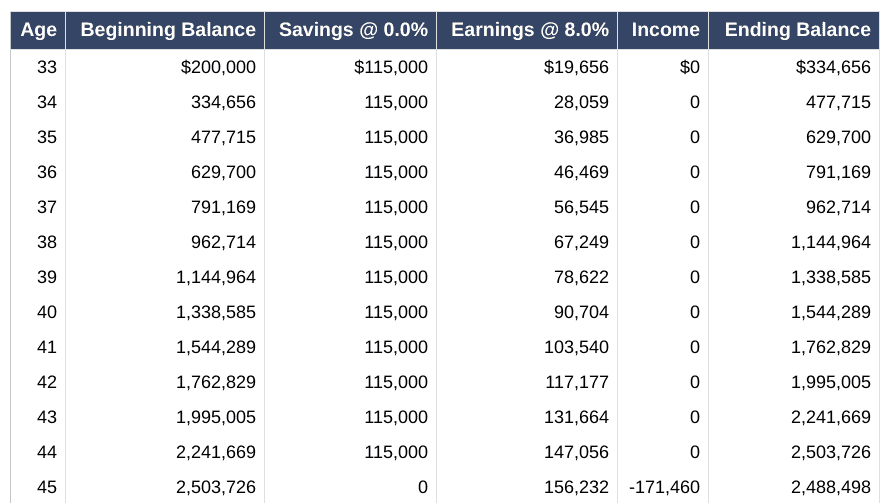
To stay motivated, it is helpful to look at the math of compound interest. A person who saves $10,000 a year starting at age 25 and stops at age 35 will often have more money at retirement than someone who starts saving $10,000 a year at age 35 and continues until they are 65. This “early bird” advantage highlights why the amount you save per year is important, but the consistency and timing are even more critical.
Annual Financial Audits
Every January, review your previous year’s performance. Did you hit your 15% or 20% goal? If not, where did the leak occur? Check your subscriptions, your dining habits, and your insurance premiums. Often, a few hours of administrative work can “find” an extra 2% to 3% of your income that can be redirected toward your savings goals for the coming year.
Ultimately, the question of how much you should save per year is a question of what kind of future you want to buy. By aiming for a baseline of 20%, utilizing tax-advantaged accounts, and staying vigilant against lifestyle inflation, you can transform your income into a powerful engine for long-term financial freedom. Savings is not about restriction; it is about providing yourself with options, security, and the ability to live life on your own terms.
aViewFromTheCave is a participant in the Amazon Services LLC Associates Program, an affiliate advertising program designed to provide a means for sites to earn advertising fees by advertising and linking to Amazon.com. Amazon, the Amazon logo, AmazonSupply, and the AmazonSupply logo are trademarks of Amazon.com, Inc. or its affiliates. As an Amazon Associate we earn affiliate commissions from qualifying purchases.