
In the modern economic landscape, saving money has transitioned from a simple habit of tucking away spare change into a sophisticated discipline of financial optimization. While traditional banking advice often focuses on abstract concepts, the collective intelligence found in online forums like Reddit has distilled financial management into a series of actionable, high-impact strategies. These communities, ranging from r/personalfinance to r/frugal, have crowdsourced a blueprint for wealth building that emphasizes psychological shifts, tactical spending, and the power of automation.
To save money effectively in the current climate requires more than just “spending less.” It requires a comprehensive overhaul of how an individual interacts with their income, their impulses, and their long-term goals.

Redefining the Budgeting Mindset: From Restriction to Optimization
The word “budget” often carries a negative connotation, suggesting a life of deprivation. However, the most successful financial strategies viewed through the lens of modern personal finance emphasize optimization over restriction. Budgeting is not about stopping yourself from spending; it is about ensuring your money is allocated to the things that provide the highest value to your life.
The 50/30/20 Rule: A Foundation for Success
One of the most frequently cited frameworks for those starting their financial journey is the 50/30/20 rule. This method provides a clear, balanced structure: 50% of income goes toward “Needs” (housing, utilities, groceries), 30% toward “Wants” (hobbies, dining out, entertainment), and 20% toward “Savings and Debt Repayment.”
The genius of this rule lies in its sustainability. By explicitly allocating 30% to enjoyment, it prevents the “frugal fatigue” that leads many to abandon their budgets. It treats savings as a non-negotiable obligation, similar to a utility bill, rather than an afterthought based on what is left at the end of the month.
Zero-Based Budgeting: Giving Every Dollar a Job
For those who require more granular control, zero-based budgeting is the gold standard. The core philosophy is simple: your income minus your expenses should equal zero. This doesn’t mean you have zero dollars in your bank account; it means every single dollar has been assigned a specific destination—whether that is the rent, a vacation fund, or a brokerage account. This prevents “leakage,” where small, unaccounted-for purchases slowly erode your monthly surplus.
The Power of Sinking Funds
A common reason people fail to save money is the “unexpected” expense—the annual car registration, the holiday gift-giving season, or the dental co-pay. Reddit’s financial experts advocate for “Sinking Funds.” These are sub-savings accounts where you set aside small amounts monthly for specific, non-monthly expenses. By spreading a $1,200 annual expense across twelve $100 monthly contributions, you eliminate the “financial shock” that often results in credit card debt.
Tactical Frugality: Real-World Hacks for Everyday Expenses
Tactical frugality is the art of reducing costs without significantly diminishing quality of life. It focuses on the “big wins”—areas where small changes in behavior lead to thousands of dollars in annual savings.
The “Buy It For Life” (BIFL) Philosophy
A major tenet of modern saving is avoiding the “poverty trap”—the cycle of buying cheap, low-quality goods that need frequent replacement. The BIFL philosophy encourages consumers to spend more upfront on high-quality, durable goods that will last a decade or more. Whether it is a pair of Goodyear-welted boots, a cast-iron skillet, or a reliable Toyota, the long-term cost-per-use of high-quality items is significantly lower than their “fast fashion” or “disposable” counterparts.
Eliminating Subscription Creep
In the digital age, “subscription creep” is one of the silent killers of wealth. Ten dollars for a streaming service, fifteen for a gym membership, and five for a cloud storage plan may seem negligible in isolation, but they often aggregate into hundreds of dollars a month. Successful savers perform “subscription audits” quarterly, canceling any service that hasn’t been used in the last 30 days. Many have found that “cycling” subscriptions—subscribing to one streaming service for a month, bingeing specific content, then switching to another—provides the same level of entertainment at a fraction of the cost.
Grocery Optimization and the Meal Prep Revolution
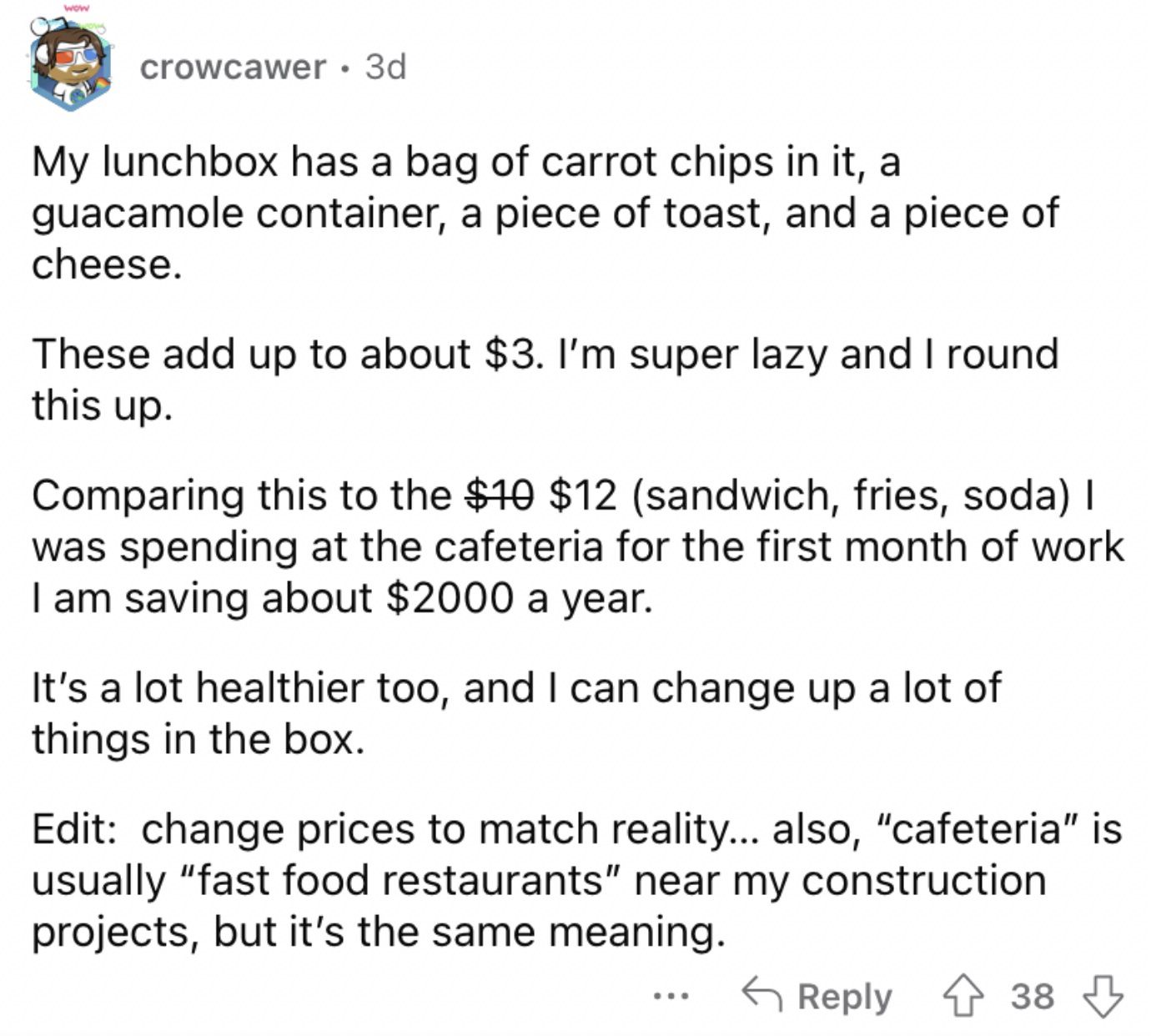
Food is often the largest variable expense in a household budget. The community-driven consensus on saving here is two-fold: meal prepping and bulk purchasing. By dedicating a few hours on a Sunday to prepare lunches for the week, individuals can avoid the $15–$20 daily expense of “convenience” meals. Furthermore, shifting the shopping focus to “loss leaders”—items stores sell at a discount to get you in the door—and buying staples like grains, beans, and frozen vegetables in bulk can reduce monthly food costs by 30% to 50%.
Behavioral Finance: Overcoming the Psychology of Spending
The hardest part of saving money isn’t the math; it’s the psychology. Our brains are hardwired for immediate gratification, which often clashes with the delayed gratification required for financial independence.
The 48-Hour Rule for Impulse Buys
Impulse spending is driven by a dopamine hit that occurs at the moment of purchase. To combat this, many savvy savers implement a mandatory “waiting period” for non-essential purchases. If you see something you want, you must wait 48 hours (or 30 days for items over $100) before buying it. In the majority of cases, the initial emotional urge dissipates, and the realization sets in that the item is a “want” rather than a “need.”
Lifestyle Inflation and the “Invisible” Raise
Lifestyle inflation occurs when an individual’s spending increases at the same rate as their income. When people receive a raise, they often move into a more expensive apartment or buy a newer car, effectively staying in the same financial position despite earning more. The strategy to combat this is to “hide” the raise from yourself. By immediately diverting the entirety of a salary increase into a 401(k) or a high-yield savings account, you increase your wealth-building speed without ever feeling the “loss” of that money in your daily budget.
Gamifying Your Savings
Turning savings into a challenge can provide the dopamine hit that people usually get from spending. Strategies like “No-Spend Months,” where participants commit to spending only on essentials for 30 days, or “The $5 Challenge,” where every five-dollar bill received is put into a jar, turn the act of saving into a game. These challenges help build the “savings muscle,” making the process feel less like a chore and more like a series of wins.
Automation and Financial Infrastructure
In the world of finance, friction is the enemy. If saving requires a manual decision every week, the likelihood of failure increases. The solution is to build a financial infrastructure that operates automatically.
Automating the Transfer Process
The most effective way to save is to “pay yourself first.” This means setting up an automatic transfer that moves money from your checking account to your savings or investment accounts the same day your paycheck hits. By removing the money before you have a chance to spend it, you force yourself to live on the remaining balance. This turns saving into a passive activity.
Leveraging High-Yield Savings Accounts (HYSA)
Traditional “big bank” savings accounts often offer interest rates as low as 0.01%. In contrast, High-Yield Savings Accounts (HYSAs), often from online-only banks, offer significantly higher rates. Moving an emergency fund to an HYSA ensures that your cash isn’t losing value to inflation as quickly. While it won’t make you rich overnight, it is a risk-free way to ensure your idle cash is working for you.
Credit as a Tool, Not a Trap
The sophisticated saver understands that credit cards are a double-edged sword. While they can lead to high-interest debt, they can also be used as a tool for “cash back” and rewards. By using credit cards for everyday expenses and paying the balance in full every month, individuals can effectively “save” an additional 1–5% on every purchase they make. However, this strategy requires extreme discipline; the moment interest is paid, the benefit is lost.
Long-Term Growth: Transitioning from Saving to Investing
While saving is about preservation, investing is about growth. The ultimate goal of saving money is to reach a point where your capital begins to generate its own income.
The Emergency Fund Threshold
Before investing in the stock market, the consensus is to establish an emergency fund consisting of three to six months of living expenses. This fund serves as financial insurance, preventing the need to liquidate investments or take on high-interest debt when life’s inevitabilities—job loss, medical emergencies, or home repairs—occur.

Tax-Advantaged Accounts and Compound Interest
Saving money is most effective when it is done within tax-advantaged buckets like 401(k)s, IRAs, or HSAs. These accounts allow money to grow tax-free or tax-deferred, significantly accelerating the power of compound interest. The “Reddit strategy” often emphasizes maximizing the employer match on a 401(k) first, as this represents a 100% return on investment that is essentially “free money.”
In conclusion, saving money is not a singular act but a lifestyle of intentionality. By adopting a structured budget, practicing tactical frugality, mastering the psychology of spending, and automating the process, anyone can move from a state of financial stress to one of financial security. The collective wisdom of the internet emphasizes that while you cannot always control the economy, you can always control your own “personal economy” through disciplined habits and smart systems.
aViewFromTheCave is a participant in the Amazon Services LLC Associates Program, an affiliate advertising program designed to provide a means for sites to earn advertising fees by advertising and linking to Amazon.com. Amazon, the Amazon logo, AmazonSupply, and the AmazonSupply logo are trademarks of Amazon.com, Inc. or its affiliates. As an Amazon Associate we earn affiliate commissions from qualifying purchases.